Just before Christmas Day, a group of cyclists pulled into Panama City, marking the end of one of the world’s longest supported bicycle expeditions, the 5 1/2 month long, 13,800km North American Epic. Now, a month later, what do they think about their journey across the continent?
Registration for the 2029 North American Epic is now open.
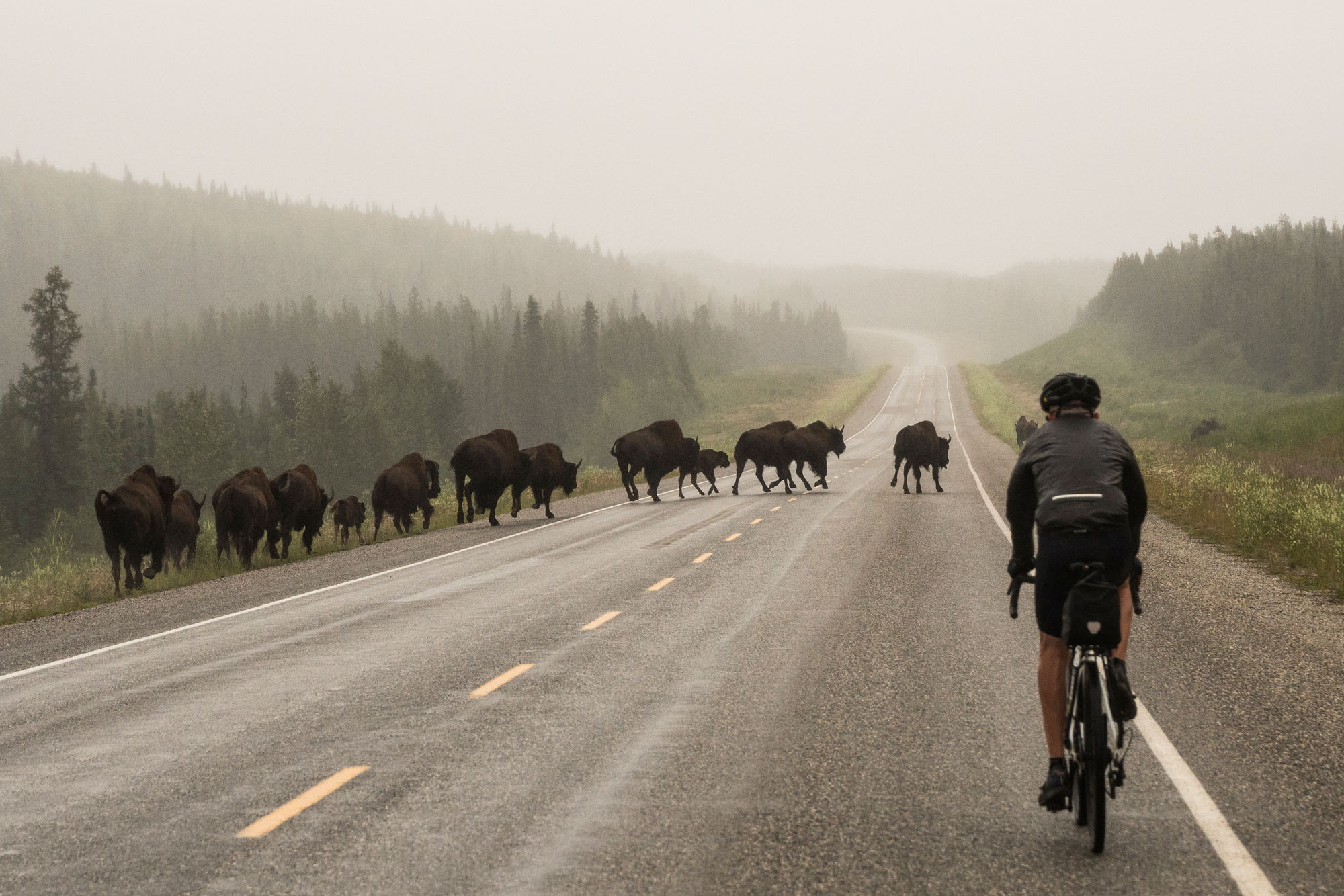
“One of the best rides I’ve participated in. Tour was well organized. The route traveled was well planned and the detours were simple and easy to follow The crew made you feel comfortable. At no time did I feel I was ever in a dangerous situation.” – Steve Johnson (USA)
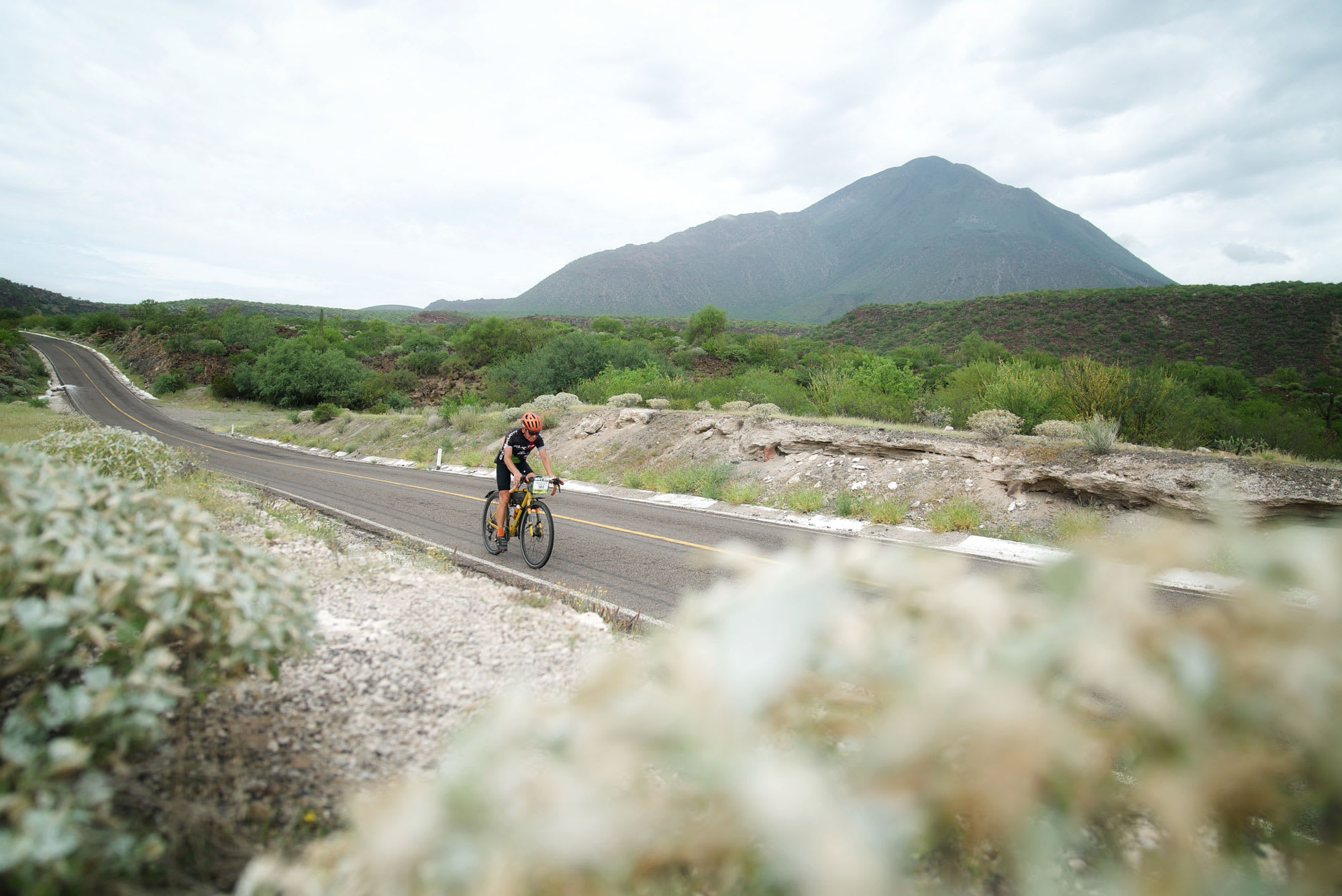
“This trip broadened my worldview and pushed me to rethink my daily patterns. As I get older, it’s easier to fall into routines and let my world shrink. Traveling with TDA disrupts that tendency by exposing me to the many ways people choose to live, while also reshaping my own daily rhythms. It has the added benefit of easing fears about other cultures—fears often amplified by the media. And traveling by bike makes staying fit genuinely fun.” – Camia Young (New Zealand)
“A unique occasion to experience the wilderness of the great North.” – Pascale Bilodeau (Canada)
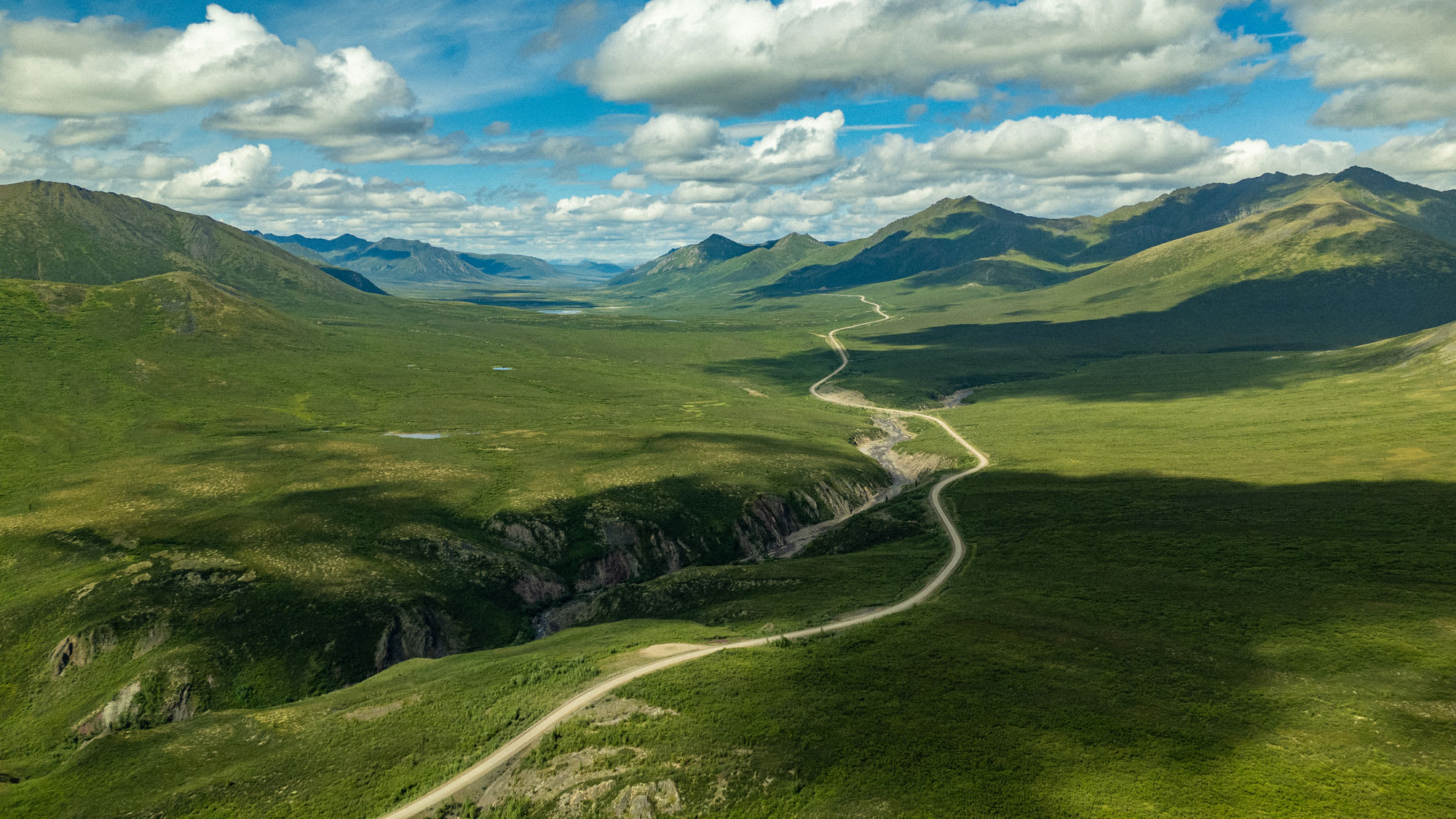
“This tour was a once in a lifetime experience featuring amazing scenery, interesting people, and great support from TDA staff. The riding was a challenge each day particularly the Dempster Highway section. The camaraderie among riders was a big motivation to complete each days ride, regardless of how long I spent on the bike.” – Bruce Huddleson (USA)
“The best way to experience the Canadian Rockies. Fully supported with an extremely experienced and professional crew.” – Murray Beare (Canada)
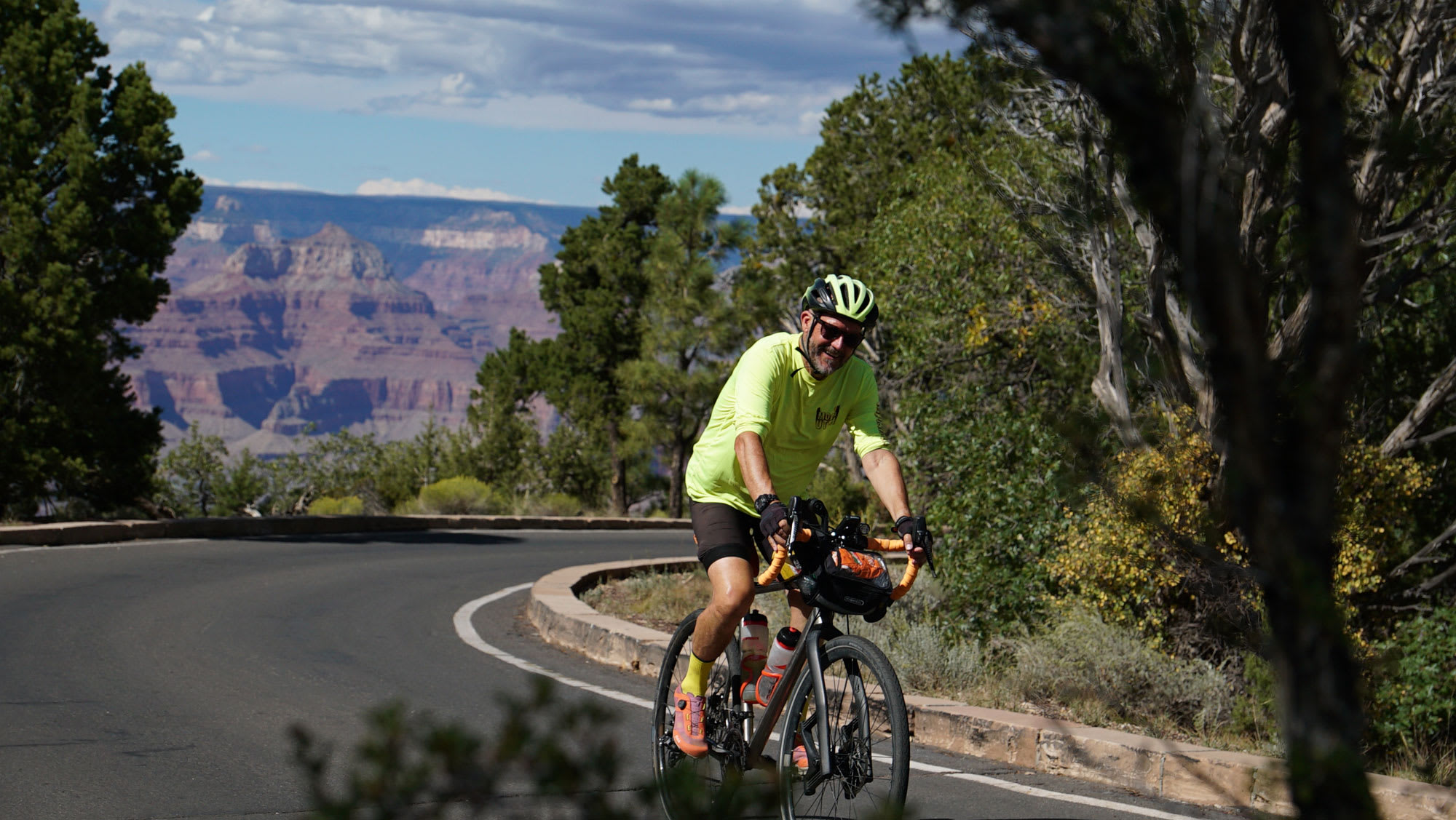
“It was a memorable adventure. It was challenging and took me well outside my comfort zone on occasions. The attitude of the other participants and staff was commendable when the going got tough.” – Graeme Don (New Zealand)
“An amazing experience, better organized that other companies, especially considering the length, number of countries and characters.” – Scott McFarlane (Australia)
RELATED
TOUR
North American Epic
This incredible expedition is the only cycling tour that covers the entire North American continent, from the shores of the icy Arctic Ocean to the...
]]>
When I arrived in Mexico City to help out on the 2025 North American Epic, I wasn’t 100% sure what to expect. To my mind, Mexico evoked images of beaches and deserts so, I guess, that is the terrain that I thought I would be travelling through. Soon enough, I was to discover the scope of my ignorance.
Mexico City
First, however, I had to navigate the mega-metropolis that is Mexico City (pop. 9.2 million).
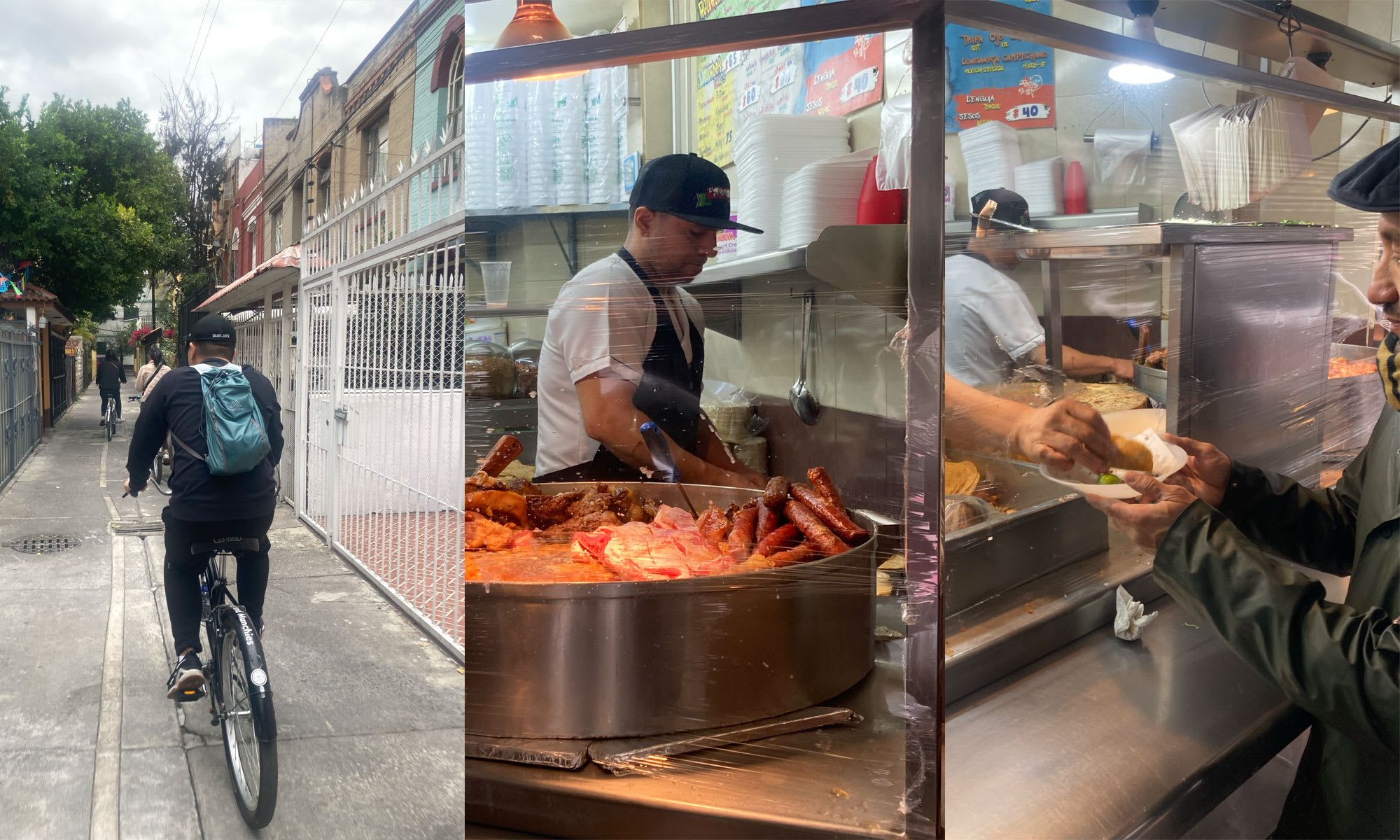
The first thing I like to do when I arrive in a new city is to, whenever possible, take a bike tour. To me, it is the best way to get a quick, and fun, glimpse of the city. Mexico City was in the midst of a cold snap or ‘Frente Frios’ when I woke up. Brr…14C and cloudy.
Our group headed out to sample the city’s street food, stopping at a few of the seemingly endless stalls serving up fresh and exciting tastes. I think you could spend a lifetime exploring the possibilities. Along the way we noticed the city’s efforts to promote cycling by adding bike lanes to the roads. In fact, the North American Epic’s entry into the capital city now takes place almost exclusively on these new bike paths.
Our guide noted that in Mexico, you are not required to take a test to get your driver’s license, you just need to be 18 years old! Despite this kinda scary thought, the drivers we encountered on our tour were unanimously patient. One TDA rider mentioned that as soon as they crossed the border into Mexico, they found the drivers to be very courteous, a relief after the more aggressive road users they encountered in the southern USA.
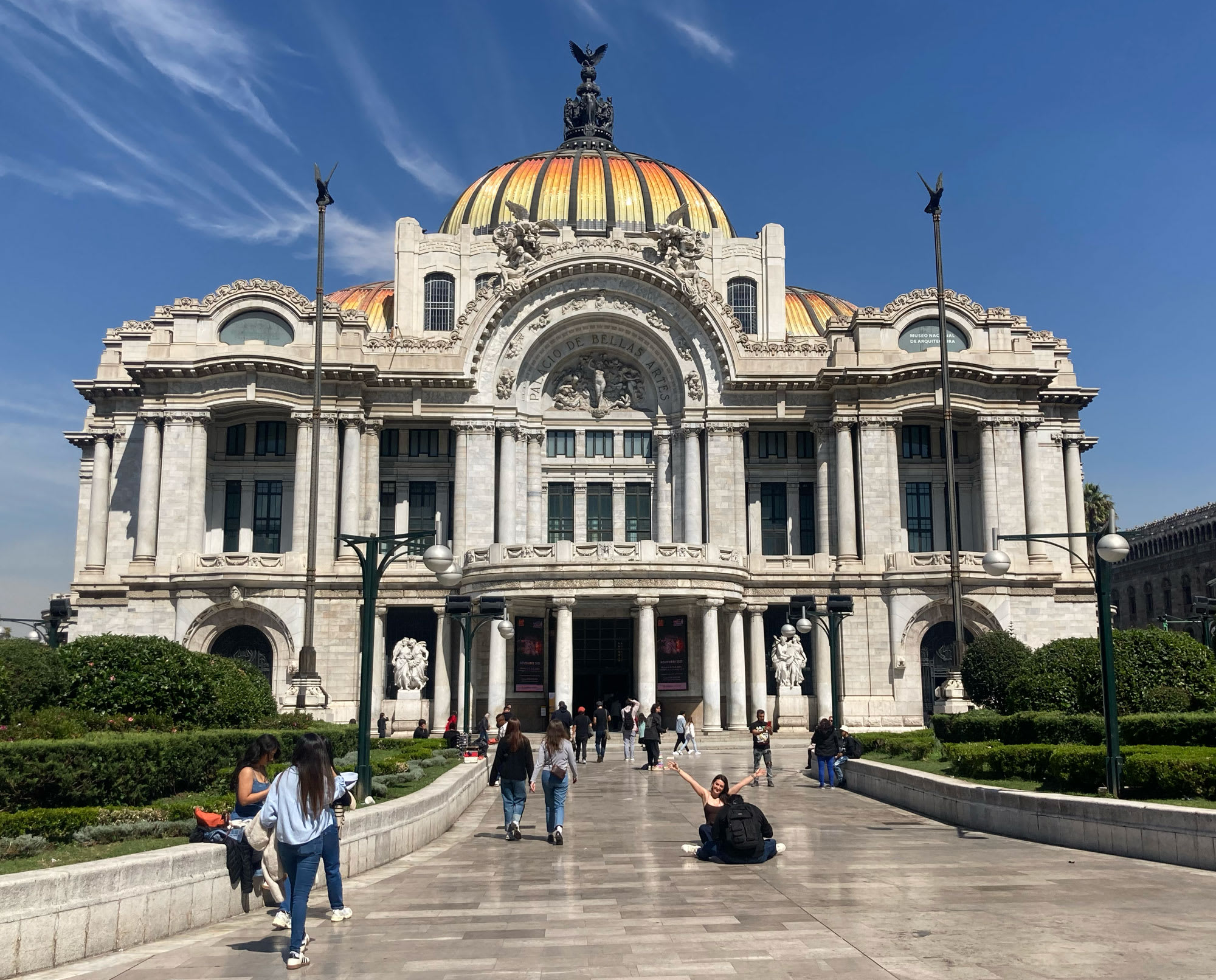
Palacio de Bellas Artes Museo Mural Diego Rivera to see his famous “Dream of a Sunday Afternoon” mural, Mexico City
The next day, I traded in wheels for shoes and spent the day walking through the city streets, often along roads named after European cities – Berlin, Naples, Milan, Versailles – a past attempt to create a European aesthetic to the downtown area. That may have been the goal the atmosphere is now distinctly Mexican – vibrant and alive. I wandered aimlessly, stopping to explore the Museo Mural Diego Rivera featuring his famous ‘Dream of a Sunday Afternoon’ mural and the beautiful Palacio de Bellas Artes.
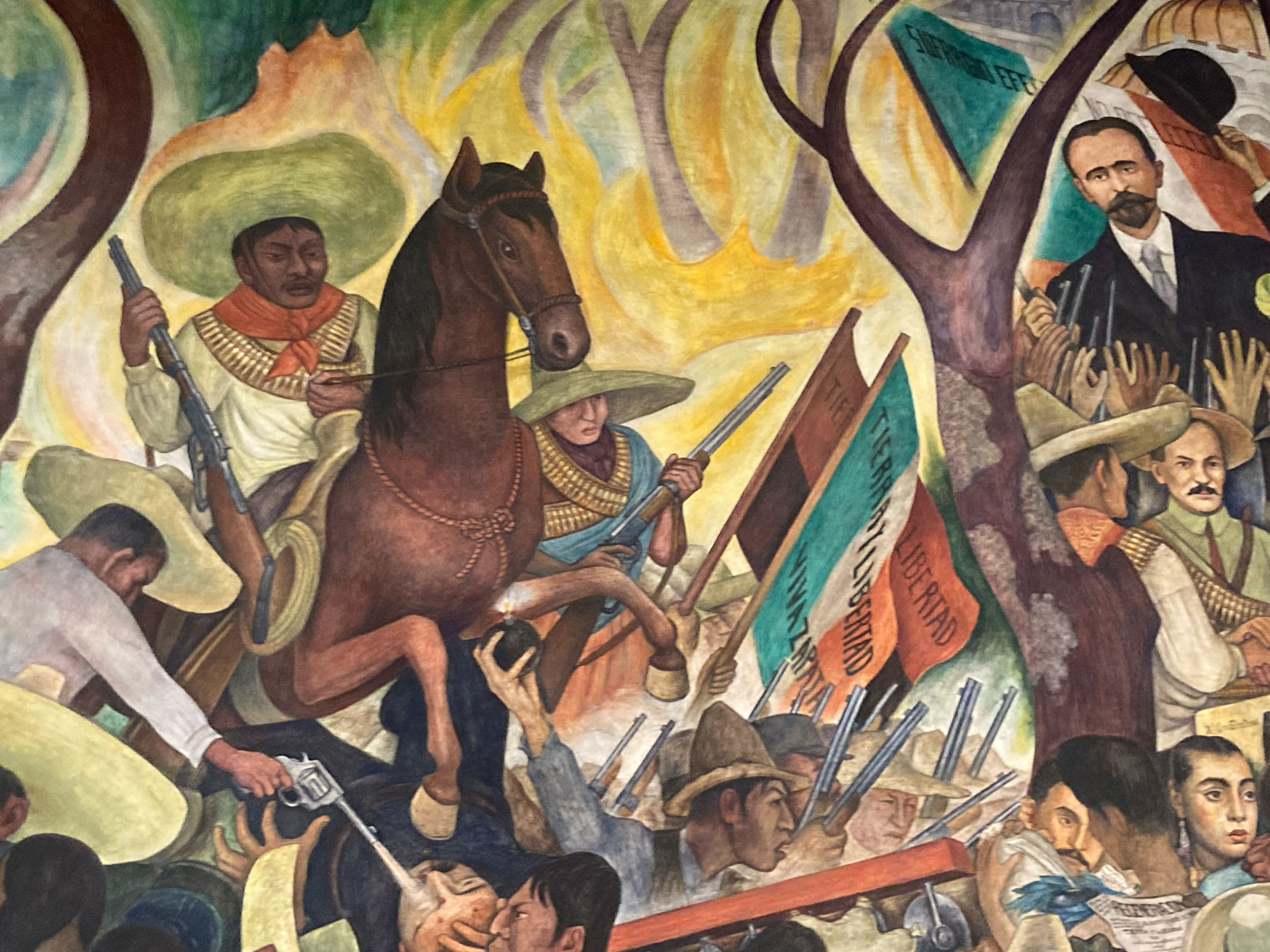
Details from Dream of a Sunday Afternoon
I ended up at the Plaza de la Constitución, a massive main square also known as the Zócalo. I managed to visit the Templo Mayor (a 13th-century Aztec temple) but to my dismay the viewpoint from the bell tower of the baroque Catedral Metropolitana de México and the Palacio Nacional were closed due to another distinctly Mexican pastime – political protest.
The next day, the tour hit the road, heading for the next rest day in Oaxaca.
Oaxaca City
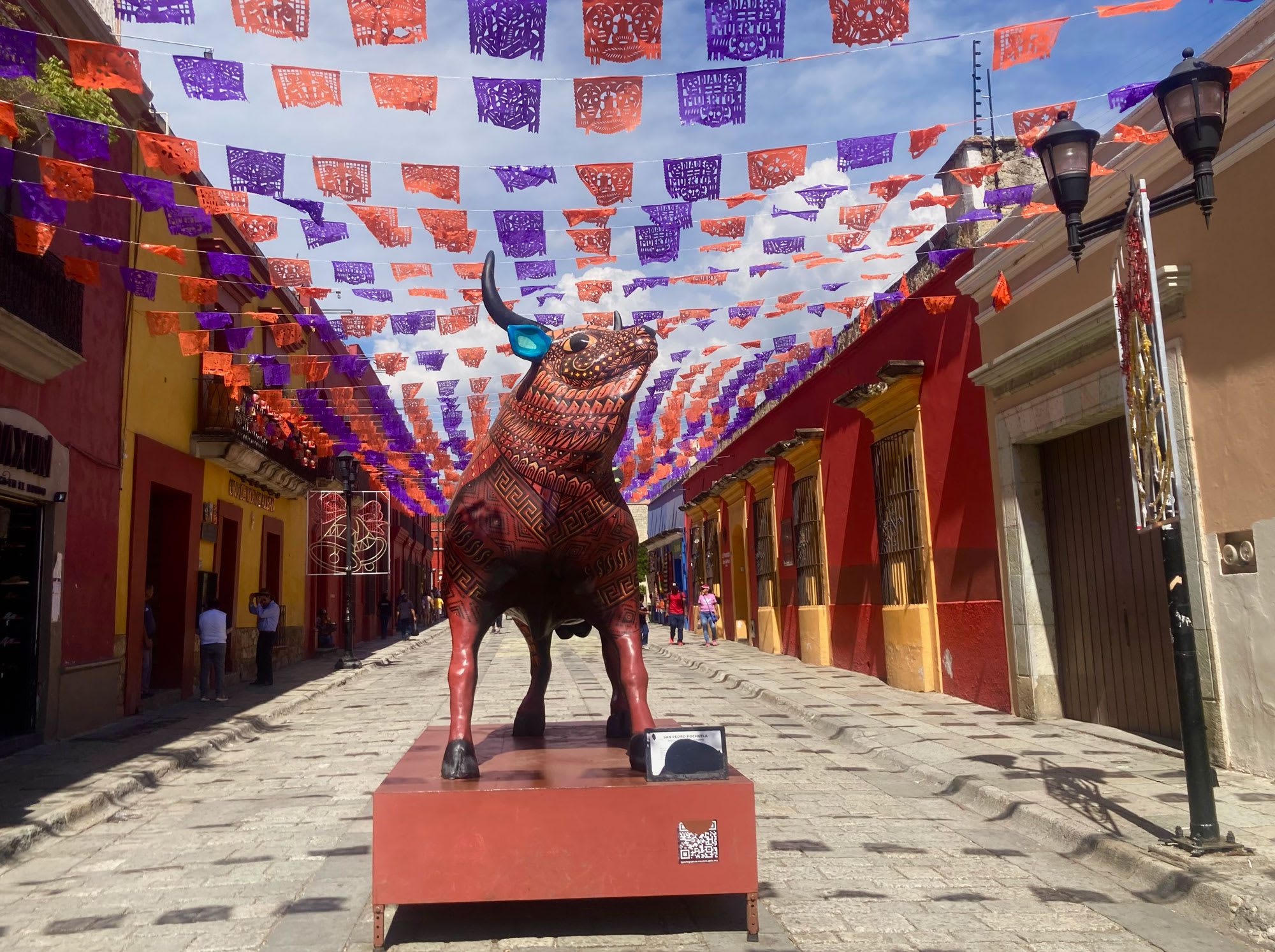
Oaxaca is all colour and art and history. As usual, I opted for a bike tour to scope out the city. While the one in Mexico City focused on food, the one here was all about street art. It was so insightful and fascinating. You can read about it here. Everything is art in this city – even the security bars on windows and doors. The architecture is amazing and human in scope as buildings are limited to a maximum of 3 stories, a precaution linked to the area’s intense seismic activity (300 small quakes a day!).
Our guide didn’t just provide information about the street art. He told us about the city’s unique governing system where neighbourhood committees approved such things as the colour of the buildings and the city itself runs on the traditional system of ‘usos y costumbres’ (indigenous customary law) for local self-governance. He also pointed out that Oaxaca has a special place in the Día de Muertos (Day of the Dead) celebrations as it is considered the place closest to the entry point to the Aztec underworld of Mictlán, a realm ruled by the gods of the dead.
The In-Betweens
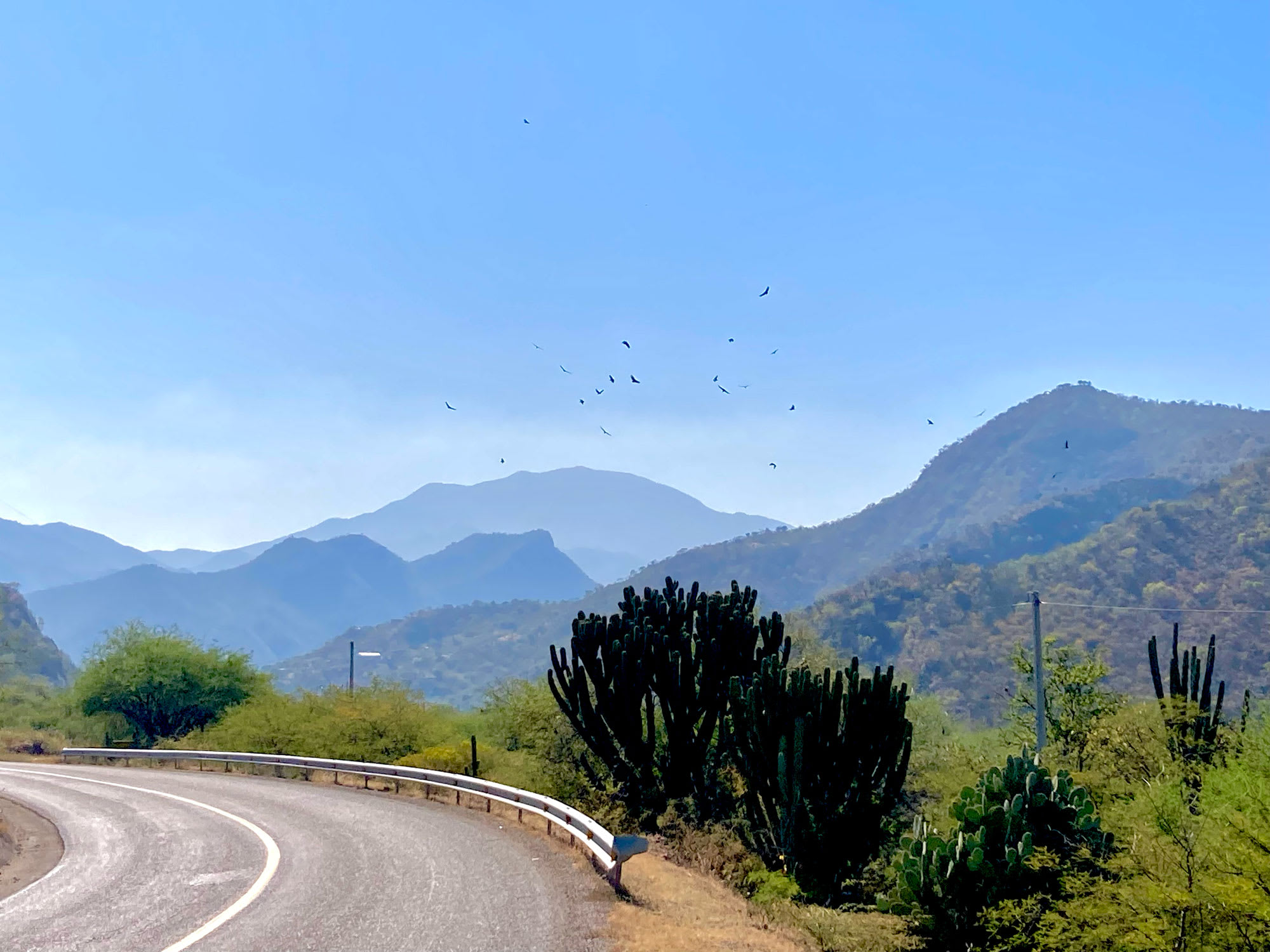
On the road between Mexico City & Oaxaca
So much for my visions of beaches and deserts! This section of the North American Epic featured some absolutely stunning, and challenging, mountain roads.
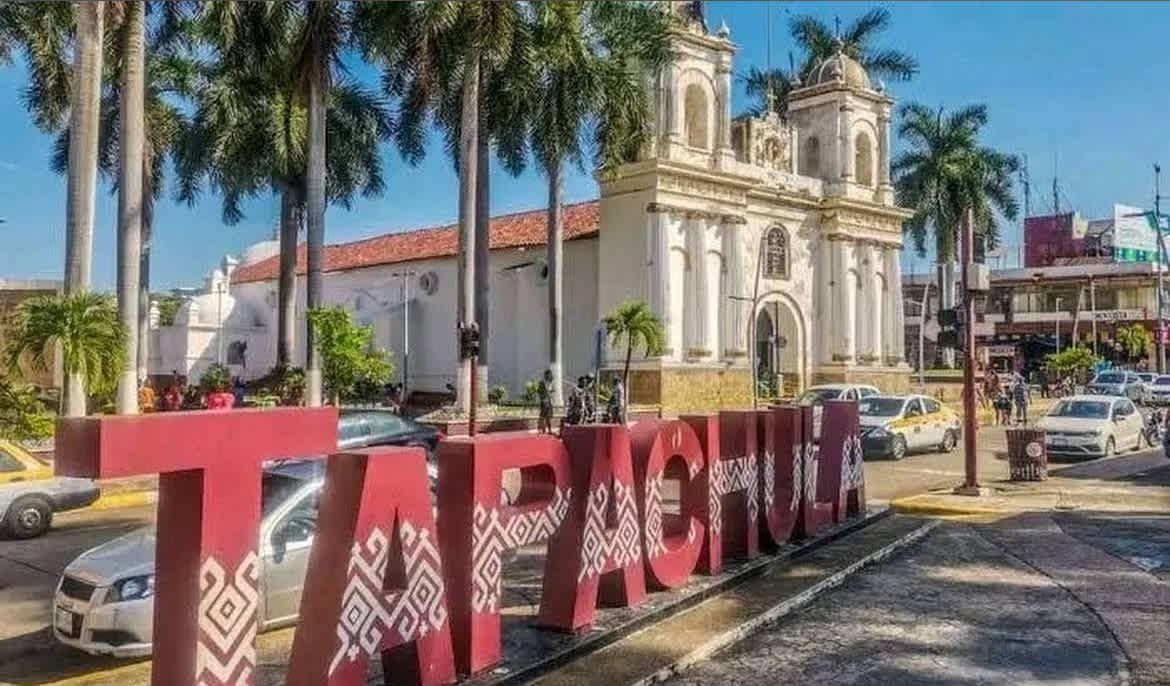
One of the most rewarding aspects of taking part in a TDA adventure is that in between the major touristic sites like Mexico City and Oaxaca, you get to stay in towns that are way, way, way off the beaten track. This allows you to experience rural areas that have their own attraction, a colourful, alive, and unvarnished look at the local people. We stayed in small towns like Ixcaquixtla, El Camaron Yautepec and San Pedro Tapanatepec.
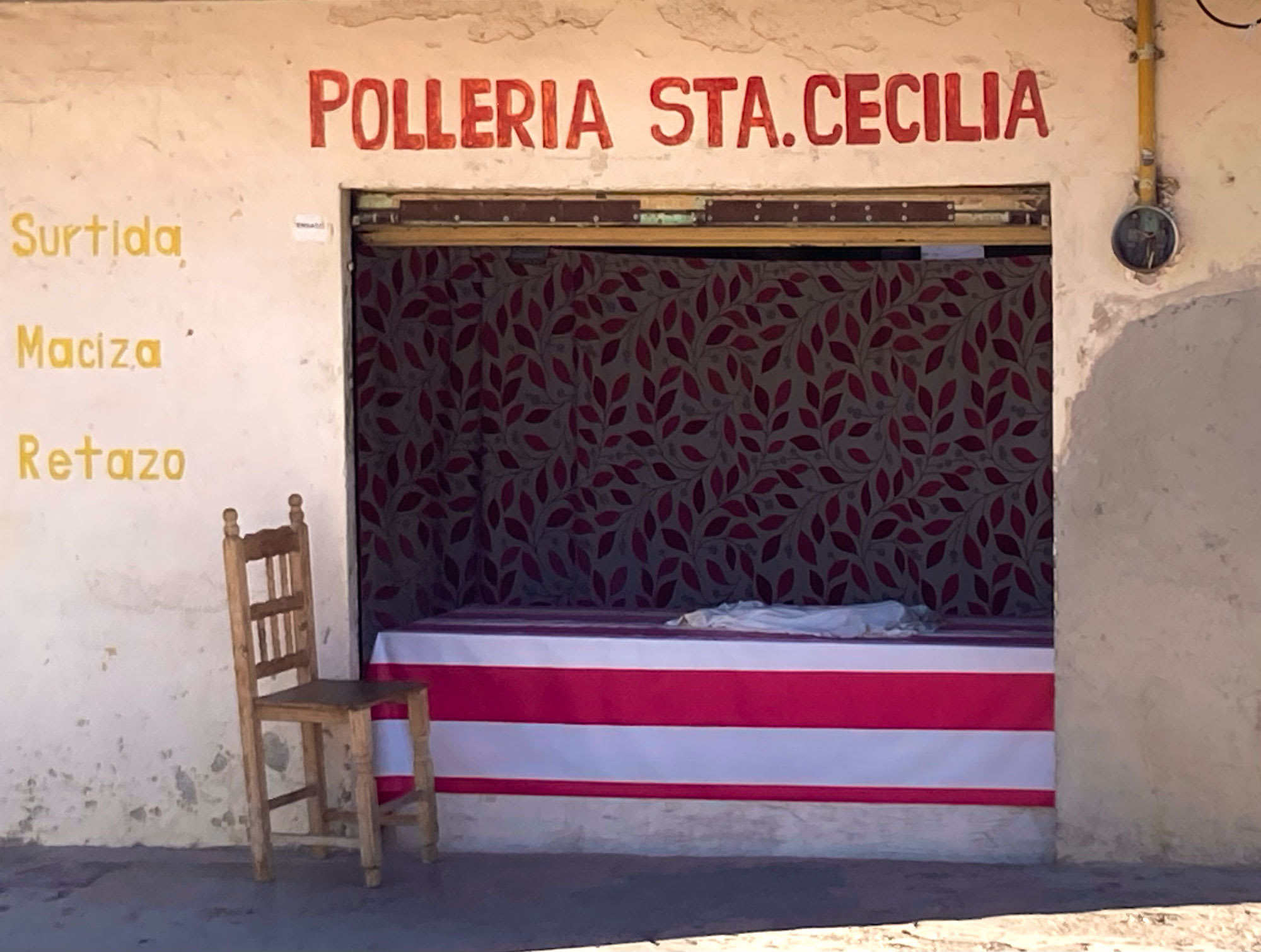
Each night the staff would venture down to the local plaza in these small towns to wander through the lively markets and listen to the local music. And each time, they discovered a lively, friendly, curious, crowd, a community simply going about their lives and enjoying their traditional evening gathering. The ability to interact in this manner is, I think, unique to our tours and something that most riders would rank as an experience to be cherished and honoured.
>>Related Post: The Magic of the Mundane
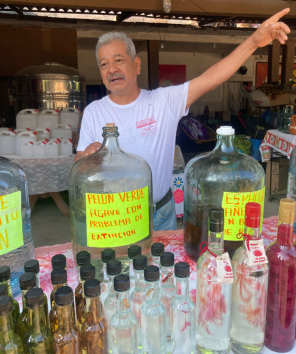
South of Oaxaca, we largely followed the Mezcal Road. This spirit is a sacred drink in Mexico, not just something to get drunk on, a way to connect with the gods. There were numerous artisanal mezcal factories along the way where you could stop, sample the wares and learn about the numerous ways to distill the spirit from the local agave plants .
Riders also learned that Auto Hotels would probably be better referred to as Love Hotels (!) and that some agave farms are certified as “Bat friendly’ if 25% of the agave is left to flower as food for bats, some of whom migrate all the way from Canada.
We also learned that Aztec bees were bred to lose their stingers and can be found in local kitchens and that the honey has medicinal qualities. The cyclists pedalled past an amazing variety of cacti and past vast fields of mango trees in a region aptly known as ‘La tierra del mango.’
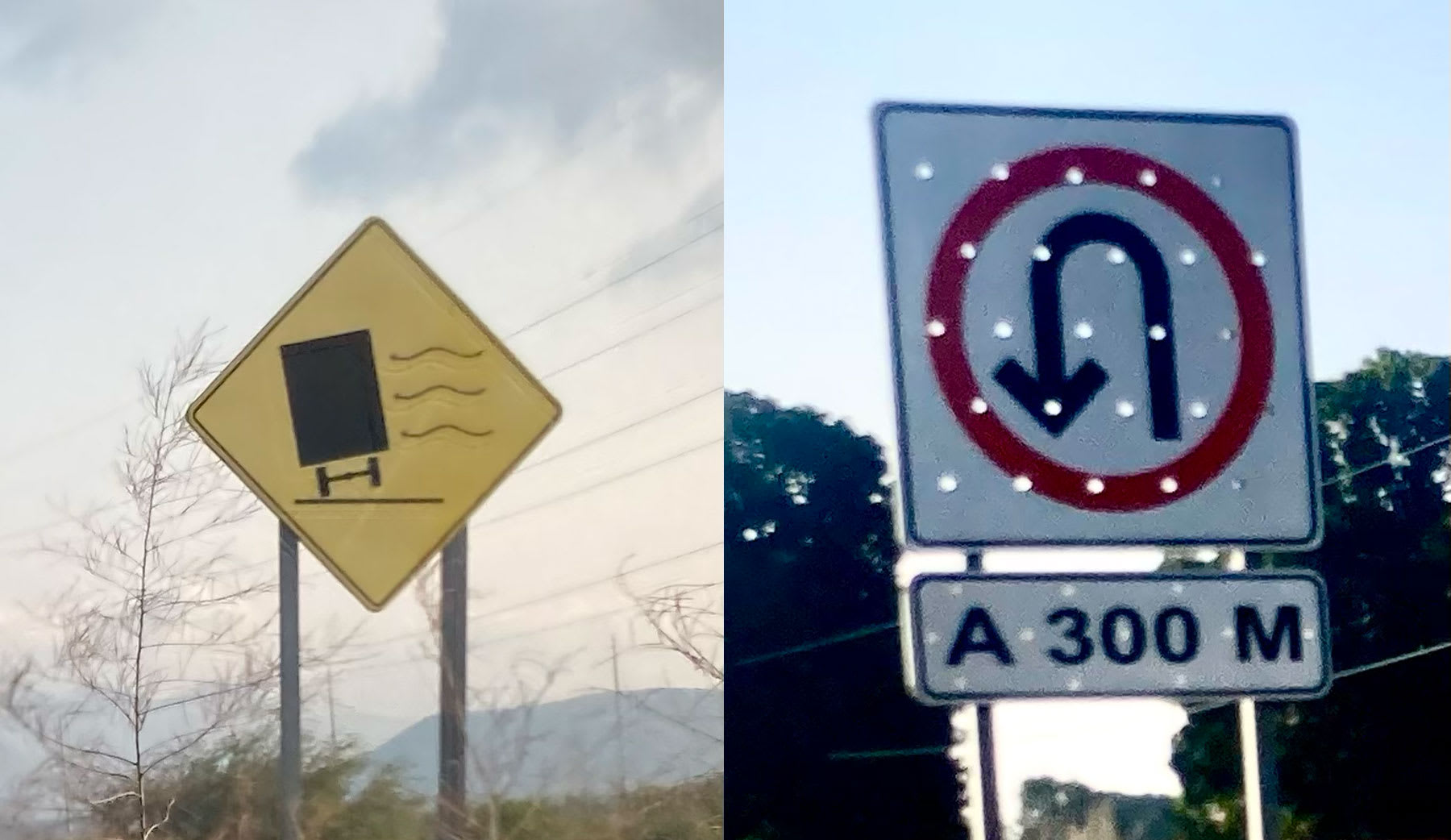
The Mezcal Road eventually descended to the coast and the Isthmus of Tehuantepec where the proximity of the Atlantic and Pacific Oceans creates some unique climactic conditions! Wind farms abounded and the traffic signs were made with holes in them so strong gusts wouldn’t blow them over. Fortunately, this year the riders only had to deal with a crosswind.
What did I learn from my time on tour? Well, as always, I am in awe of the riders who take on the challenge and who are universally so positive and optimistic. I also got to see just how hard our field staff work on these expeditions and how vital they are to each tour’s success. I got to see 2 incredible, historic cities and also was able to experience parts of Mexico that most people will never have a chance to – truly a tale of two cities and the in-betweens.
RELATED
TOUR
North American Epic
This incredible expedition is the only cycling tour that covers the entire North American continent, from the shores of the icy Arctic Ocean to the...
]]>
Arjuna Boucher-Pertuisot is the Content Creator on the 2025 North American Cycling Expedition. A huge shout out to Coyote Aventuras & guide Diego Jacob Cano for their support and insight into this fascinating city.
My rest day in Oaxaca didn’t involve the normal rhythm of the tour, long climbs or rushing to a hotel. Instead, Michael arranged something that fit the city perfectly: a bike tour through Oaxaca’s most iconic street-art neighbourhoods with local artist and guide Diego Jacob Cano. It ended up being one of the most meaningful cultural moments I have experienced since arriving in Mexico.
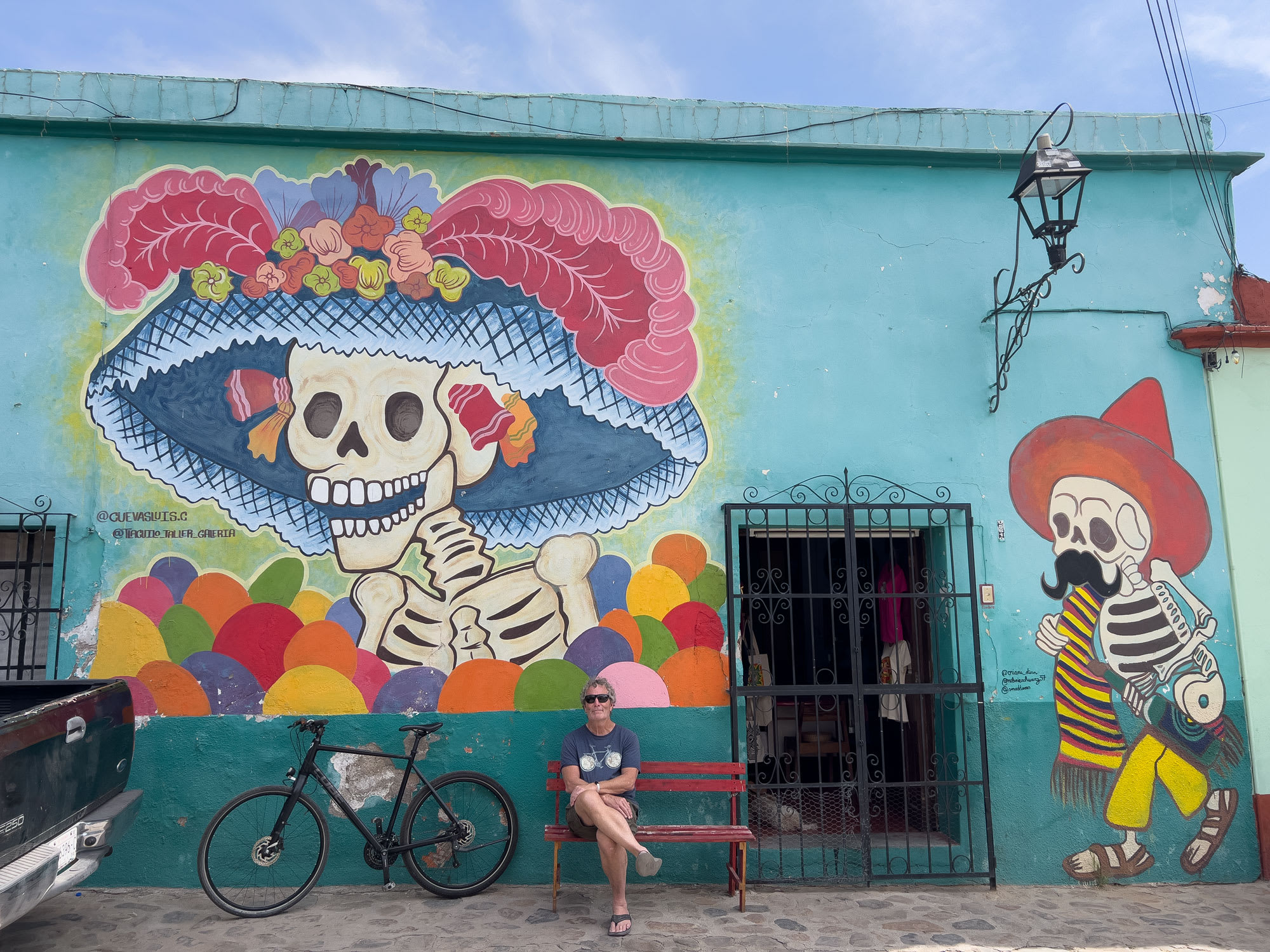
The thing about Oaxaca is that it doesn’t just show you its culture, it surrounds you with it.
You pedal through it.
You breathe it.
You ride right into it.
And through Diego’s eyes, the murals we saw became more than visuals. They became lessons about identity, community, spirituality, politics and the land itself.
A City That Pulls Artists In
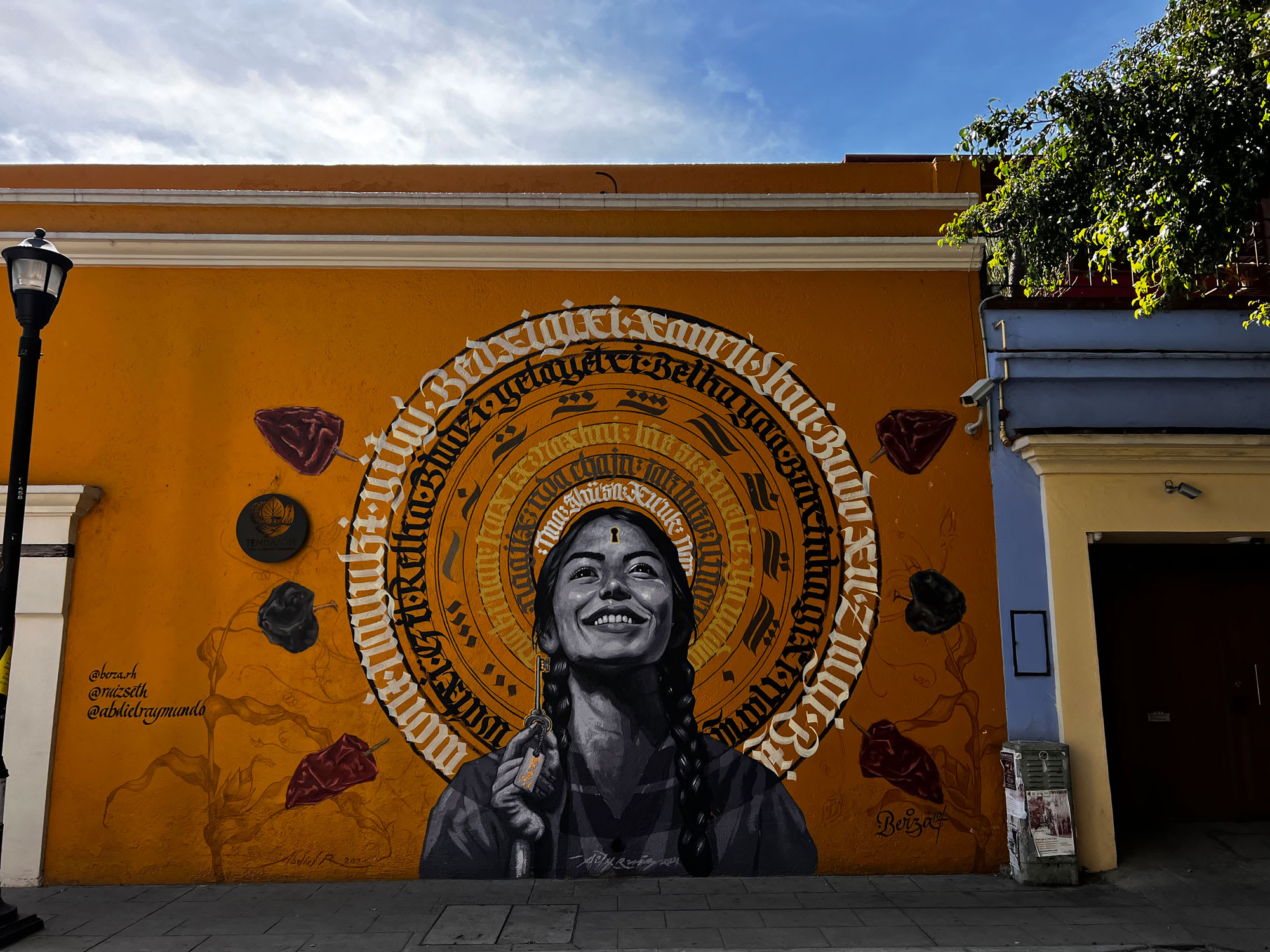
What Diego said early on stuck with us – “Oaxaca is where artists come to make sense of Mexico.” And you feel that immediately. There’s something in the air, a mix of spirituality, rebellion, community, Indigenous pride, and tradition, that attracts creators from all over the country. The colours are louder, the symbols are older, and the messages on the walls feel like they’ve been there for centuries, even if they were painted last week.
Pedalling through Xochimilco, Jalatlaco, and the northern part of Centro, we passed murals that felt less like street art and more like conversations between the past and the present. Like the large portrait of a woman surrounded by golden script, a celebration of strength, youth, and identity. Or the street covered in papel picado banners, glowing with festival colours. Nothing is random in Oaxaca. Everything is expression.
Papel Picado – The Flags That Make the Street Breathe
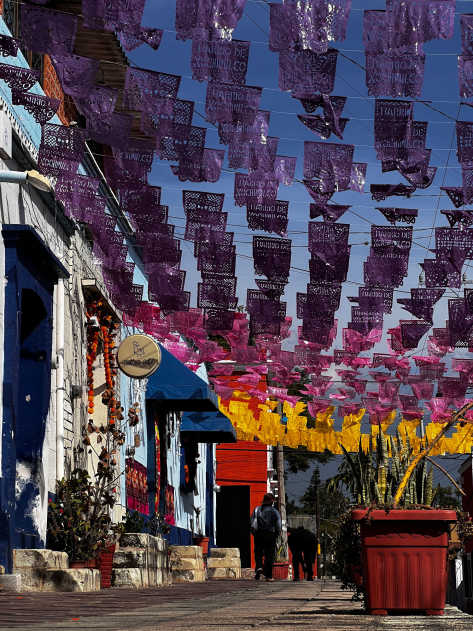
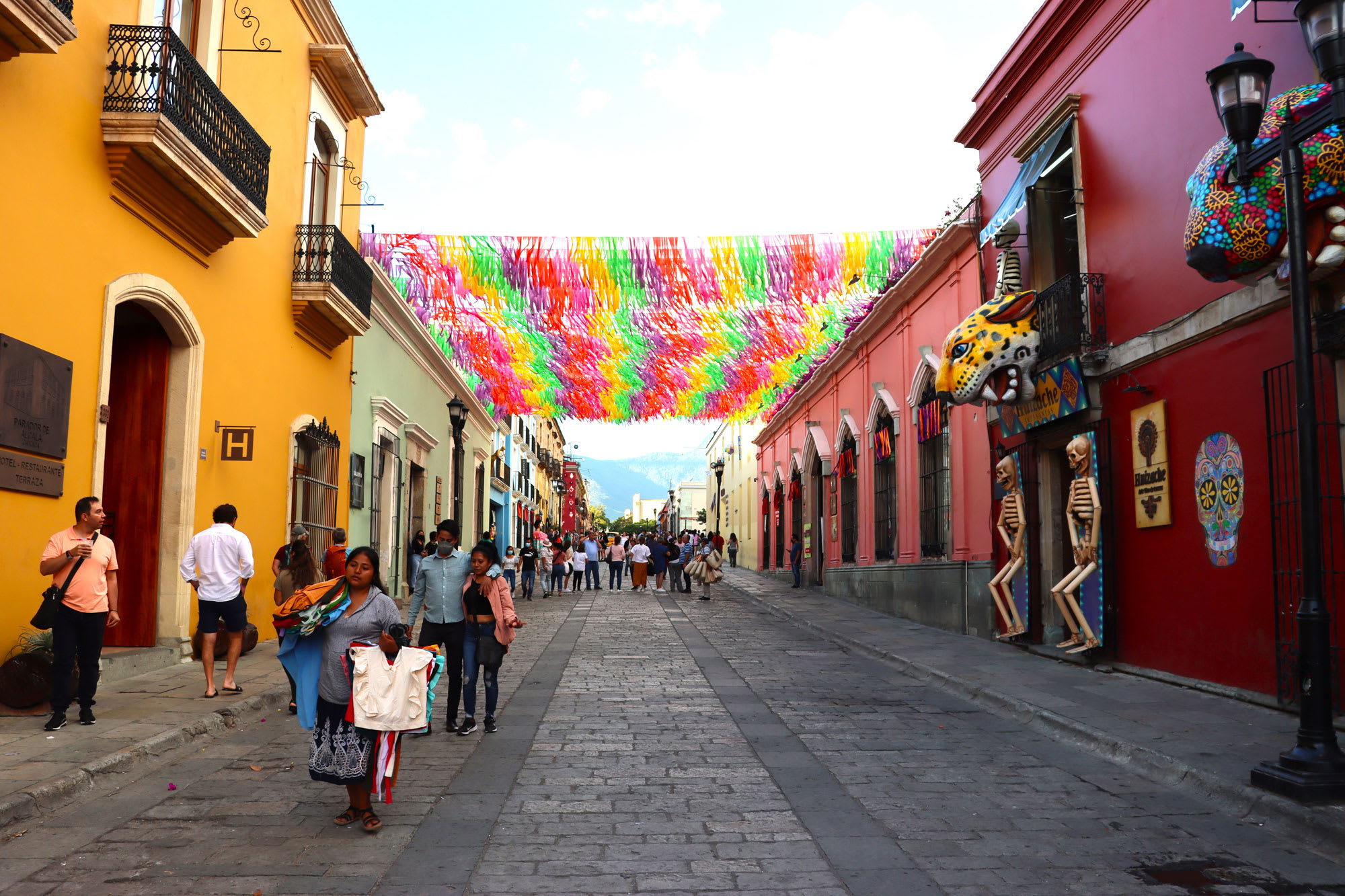
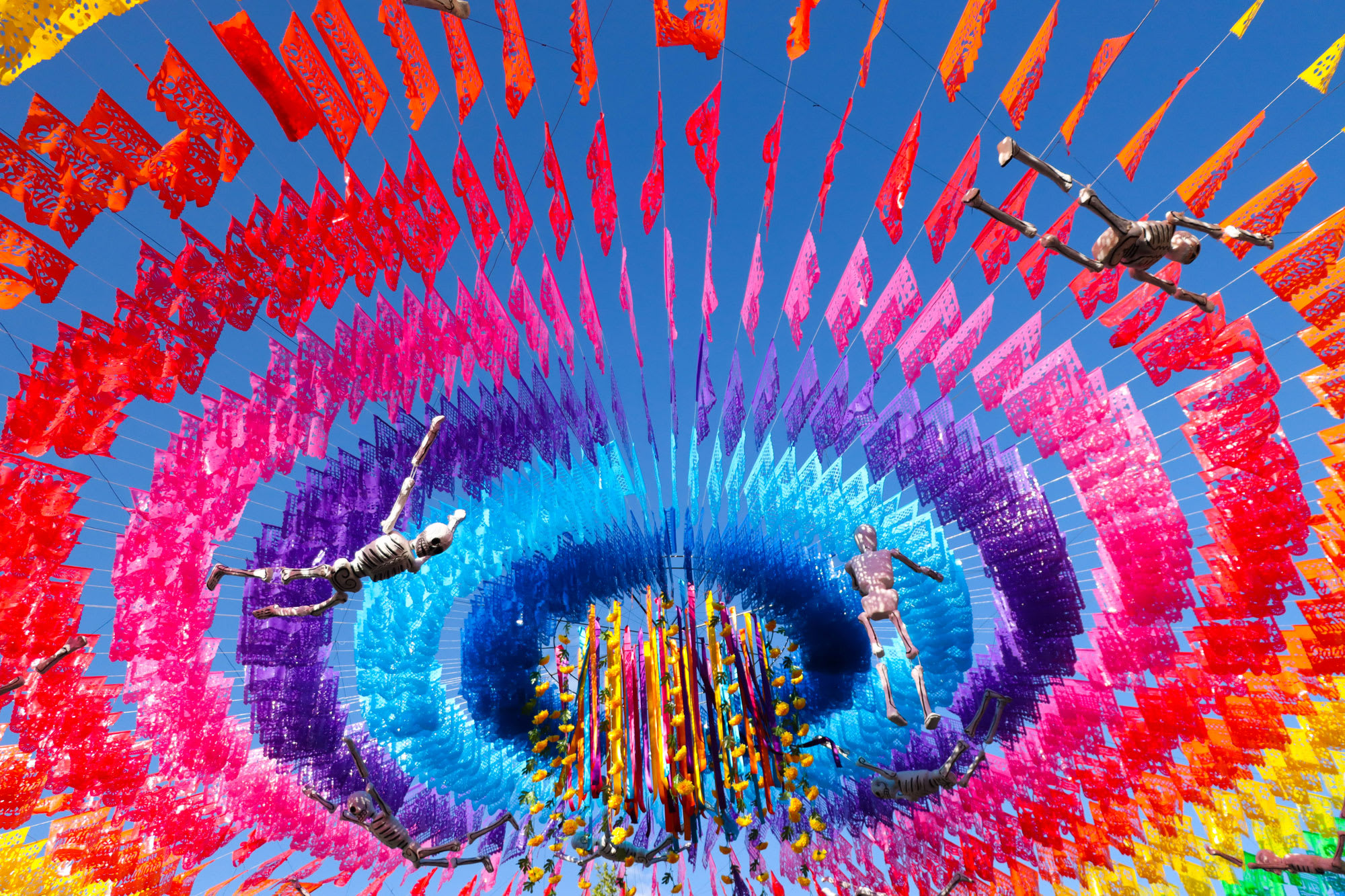
A few turns into the ride, we rolled under a sky full of colourful papel picado, and suddenly it felt like we’d biked straight into a fiesta. Pink, purple, yellow, turquoise, the whole street looked like it had dressed up just for us. Diego laughed when we slowed down to take pictures. “Everyone thinks they’re just decorations,” he said, “but trust me… these flags have deeper meaning.” He explained how each colour means something: purple for spirit, yellow for the path of the dead, pink for celebration, green for hope, white for offerings.
And the designs? Flowers, spirits, suns, moons, tiny stories cut by hand into delicate paper. The best part? Even the movement matters. When the wind hits them just right, the fluttering is meant to represent the presence of spirits passing through. (So basically, in Oaxaca, even the breeze is spiritual.) “Yes, people hang papel picado now for vibes and Instagram-worthy streets,” Diego admitted that with a grin but the meaning behind them is ancient. They were originally used during Día de los Muertos to guide the souls home, the colours acting like signposts in the sky. Riding under them felt like the city was cheering us on, playful, loud, alive. Like Oaxaca was saying – ‘Relax. Celebrate. You’re welcome here.’
Mezcal – The Spirit of the Land
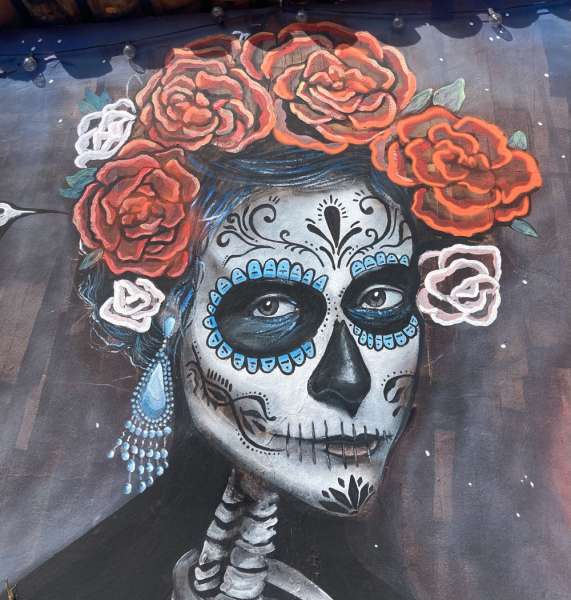
Coffee and cacao are important here, ancestral, ceremonial, but the story Diego kept coming back to was mezcal. And it made sense: we were literally cycling through mezcal country. Mezcal in Oaxaca isn’t something people use to get drunk. It’s a symbol of identity, a drink tied to ceremony, land, ancestry, and time. Diego explained how:
– Agaves take years — sometimes decades — to mature.
– Families guard traditional mezcal methods like heirlooms.
– Cooking, fermenting, and distilling mezcal is purely manual — fire, stone, wood, earth.
– Each region’s mezcal tastes different because the land shapes it.
– Mezcal is shared during Día de los Muertos to welcome ancestors back home.
“Mezcal tells the truth of the land,” he said. And suddenly, the murals with skeleton musicians, marigolds, and mezcal bottles became clearer. They’re not images of death. They’re images of continuity, celebration, and memory. Cycling through agave fields, past smoky palenques, past murals referencing spirits and ancestors, mezcal wasn’t just a drink in this landscape. It was the pulse.
Spirit Dogs, Ancestors & Día de los Muertos
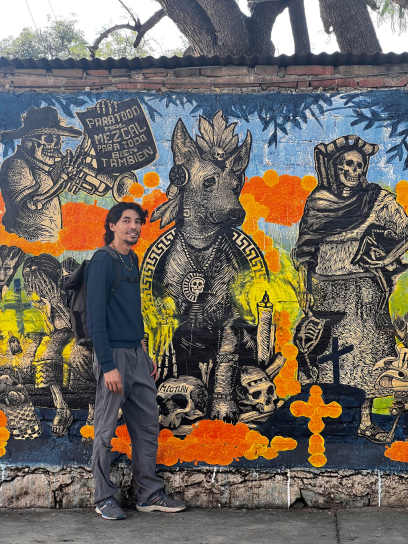
One mural stopped us cold, a huge depiction of the xoloitzcuintli, the sacred spirit dog who, in Indigenous belief, guides souls through the afterlife. Around him were skeleton musicians, mezcal symbols, and bright marigold flowers. At first it looked playful, but as Diego spoke, the wall turned into a doorway into another worldview.
In Oaxaca, Día de los Muertos isn’t a holiday, it’s a living relationship between the living and the dead. And this is the place in Mexico where the celebrations last the longest, because, as Diego told us – “This is where the doors open first. This is where the souls begin their return.” The orange marigolds you see everywhere, on altars, in murals, sold on street corners, are not just flowers. They are lights. Pathways. Guides laid out so the spirits can find their way back home.
Once you know that, the murals make sense.
The skeletons aren’t scary.
The spirit animals aren’t fantasy.
The candles, copal smoke, offerings, and symbols are all part of a system of memory and welcome.
You ride a few blocks and the themes repeat: ancestors watching over the living, animals guiding souls, offerings painted as if glowing. It’s intense, but it’s beautiful too, a reminder that in Oaxaca, life and death aren’t opposites. They walk the same streets.
A City Governed by Community, Not by Power
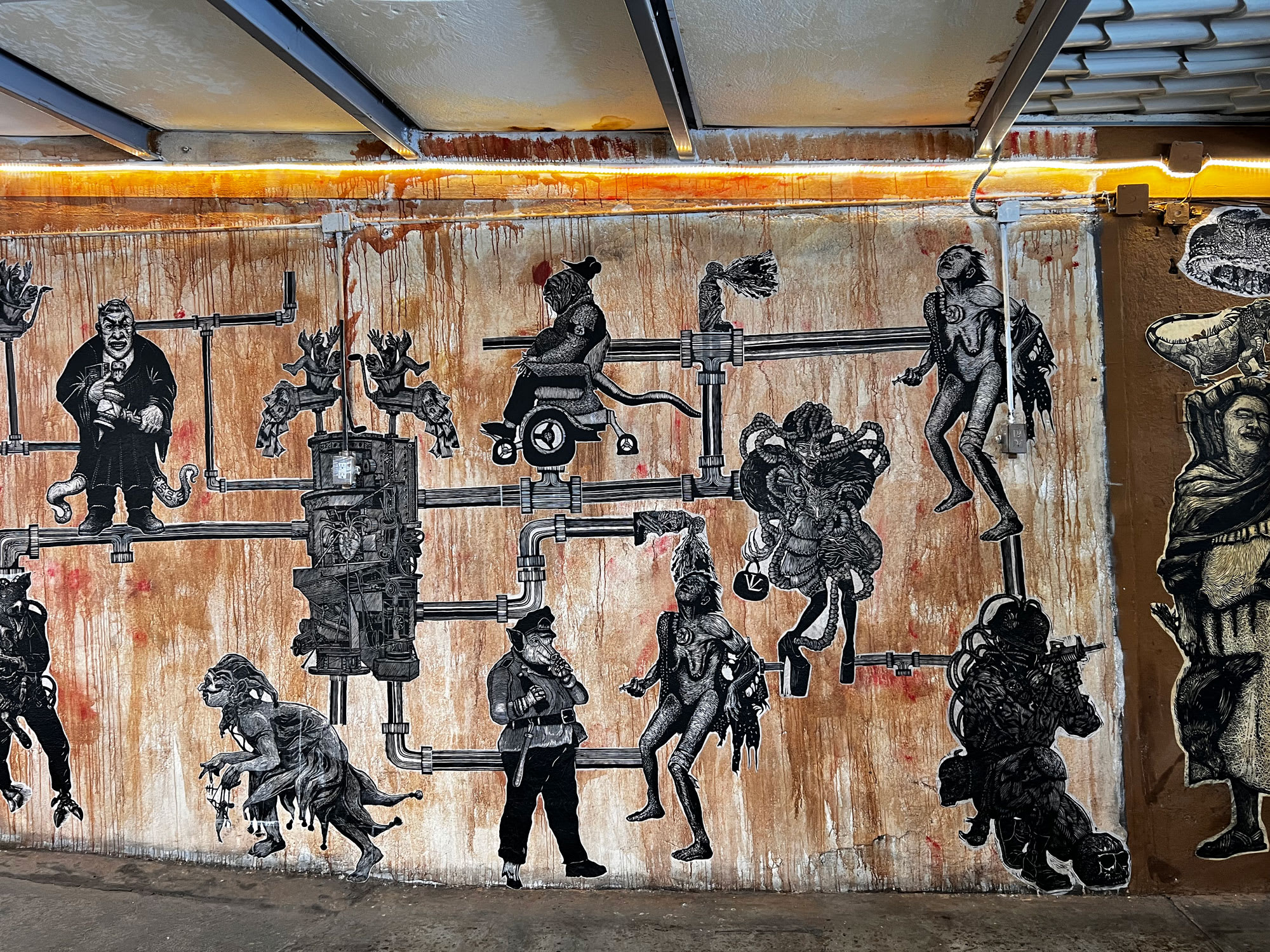
One of the most fascinating things Diego shared was how many Oaxacan communities still operate under ‘usos y costumbres,’ a collective system older than the Mexican state. Meaning
– No formal governors
– No centralized authority
– Decisions made in community assemblies
– Leadership rotates
– Responsibility is shared
This governance model is woven directly into the murals: unity, resistance, solidarity, ancestral protection, communal memory. For cyclists crossing an entire continent, moving from country to country, system to system, this idea felt both refreshing and powerful. There are so many ways a society can organize itself. Oaxaca reminded us of that.
Cycling Into the Heart of It All
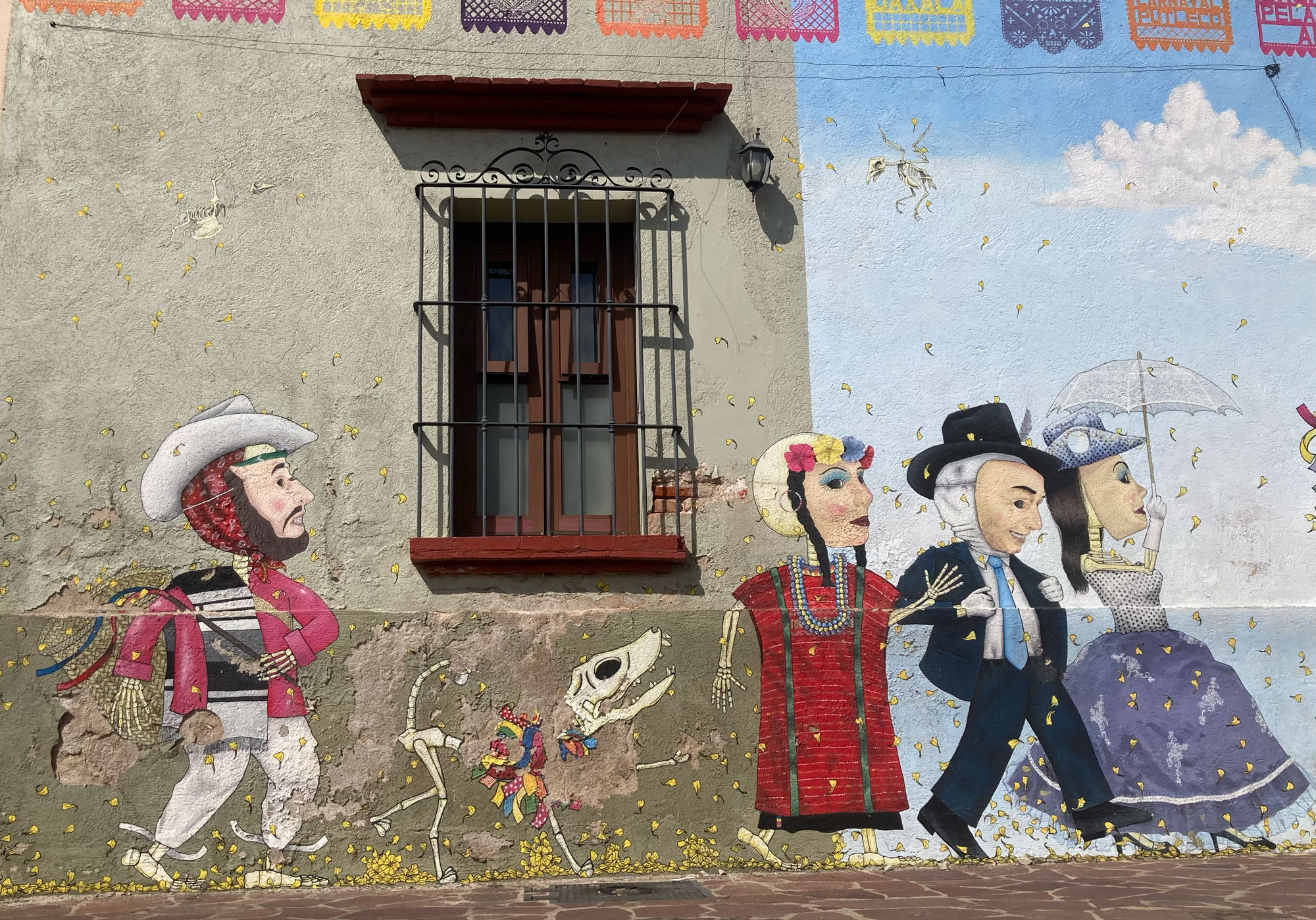
Moving through this environment on bikes felt perfect. At street level, every sound, smell, and colour hits closer:
Kids laughing.
Dogs barking.
Radios playing cumbia.
Smoke rising from agave ovens.
Cacao roasting.
Copal incense burning outside doorways.
You roll into colour.
You glide between traditions.
You absorb culture at the speed of curiosity.
By the time we looped back toward Centro, it was clear this wasn’t a side activity or a filler for a rest day. It was an essential chapter of the journey. Oaxaca didn’t just welcome us. It revealed itself. And in the mix of art, mezcal, politics, spirituality, spirit dogs, and community, we found a reminder of why we travel this way. Why we cross borders on bicycles. Why the road always feels bigger than the map. Because sometimes, the most unforgettable kilometres are the ones covered slowly, listening, learning, and letting a place leave its mark.
RELATED
TOUR
North American Epic
This incredible expedition is the only cycling tour that covers the entire North American continent, from the shores of the icy Arctic Ocean to the...
]]>
Camille Kirby is the Content Creator on the 2025 North American Epic Cycling Expedition. She looks back at the Expedition’s time in the USA.
Surrounded by saguaro cacti, desert mice and dilapidated ghost towns, the North American Epic, on its journey from the Arctic to Panama, reached its half way point in Salome, Arizona (pronounced “sal-oom” by some locals, “salami” by others). Riders and crew have come and gone, frigid nights have been had and glorious rides alongside wild bison, elk and deer have been witnessed. But those who started in the Arctic are still in the present, feeling the enormity of what they’ve already cycled in time that is speeding by.
On the subject of the achievement and the feeling that there are still so many more kilometres to tackle, Camia Young, an American living in New Zealand for the past 25 years, throws out the proverb, “If you want to eat an elephant, it’s one bite at a time.”
An apt quote, indeed, but you can’t help but think about a different proverbial ‘elephant’, the one that’s in the room as we cycle through the United States – the current political atmosphere. It’s a frequent conversation; many are actually surprised they haven’t encountered anything they’ve been reading and watching in the media. “Politics have a much smaller profile than what you see online,” says Jim Hodgkins, from Great Britain, “this tour has actually been the inverse of a normal trip to America for a Brit.”
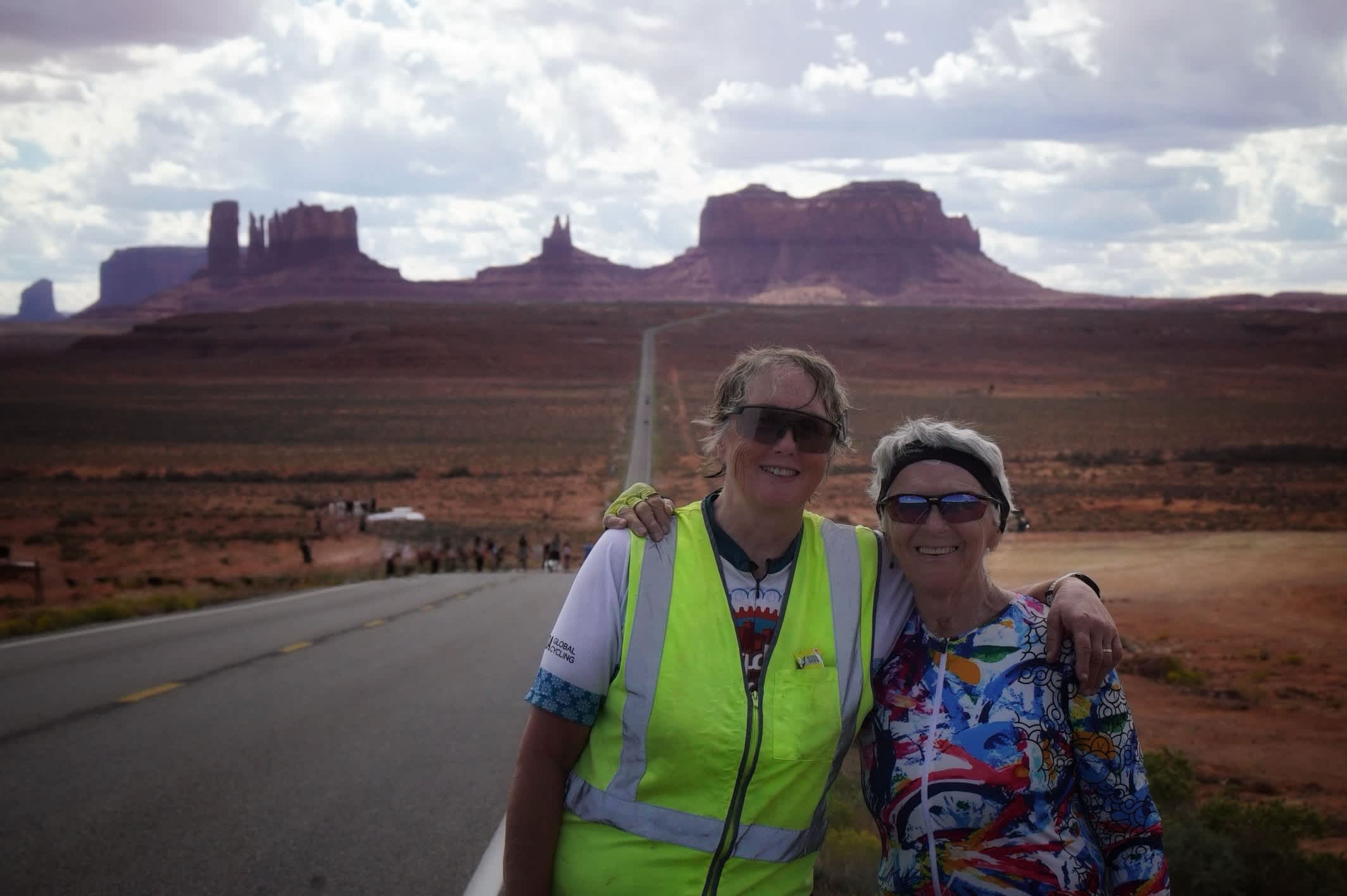
Of course, Jim is referring to our route that runs along and through some of America’s greatest national parks – Glacier, Yellowstone, Arches, Canyonlands, the Grand Canyon. In his experience, “No Brits go to Yellowstone because it’s not near a Disney property.”
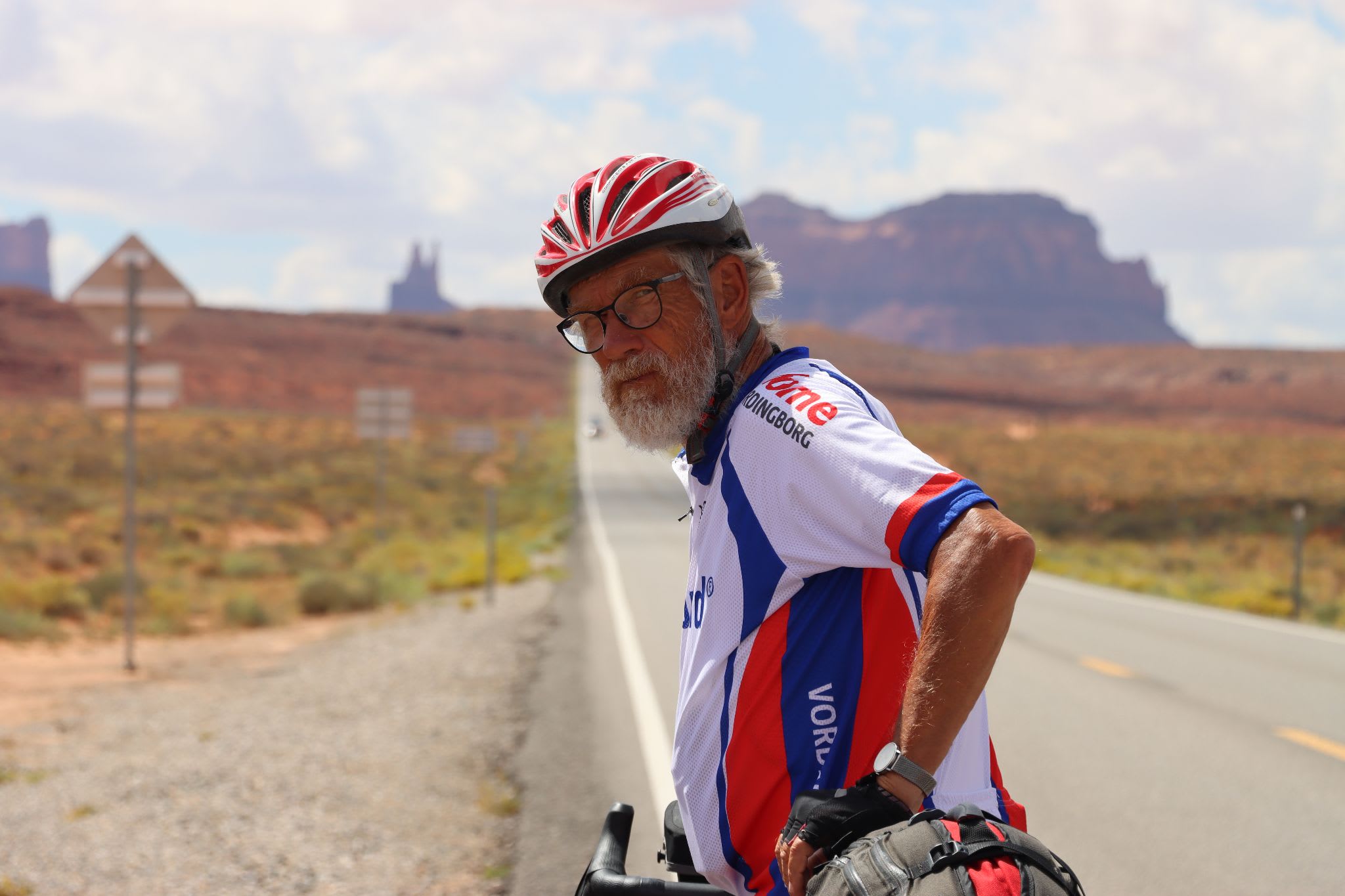
He’s learned it can actually be 50 miles between coke stops, and that it’s just as thrilling to ride along with a singular bird than to see a bear or a deer. Jim’s favourite ride day was our meandering course through Monument Valley. “You’re just cycling towards it all day. You stop to take a picture, and then you just keep stopping for 50 miles until you’re finally past it.” Jim says this as we sit at a picnic table at a remote campsite in Mingus Mountain, a quite hilly area in central Arizona. Jim and I both agree – we hadn’t realized Arizona had any hills! The desert always feels like a flat sort of place.
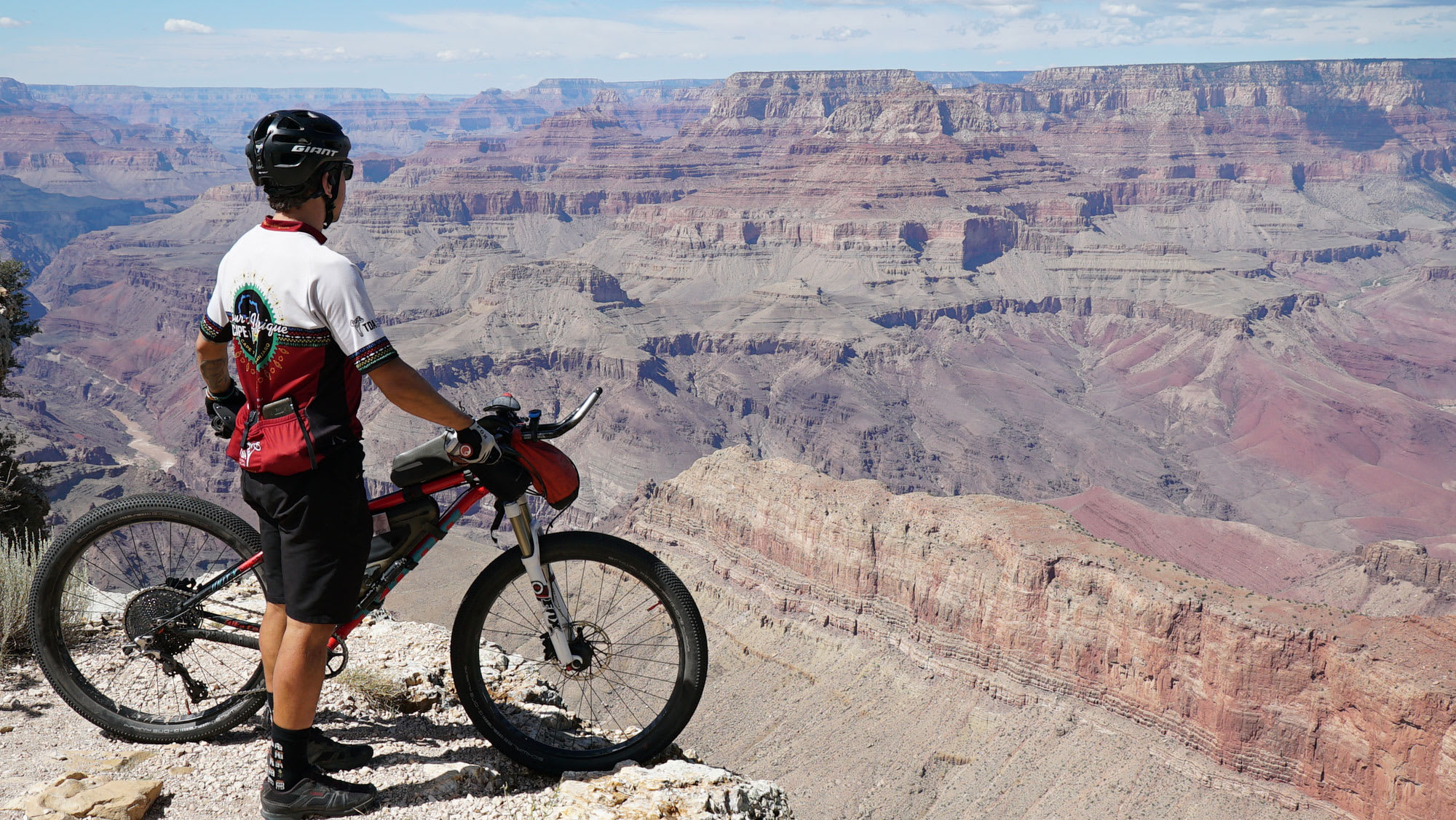
That exact notion, of being surprised by the States, seems like it’s been a running thread in this group. This cycle through the U.S. has given a new context to the country for those who’ve seen its coasts and its cities; this is one of the most diverse geographies in a single nation. Keith Elliot, also from the U.K., “wanted a route that was rural and went away from the cities.” His belief was, “I probably won’t come back to the States in my lifetime so it was perfect.” And what a lovely notion that is, one can ride through the most remote, the most stunning parts of a country that can seem to be otherwise a mess on TV screens and the Internet.
Camia Young, who’s been away from the States for quite some time, has spent much of her riding thinking about how the U.S. has changed over the 25 years she’s been gone. An architect by field, she’s “seeing the states through the view of architecture,” and has found the communities we’ve been cycling through to have an uninspired way of building. A main point of conversation around the national parks we’ve been staying in is how unique the communities that live around them are; whether camping in the Navajo Nation or the boondocking towns of the Sonoran desert, we’ve encountered such an array of sub-communities within one country.
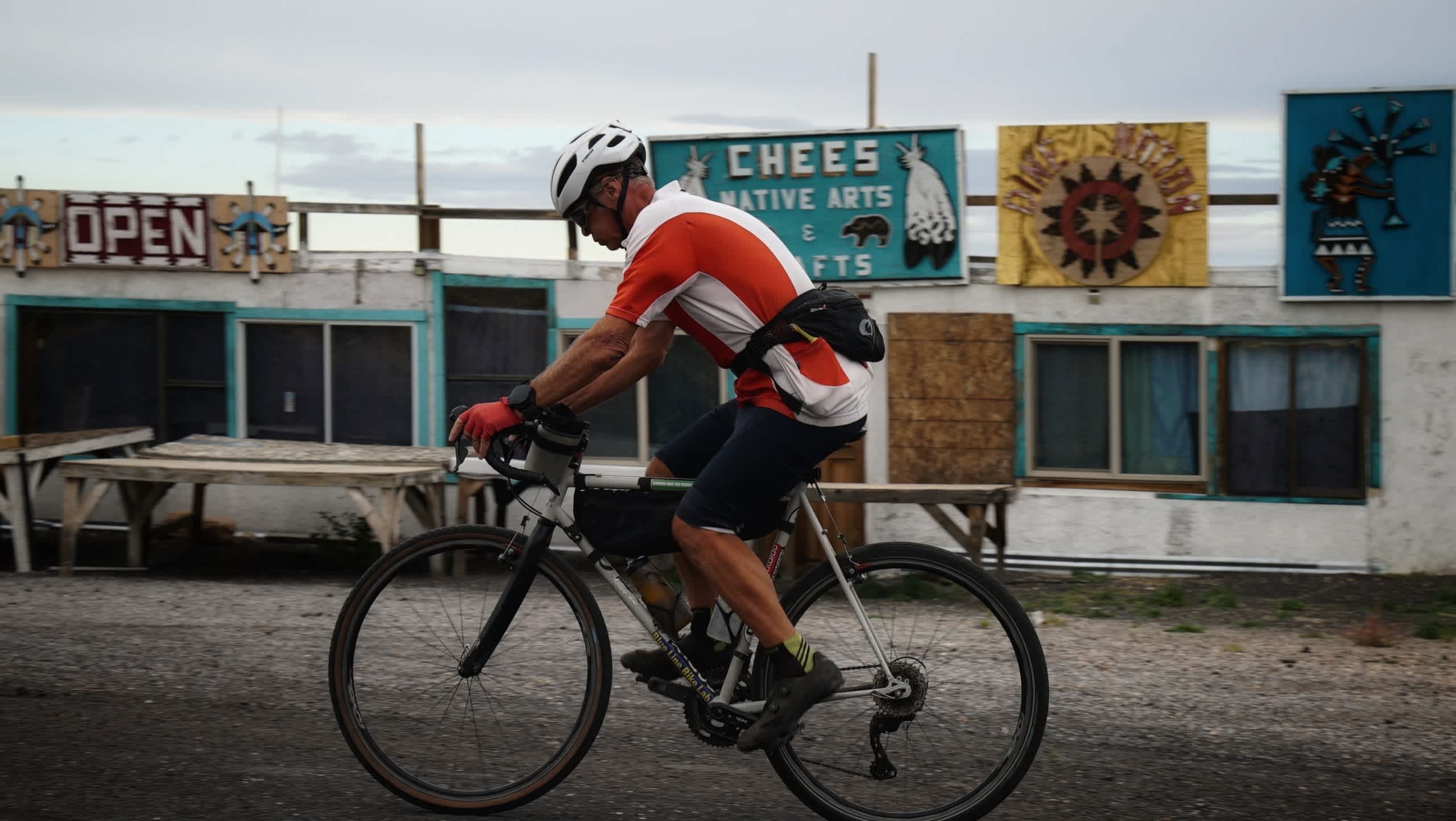
So sitting around a campfire in that town of Salome, celebrating an epic milestone in a trip that runs from July to December, it was nice to feel like we still had so much to go. So much more to explore, to learn and to unlearn, just as we’ve been doing in the States. We have declared ourselves immensely lucky to be riding through such gorgeous national parks as what seems like chaos unfolds around us – even the very parks we ride through have uncertain futures.
This journey through America has felt like a revelation; this territory we call the United States of America is a lot more nuanced, a lot quieter than a lot of us had known. The adventures of following the Rockies from Canada into the U.S. or entering the Sonoran desert in Arizona and exiting it in Baja California, they pull apart the notion of borders and see the land for what it is; simply land. It’s not just the country flooding the news networks, it’s also a large expanse of ancient territory, fascinating people and kilometres upon kilometres of some pretty great bike riding. From Canada to the U.S.A. to Mexico – it’s all one land mass, one ready to be explored and revered. Meaningless borders. Meaningless separation. Just one big vast beautiful (bike) ride.
Next up: Nos vemos pronto en México!
RELATED
TOUR
North American Epic
This incredible expedition is the only cycling tour that covers the entire North American continent, from the shores of the icy Arctic Ocean to the...
]]>
Paige White was the Content Creator on the 2025 North American Epic from Whitehorse to Fort St John.
Most of the travellers on the iconic Alaska Highway aren’t on two wheels. Stretching from Whitehorse, Yukon, southward to Dawson Creek in British Columbia, the Alaska Highway is steeped in history, built as a strategic military project during World War II.
By the time our riders made it to the second section of the tour, they’d already endured a wicked storm at the North American Epic’s starting line in Tuktoyaktuk. The reality of life on a bicycle had begun to sink in. When you’re on a bike for 128 riding days from the Arctic Ocean to Panama City, you risk misremembering some of the smaller details from the beginning of the trip.
Let’s share a few highlights from our riders on the Alaska Highway section of the North American Epic to make sure those moments stay alive and ensure that the beginning of this long trip is not so easily forgotten.
Luca Bortolami, Italy
Luca breaks records for the most sandwiches he can eat in a day. His record is 12.5, which he gets dangerously close to, day after day. When he isn’t breaking his own lunch records, he can often be found riding by himself at the front of the TDA pack – until one day he wasn’t alone anymore.
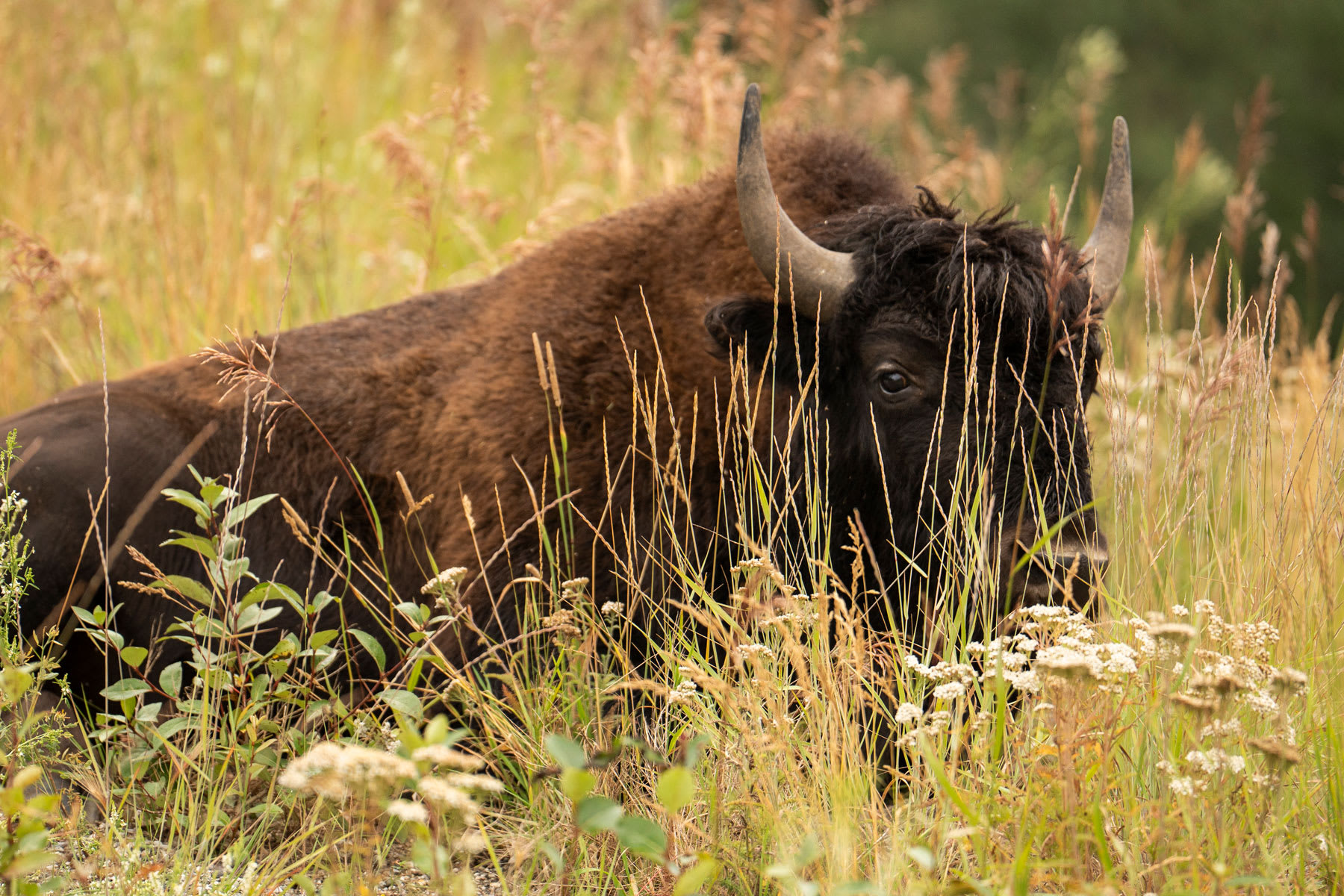
In Northern Canada of all places, Luca was reminded of a transformative experience he had in Kruger National Park, South Africa but this time it wasn’t a herd of elephants and he wasn’t in a world renowned national park. This time, Luca was on the side of a Canadian highway and now he had suddenly made friends with the largest Canadian land animal, the bison.
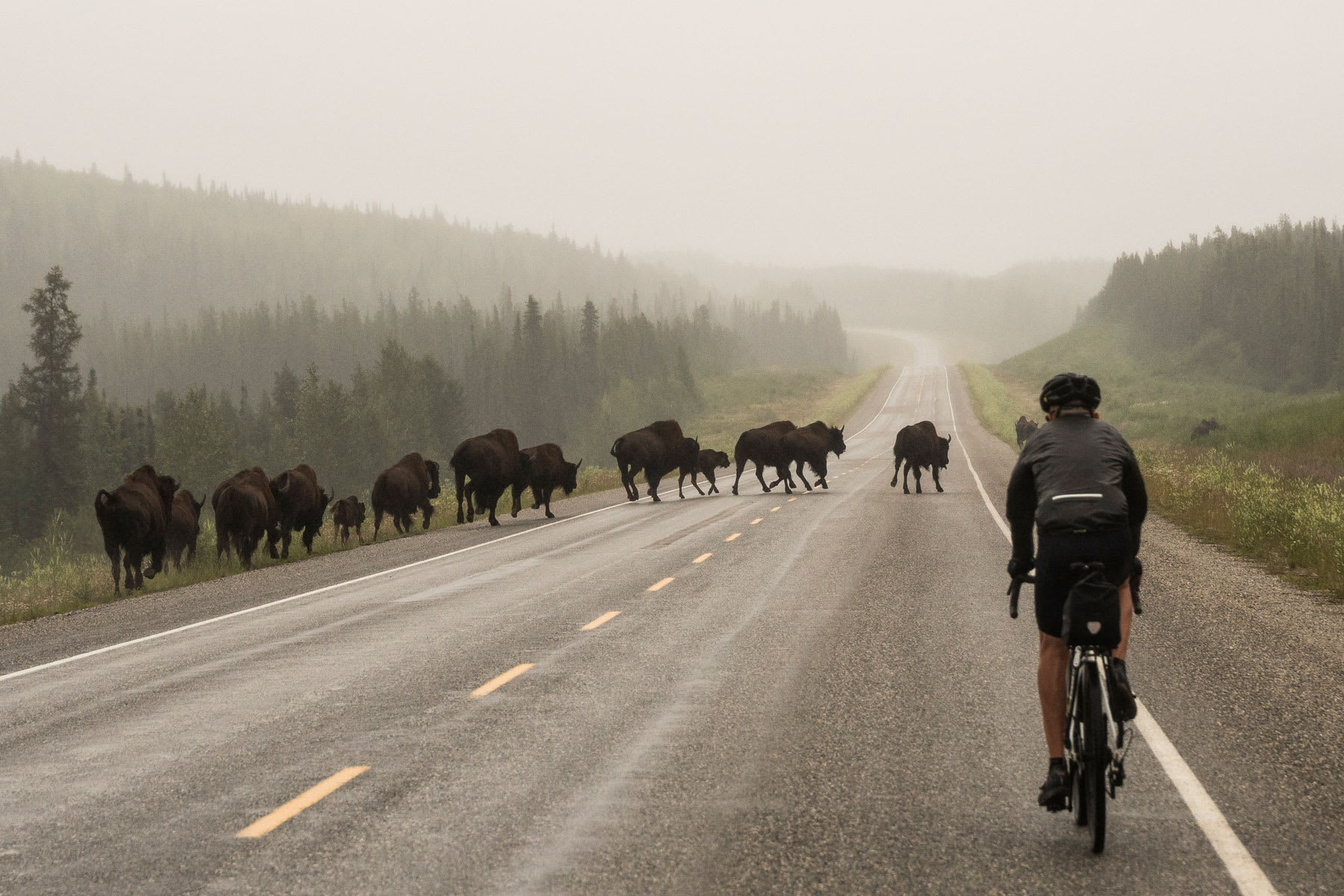
“They were so close and everything felt so peaceful. I felt like I was a part of the group with them, a part of the herd and it was a really beautiful feeling. I really enjoyed it and there was no fear or concern.” Luca had managed to go from riding solo to joining over 25 bison. Not only could you see him cycling side by side with these large animals but you could hear the rhythm of their hooves hitting the ground while they ran alongside him. He had the security of Tour Leader Britney cruising close behind him (after all, bison are large wild animals) so we were able to capture the moment on video and Luca can relive and share his special moment.
Kaye Hudson, New Zealand
Kaye is a seasoned rider, with the North American Epic marking her 10th tour with TDA. No matter how many tours you have done, if you sign up for an expedition tour you will still need a reliable tent and sturdy tent poles. Kaye learned this lesson the hard way and, after completing the first stretch of the tour through the Arctic, she stopped in Whitehorse on the rest day and bought a brand new tent.
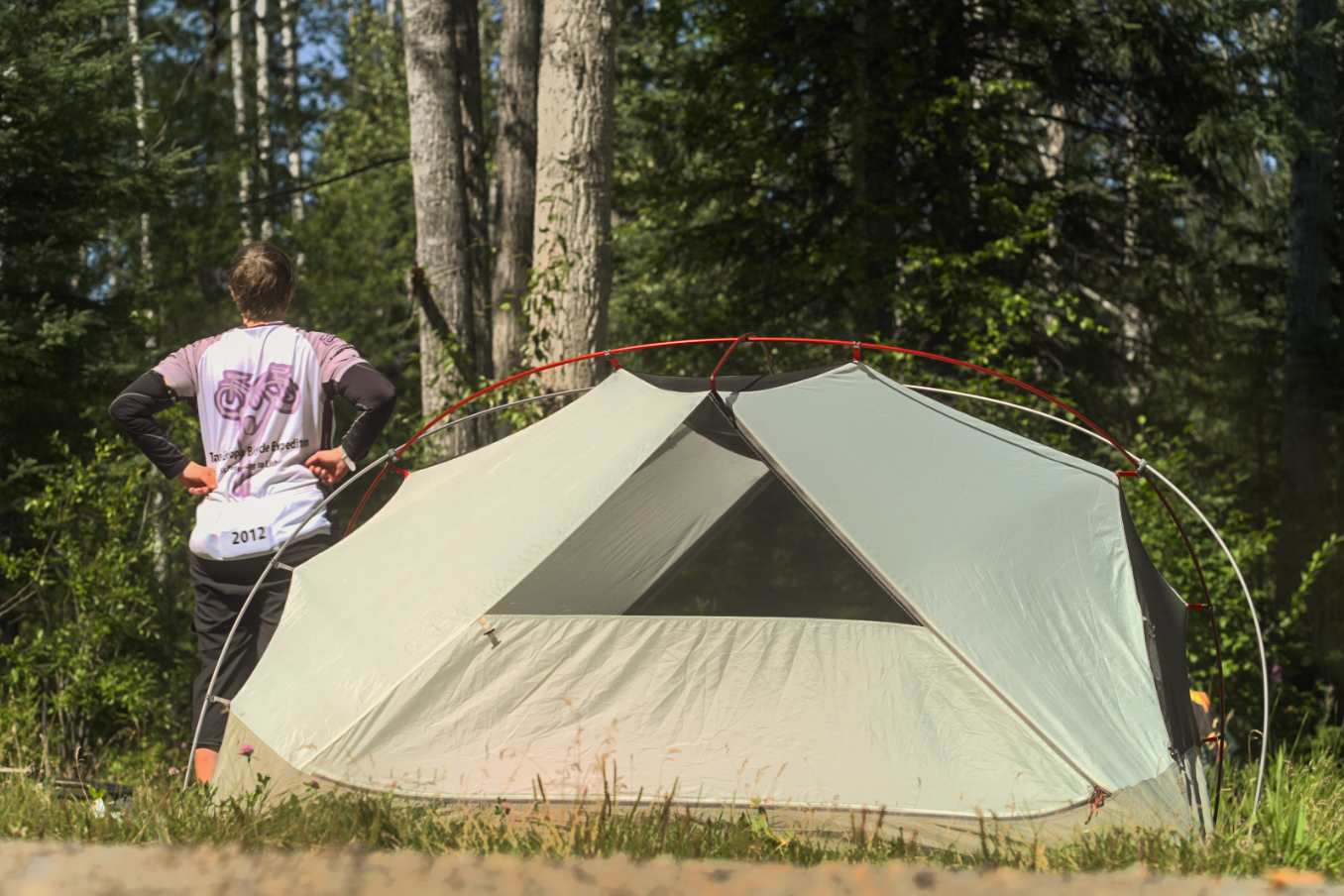
With her fancy new digs, Kaye left Whitehorse heading for the next stop, Squanga Lake Campground. No problems. From Squanga Lake, the next stop was Teslin, which is a gas station, motel, campground, laundromat, restaurant, a one -stop shop kind of campground. Leaving Teslin, Kaye arrived at the Continental Divide RV Campground for the night…but Kaye’s tent poles did not. After a minor freak out and with the reality setting in, Kaye managed to wrangle the campground owner to borrow their phone. He wasn’t incredibly enthusiastic but maybe he deals with a lot of city-slickers who can’t cope one night without cell service.
Kaye called Teslin and got a hold of the manager who was equally as unenthusiastic and uninterested in her dilemma, “I said look, a tent without poles is pretty useless and I really need it, could you please and go have a look for them and I’ll pay you for your time.” Some nervous waiting and one phone call later, she heard an enthusiastic, “Yep. I’ve got them” before facing the next problem, how to transport the poles to her. It turned out every evening there is a shuttle that passes through Teslin and conveniently passes the Continental RV Campground. “All was good. Until the shuttle arrived, and they were not on the shuttle. I talked to the shuttle driver and he said no one spoke to him about the poles.”
So Kaye called back to Teslin, again. This time a new woman answered. “Yep, yep, they are on the shuttle.” “Yep, yep – No they’re not. Can I talk to the guy who was going to put them on the shuttle?” Silence. “Oh ya, I missed the shuttle driver by about a minute. Don’t worry I stopped a couple of guys in a white Nissan asked them to drop them off.” Kaye, of course, thought she would never see the poles again as the Teslin manager couldn’t remember what time the Nissan left, and couldn’t make any guesses as to when the car might arrive.
Kaye got some camp chores done and sat near the road for an over an hour. Fed up and frustrated, she decided to go to bed, and then what does she see? A white Nissan. Just like that, Kaye walked back to camp, tent poles in hand.
Keith Elliott, United Kingdom
Keith loves to swim. In the lobby of the Super 8 Hotel in Fort Nelson you could hear the TDA crew cheering like sports fans and pounding their fists on the glass window while Keith was hitting the hotel water slide at full speed, with the energy of a toddler.
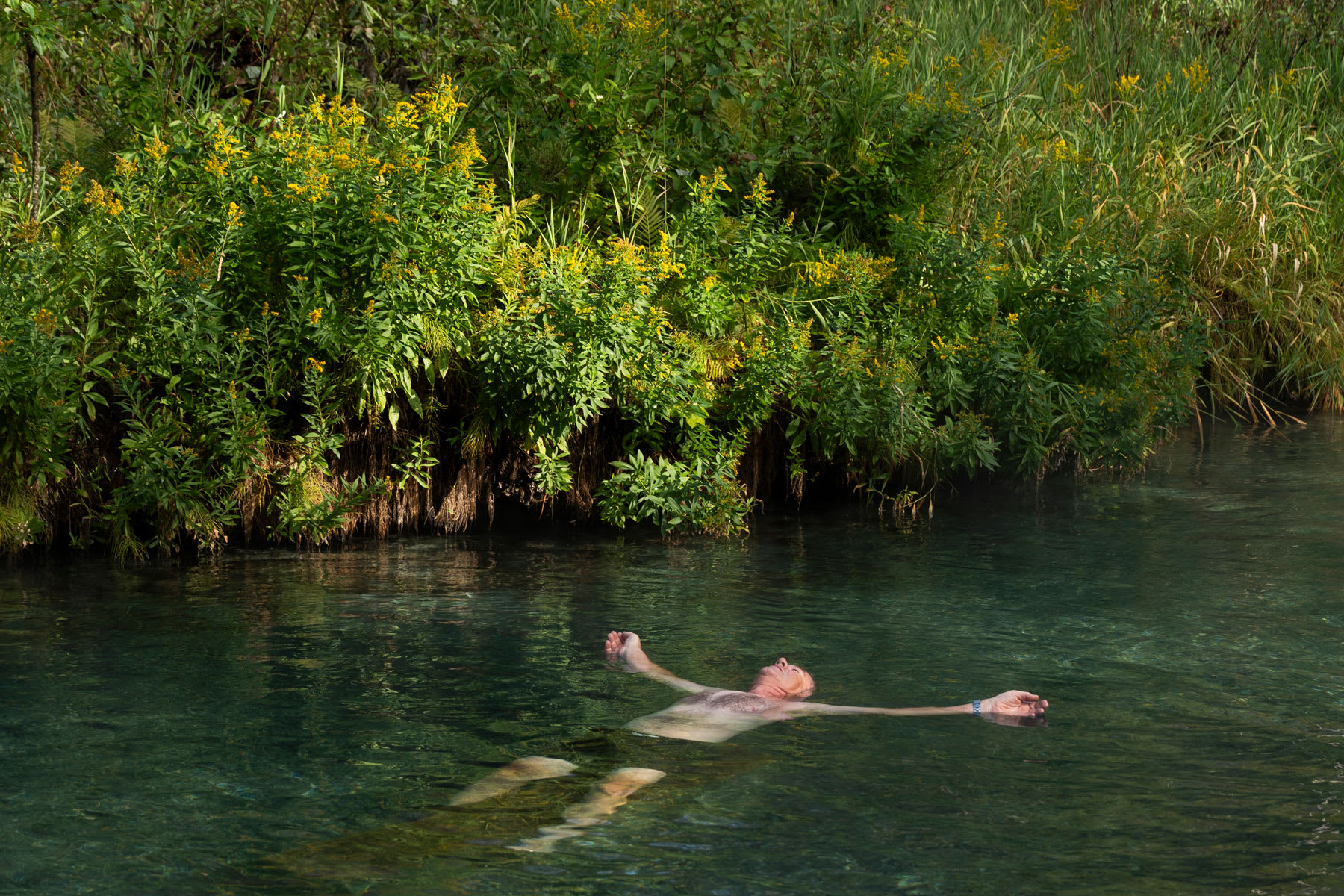
Keith says that he goes out of his way to make sure his TDA trips are about more than cycling and if that means a swimming stop, he’s always open to the possibility. Canada is the land of fresh water and lakes with no shortage of swimming spots but it isn’t everyday that you pass a natural hot spring. Liard Hot Springs, is a top tourist attraction, and Keith made sure to stop and peel off the lycra to enjoy a midday swim.
“On these trips I can relax and enjoy myself, I don’t have to think about the outside world and the reality of life. You can just get up and cycle, and do things like swimming. When I was a teacher I was very stressed at the end, and this is one of the best ways of de-stressing.” Lucky for Keith, the next rest day hotel also had a water slide.
RELATED
TOUR
North American Epic
This incredible expedition is the only cycling tour that covers the entire North American continent, from the shores of the icy Arctic Ocean to the...
]]>
Arjuna Boucher-Pertuisot was the Content Creator for the 2025 North American Epic from Tuktoyaktuk to Whitehorse.
Every great journey has a beginning. For the riders of the 2025 North American Epic, that beginning unfolded far above the tree line, where gravel highways carve through tundra and the sun forgets how to set. From the tiny town of Tuktoyaktuk on the shores of the Arctic Ocean, this 165-day, 13,800 km cycling expedition will eventually reach Panama City…but before the jungles and volcanoes, comes the Arctic Spirit.
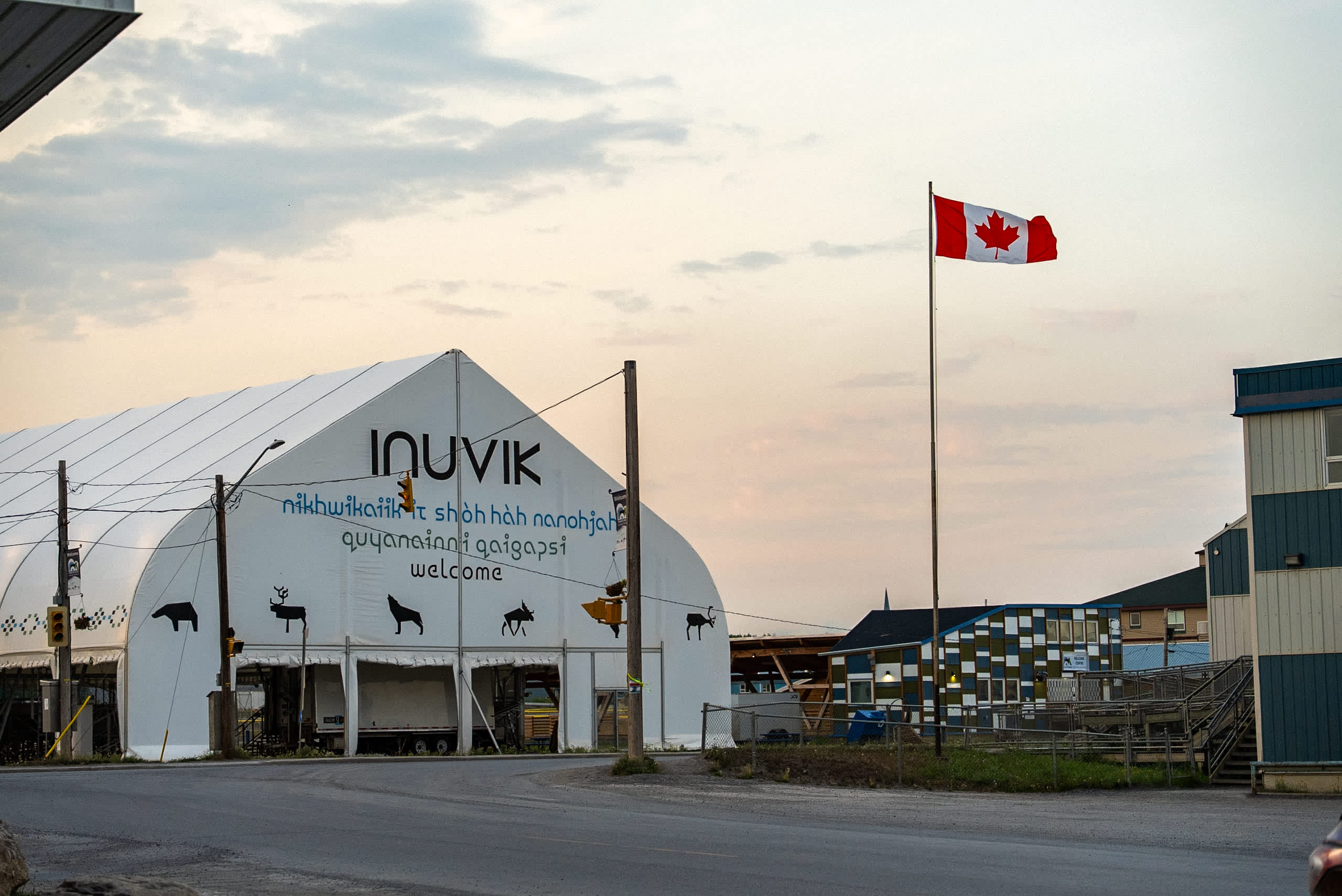
It all started in Inuvik, Northwest Territories. A crew of eight prepared to welcome seventeen riders from around the world. Bikes were assembled. Gear checked. Spirits buzzed under skies that never darkened. The real journey, through gravel, remoteness, and raw beauty, was just about to begin.
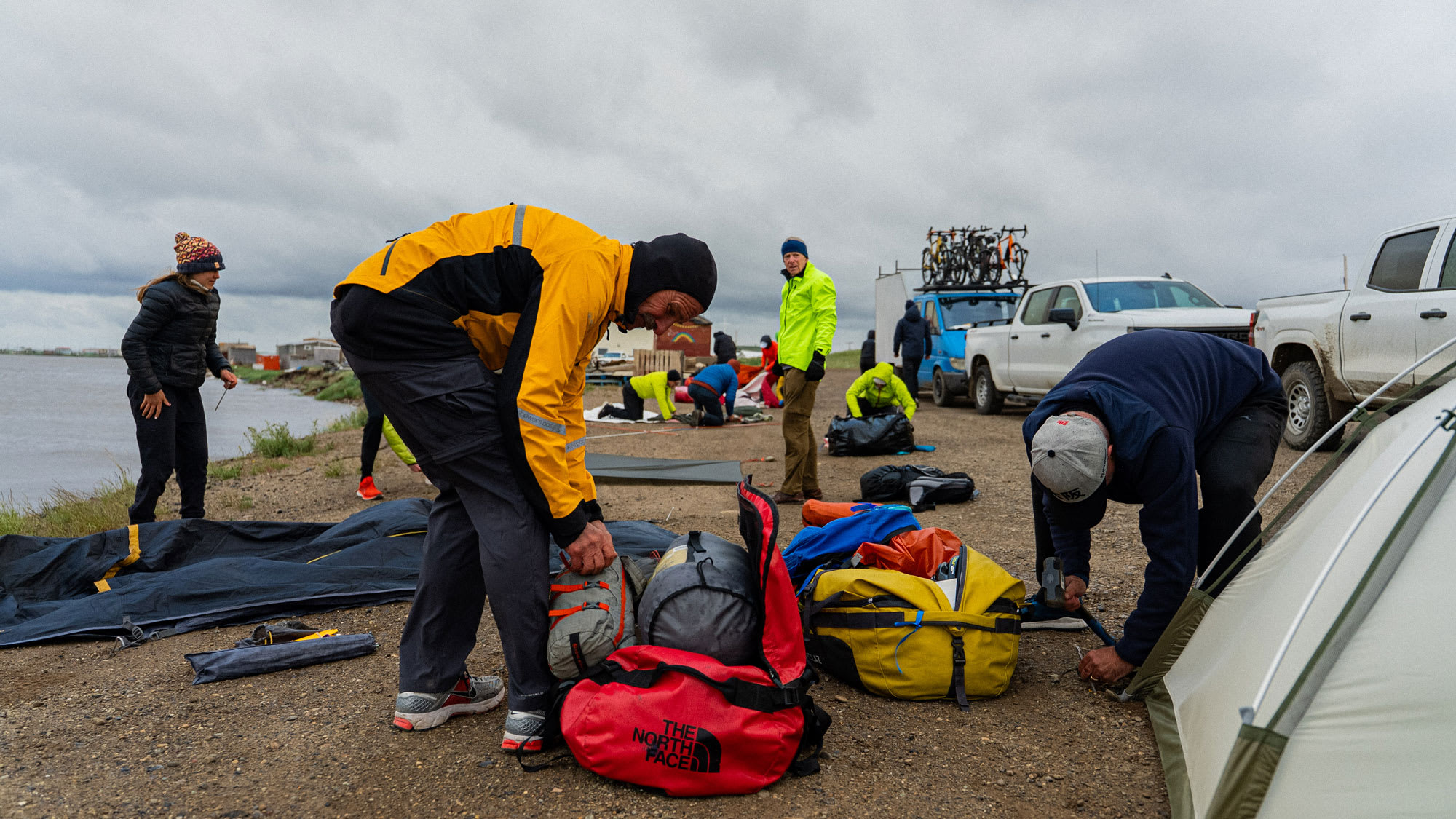
Tuktoyaktuk welcomed us not with calm, but chaos. As we arrived, a rare once-in-a-summer storm swept in. Tents flew. Rain slashed sideways. The Arctic Ocean howled in our ears. “This is some serious Type 2 fun,” laughed Tour Leader Britney, soaked but smiling. A young local guide shrugged: “We don’t see this kind of weather often… I guess you’re the lucky ones.” That night, something shifted. The storm didn’t just test us, it forged us. Laughter in wet socks. Huddled jackets. Strangers turned into teammates in minutes.
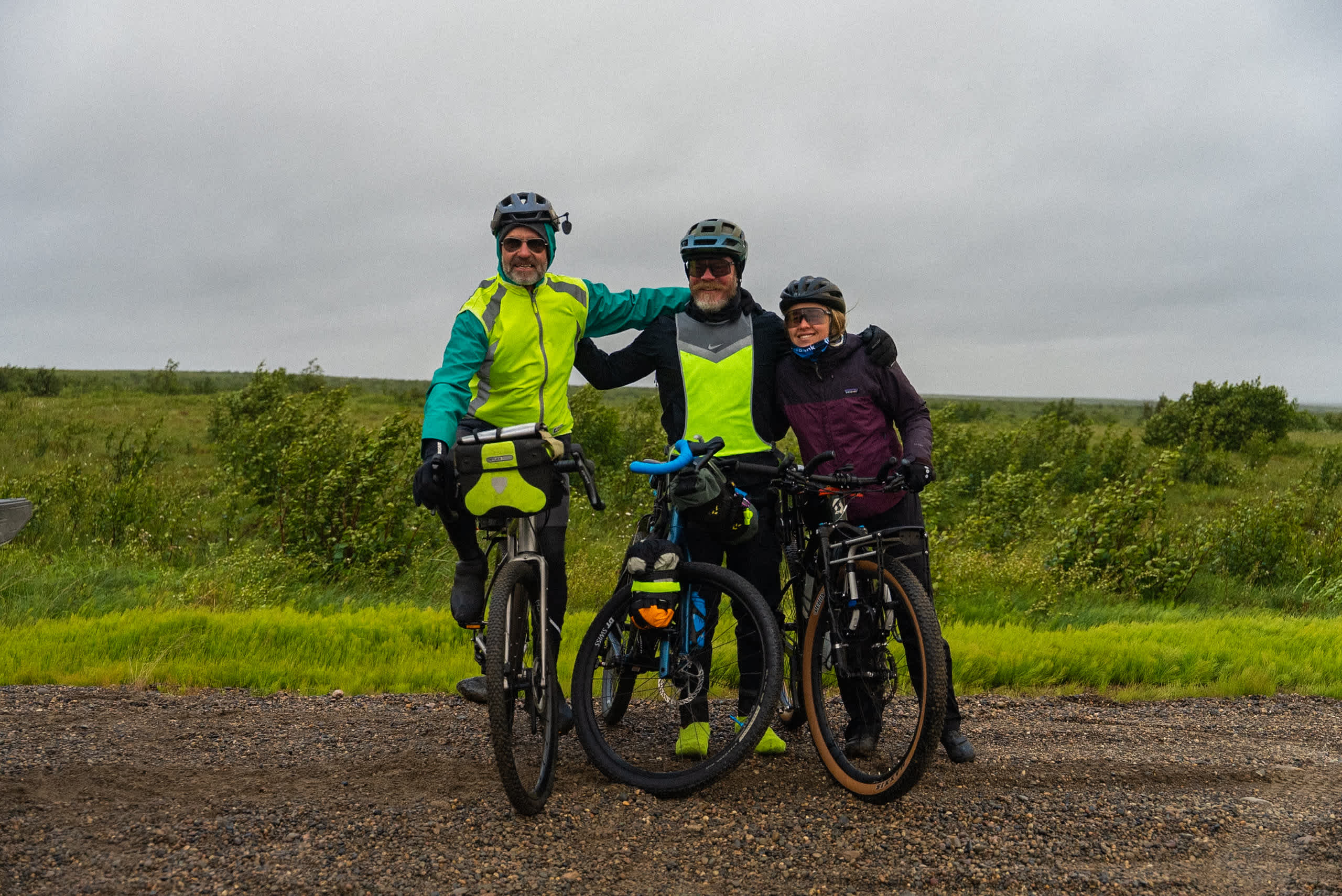
Only three riders clipped in for the first ride – Richard from France, Peter from Australia, and Jessica, our medic from South Africa. They pedalled 70km through the wind back to Inuvik. “It was rough,” said Jessica, “but honestly… I’d do it again. Something about that road just grabs you.”
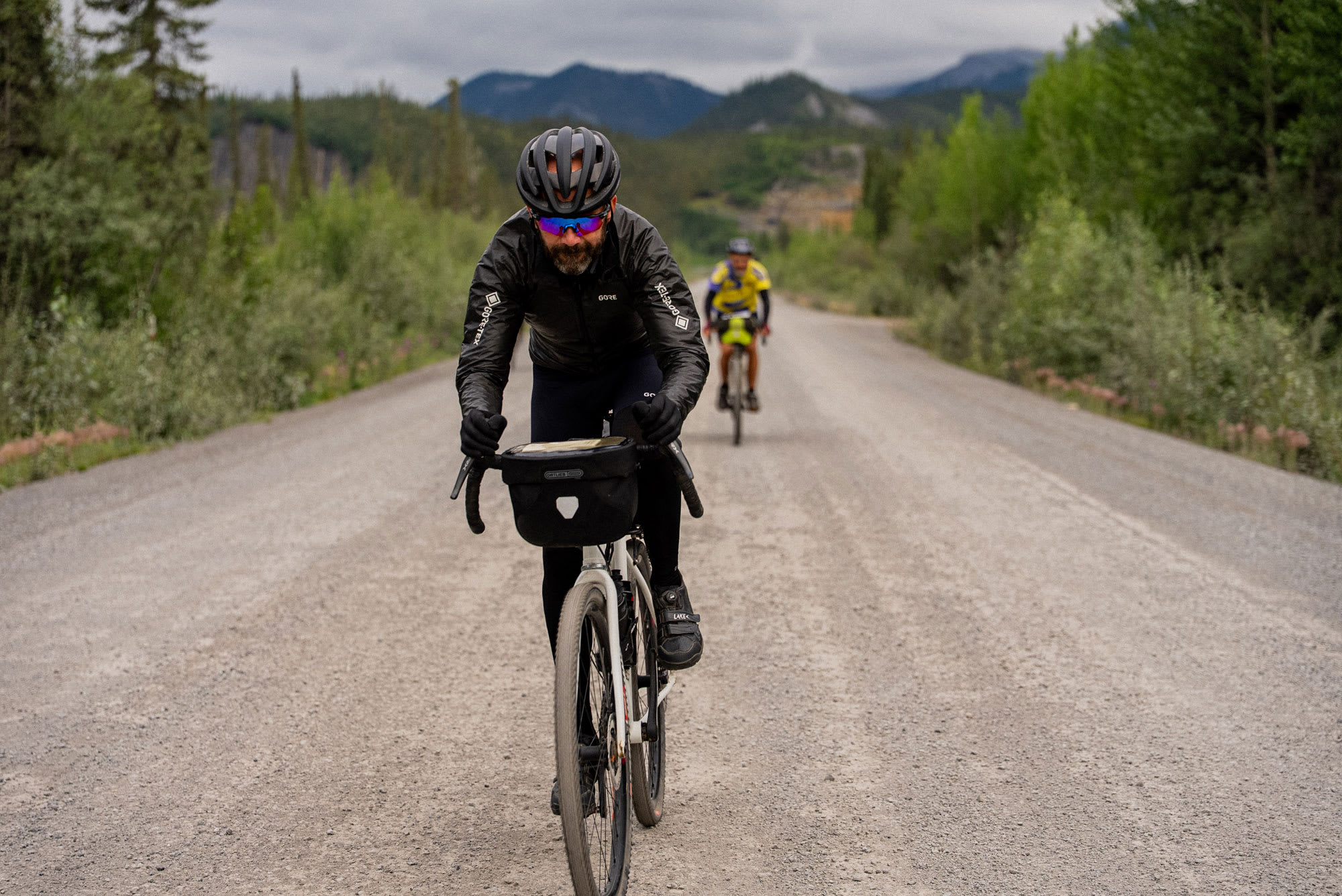
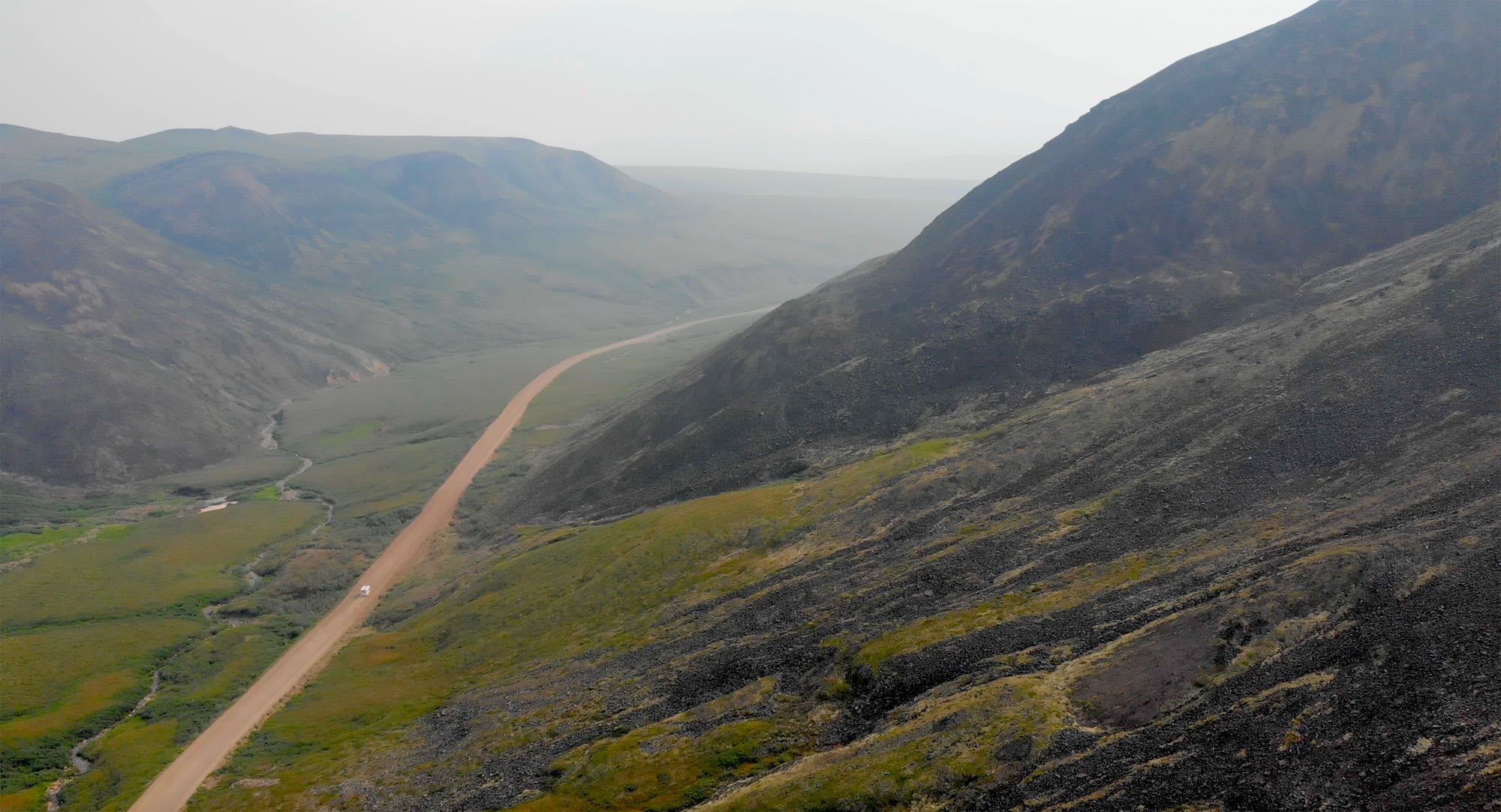
Then came the Dempster Highway. The gravel legend. Remote. Rugged. Beautiful. Each rider found rhythm in the silence: pedal, breathe, camp. No service. No towns. Just dust, wilderness, and a growing sense of presence. “I’ve never felt this disconnected,” one rider said, “And I’ve never felt this present.” We rode through bear country. Carried bearspray. Made noise. Watched shadows in the trees. One evening, a grizzly wandered near camp. No panic. Just awe. “I’ve never felt so small and so alive,” someone whispered as the bear slipped into the forest. On the Dempster, fun took many forms. Type 1, 2, sometimes 3. Wet socks. Dusty lungs. Cold rivers. Glorious sunsets. Hard to explain, harder to forget. “It’s the kind of hard that makes everything else feel small,” one rider said, “And the kind of beautiful that stays with you.”
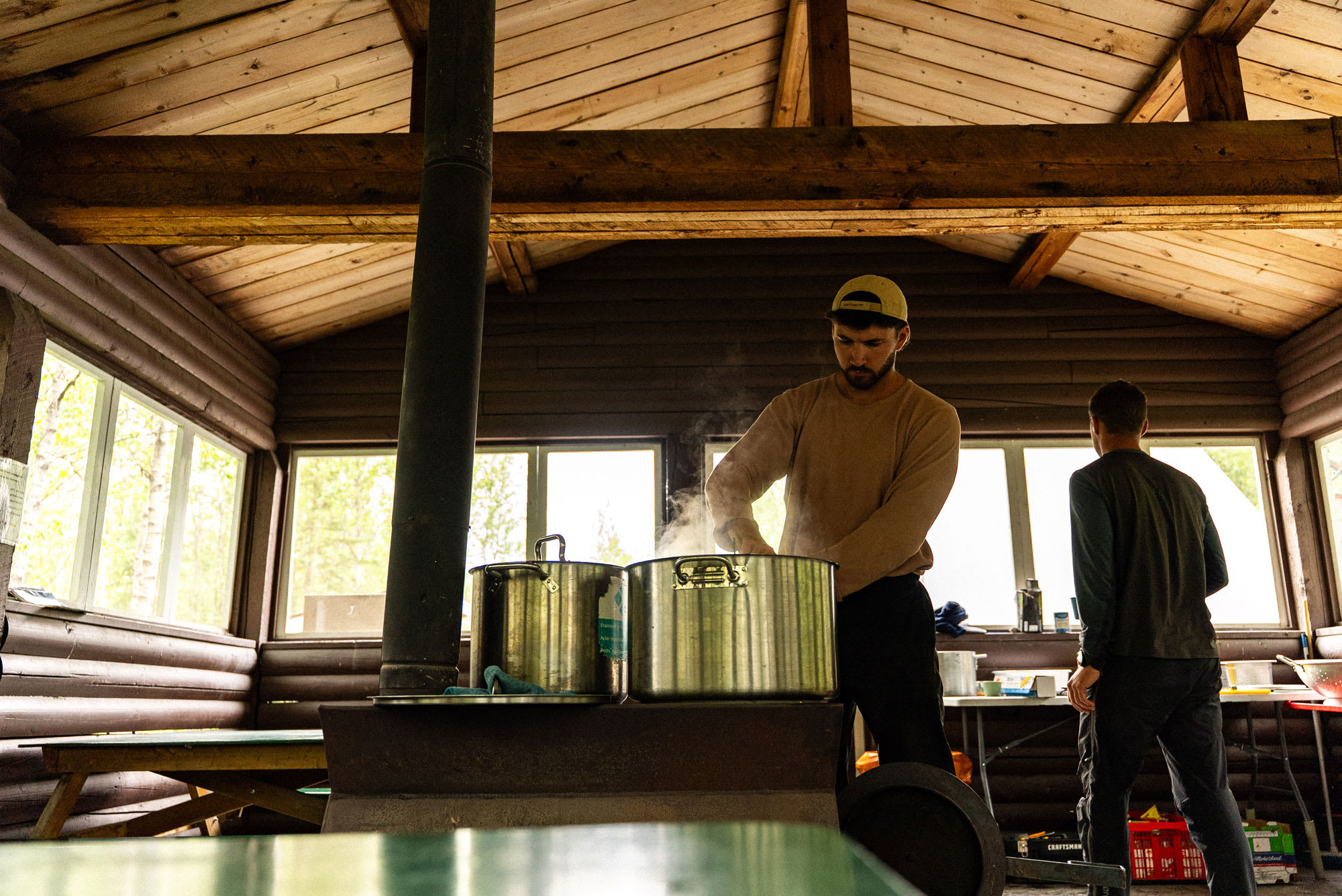
Out here, food is more than fuel, it’s morale. In a place with no stores, no cold drinks, and no chance of restocking for nearly two weeks, Chris became the heart of camp. It was his first TDA tour, and he had big shoes to fill, but not without support. Colleen, a TDA culinary legend with years of experience on tours around the world, was by his side for the first stretch, guiding, mentoring, and passing on the art of feeding hungry cyclists in the middle of nowhere.
With limited ingredients and creative calm, Chris turned dinner into daily magic. A warm bowl of chili after a cold ride. Thai curry on a rainy evening. Indian dhal or one of his many rotating soups, each dish waiting like a reward at the end of a long, dusty day. It wasn’t just impressive, it was grounding. “I didn’t expect to eat this well in the middle of nowhere,” one rider laughed. “Chris is a wizard.” From July 11 to 23, there were no Coke stops. No cafés. No bakeries. But there was Chris, showing up each day, reminding us that care can travel, and that even on the hardest roads, food has the power to bring people together.
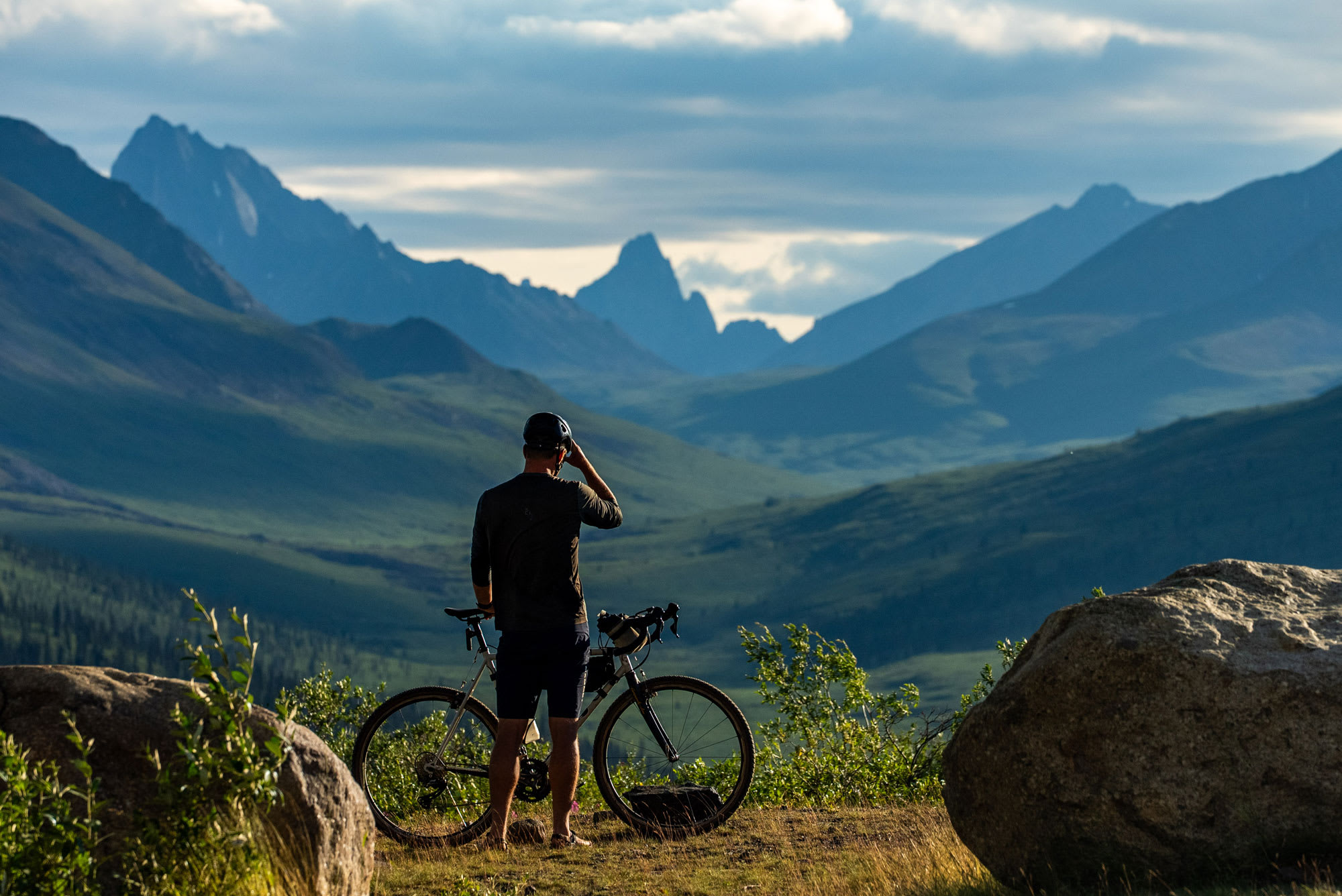
Through Tombstone Territorial Park, the peaks rose like jagged teeth. The climbs were steep, the views unmatched. “This is why I signed up,” a rider admitted. Camp that night was quiet, not from fatigue, but reverence. And then, tarmac. After hundreds of kilometres of dust and rattle, the Dempster ended in smooth blacktop. One rider dismounted and kissed the pavement. “I didn’t know it was possible to miss pavement this much,” someone joked. We laughed, knowing we’d earned every metre of it. But not everyone was ready to let go. “There’s something about gravel,” one rider said. “You feel more present. More connected. It demands more, but you notice more.” The gravel had texture. Fast-packed ridges. Loose, chunky climbs. Mud. Champagne gravel that made you float. Leaving it behind wasn’t just comfort, it was a shift. A goodbye to the rawness that had shaped us from the start.
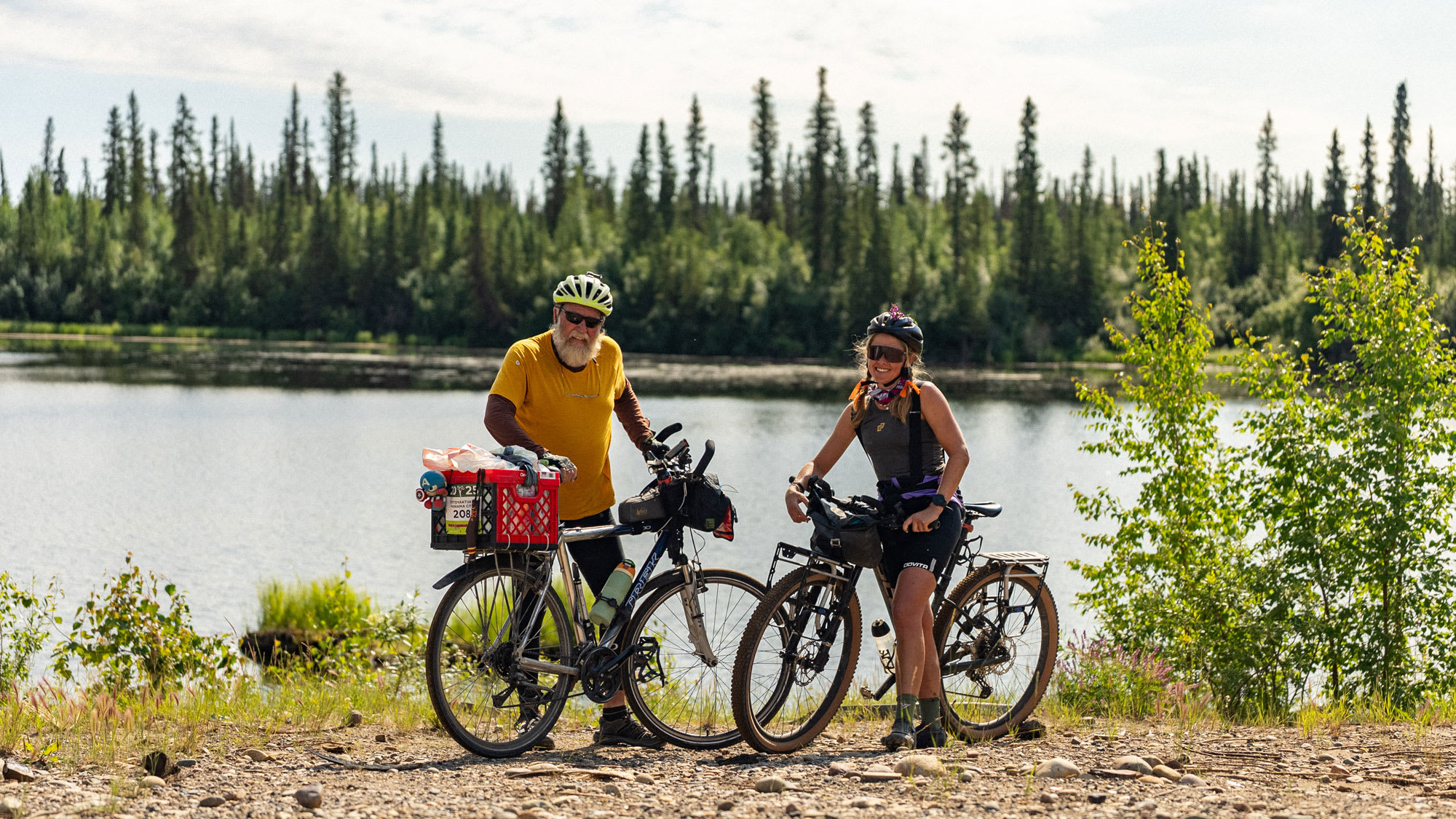
From Dawson to Whitehorse, the land changed again. Fire-scarred hills bloomed with fireweed, pink and purple waves of resilience. “This stretch had it all,” said one rider. “Weather, beauty, grit, joy, and so much fireweed.” By the time we rolled into Whitehorse, legs were tired. Hearts were full. The Arctic Spirit had tested us, and transformed us. But more than the road, it was the people who made it unforgettable. A crew that led with heart. Riders who lifted each other through wind, rain, and silence. From stormy tents to midnight mountain views, we became more than cyclists, we became a crew. If the Arctic has a spirit, maybe it’s this: to push you just far enough… so you can discover what’s waiting inside.
RELATED
TOUR
North American Epic
This incredible expedition is the only cycling tour that covers the entire North American continent, from the shores of the icy Arctic Ocean to the...
]]>
The United Staes Of America is more than just the land of the free and the home of the brave. It is also one of the best places in the world to go long distance cycling. The North American Epic Cycling Expedition begins in the Canadian Arctic and ends in the rainforests of Central America but the core of the trip takes place in the USA, taking riders through the great states of Montana, Idaho, Wyoming, Utah, Colorado and Arizona.
The route takes the riders from the mountains and alpine forests of Glacier National Park, through vast ranch lands and past the headwaters of the historic Missouri River and famous Yellowstone Park. It then traverses both the Grand Teton Mountains and the remote High Chaparral before passing through the spectacular scenery in Monument Valley and the beautiful desolation of the Arizona desert.
These three sections of the North American Epic Cycling Expedition will take you from north to south across the USA. Choose 1, 2 or all 3 and enjoy the best of America’s west from the seat of your bicycle.
Road To The Sun (Banff – Helena)
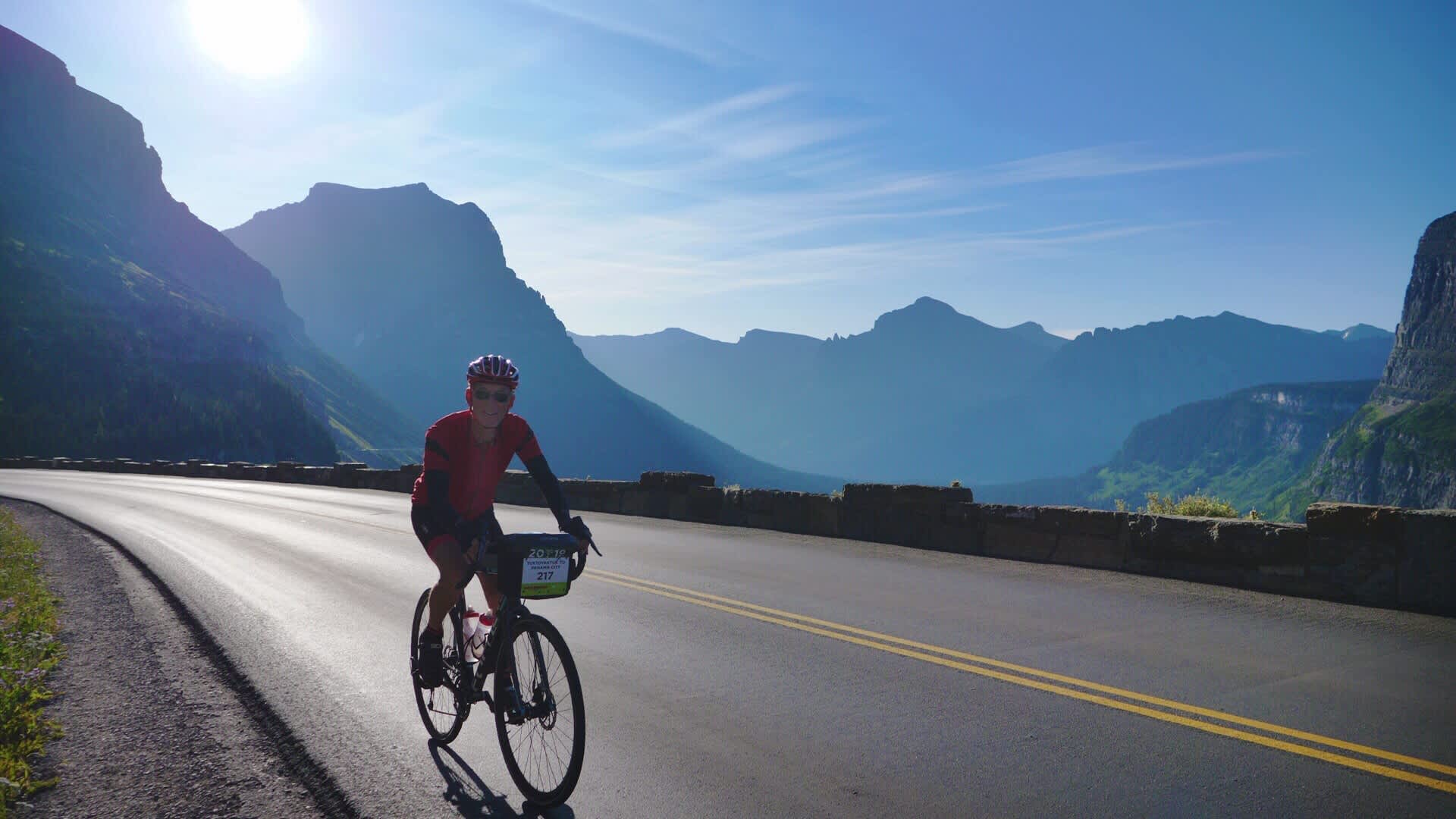
“Below was a stunning series of valleys and a spectacular road that carved along the very edge of the mountain. Our gang were joyous. The excitement was palpable. For the next hour, we swept down towards the valley below, gravity handling all the pedalling. At the small village below where we all stopped for coffee, there was a euphoric buzz circulating amongst our riders. Mother Nature had gifted us a thrill of a lifetime.” – Cycling The Road To The Sun On The 2022 North American Epic
The Great Divide (Helena – Moab)
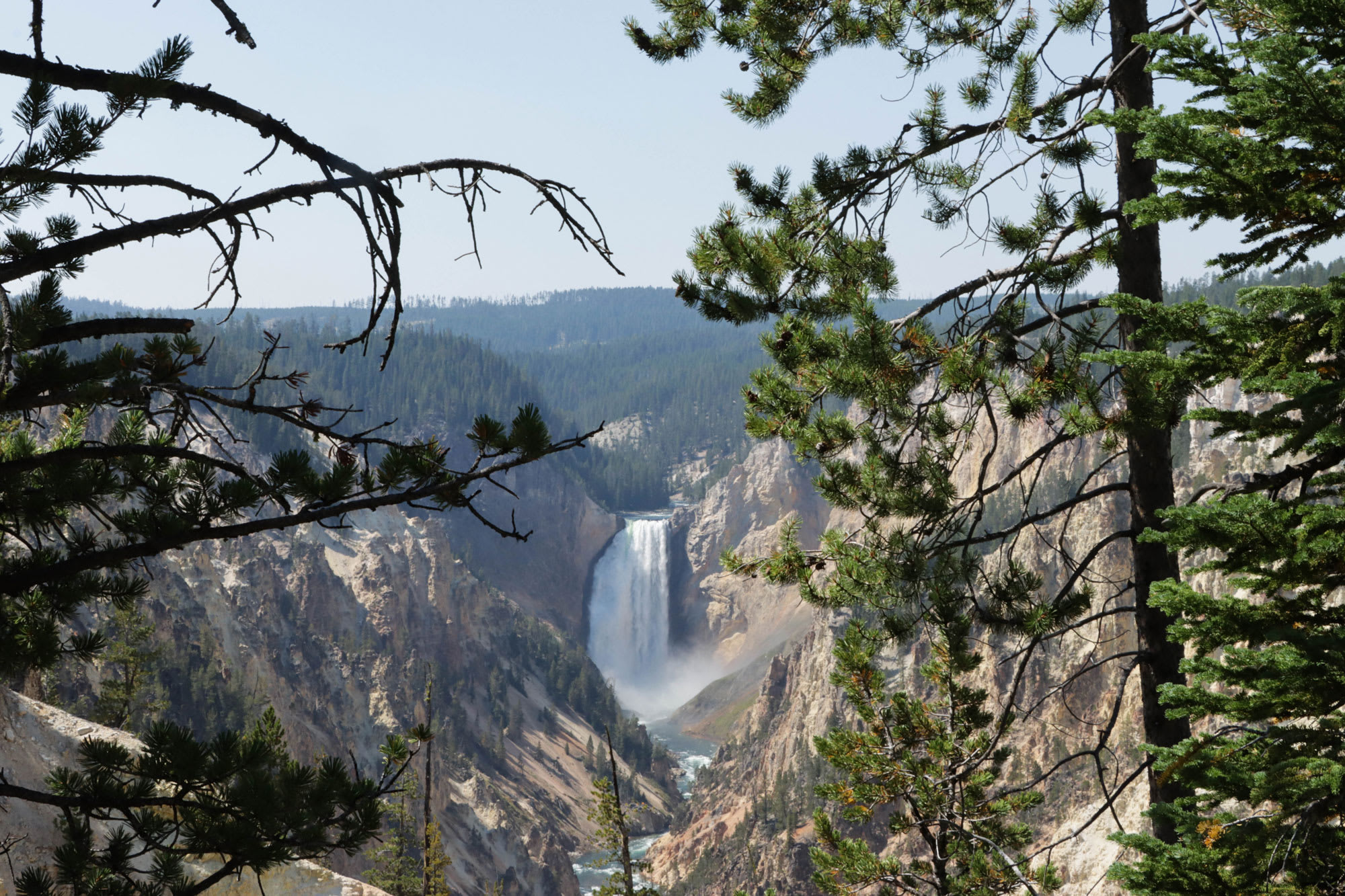
“‘Howdy stranger. Yonder is Jackson Hole. The last of the Old West,’ reads one of the welcome signs for the town of Jackson Hole in the state of Wyoming. It is here that the old west begins to be felt in the architecture, the streets, the photographs and paintings that adorn the buildings, as well as in the landscape where horse stables abound. On our way south it’s not hard to fantasize about gunslingers, stagecoaches, outlaws and legends, as there are several old vintage pieces displayed.” – Of National Parks, Cowboys & Dinosaurs
Canyonlands (Moab – Yuma)
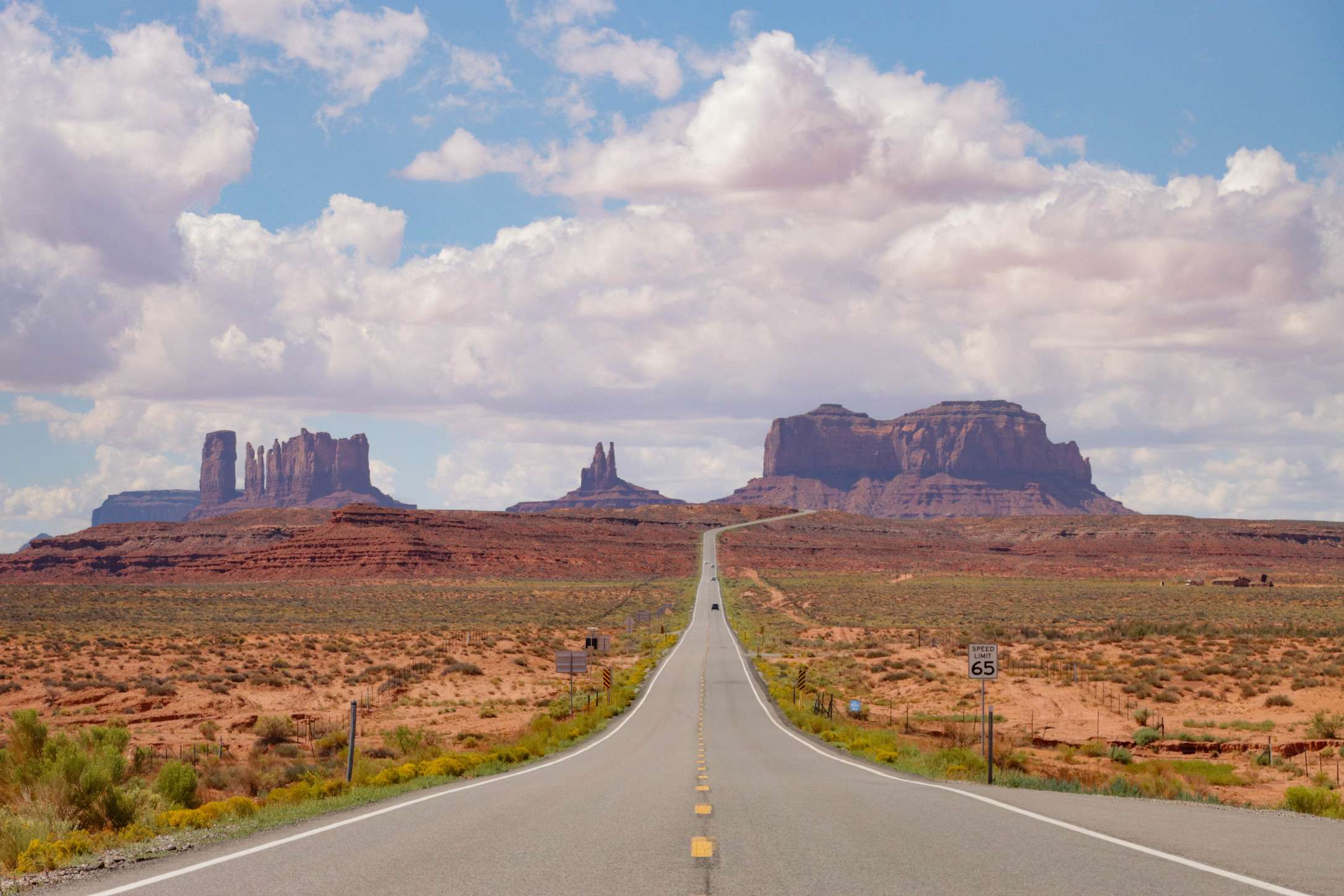
“Almost all of the riders and staff on this tour remember the day we arrived in the ‘Land of Canyons and Fire’ – a Mars-like vision appearing before our eyes. Our jaws dropped and our pupils dilated. The mere sight of this rocky, red expanse burned into our eyes, appearing as though in a dream…we rode through a desolate landscape, but soon encountered a drastic change of environment: rock towers piercing the blue sky along narrow gorges, and canyons amongst a fire-red desert of plateaus.” – Canyonlands
RELATED
TOUR
North American Epic
This incredible expedition is the only cycling tour that covers the entire North American continent, from the shores of the icy Arctic Ocean to the...
]]>
Sime Baricevic, our Content Creator on the 2022 North American Epic Cycling Expedition, has had some time to reflect on his assignment and to create a longer form video about his experiences in the far north of Canada. As both the filmmaker and the narrator, Sime examines this unique landscape, its people and the cyclists who took part. His 2-part, 34 min video can be found at the end of this blog.
Even though having TDA Global Cycling as an employer puts you in a very adventurous, laid-back environment, there are still rules that exist and structures that need to be followed. With all that said, as a content creator, from the very first moment of my assignment, I never had the feeling that anyone would be keeping me from expanding my creativity beyond my assigned tasks.
 It is quite hard as a ‘one man show’ to commit to long edits while on the road, especially on remote tours like the North American Epic where the internet and electricity are hard to come by. For that reason, most of the video content created during the tour ended up being limited to about 3 minutes in length.
This is why, when I finally completed my assignment, I decideed to put these two longer form videos together. The goal was to try and bring the real atmosphere of the tour closer to the average viewer.
One might watch the video of someone cycling 150 km per day with a smile on their face and be intimidated, thinking – wow, this must be a superhuman! But if they see the same person struggling with daily obstacles like mosquitos, dust, heat, cold, exhaustion… they might think – hey, I am no different than this person!
There are a few things that make Canadian North special. Being there during the high summer when the sun never sets is one weird and quite special feeling. Another thing is the remoteness. Surprisingly, on the Arctic Spirit section of the North American Epic, the least isolated feeling I got was at the furthest point, in Tuktoyaktuk and Inuvik. Inuvik is a completely functioning town with a decent sized airport, well connected with the rest of Canada. It was the space between Inuvik and Whitehorse that actually seemed like the middle of nowhere. There wasn’t a single day where I didn’t look into the distance and wonder if anyone had ever stepped foot on that mountain or hill or if anyone had ever enjoyed a dip in one of the endless lakes.
For someone who’s thinking about cycling in the Canadian North, I would say, be prepared for the moments during the day when you, either alone, with your partner or in a group, find yourself surrounded by nothing but an empty landscape. It might seem like you’re the last person in the world at some point. If you do, take a deep breath and enjoy it as there are very few places left in the world where you’re still able to feel that way.
RELATED
TOUR
North American Epic
This incredible expedition is the only cycling tour that covers the entire North American continent, from the shores of the icy Arctic Ocean to the...
We have run the North American Epic 4 times – twice from Anchorage, Alaska to Mexico City, Mexico and, more recently, twice from Tuktoyaktuk, Canada to Panama City, Panama. It is certainly a memorable cycling adventure. As Canadian rider Chris Wille put it after his journey in 2019, “From the shores of the Arctic Ocean to the Panama Canal – Beluga whales and bison to monkeys, sloths, Macaws and toucans- Truly the trip of a lifetime! What better way to experience the North American continent with all your senses? The people, the culture, the landscapes – priceless!”
We are excited to be running the North American Epic again in 2025, beginning on the shores of the Arctic Ocean in the isolated Inuit village of Tuktoyaktuk and finishing in bustling, cosmopolitain Panama City, on the banks of the Panama Canal. Here are 10 blogs from the past tours that should convince you to sign up and be part of this incredible cycling expedition.
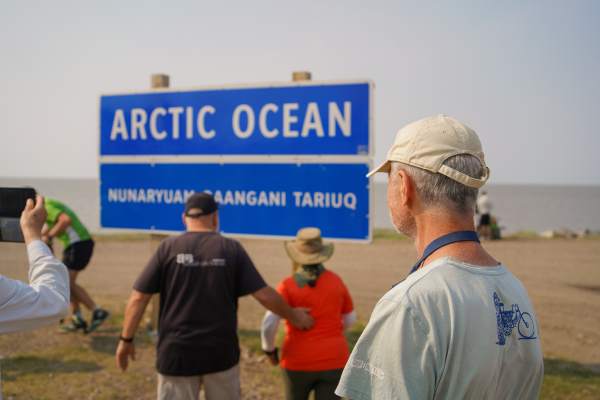
1 – On The Shores Of The Arctic Ocean: Pingos, Metallica & Muktuk

“The 2015 North. American Epic started in Anchorage, Alaska and finished in Mexico City, Mexico. It was a pretty epic ride – 10,000 km, 116 days & 3 countries. No need to change anything, right? Well, somehow we got word that the Canadian government was building a new road between the Arctic hamlet of Tuktoyaktuk and Inuvik, thereby connecting the rest of the North American road system with the shores of the Arctic Ocean. A lightbulb went off in our collective TDA hive mind and before you could say, let’s think this over, we had sketched out a new North American Epic route, one that would start in Tuktoyaktuk and continue south, all the way past Mexico City, to Panama City – 14,500 km, 165 days & 9 countries.” (Read more)
2 – Cycling The ‘Road To The Sun’ On The 2022 North American Epic
“After nine spectacular days in the company of TDA’s North American Epic, I realized that I had hit a home run. My cycling adventures hinge upon 3 distinct objectives. First I’m seeking to share time and the road with avid cyclists from every corner of the planet. Social interaction and friendship are something I truly value. I enjoy people; people of all shapes, sizes and colours; people with all of their quirks, smiles and laughter. Secondly I’m seeking a physical challenge with the bike. The sights, smells, rain and sun transform this form of activity into a magical adventure; day after day after day. The third and final piece for me is “light”. I want to ride where the light, clouds and landscape join forces to produce a surreal display that only nature can bring.” (Read more)
3 – Redefining Mexico
“Maybe you think that in Mexico we only eat tortillas, tacos and beans. However, after visiting a few Mexican restaurants or street food stalls, the taste buds of the riders were met with an explosion of flavours from the various Mexican dishes and ingredients. The culinary diversity that the country possesses is impressive, so much so that it is considered a Cultural Heritage of Humanity by UNESCO.” (Read more)
4 – The Other People
“Today, like every other day, starts with the clanging of pots. Tom has turned on the burners, he’s up so early. Maybe he never sleeps. Boil water, big pot, small pot. Someone has been hiding toffees everywhere. I eat one. It’s not poison. Wash wash. Big pot small pot.” (Read more)
5 – South Africans In The Great White North
“Over the years TDA Global Cycling has sent almost 1,000 Canadians cycling through Africa, many of whom were visiting Africa for the very first time. We’ve heard all kinds of intriguing feedback from them about their adventures in Africa, but this article isn’t about Canadians in Africa, but rather about Africans in Canada.” (Read more)
6 – 10 Reasons To Cycle North America From Top To Bottom
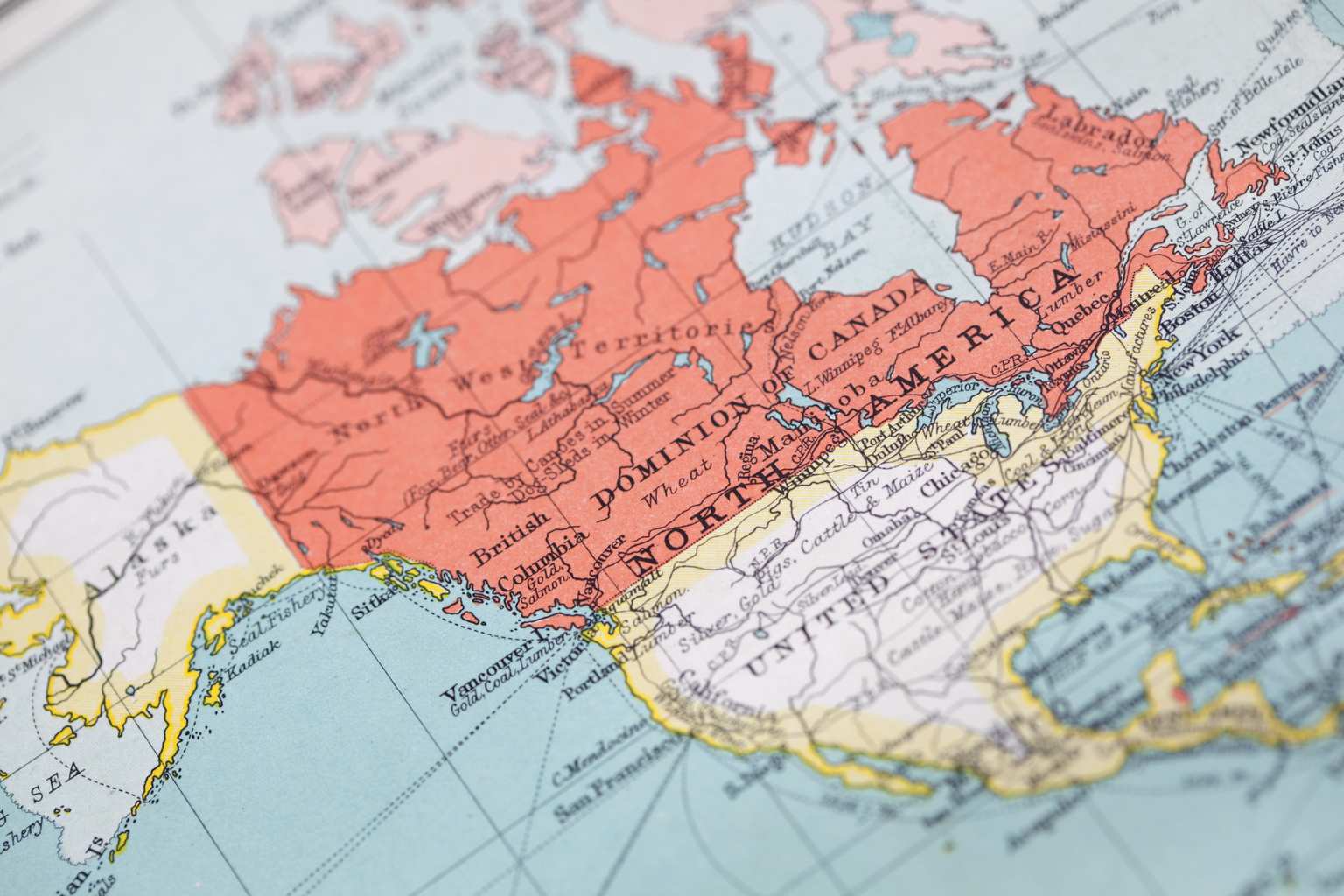
“To be able to cycle from the northern most reaches of our continent to its southern end seemed irresistible for some who signed up immediately. But the NAE is more than just a trans-continental journey on 2 wheels. The route includes some of the world’s premier national parks, and historically significant sites.” (Read more)
7 – The Yin & Yang Of Camps & Hotels
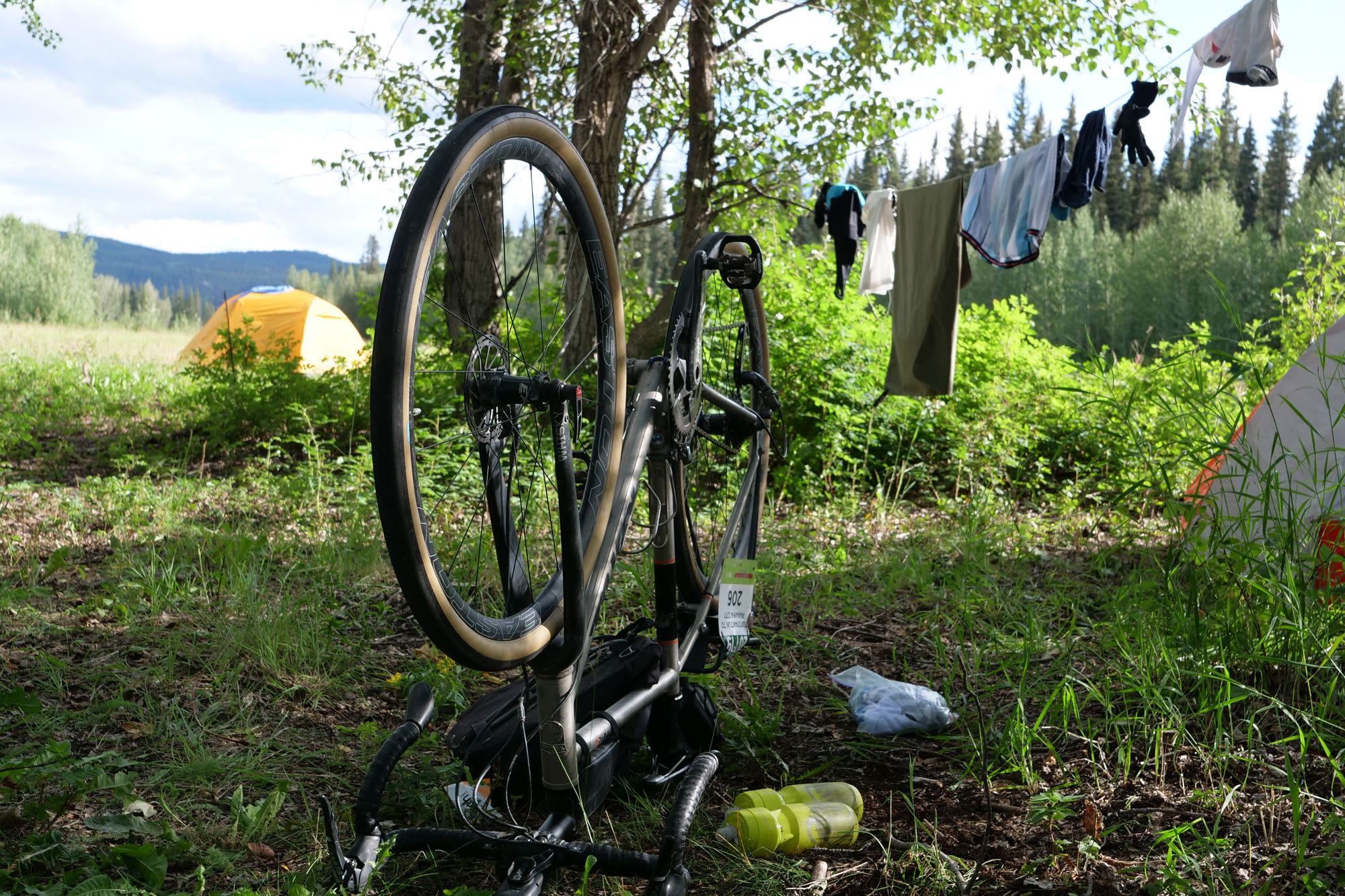
“I love waking up to the sight of the sun and to the sound of the wind. I love falling asleep to a sky full of stars with light rain overhead. I love the freedom to pitch my tent anywhere I choose, and to customize it to my liking. I love cooking on an open fire. I love a cold beer by the river with new friends. I love watching the animals, big and small, share the open environment with me. I love reading my book by flashlight. I love disconnecting from the rest of the world.” (Read more)
8 – A Lesson On North America Through A Geographer’s Lens
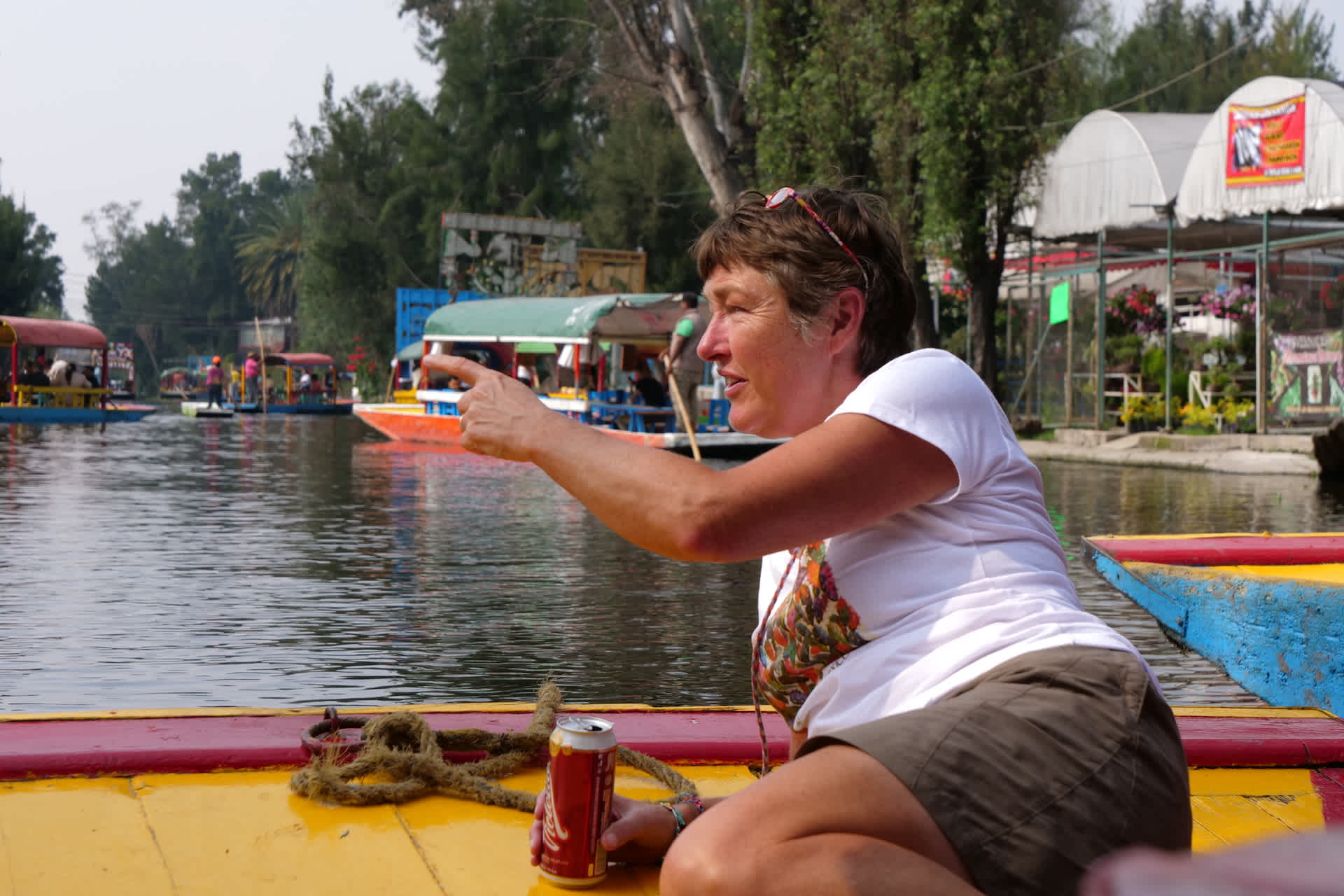
“The North American Epic traverses through just about every landscape imaginable – from the arctic tundra, to alpine forests, mountains, desert, coastline, jungle, even a couple notable cities. To most, the moving landscape is an enthralling visual roller coaster through the world, but there is a lot to learn from these diverse ecosystems that go beyond their physical beauty. And there is no one better to take us through the land of monuments than our full-tour rider and a long-time geography teacher, Debbie.” (Read more)
9 – A Report From Mile 300 On The Alaska Highway
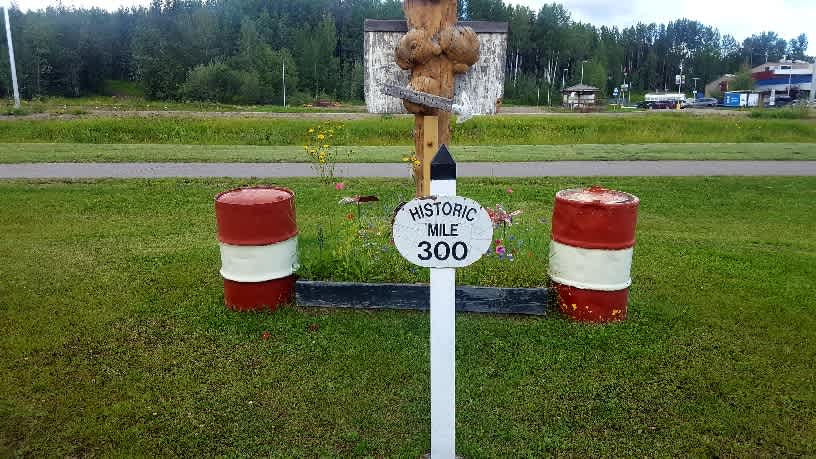
“Alaska Highway
Winding in and winding out
leaves my mind in serious doubt,
as to whether the lout that built this route,
was going to hell or coming out!
– Sergeant Troy Hise” (Read more)
10 – The Roads Of Baja California
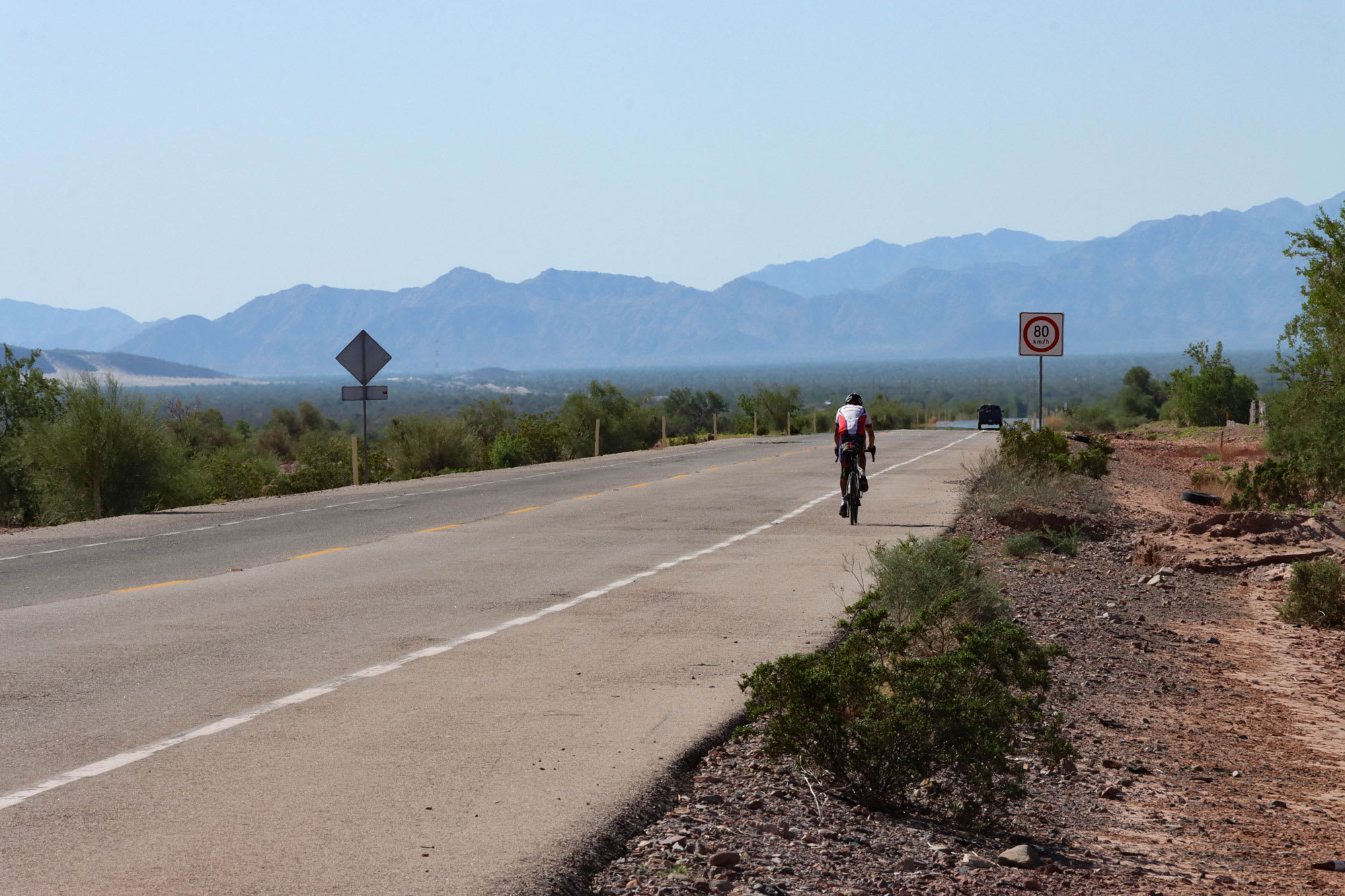
“This was how Highway 1 was built and the route would be based on part of the road that Yuyi’s father built. Don Eugenio knew by heart all of the events and exact dates. He told me that in 1979 he started a lonchería in the ranch, just next to Highway 1, so any traveler could stop at his place. It was not until 2019 that the lunch shop closed and his daughter opened a restaurant a few metres from it: Restaurant Nueva Chapala. None of us would have imagined that this ranch, in the middle of Baja California desert, could hold so much history.” (Read more)
RELATED
TOUR
North American Epic
This incredible expedition is the only cycling tour that covers the entire North American continent, from the shores of the icy Arctic Ocean to the...
]]>
Sarah Fonger was one of the Content Creators on the 2022 North American Epic. She looks back at some of the rider’s and staff’s favourite memories.
And just like that our 5 1/2 month journey across North America is complete. We have travelled over 13, 000 km and across 9 different countries. We’ve biked through the Arctic, the Rocky Mountains, Mexico, down central America and all the way to Panama City. We’ve made it through harsh winds, hot weather and rainy days. We’ve had both amazing times and tough days. We’ve suffered, we’ve laughed, we’ve smiled and we’ve cried. Before the end of the tour staff passed around sheets of paper that asked riders different questions about their experience. The questions were related to favourite memories, challenges overcome, why they came on tour and what they will miss most when they are back home. Here are some of their answers.
What was your favourite moment(s) on tour?
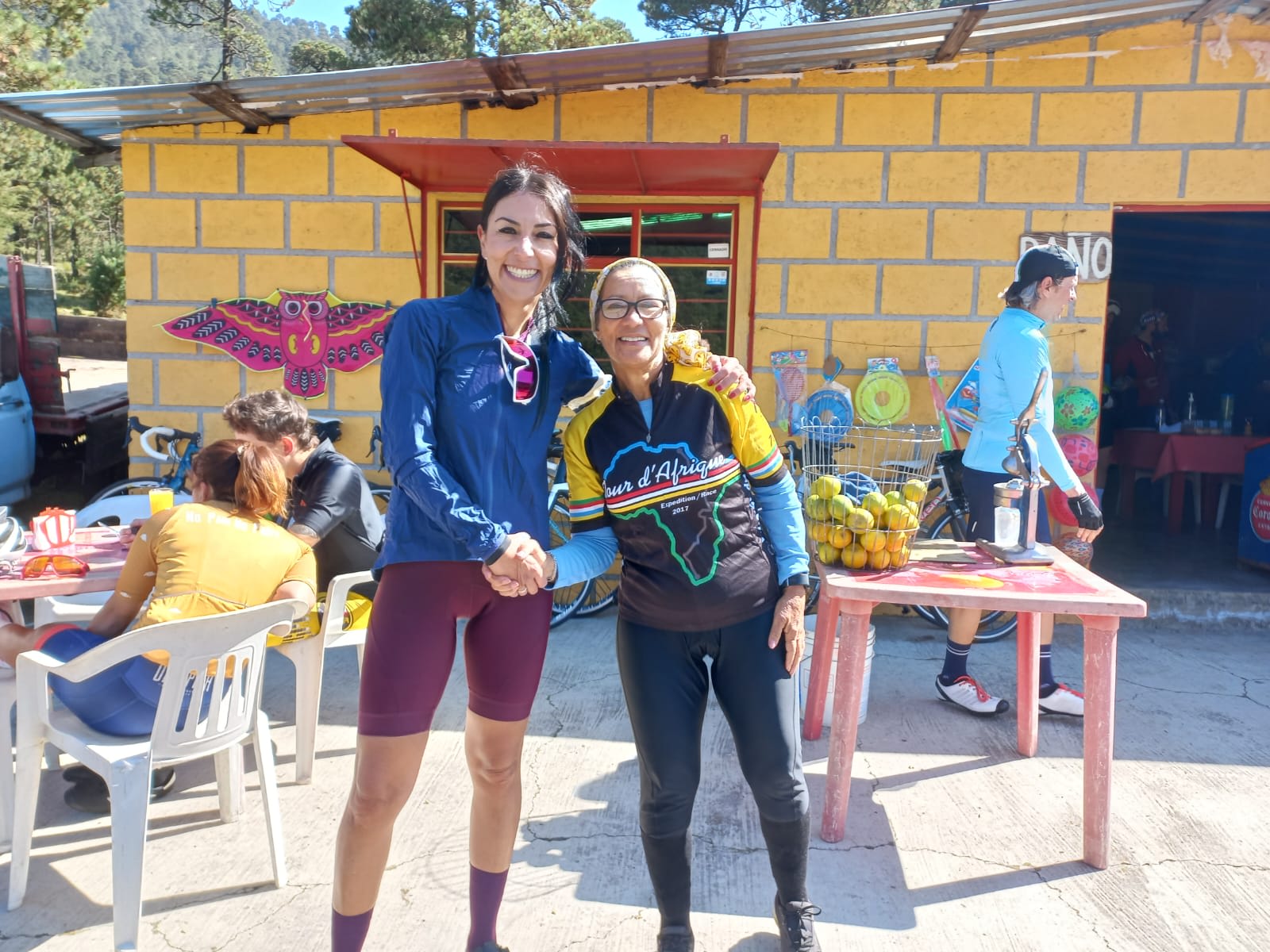
Credit: Judith Treloar
Judi Treloar (Tuktoyaktuk to Panama City) – Meeting and having photos at a Coke stop with one of Mexico’s female Olympic cyclists.
Marloes Verwijst (Mexico City to Panama City) – Playing a prank on the staff.
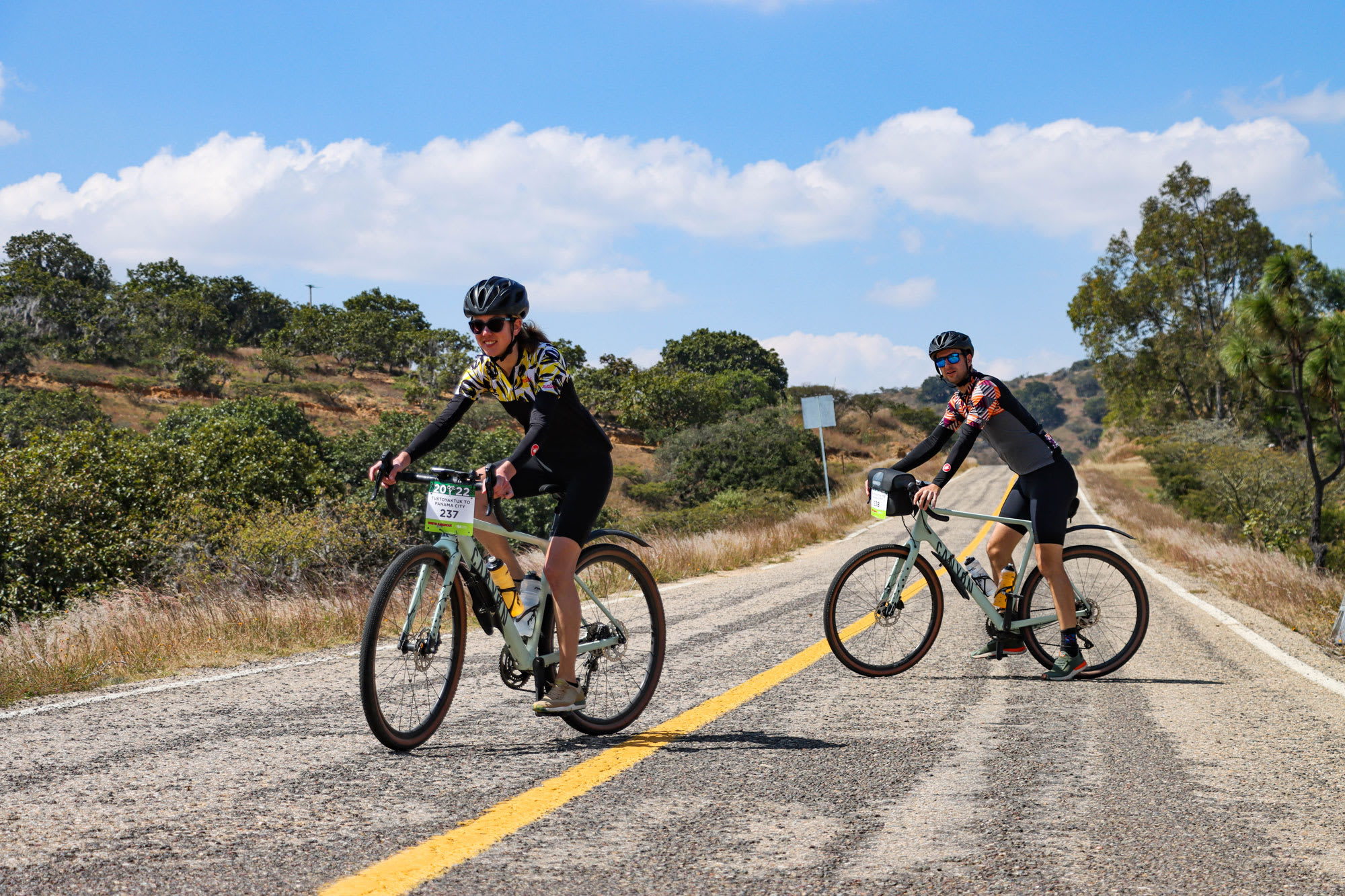
Jan Donkers (Mexico City to Panama City) – Randomly spotting wildlife on the side of the road in Costa Rica and roadside encounters with locals!
Inge Ruijs (Tuktoyaktuk to Panama City) – Seeing my first bear. Seeing such a beautiful animal coming out of the woods. Luckily he was more afraid of me.
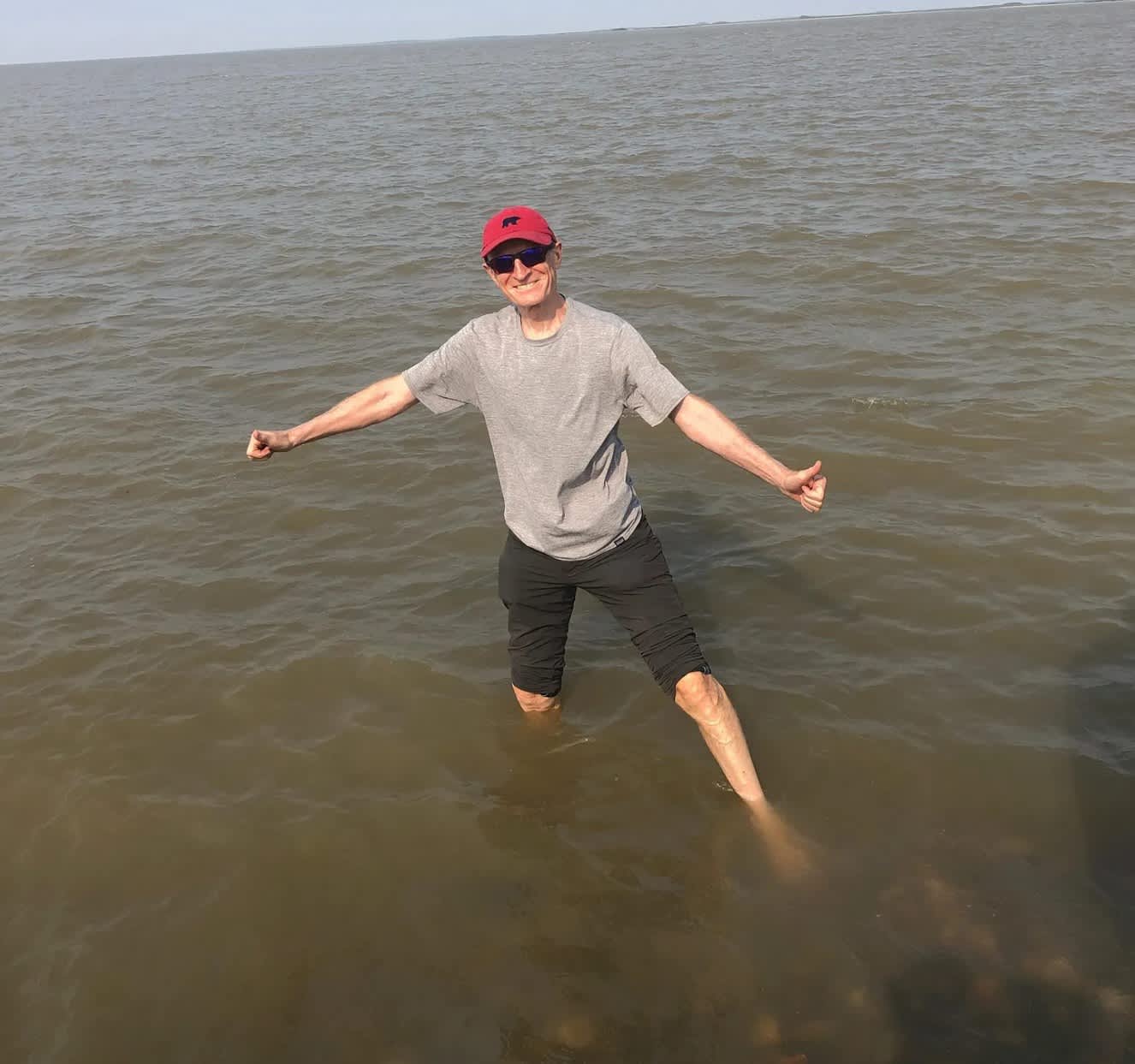
Credit: Tom Perlmutter
Tom Perlmutter (Tuktoyaktuk to Panama City) – Stepping into the Arctic Ocean.
What was the funniest moment on tour for you?
Isla McColl (Tuktoyaktuk to Panama City ) – One of my fellow riders, Matt, told me how he didn’t sleep the first night that we camped in Tuktoyaktuk (on concrete next to howling dogs) because he had put his bear spray in his bear box so he didn’t dare leave his tent to pee! He spent the night sitting upright on his bed listening to the howling dogs.
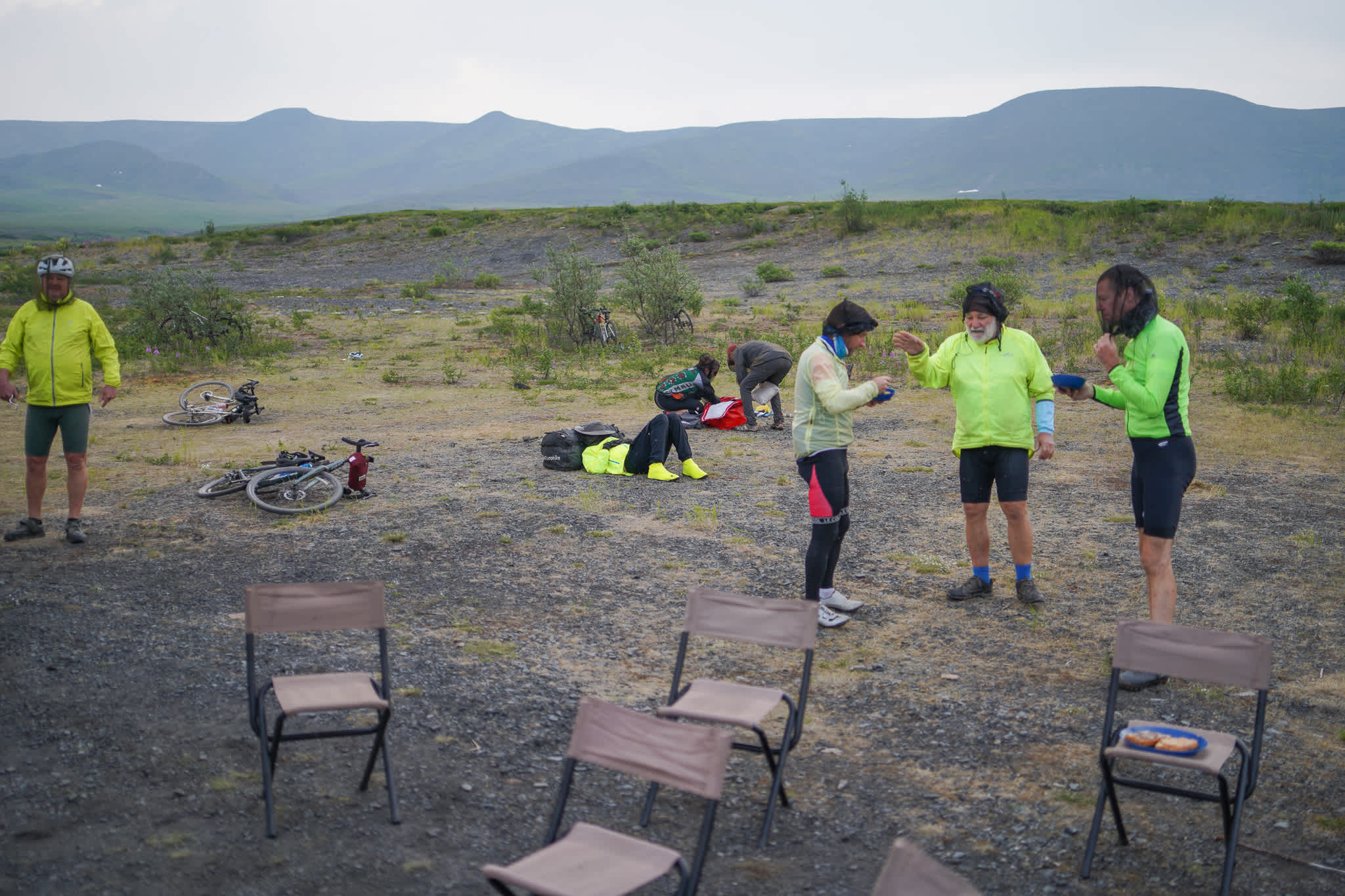
Inge Ruijs (Tuktoyaktuk to Panama City) – The night the gazebos blew away in the storm and we all ran after them. It was funny and scary at the same time. I still see one of the staff, Sime, running after them with his long strides.
David Grassham (Tuktoyaktuk to Panama City) – After waiting to see a bear for so long, thinking that our first sighting was a dog until close up.
When were you most proud of yourself for overcoming a challenge?
Tom Perlmutter (Tuktoyaktuk to Panama City) – I had a bad fall on the Dempster Highway. My handlebar was skewed. I had a massive hematoma on my right thigh. My shoulder ached like crazy. A horde of mosquitoes were enveloping me – and I laughed, really laughed – got alcohol swabs, cleaned myself the best I could, straightened the handlebar, got back on the bike and rode the 20 km to camp that night – I was thrilled!
Grace Zhang (Yuma to Panama City) – I was bitten by a dog in Mexico. After that, I was afraid of riding alone on the road. After a couple of weeks, I was okay to ride alone.
Klaus Jensen (Tuktoyaktuk to Panama City) – When I stood in the Gatwick Airport and found out that my flight was leaving from Heathrow.
What was surprising to you about North America and the countries we have visited?
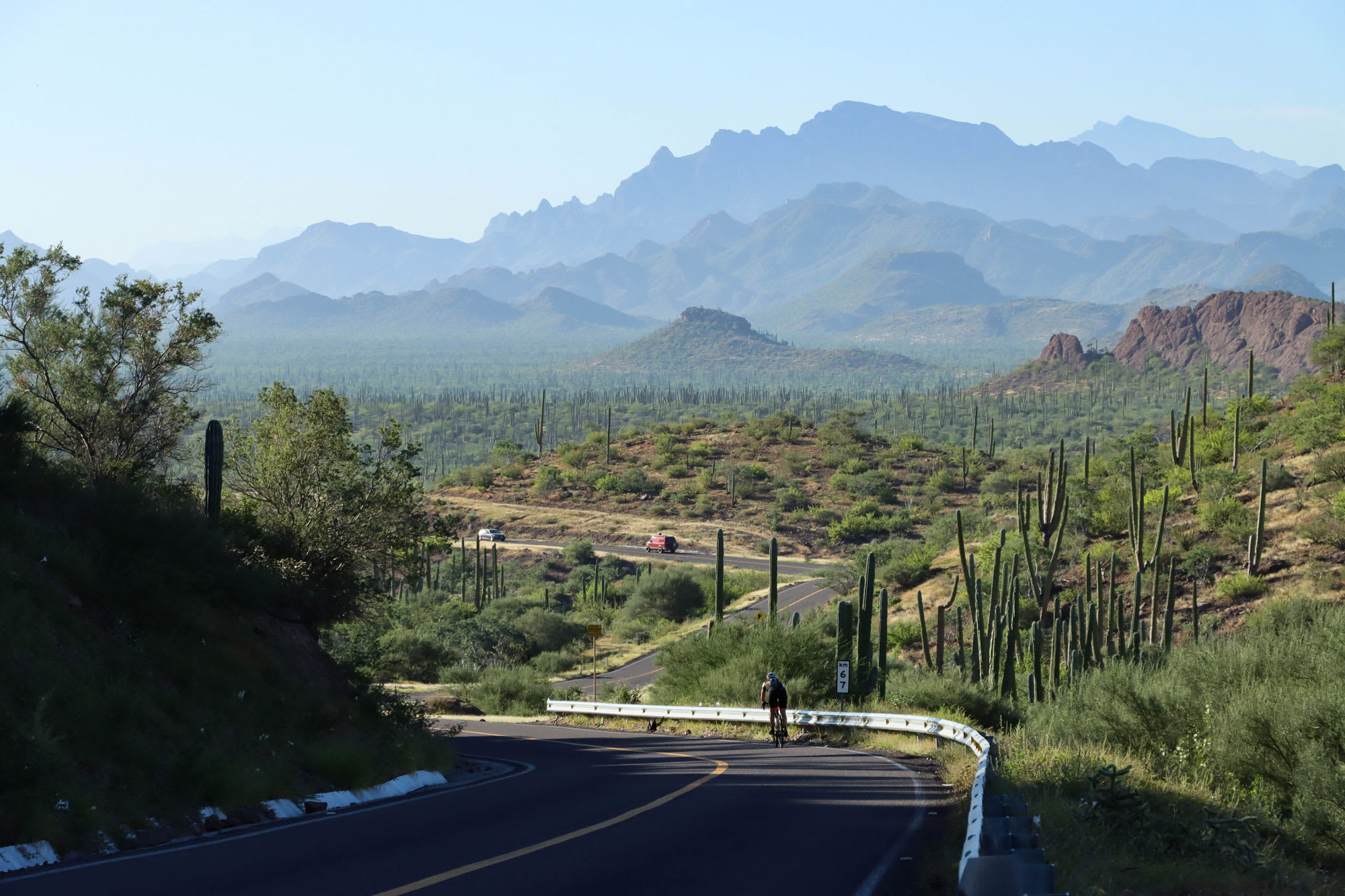
Cat Hardee (Tuktoyaktuk to Panama City) – I was amazed at how diverse and huge Mexico is!
Beth Butcher – Medic – (Puerto Vallarta to Panama City) – Mexico was really amazing for me – Every day was a fiesta. I don’t think I’ve ever been somewhere with so much culture! Flamenco on the streets of Guanajuata, street performers in Puerto Vallarta, Korean music, mariachi, Zapateca street parade in Oaxaca. All amazing!
Linda Du (Mexico City to Panama City) – El Salvador was not even on my radar and then it turned out to be incredible!
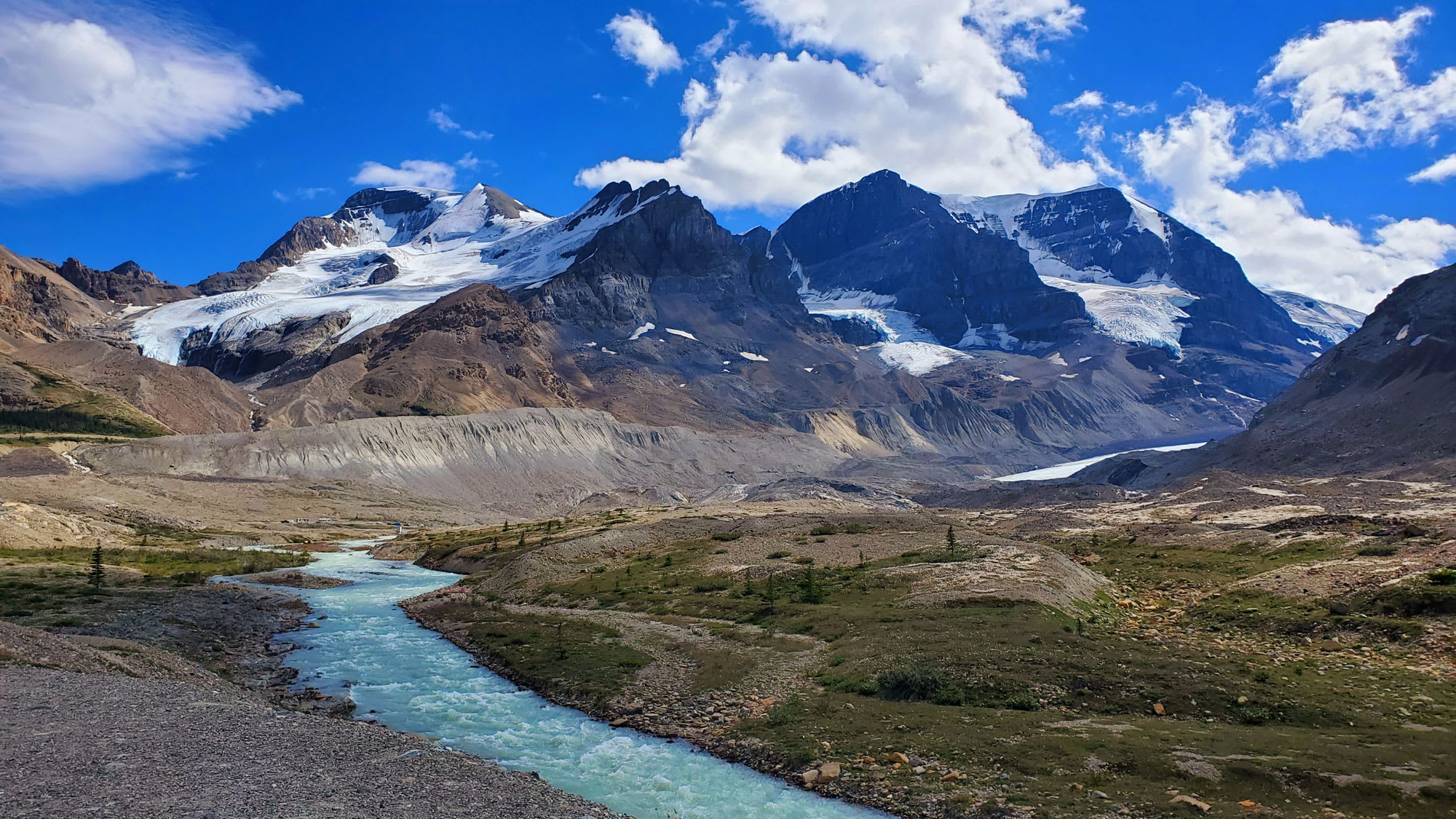
Inge Ruijs (Tuktoyaktuk to Panama City) – How beautiful nature was in Canada and the US and all of the differences between the countries in Central America.
David Grassham (Tuktoyaktuk to Panama City) – Mainland Mexico being nothing like I expected; cooler, less desert and more developed. Guanajuato in particular. A town that I had never heard of was so colourful.
What will you miss the most when you’re back home?
Jan Donkers (Mexico City To Panama City) – Being outside all day everyday in the perpetual sunshine.
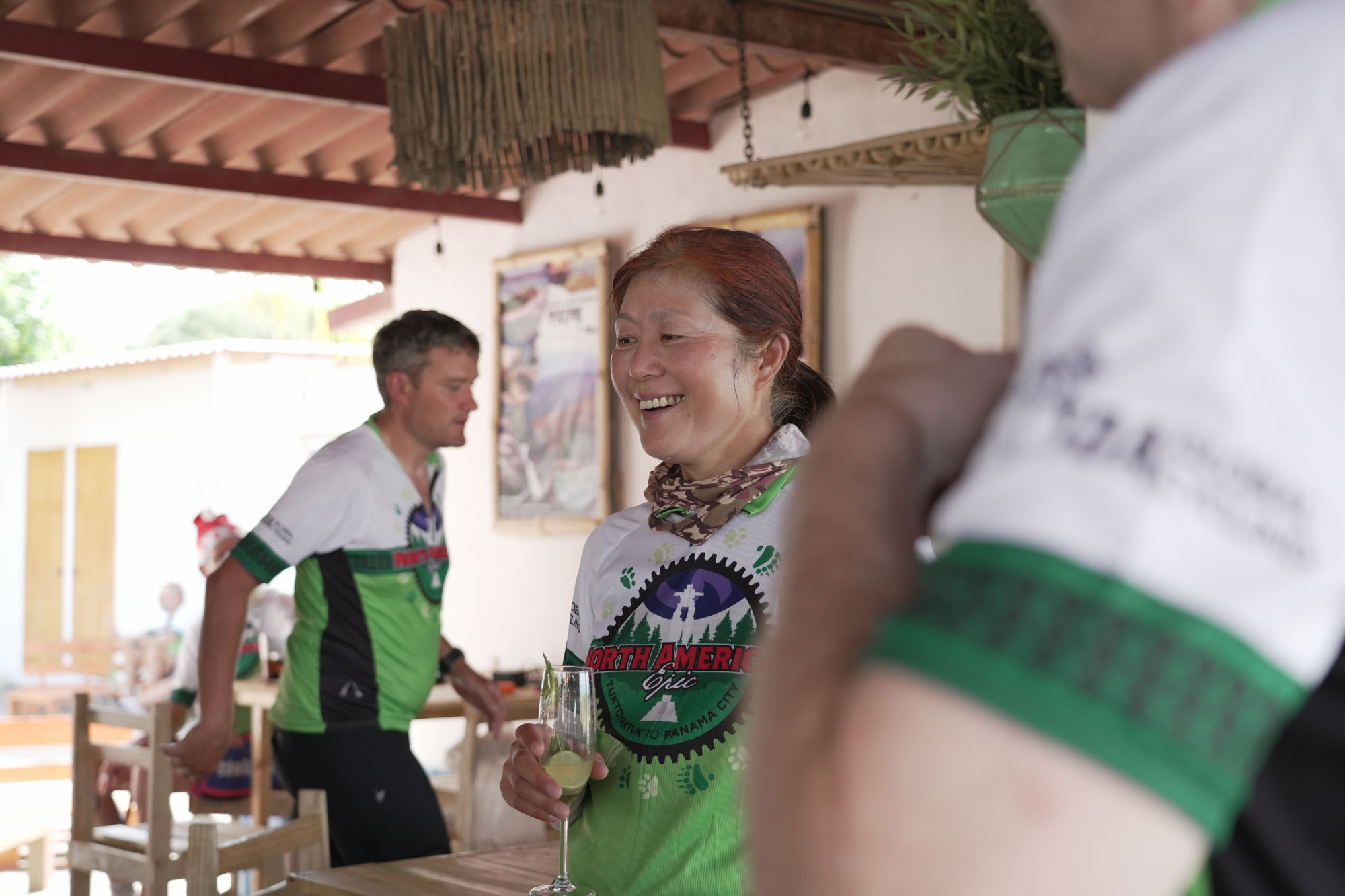
Grace Zhang (Yuma to Panama City) – I’ll miss the friends that I made.
Michael Treloar (Tuktoyaktuk to Panama City) – Not being able to sample the diverse food and different beers available.
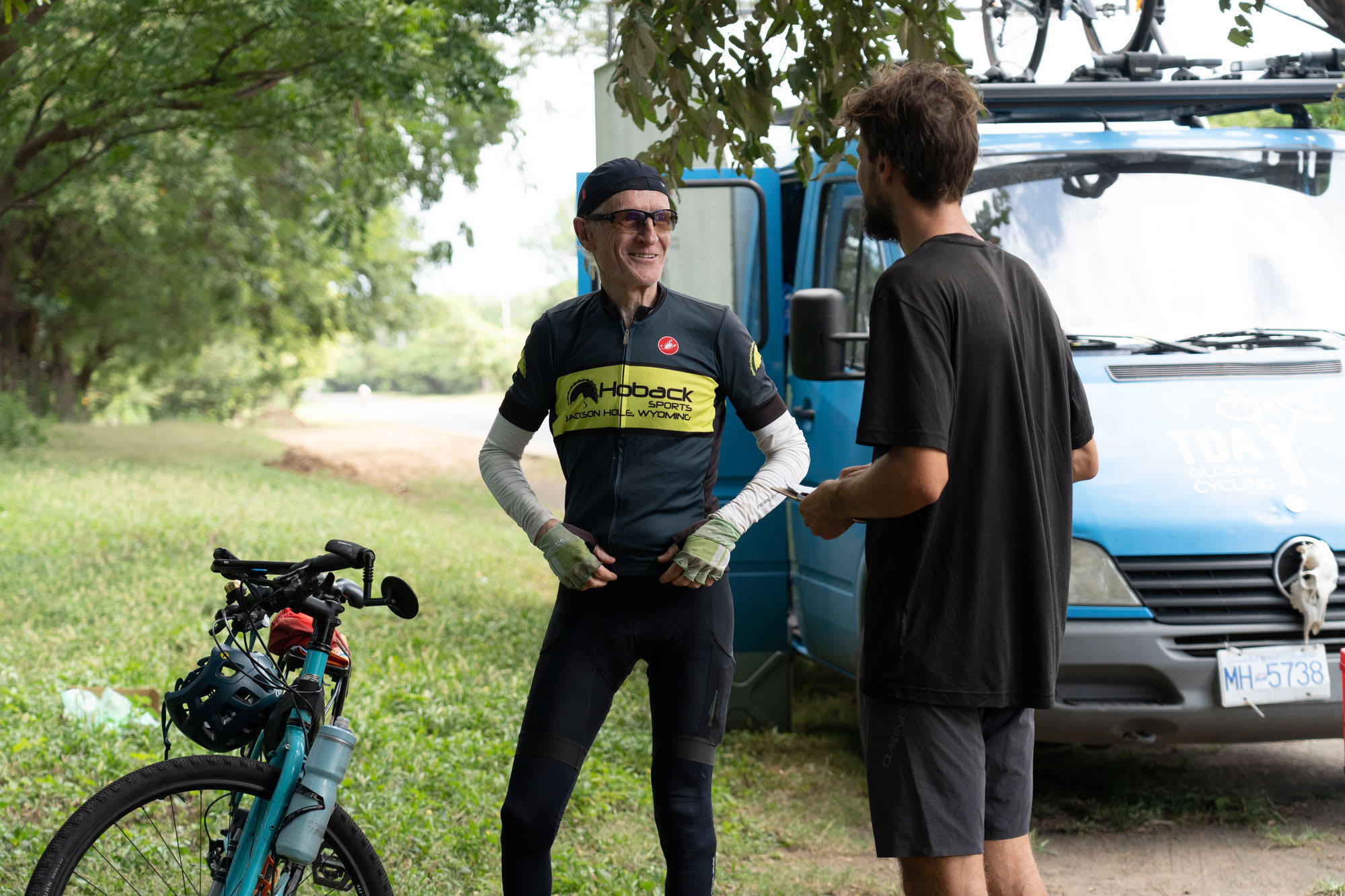
Philippe Chimounia – Tour Leader trainee – The amazing food, Isla’s “good morning my dear,” and great conversation with inspiring souls.
RELATED
TOUR
North American Epic
This incredible expedition is the only cycling tour that covers the entire North American continent, from the shores of the icy Arctic Ocean to the...
]]>
This is the third and final part of a three part series that will introduce some of the riders who rode the 2022 North American Epic. Sarah Fonger, our Content Creator, will look at how they got into cycling, their past and who they are as people.
Klaus Michael Jensen (Tuktoyaktuk – Panama City) – ‘The Stoic Dane’
Klaus is the strong silent type. When he talks, he has something important to say. He’s always smiling when he sees you and says, “ hi hi,” in his Danish accent. Klaus cycled when he was quite young but then stopped and didn’t pick it up again until he was much older. Since then he has completed the Tour d’Afrique (2014) the South American Epic (2015), and now the North American Epic (2022). If you talk to Klaus for any amount of time you will come to the conclusion that he is an exceptional human being. It took Klaus 3 years to complete the Tour d’Afrique due to injuries. The first time that he attempted it, he ended up crashing and breaking his hip in Northern Kenya. He had to be flown to Nairobi where he was given a hip replacement and then flown home.
The second time he attempted the tour, he started in Addis Ababa and made it to Botswana where he was hit by a truck and broke his pelvis. After the Tour d’Afrique and South American Epic he was training for the Bamboo Road when he slipped on some leaves and crashed. He ended up breaking his collarbone, a rib and his other hip. At the time Klaus did not know this so he kept cycling until he came to a hill. He recalls that he got off his bike and wasn’t sure that he would be able to make it. While he was thinking someone stopped him and told him he didn’t look very good and needed to go to a hospital.
Klaus’s favourite part of the tour was the Cervantino Festival in Mexico. It’s a two and a half week celebration with theatre, opera and shows. He was only able to spend 1 day there on his rest day in Guanajuato so he wants to go back and spend the full 2.5 weeks at the festival. In Denmark, Klaus’ last job was the Director of Culture in his county and would go to many performances and events. When he was at the Cervantino Festival he saw a performer there that he had seen before in Denmark. The man was from the same town as him in Denmark. Klaus just thought that this was so cool!
>>Related Post: Meet Tom & Isla: The Observer & The Chatterbox
Near the end of the tour staff passed around a sheet for riders to fill out that included questions related to their favourite memories, proudest moment or greatest challenge overcome, things like that. On Klaus’s sheet under ‘Why did you come on the tour’ Klaus put “By mistake. I should have been east (Silk Route) but I happened to go west (Canada).” Honestly, his answer seemed to raise more questions than it answered. It turns out that Klaus had been wanting to ride the Silk Route but it hasn’t run for a few years and it looked like it would go in 2022. It didn’t end up happening so Klaus decided that he would do the North American Epic instead. When you talk to him you can easily tell how excited he is about the Silk Route. He knows exactly where it is going and what sort of things he can expect to see along the way. He was ready to ride it in 2022 and since he is 75, he doesn’t think that he will be able to do it if it keeps getting pushed back.
After every tour Klaus says to himself, very seriously, that it is his last one. He did this after he finished the Tour d’Afrique and the South American Epic. When I asked him if he is doing another ride after this one, he looked me straight in the face and said, “No.” But I bet you if the Silk Route runs in 2023 or 2025, there is an excellent chance they will have a rider named Klaus from Denmark.
Ruth Storm (Yuma – Panama City) – ‘The Expeditionist’
This is Ruth’s fifth tour with TDA, having previously done the Tour d’Afrique (2007), Silk Route (2016), Magical Madagascar (2019) and the Trans-Himalaya (2019). She did back to back tours in 2019 to celebrate her 60th birthday as she really wanted to make it a special year. The Tour d’Afrique was the start of her love for cycle touring. She had done some small self supported trips before but nothing close to the long days and distances cycling from Cairo to Cape Town. Ruth likes doing TDA tours because she gets to meet people that she wouldn’t normally cross paths with. She has met people on the trips that she has created long term friendships with. She is part of a group of TDA riders that meet up to do their own group tours to different places around the world.
Ruth has done a lot of self supported bike trips on her own. Before coming on tour she bike-packed through Spain and Portugal. For her next trip, she is thinking about going to either Japan or Norway. When doing trips on her own she brings camping gear but typically stays with Warm Showers hosts, in hotels or plans her routes around where her friends live. Typically she uses TDA to go places she wouldn’t feel comfortable going by herself.
>>Related Post: Meet Jan & Grace: The Extreme Cyclist & The Documenter
Ruth is not only interested in bike touring, she is also very interested in doing long and difficult expeditions of many different types including skiing, sailing and trekking. She has done skiing expeditions on both the North and South poles. The latter was the most difficult because she skied 900 km with an elevation gain of 10,000 ft. in 3 weeks. On her longest days, she would ski around 40 km and pull about 60-70 kilos behind her. When travelling to the North and South poles one has to be very aware of the risk of getting Arctic Shock, which is a common condition that can occur due to the remoteness of the areas and the harsh environments. Ruth was scared but she was able to keep it together and keep her wits about her.
Ruth has two sons and will visit one son in the U.S. directly after the trip is over for Christmas before going to visit her other son in England for New Years. After that, she is planning on returning to her house in Switzerland before going on a sailing trip and a skiing expedition in Greenland with one of her sons. While on tour Ruth has been working when she has rest days. She is a coach and consultant for companies in the finance and investing sector. She teaches companies and employees about leadership and helps work out issues that arise.
Ruth is very friendly and takes an interest in her fellow riders. You can tell she uses her expeditions and her interactions with others to learn more about herself and the world around her. Before she goes on a new trip, she writes out what she is looking to get out of it and what her expectations are. One night after dinner, Ruth gathered some of the riders and staff together and gave a talk about her expeditions on the poles. She talked about leadership styles, mindset and getting through difficult situations. Ruth is a wealth of knowledge and loves to share her experiences with others.
RELATED
TOUR
North American Epic
This incredible expedition is the only cycling tour that covers the entire North American continent, from the shores of the icy Arctic Ocean to the...
]]>
This is the second part of a three part series that will introduce some of the riders who rode the 2022 North American Epic. Sarah Fonger, our Content Creator, will look at how they got into cycling, their past and who they are as people.
“The Extreme Cyclist” – Jan Demeulemeester (Tuktoyaktuk To Panama City)
Jan is what people refer to as an ‘extreme cyclist.’ His record for kilometres cycled in a 24 hour period is 608. He enjoys entering races and events where he must cycle between 200 – 400 kilometres each day. The University of Leuven, Belgium has reached out to Jan to use him as one of their subjects in a study that they are doing on extreme cycling and its effects on the heart. In early 2022 they ran many tests on him and will run those tests again once he is back. The most interesting test that was done on Jan was one where he was cycling while having a brain scan in an MRI machine. Jan keeps data from all of his rides and will provide the university with that information when he returns. Jan also enjoys bikepacking and has done self supported trips around the UK and Switzerland. He has also done supported trips in Australia and South America.
 Jan is by far the most eclectic and eccentric person on tour and never fails to keep things new and interesting. One thing that Jan is famous for is his figurine turtle collection. Jan currently has 30 turtles in his collection, 15 of which have come from the tour. Jan’s goal has been to find at least one turtle per country. This has proved to be quite challenging in Central America where days in a country can be few and locations quite remote. Because of this Jan has many times requested the help from staff and fellow riders who have been more than happy to participate, mostly due to the unique nature of his request.
Since seeking the help of others, Jan has provided the participants in his hunt a quite thorough list of requirements for his potential new turtle statue. The turtle must not be “tacky”, have the name of a place on it, be on something else or have a country’s flag on its back. The fifth rule is, “just nice turtles.” Watching Jan find a new kind of turtle that he has never seen before is one of the most wonderful things; his face lights up and a very pure kind of happiness immediately washes over him.
Jan is also known for finding a flag of each country and attaching it to his bicycle. In Nicaragua he went as far as to have a shop print out the flag from Honduras (the country before) on a piece of paper because he was not able to find one from there. Jan also rides with a stuffed dinosaur on the back of his bicycle named after the chef, previously on tour, Colleen. Colleen rides with Jan wherever he goes and keeps him company. Jan loves animals and has famously helped a tarantula cross the road in Mexico.
For Jan’s birthday the staff and riders came together to give him a celebration. It started off with a song, “Jan you are a determined man…” and ended with a deconstructed key lime pie. Jan was given a special turtle wrapped in newspaper, a flag designed by the riders and a card signed by everyone on tour. It’s safe to say that this tour is more interesting with Jan on board.
>>Related Post: Meet Tom & Isla: The Observer & The Chatterbox
“The Documenter” – Grace Zhang (Yuma to Panama City)
This is Grace’s second tour with TDA as she previously did the Tour D’Afrique in 2020 (only the first half due to COVID). Grace got into cycling in 2011 when a friend asked her if she wanted to participate in a fundraiser and ride from Vancouver to Seattle (250 km). She hadn’t cycled very much but she decided to do it anyway. She really enjoyed it so she did the ride again in 2012. In 2018 she bought her own bike and travelled across Canada with her son for a different fundraiser. She did this in 2019 again but cycled across America instead. She was hooked, so in 2020 she decided to set off for the Tour d’Afrique. Unfortunately the 2020 trip was cut in half due to COVID so Grace plans to finish the second half next year. This year she arrived on the North American Epic in Yuma. Her favourite part of the trip so far has been cycling down Baja California. The uniqueness of the landscape was something that really interested her.
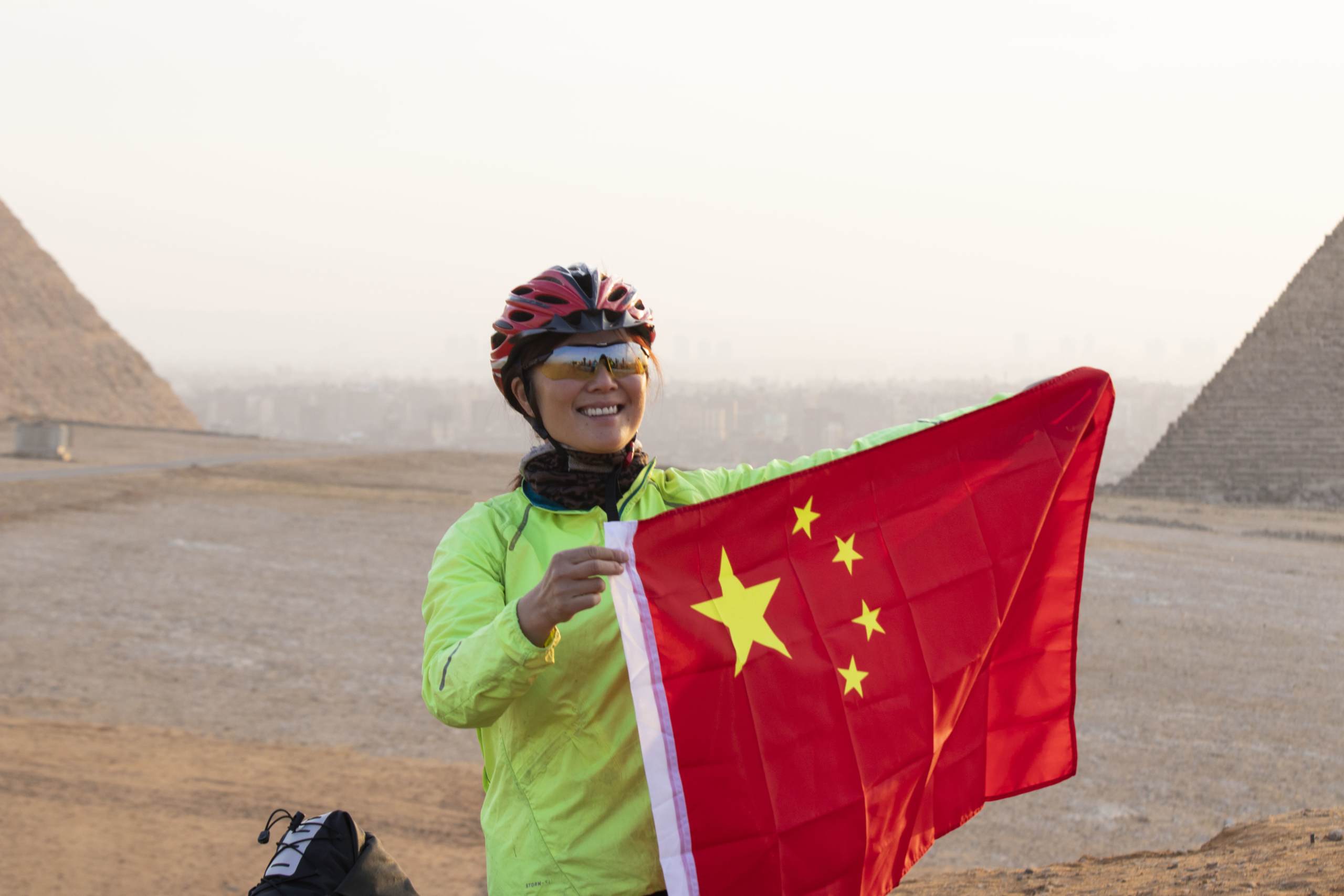
Grace in Cairo of the start of the Tour d’Afrique
Grace rides her bike everyday, sometimes upwards of 150 km. She truly loves it. She doesn’t have insurance on her car so she uses her bike to get around. In the last 2 years she has cycled over 10,000 miles (each). She likes travelling by bike because it gives her the ability to see things in a different way and stop whenever she likes. When she found out that there was a tour down the continent of Africa she knew that she had to do it. While she is on tour she loves taking pictures and videos of her travels. She has a drone and a Go Pro and can often be seen using her camera. For her it’s about preserving the memories of her travels and the people that she meets.
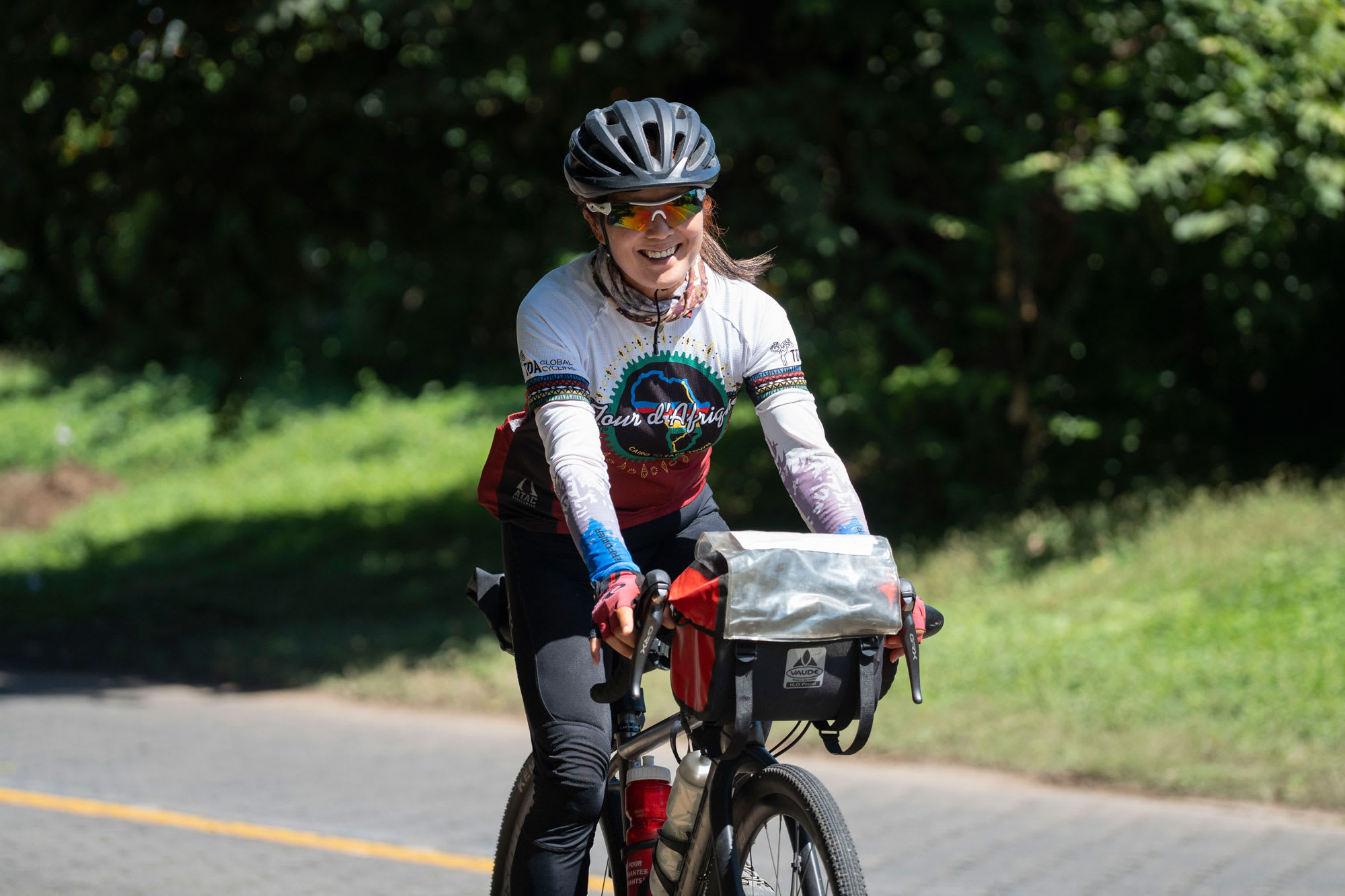
There was a really tough day for the riders, a hot day with 1,964 metres of elevation gain in 82 kilometres. The views were absolutely beautiful but most riders were very focussed on making it up the climbs and finishing the ride in good time. It definitely looked like a struggle, the climbs kept coming and the heat made it so difficult. When some riders rode by her, Grace was standing at the bottom of a hill, no worry in the world, flying her drone, trying to get some shots of the amazing scenery. I think this explains Grace’s personality, she is always so calm and chill and rarely seems outwardly stressed. She’s here for the journey and she’ll get there when she gets there. She rarely seems phased by tough days or difficult situations.
Grace and her partner Roger
Grace is warm and friendly, always greeting you with a smile and a “how are you?” She doesn’t talk much about herself unprompted so it’s not uncommon to be completely surprised to learn something very impressive about her. Her partner Roger is one of the sectional riders and is cycling with her between Nicaragua and Panama. No one really knew that he was the new sectional rider until the day before he was set to arrive. Grace is full of surprises and it has been really fun to learn more and more about her.
Stayed tuned for the last part of this three part series on riders of the 2022 North American Epic.
RELATED
TOUR
North American Epic
This incredible expedition is the only cycling tour that covers the entire North American continent, from the shores of the icy Arctic Ocean to the...
]]>
Our Content Creator on the 2022 North American Epic, Alicia Arellano Nava, reflects on cycling in Latin America.
Do you wonder what it’s like to travel through Latin America by bicycle? Is it possible? Is it safe? Is it worth it? In this post we will explore the experiences of the cyclists who travelled through the area on TDA´s North American Epic. Coming from Canada and the United States, Mexico is the gateway to Latin America and is a country that has seduced more than one cyclist with its people, colours, food, weather and music.
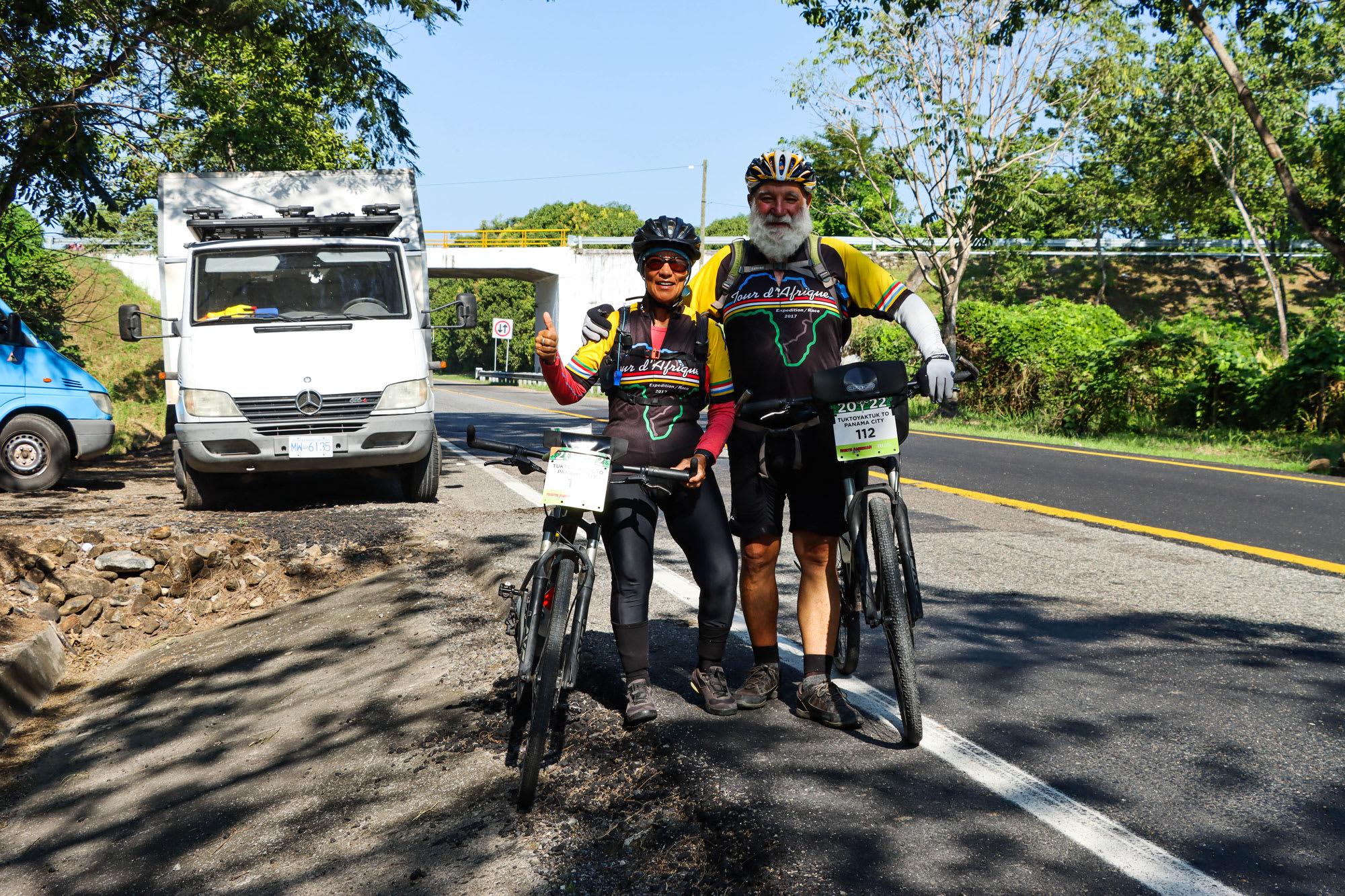
Michael & Judith
Judith from South Africa, who was riding the tour with her husband Michael, told me that what she liked most about Mexico is that people are friendly and if you try to speak a little bit of Spanish like, “¡buenos días!” or “¿cuánto cuesta?” they will try their best to communicate with you. A little bit of English, a little bit of Spanish, or even people using their hands to make their point is what you’ll find.
 She added that, “What I also like is that this place is so colourful, theres something to catch your eye all the time. So when you are traveling you don’t get bored. You don’t just see kilometres and kilometres of road, you actually see people and villages and… even the dogs! The dogs are amazing. They are used to having movement around them so there’s very few of them that will actually worry you as a cyclist”, she says with a big smile. “The countryside keeps changing and that also makes it interesting because the vegetation is different, the scenery is different and you just cant get enough. Mexico is an ideal tourist attraction and on this tour some of the places we go to, tourists don’t go cuz they are small, they are en route, but that’s when you get to see the real people. I’m really really happy that we’ve come to cycle through Mexico.”
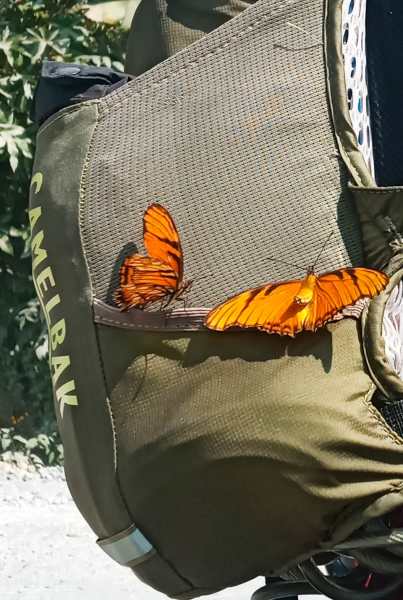
Inge, a rider from the Netherlands, added that,“Mainland Mexico is very different. Baja didn’t have many villages to cycle through. Here you have the feeling that you are part of the daily life or see what’s happening in the daily life. I like that. The only thing is all the speed bumps in the villages, that’s hard!” She’s was excited to ride her bike into a region of Mexico where it is possible to see hundreds of Monarch butterflies from November to March. These butterflies, like us, travel from Canada all the way down to Mexico. Now it’s easier to appreciate the effort of such an amazing journey and feat!
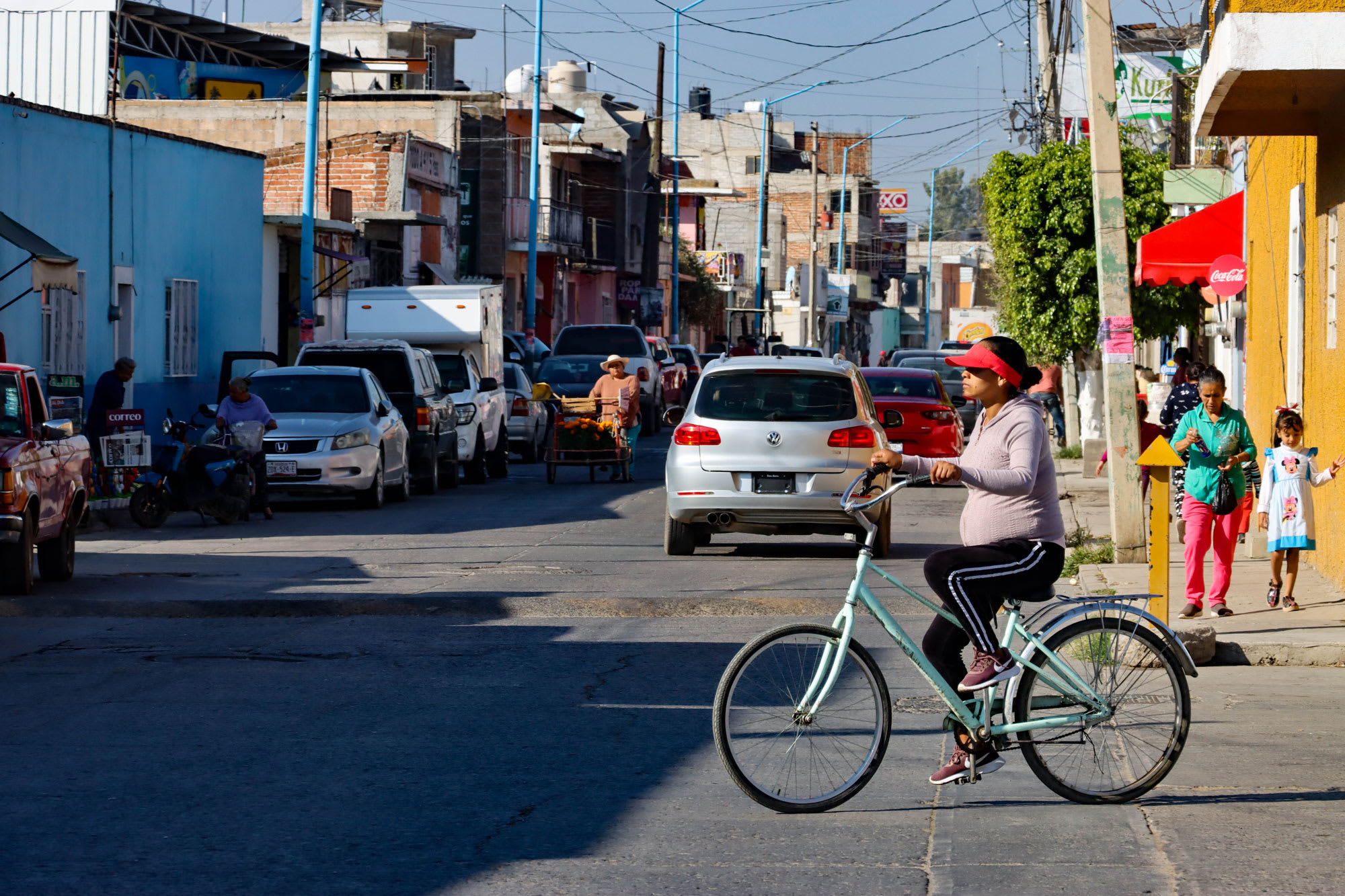
“People are out in the streets, they walk, they wait for the bus, they go to the school, they are there. They say goodbye to you, they say hello to you, they are curious, sometimes they get surprised to see somebody traveling by bike. There’s also more people on bikes in this part of Mexico. It’s funny how they try to put as many people on a bike or as many goods on a bike. In the USA and Canada we saw cyclists, but most of them were also touring or road racing, and here’s more for transport”. Inge was always seen smiling as she pedalled her bike. Her perseverance and determination were incredible, even if she is the last one and the day is difficult, she preferred to ride.
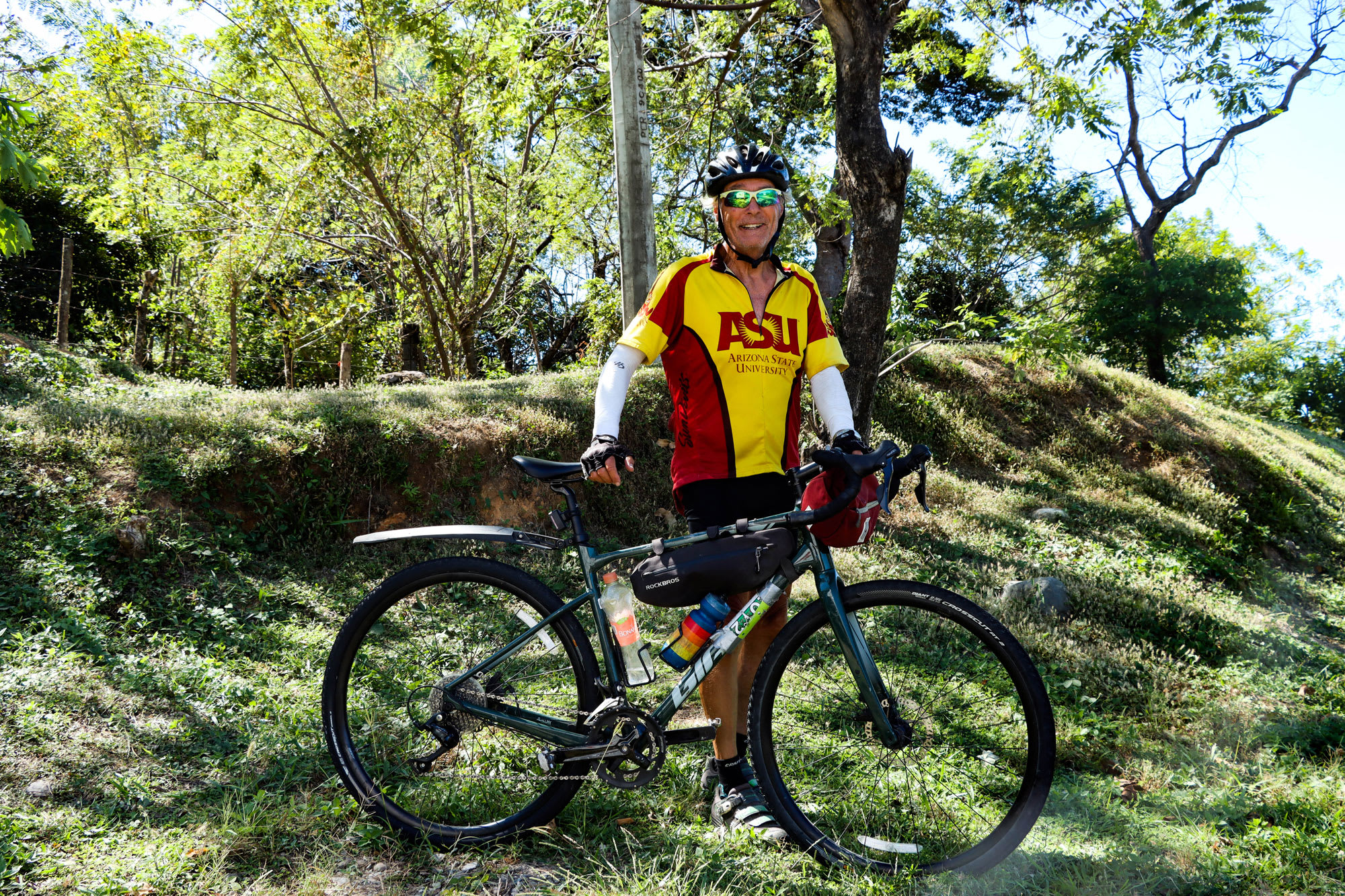
Rick
In Mexico and Latin America you will be amazed to see how many people use bikes to move around! Rick, another rider, told me that his perception of Mexico had changed. “I live in Canada, I heard of the cartels, I heard of the bad things. I was very nervous about coming to Mexico and my wife was too because of the propaganda on TV creating a stereotype and it’s not like that at all. They are very nice people and we haven’t had a problem.”
“Mexico!I just loved the vibrancy of it. The colours, the kindness of the people, so much love in these people. And same in Guatemala. In Guatemala you see the volcanoes, the trees, the jungle, the rainforest, the same vibrancy” related Isla, a Swiss rider who enjoyed every single day from this journey ever since the North American Epic started in Tuktoyaktuk on the 7th of July.
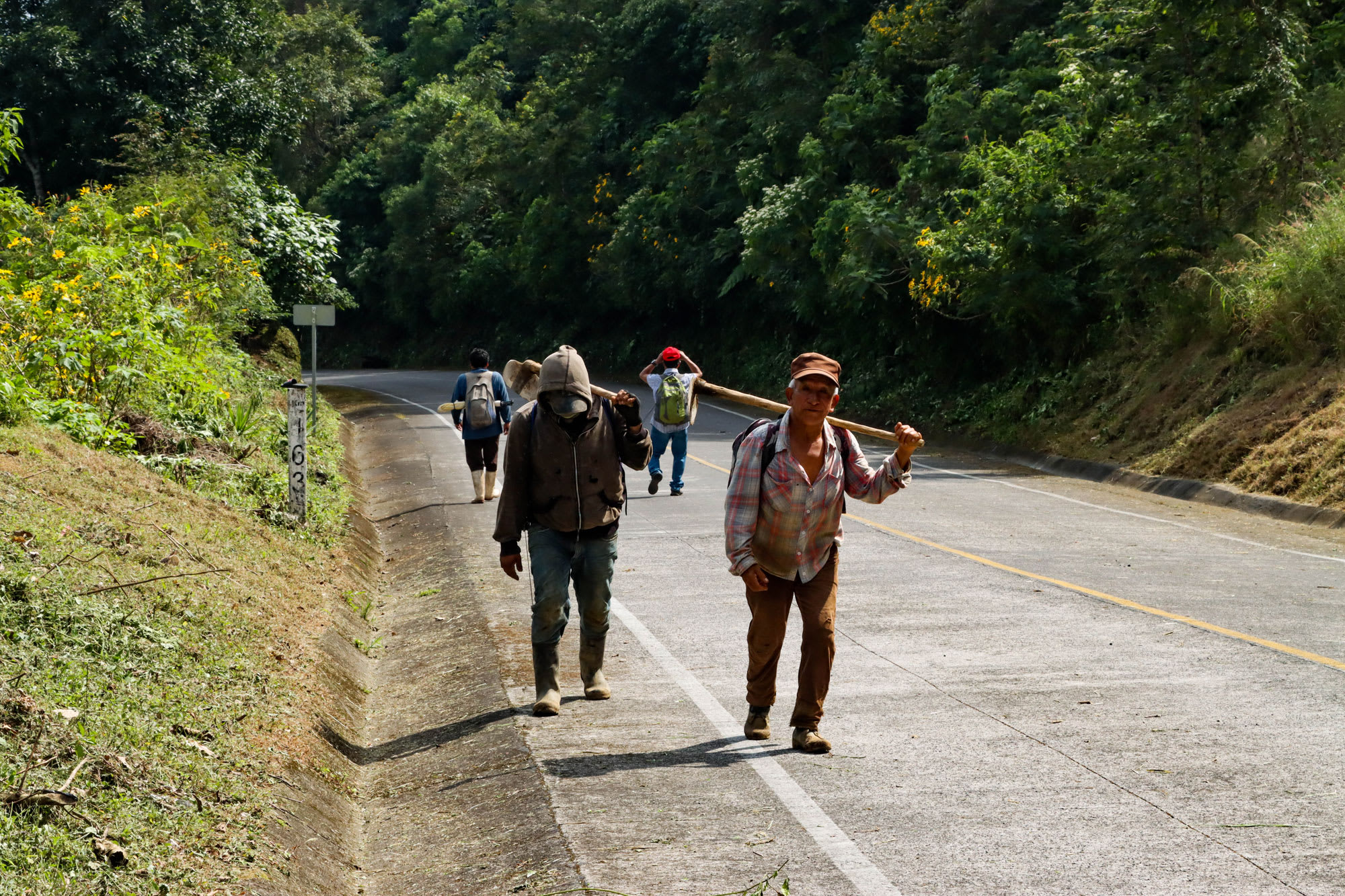
Coffee plantation workers
In Guatemala there are a lot of coffee plantations and most of the local people work on them. In Latin America, riders connect with people through empathy and emotions, through smiles and hand signals. During her time in Guatemala, Inge passed a funeral and felt the sadness and suffering of the people as she bowed to show compassion, but she also smiled one time when a woman clapped and said bravo to her for riding a very steep hill.
“People always tell me I should be afraid or scared in Latin America, but everybody has been so nice”, says Lorna, a young female rider from England who joined the team as Tour Leader Trainee for some days in Guatemala. She had been riding by herself from Mexico City and intends to go to Patagonia, Argentina. As women we need to be more brave and cautious while traveling on our own, but Lorna’s personal experience in Latin America has been great so far.
RELATED
TOUR
North American Epic
This incredible expedition is the only cycling tour that covers the entire North American continent, from the shores of the icy Arctic Ocean to the...
This three part series will introduce some of the riders on the 2022 North American Epic. Sarah Fonger, our Content Creator, will look at how they got into cycling, their past and who they are as people.
Tom Perlmutter “The Observer” – Tuktoyaktuk to Panama City
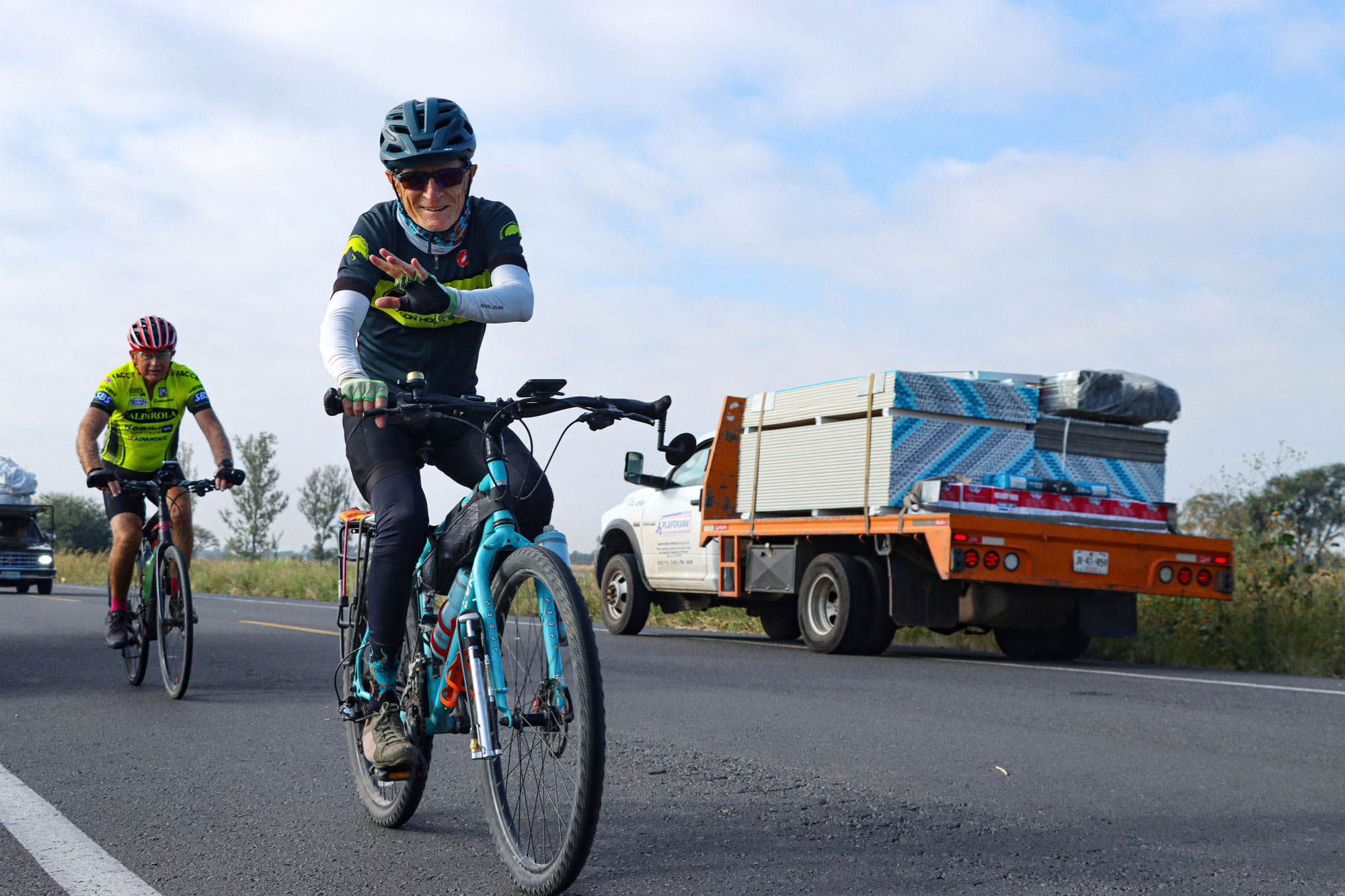
Four years ago Tom got a call from a friend who urged him to come with him on an eight day biking tour of Patagonia. Tom was resistant but eventually agreed, mostly so that his friend would stop bothering him about it. He had no idea that what he had just signed up for would be the start of a new obsession. Even though Tom had a really difficult time, got lost, missed a ferry and wanted to fly back home part way through the trip, something switched on inside of him and a love for bike touring developed. On that Patagonia trip one of his fellow riders was talking about TDA Global Cycling’s Tour D’Afrique Expedition. Tom thought he was way too old to embark on this as he was approaching 70. However, he began to talk to others and was eventually convinced by TDA alumni that he might be able to do it. Since then Tom has cycled the Tour D’Afrique (2019), the Great American RoadTrip (2021) and now the North American Epic (2022).
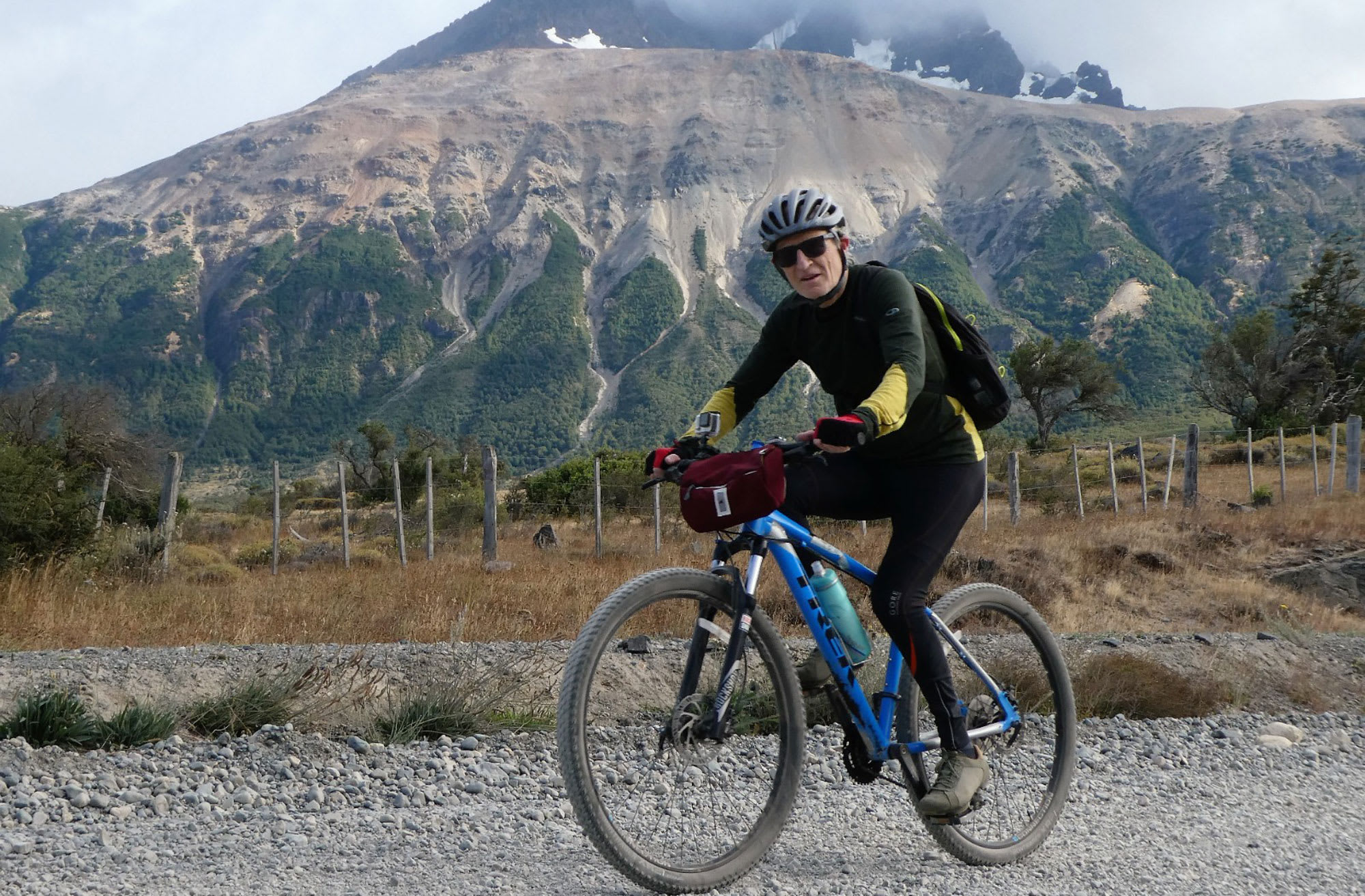
Tom on his first cycling tour in Patagonia.
Tom likes bike touring because it allows him to see the world in a different way. He loves to meet and engage with those around him and hear their stories. Tom shares his adventures by writing articles for Cycling Magazine and by posting entries on his blog – The Continental Cyclist. He enjoys writing about his experiences, the people he meets and social issues that he comes across while travelling. By reading his articles you can tell that he cares deeply for the people that he encounters and the places where they live.
Tom has written a lot about First Nations and immigrant issues through the eyes of those he meets and the places that he travels to. He also has a couple blog posts solely dedicated to celebrating his fellow female riders and how much respect he has for them. Tom is very interested in the current immigration crisis and by cycling through the Mexican border was able to see first hand the effects of the current environment on those looking to travel to a better life. Tom is dedicated to giving minorities a voice and the way he tells stories is engaging and very educational.
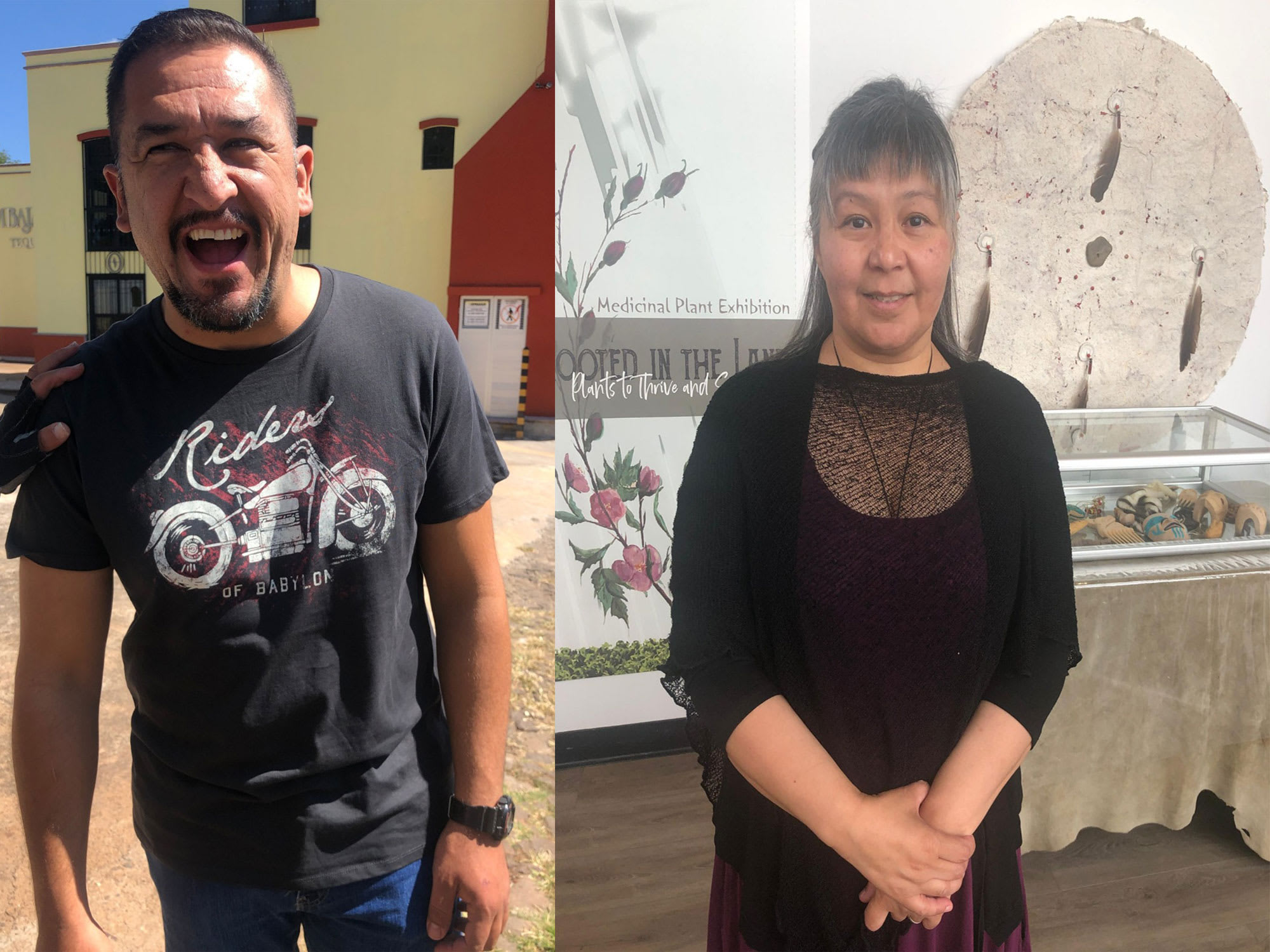
Left: Francisco, the general manager at a Tequila Distillery called Embajador in Arandas, Mexico. One of the subjects in one of Tom’s articles for cycling magazine titled, “Cycling into the Mexican Interior.” Right: Fran, curator of the exhibit “Rooted in the Land” at the Dänojà Zho Cultural Centre in Dawson City, Canada. The subject of Tom’s blog post titled, “The Long ago House.”
In Tom’s earlier professional life he was a documentary filmmaker. He was head of the National Film Board of Canada which produced many documentaries; some being nominated and winning Oscar and Webby Awards. While head of the film board he prided himself for being experimental and pushing the boundaries of digital mediums. For one project, Tom produced a short film shot by an up and coming Hollywood director on a flip phone. The film was then blown up to the big screen and shown at the Toronto International Film Festival. When talking to Tom you would have no idea about any of these accomplishments. He is not boastful or arrogant and is much more interested in learning about others and creating human connection than talking about himself. You can tell that he is genuinely passionate about learning about others and telling their stories.
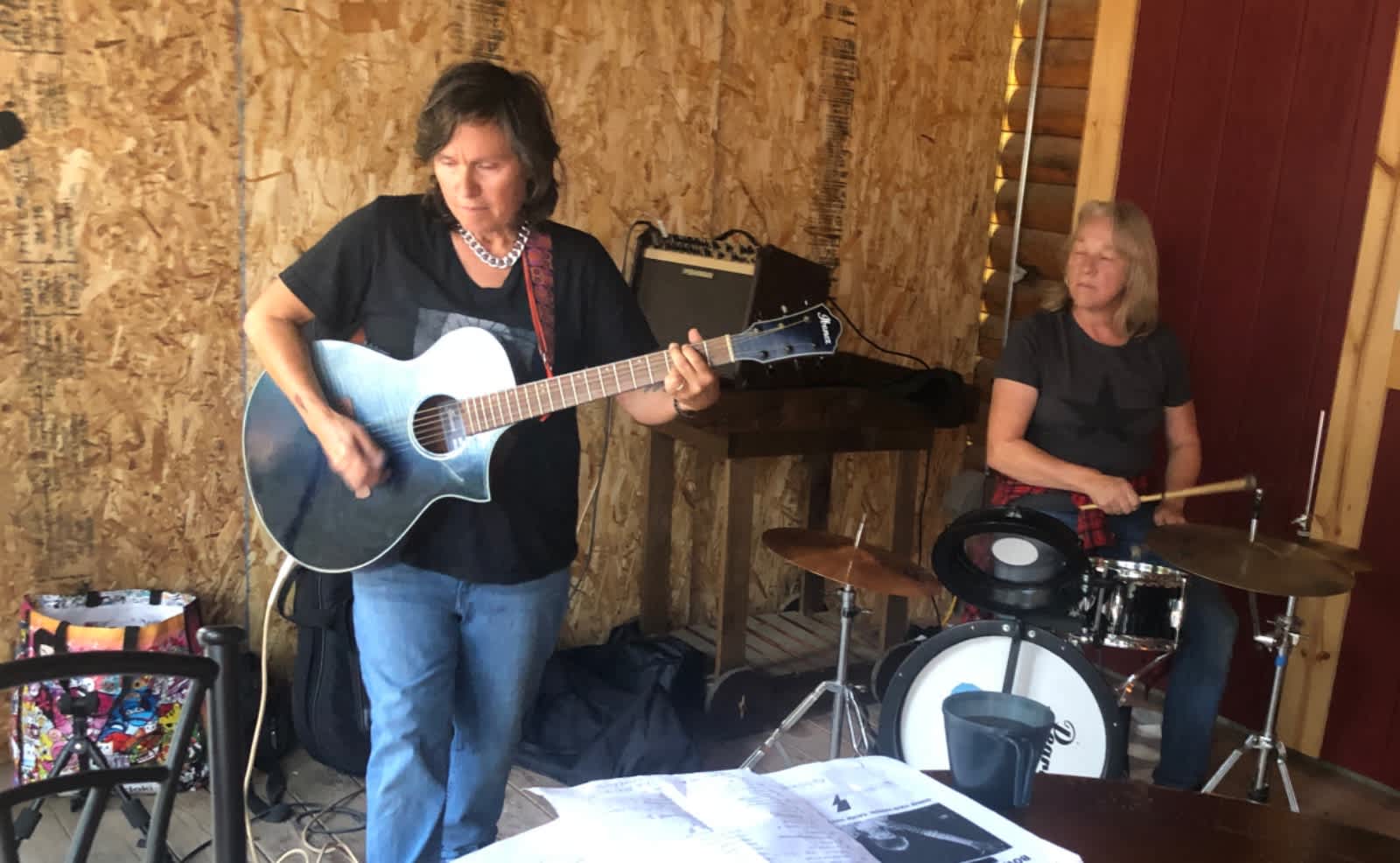
Natalie and Wendy, a couple from Chicago that are in a David Bowie tribute band who have been travelling around in their airstream. One of the subjects in Tom’s blog post titled, “Nomadlanders.”
On tour, Tom is part of what the staff like to call “the Trio,” three cyclists over 70 who are very strong and rarely ride in staff vehicles. The staff and riders are consistently impressed with their attitudes, strength and youthful outlook on life. We have a lot to learn from Tom, who has accomplished so much in his life but is so incredibly humble. He is not just cycling from point A to point B. He is using this trip to not only to expand his world view, but to teach others and give those a voice who would otherwise not have one. You can tell that Tom is incredibly open minded just by the way he talks and writes. His writing is all about learning new perspectives and educating others. It’s about lifting people up and celebrating who they are. If you happen to cross paths with Tom, you are truly lucky.
Isla Mccoll “Little Miss Chatterbox” – Tuktoyaktuk to Panama City
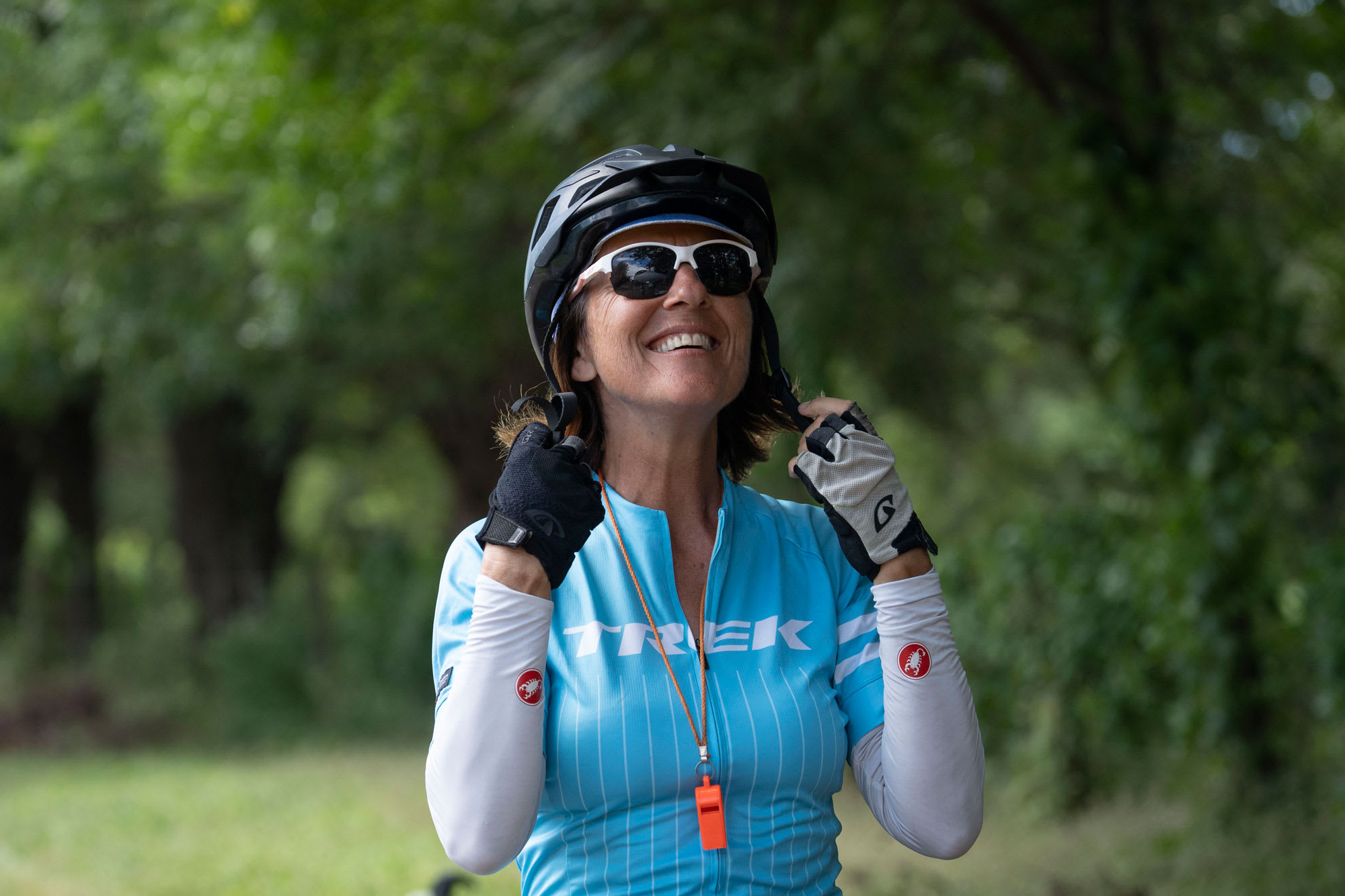
Isla is one of the most outgoing, genuine and friendly riders on tour. She is always asking how everyone is doing and striking up a conversation with whoever is nearby. You can tell that she genuinely cares about how you are feeling and loves to engage and listen to people’s experiences and stories. When I nervously asked her to be a part of this blog (being new to the tour) her face immediately lit up with a smile and she said, “I’m going to be famous! I’m going to be a superstar!” Just being around Isla makes one feel cared about, happy and ready to take life by the horns.
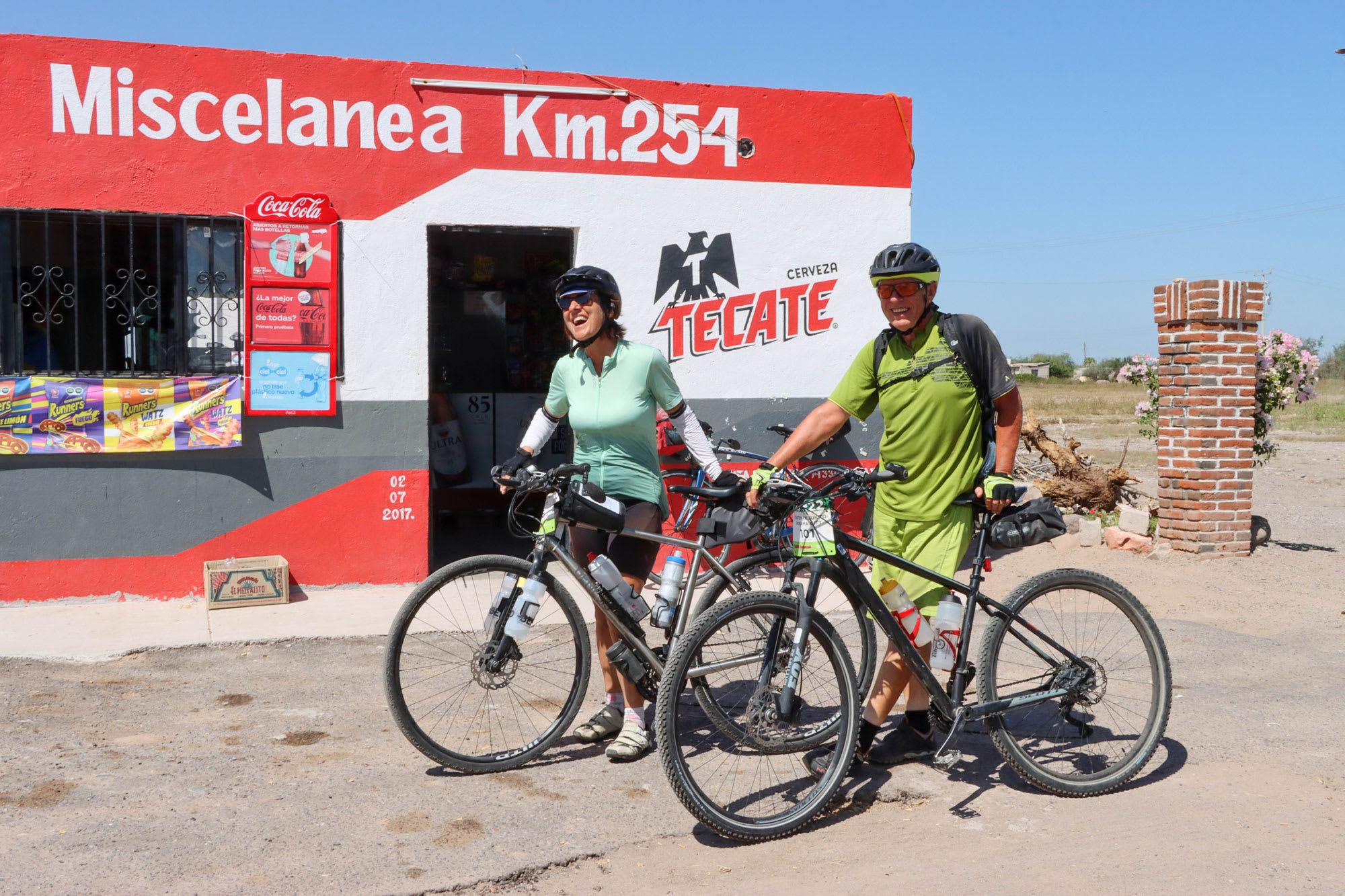
Isla and her “cycling husband,” Beat at a coke stop in Mexico
Her fellow riders have given her the nickname, ‘Little Miss Chatterbox,’ inspired by a book with the same title in the famous children’s picture book series, ‘Mr. Men.’ The riders even went so far as to make Isla her own picture book titled – Little Miss Chatterbox and Her Big Bicycle Adventure. The hilarious book follows the title character as she gets ready for the tour and makes new friends along the way. Little Miss Chatterbox encounters bugs, hard days and the fear of bears but she never lets it impact her positive attitude. She can speak four languages so Little Miss Chatterbox can sing, speak and write poems to all of her fellow riders.
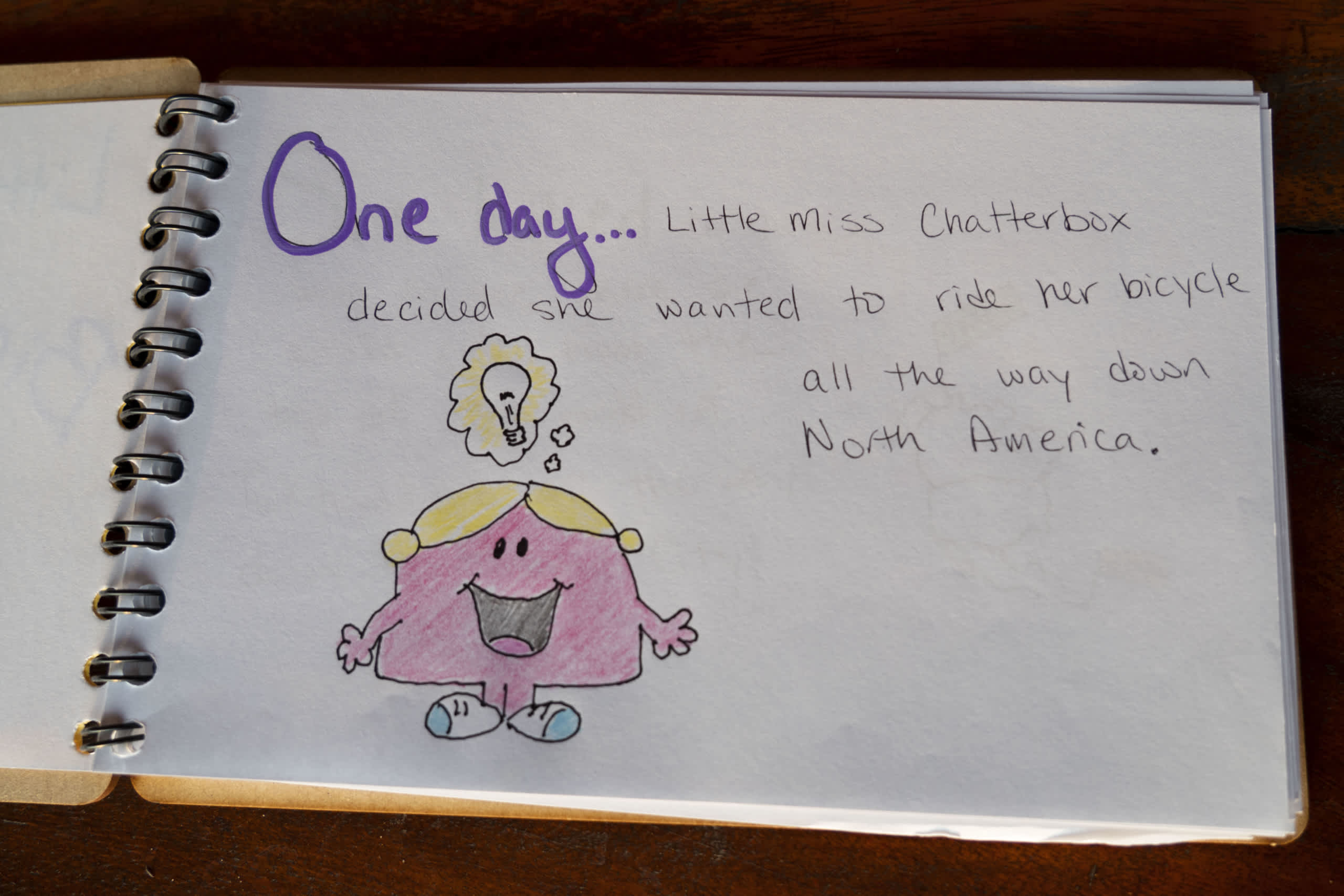
Isla got into bikepacking very gradually. She had always used her bike for commuting but had never really thought about using it to go on longer rides. When she met her now partner she started going on long day rides with him that eventually ended up spanning multiple days. In 2016 Isla decided that she needed a reset so she quit her job and cycled from her parents house in Scotland to where she lives in Switzerland. The trip took 2.5 months and Isla believed that there was a very clear before and after. Since then Isla has fallen in love with the slow travel that bike touring allows and wants ride her bike everyday. The North American Epic is Isla’s first supported bike tour. She chose to join the tour because of her desire to travel to remote places but she didn’t believe that she had sufficient experience to do it on her own.
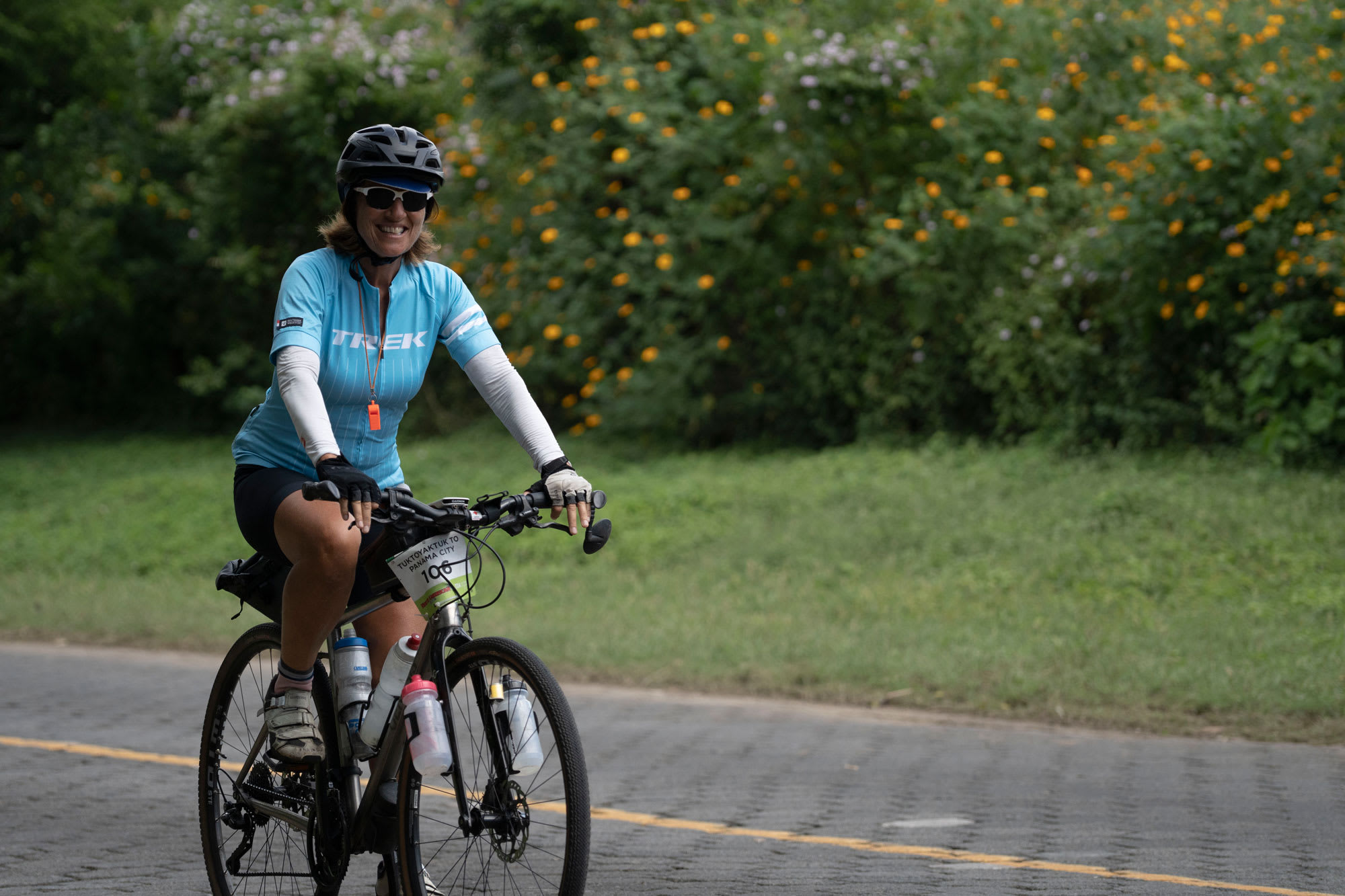
Recently on tour, Isla had gotten a few flats and had to quit cycling quite early on in the day. You could tell that she was bummed but in typical Isla fashion she remained her happy, smiley self. The next day Isla recalls that when she got on the bike and started riding she had this moment of just feeling so happy and giddy. She said that if she still felt that way after riding her bike for 5 months then she must really love it. You can sense that from her. She is so happy to be here doing this and she is not taking it for granted. She is trying to soak it up the best she can and spread her joyful spirit to the others in the group. We are all truly lucky to have gotten to know Isla over these last few months and we’ve all learned a lot just by being around her.
Stayed tuned for the next two parts of this three part series on riders of the 2022 North American Epic.
RELATED
TOUR
North American Epic
This incredible expedition is the only cycling tour that covers the entire North American continent, from the shores of the icy Arctic Ocean to the...
]]>
Everyone arrives in a country wth their own ideas on what to expect and the riders of the 2022 North American Epic were no exception to this. Our Content Creator, Alicia Arellano Nava, herself a native of the country, examines how accurate their preconceptions were.
The weather
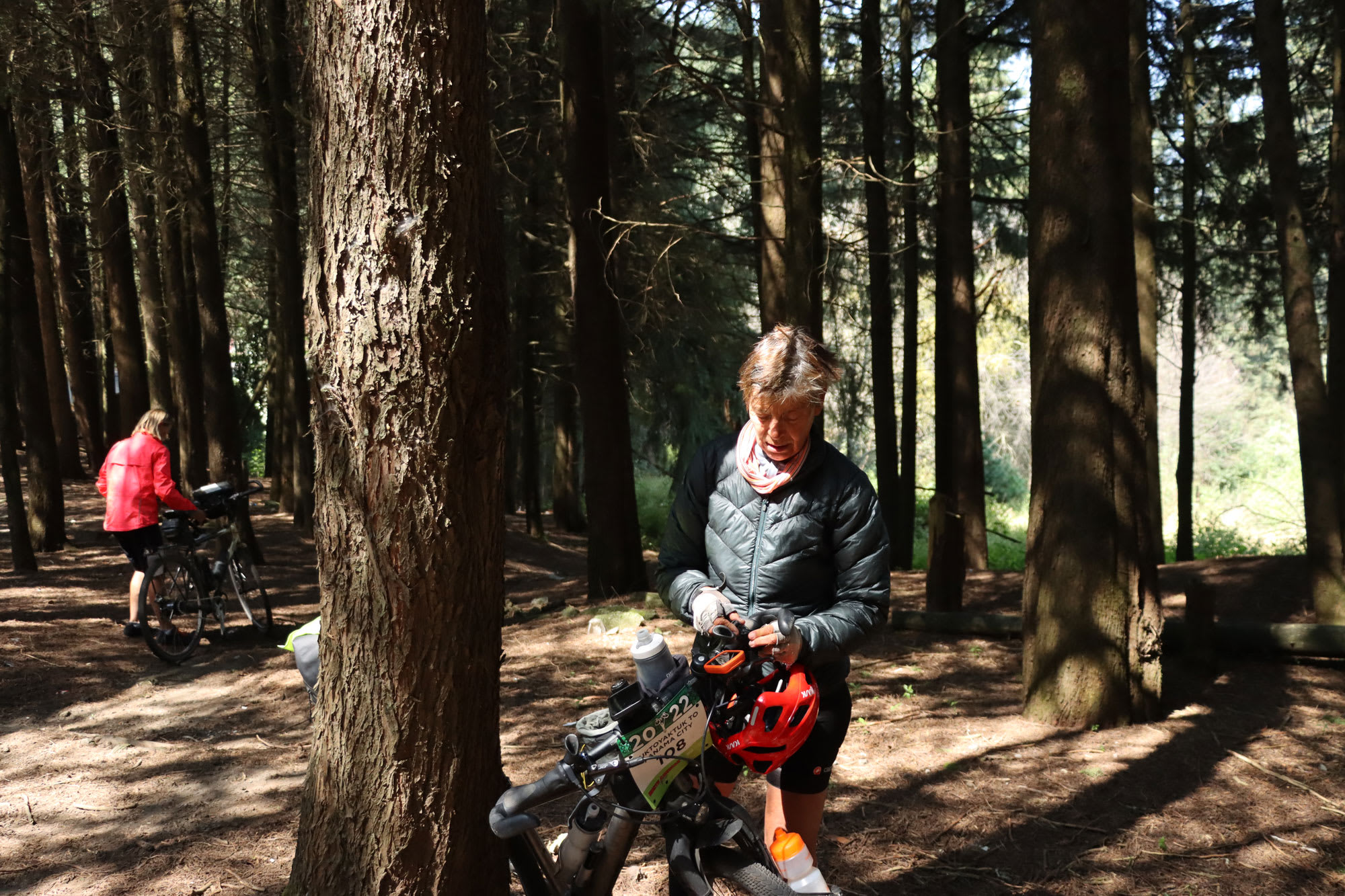
A cold day before arriving in Mexico City
Most of the riders were expecting very hot weather in Mexico. I don’t know why foreigners imagine Mexico as an eternally hot place. Probably because tourists usually go to beaches, which is where weather tends to be like that. It is true that we had sweltering days, especially when we got closer to the sea, but in general the weather was mild and cool most of the time. It all depends on where you go and the time of the year.
The geography
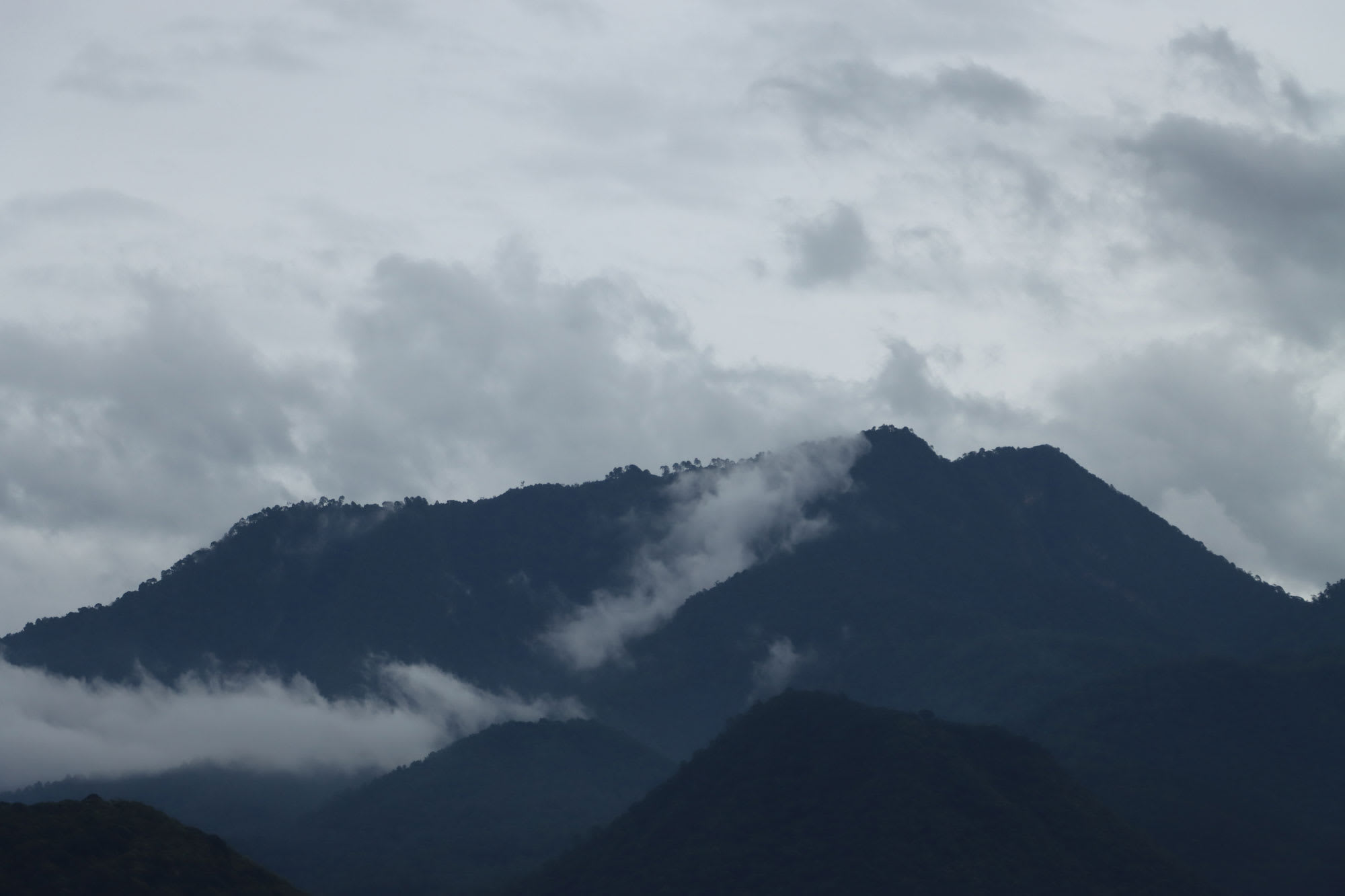
Mountains in the state of Jalisco
There’s also an idea that Mexico is a small country that can be traveled through in a few days. Nevertheless, this is the country where the North American Epic spends the largest number of days: 54 while in Canada it is 47 and in the USA it is 37. In fact, Mexico is the 13th largest country in the world and possesses a great diversity of ecosystems within different climates. Forests, jungles, deserts, grasslands, mangroves, islands, dunes, reefs and beaches abound. To the west, the waters of the Pacific Ocean bathe it and to the east those of the Atlantic.
This country is crossed by two mountain ranges and its highest peaks are three volcanos that exceed 5,000 metres in height. Days before arriving Mexico City, cycling through one of these mountain ranges, we reached an altitude of 3,000 meters and had to put our jackets on. On our journey south, we crossed 10 states of the 32 that make up the country, each one encompassing various regions of Mexico, where different indigenous cultures such as the Zapotecas, Mixtecas, Purépechas, Mayas inhabit.
People and culture
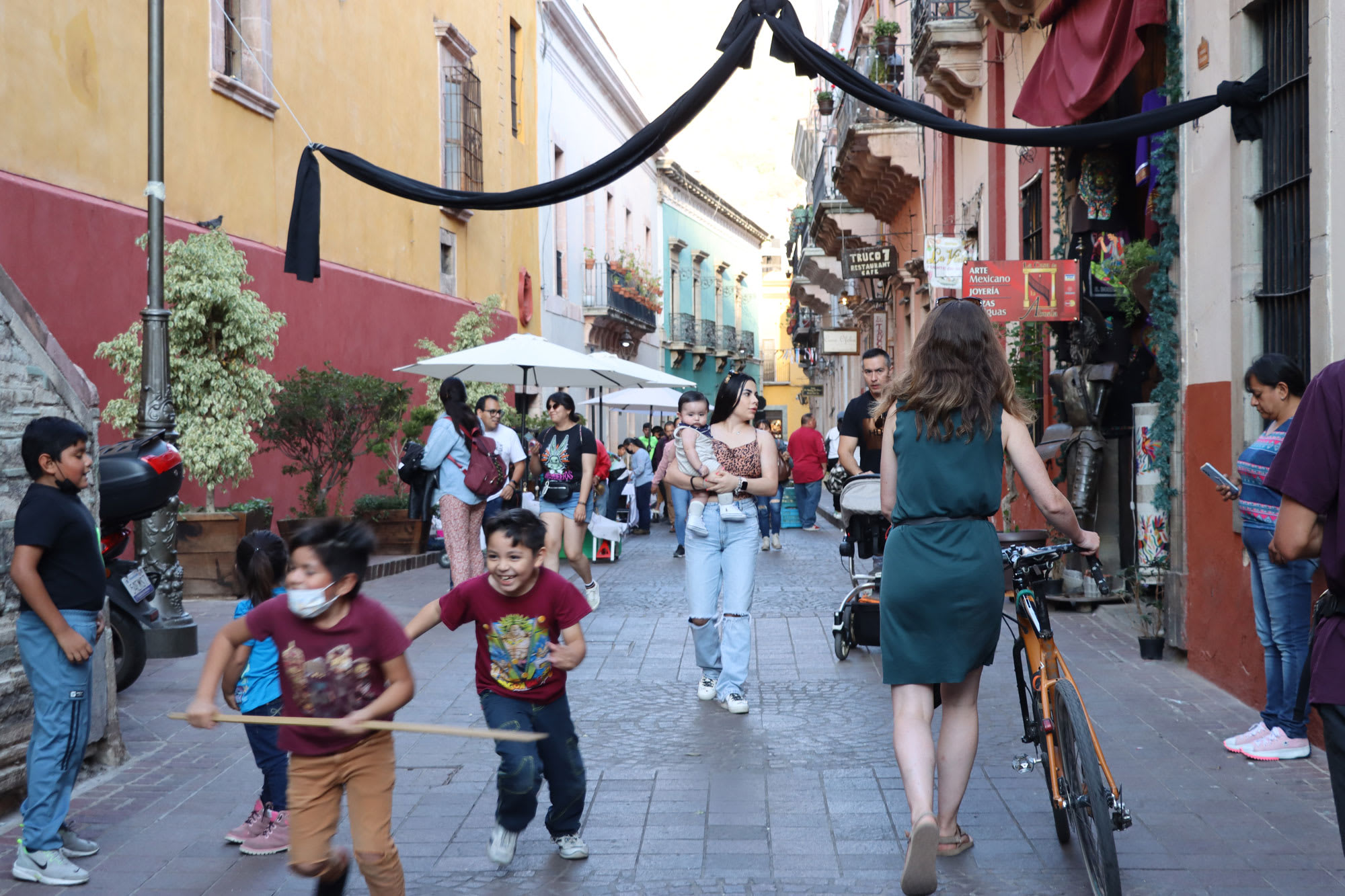
Walking in the streets of Guanajuato
You can feel Mexico the moment you set your eyes and feet on it. The Mexican culture is openly expressed through all the senses: smells, sounds, colours and flavours. In the United States and Canada, European and South African cyclists often asked “Where is everyone? I have not seen a single child.” It seemed that the towns were deserted. Mexico is the opposite. It seems that everyone is outside and nobody wants to stay at home. The laughter of children is heard in parks, streets and beaches and it is easy to observe the daily life of people. The streets are adorned with colourful papers, music, food stalls, and handicrafts.
Michel Lebel, from Quebec, tells me he’s fascinated by the kindness and hospitality of Mexicans. Trucks and cars keep a safe distance from cyclists and greet them. The people, although they do not speak English, offer a smile and do not hesitate to help and share the little they have. Every town we went to had a festival or cultural event. It’s hard to feel alone when you walk on the streets and find so much life. In our time in Mexico (October and November), we witnessed the Day of the Dead celebration, the International Cervantino Festival, and the anniversary of the Mexican Revolution. Riders and staff were amazed to find so many things happening!
Food
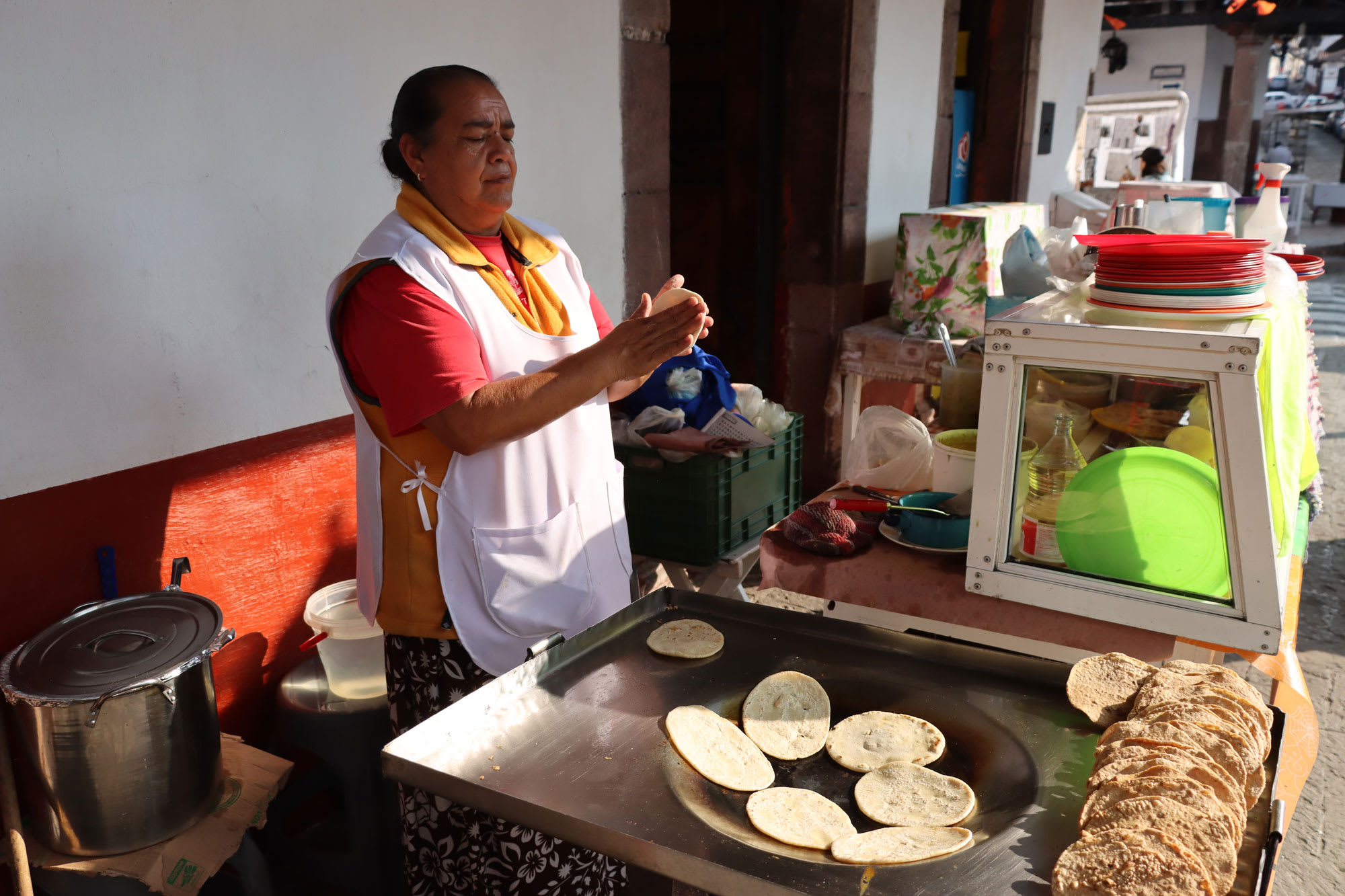
Woman making sopes and handmade tortillas
Maybe you think that in Mexico we only eat tortillas, tacos and beans. However, after visiting a few Mexican restaurants or street food stalls, the taste buds of the riders were met with an explosion of flavours from the various Mexican dishes and ingredients. The culinary diversity that the country possesses is impressive, so much so that it is considered a Cultural Heritage of Humanity by UNESCO. Unfortunately, stomachs can also suffer from a diet change. The first day we arrived in Mexico, I told riders that in order to survive here they needed to consume vitamin T, a local vitamin that includes tacos, tamales, tortillas, tlacoyos, tequila, tlayudas, tortas, tostadas… A small tasting of a very authentic cuisine.
Anyone visiting Mexico will be surprised to discover that nachos and chilli con carne are practically unfamiliar to us. The dishes that shine in Mexican cuisine are pozole, mole, chiles en nogada, sopes, enchiladas, chilaquiles, tacos and unique dishes from each state or region. By the way, tacos are not per se a dish, but a way we eat our food. We wrap any kind of food inside a tortilla. Roll a tortilla and then you have a taco! Therefore, we have several kinds of tacos. Tacos al pastor are one of the most famous ones. You have to try them. There is also a vegan or vegetarian version. Travelling Mexico without tasting it is missing a great part of the country. You need to have a stomach and a palate willing to experiment. And if coriander is not your thing, don’t forget to say “sin cilantro por favor”, as the herb is a big ingredient in Mexican cuisine.
The challenges
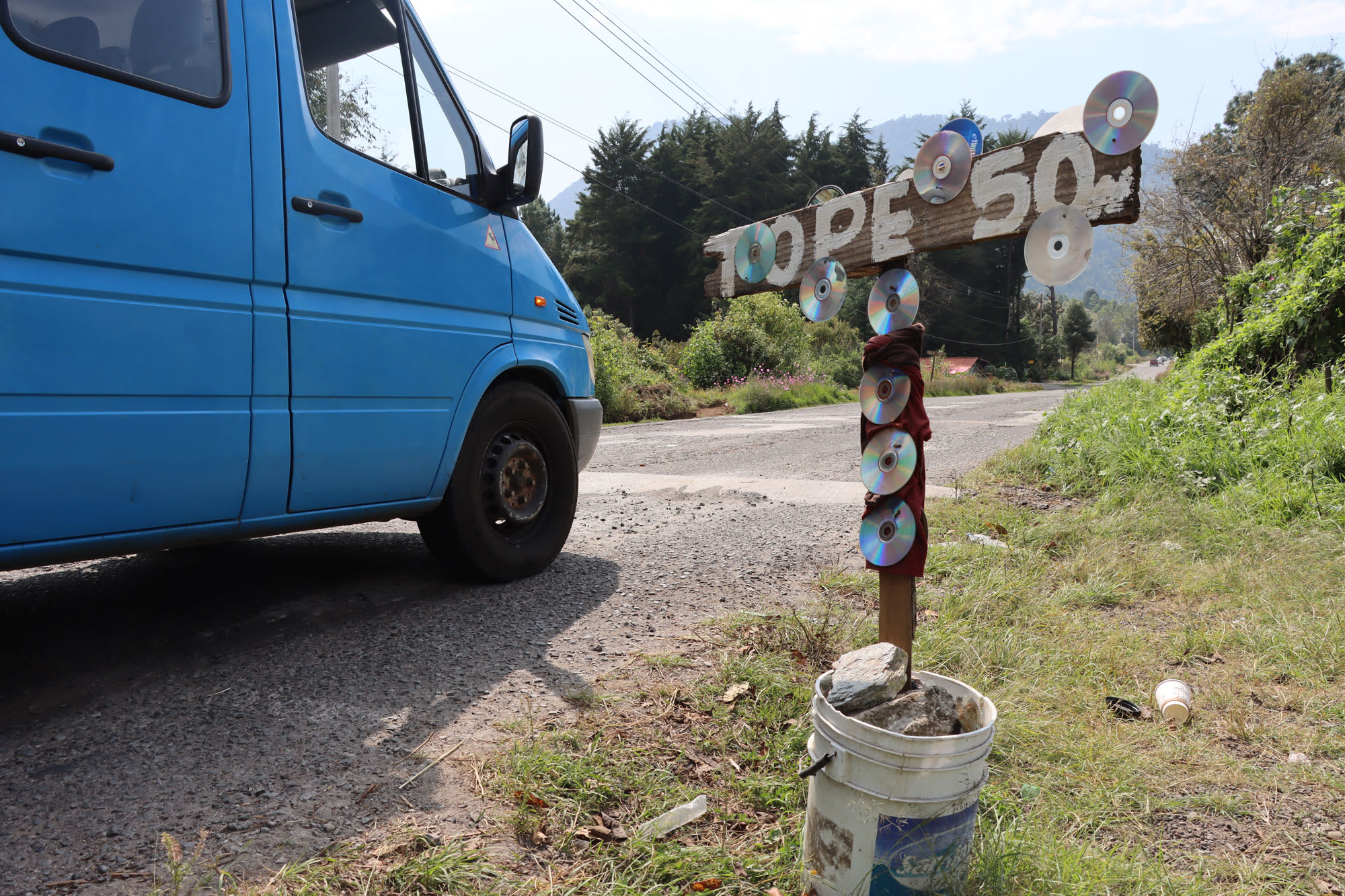
Tope country
For some riders, the hot and humid days we had next to the ocean presented a challenge, as well as the cobble stone roads, potholes and speed bumps. Welcome to tope country! You see so many. Tope is the word for speed bump in Mexico. Mexico also has an international image linked to corruption, insecurity and drug trafficking. The tranquility of the country has been affected by criminal organizations that create distrust among the population, however, throughout the entire tour we experienced the opposite. It is impressive to see the kindness of all the people and their willingness to help.
One concludes that its inhabitants are not defined by its government or by drug traffickers. The blockades that we find on the roads, due to local protests, tell us that it is a very active country in social struggles and that the population is interested in recovering the tranquility and civil rights that were taken away. Perhaps the biggest concern were street dogs, who seem to have fun chasing bikes, but the riders have been learning how to deal with those situations.
México lindo y querido
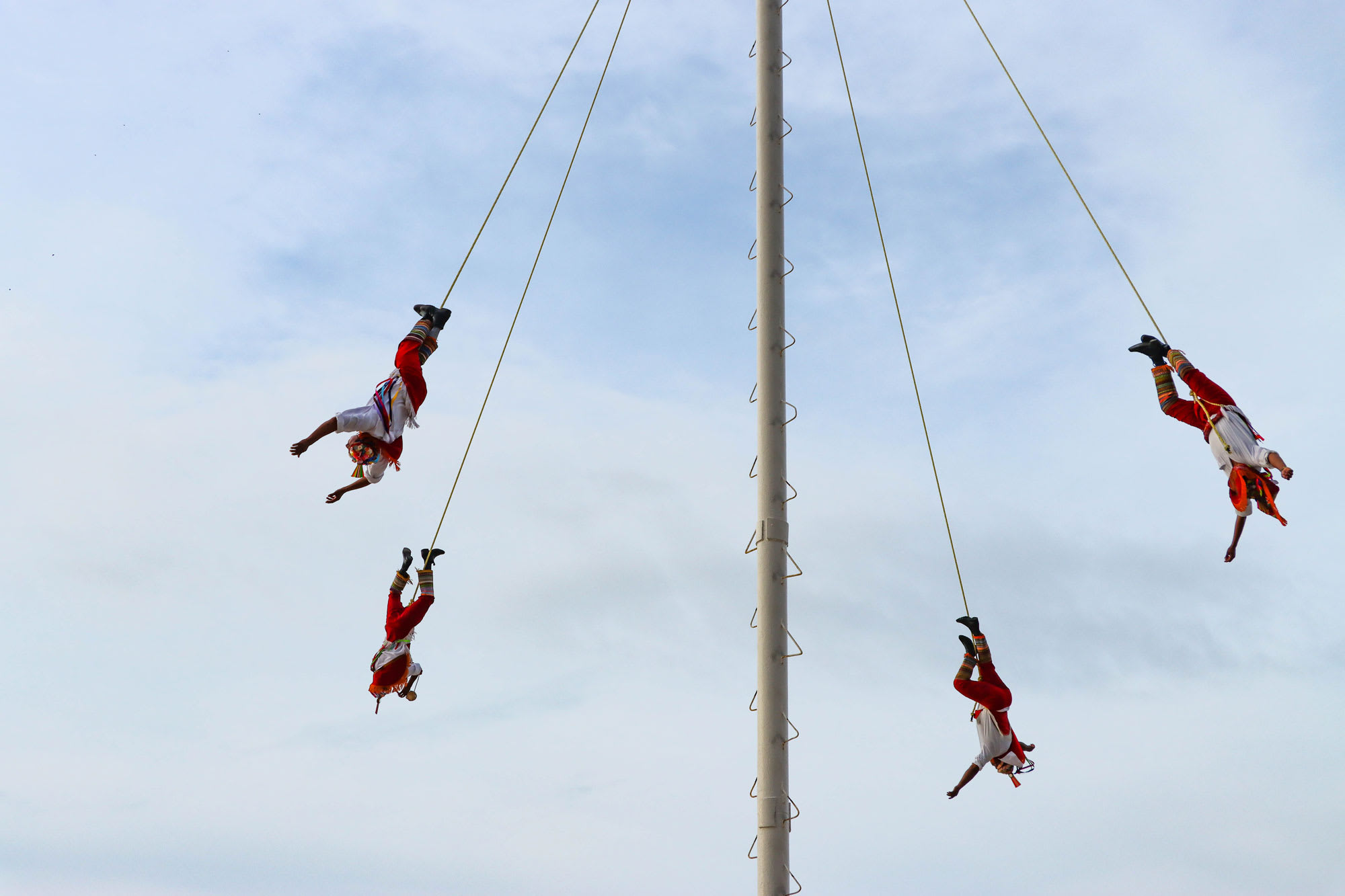
Voladores de Papantla
Mexico is a very diverse country in every sense. The colours of the flag are seen everywhere, even on dishes. Every state and every corner has something magical to offer. Its history is fascinating and the archaeological ruins of the civilizations that previously inhabited Mesoamerica can be seen throughout the country. As a Mexican, many aspects of my culture go unnoticed when living every day in my country. However, after spending a month riding in the United States and coming back to Mexico, the change from one culture to another is very evident and it is easier to appreciate one’s own and recognize contrasts and differences. I think this a very positive aspect of travelling slow the way we do it – recognizing our countries in both their strengths and shortcomings.
RELATED
TOUR
North American Epic
This incredible expedition is the only cycling tour that covers the entire North American continent, from the shores of the icy Arctic Ocean to the...
]]>
Hans van der Wulp is a Dutch rider cycling the North American Epic from Tuktoyaktuk to Panama City. He looks back at one of the memorable experiences from his journey.
When we travel, we open up, we learn, we absorb, we get amazed. Travel slow and you see more, feel more. Be in the moment and don’t hesitate to start a conversation with a stranger; you will be amazed what you may learn. On July 8th I started my first long distance biking expedition, one that would take me from Tuktoyaktuk, at the edge of the Arctic Ocean, to Panama City – a 5 1/2 month long journey across North America covering more then 14.000 kilometres. My mind could not comprehend the challenge laying ahead of me so I told myself I to take it day by day and live in the present rather then in the future. My fellow North American Epic riders and I cover, on average, a daily distance of 100 km, four to six days in a row. This is followed by a rest day in a hotel to recharge the body and mind.
The ‘band house’
Along the way I have had the privilege of meeting a lot of different people, each with their own interesting story. One, in particular, left a huge impression on me. After a rest day in Fort Nelson our cycling stage was to take us south to a bush camp near Prophet River. After breakfast we decided to hang around in the lobby of the hotel. The day’s ride was only going to be 105 km and we would be staying in a bush camp (zero facilities), so why rush? At around 08:30 we hopped on our bikes and left the Super 8 hotel behind. A good hour into the ride we saw a car parked on the shoulder of the road. This usually either means car trouble or wildlife in the area. When we arrived we saw two birds in the bush, long legged with colourful heads. The lady in the car, who had binoculars, told us we were looking at sand hill cranes and that they were very rare.
In just over 2 hours we reached the lunch stop. Somehow we managed to stay out of the rain but I was a bit cold as the temperature had dropped to around 10C. We still had some 45 km to go to our campground but there was supposed to be a coke stop at around 90 km. We had our hopes set on that but when we got there we found only an abandoned gas station on the right hand side of the road. I saw a fellow rider across the street eating something so I thought the store was across the road. Unfortunately, this was not the case. It was a Canadian Post Office which was now closed. Then a red car pulled up and a lady, Lorraine, stepped out. I started a conversation with her and asked whether there was a store nearby. She thought briefly and said there is a ‘band house’ where we could possibly get some food and drinks. After a short phone call she told us to follow her car.
Not knowing what a ‘band house’ was, nor where we were going, we decided to follow her anyways. We arrived at the beautiful Community Centre of Prophet River First Nation, which is located 100 km south of Fort Nelson, British Columbia on the world-famous Alaska Highway at Mile 233. The community reserve is 924 acres in size. The traditional territory of the Prophet River First Nation is situated mainly in the boreal forest region of northeastern British Columbia. It has a population of around 275 members. These First Nation people are from the Beaver Band tribe with an elementary school, a health clinic where a nurse takes patients two days a week, kitchen, basketball court etc. Lorraine offered us Gatorade and asked whether we wanted coffee or a hot drink for the cold day. Of course!
 She took us to the boardroom and soon we were eating hot soup, drinking coffee, eating biscuits and chatting to several people of the community about the education, languages, elders and life within the First Nation community. When the US soldiers constructed the Alaska highway in 1942 they used heavy equipment. The First Nation people had never seen a bulldozer and described this as a huge animal with brights eyes that was eating trees. A white man seemed to be trying to tame the wild animal but did not seem to be in control!! Up till 1942, these people had limited interactions with others, they did not speak English and did not know what alcohol was. The Alaska Highway changed everything but not always for the better.
Alcohol addiction started with the construction of the Alaska Highway and has been a problem ever since. Many of them still struggle with addictions. First Nation members did not benefit from the construction of the highway at all. A few times they were asked to act as guides for planning purposes but other then that, they had no involvement whatsoever. Can you imagine how they must have felt as part of their land was taken away abruptly? The conversation continued to be very open and we listened intensively to their stories. One of the members told us about her parents being abused in the notorious boarding schools. She later ran away from school several times because of physical and verbal abuse. The government has admitted their wrongdoings and there is the possibility to claim for compensation. However, if the traumatic experiences are such that you are unable to talk about it with your children, the compensation is only theoretical.
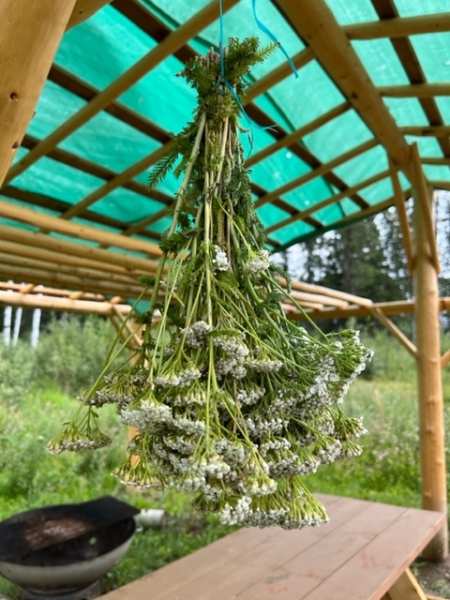
Keeping the bugs at bay
The group structure is one of the important backbones of the First Nation peoples. Elders came together frequently to decide priorities and tasks for the season. Important roles were for the ‘dreamers’ and the ‘drummers’. Dancing around the fire to the beat of the music and singing songs cleared you from your sins. Unfortunately, nowadays there are less and less ‘dreamers’ and ‘drummers’. Decisions are made on how much game (wildlife) is needed to survive the winter. Essential skills like skinning a moose are passed on from generation to generation. With a shrinking population and young First Nations people moving to bigger cities, these skills are likely to be lost soon.
In the end we were shown around the facilities and were introduced to plants that would help us to keep mosquitos away. Maybe TDA needs to consider inviting First Nation’s people to the initial briefing in Inuvik so the riders may potentially save on bug spray and end up with fewer mosquito bites. Overall it was a priceless experience that afternoon. We were just so lucky to be in the right place and the right moment, talking to a stranger.
RELATED
TOUR
North American Epic
This incredible expedition is the only cycling tour that covers the entire North American continent, from the shores of the icy Arctic Ocean to the...
Alicia Arellano Nava is the Content Creator on the 2022 North American Epic. She sends this report from Chapala, Mexico.
We crossed the border between the United States and Mexico and were travelling along the road that goes from Mexicali to Chapala. The last two days, in Puertecitos and Rancho Grande, we had camped right in front of the beach. We were getting used to have our bare feet in contact with the sand, as well as diving into the warm waters of the Gulf of California after a long day on the road. However, we were determined to cycle the 1250 kilometres that comprises the Baja California Peninsula, from the top to the bottom.
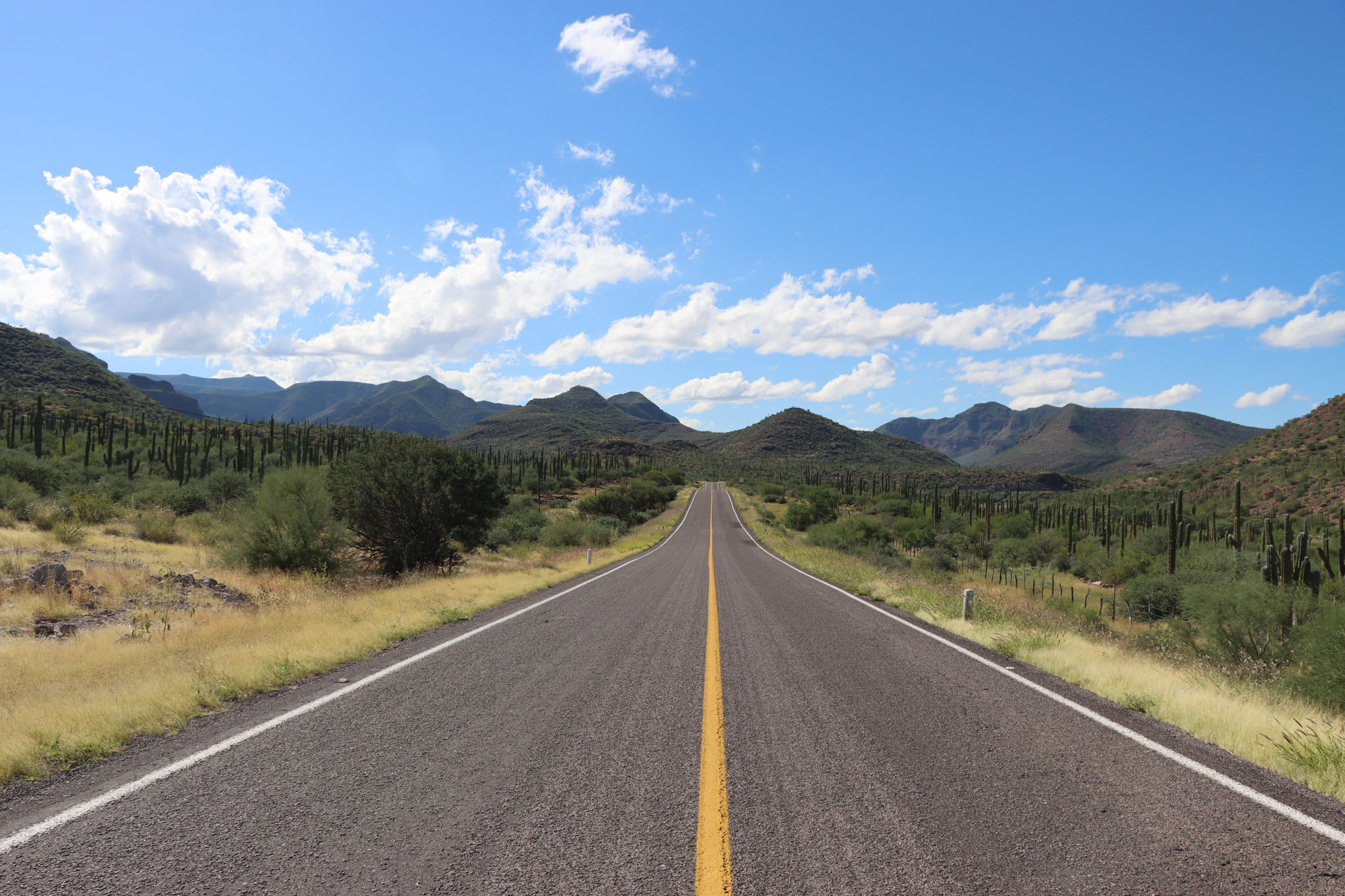
We went to Chapala to find the intersection of Highway 5 and Highway 1. Highway 1 is the iconic road of Baja California because it runs down the entire peninsula: from Tijuana to Cabo San Lucas. We arrived in Rancho Laguna de Chapala to camp. A blue house, very humble, and with a neglected appearance, was the first thing we could see. Behind it there was a huge field with farm animals, chicken and horses. This view included a couple of old rusty trucks, pieces of iron scattered on the grass and a man chopping wood. Cyclists were milling around an internet antenna. It was the first time in three days we had Wi-Fi, a long period of abstinence for modern life.
I found Eugenio Grosso sitting outside the door of his house. “Hola, buenas tardes,” I said, and we started talking. He surprised me with his conversation. His grandfather, father and the ranch where we were, are an important part of the history of Baja California. He told me there was a book about it and when he asked me about my role in the North American Epic Expedition and found out that I was the Content Creator, he became excited and asked to tell me the whole story and appear in a video.
Yuyi, as people close to him address him, was the grandson of an Italian immigrant, Eduardo Grosso Boitare. Eduardo arrived in Mexico in 1885 and would soon have several sons and daughters that, later on, would be part of the development of the peninsula. His father, Arturo Grosso Peña, was born in 1892 and was a soldier and then a lieutenant at the time of the Mexican Revolution. He fought alongside Abelardo L. Rodríguez (former president of Mexico) and Pancho Villa (one of the main leaders of the Mexican Revolution). While with Pancho Villa he witnessed great massacres between Mexicans and Americans. Something that he didn’t like because he had empathy towards both sides (he grew up in Mexico and went to school in the United States). For this reason, he decided to leave the army and return home to Baja California.
General Abelardo L. Rodriguez found him and instead of executing him for desertion spared his life but as a punishment, ordered him to build one of the first roads in Baja California. It started in El Rosario (177 kilometres north of Rancho Chapala) and finished in El Arco (about 140 kilometres from his ranch). He built around 330 kilometres of road from 1925 to 1926. Quite a feat for that time. He would move to Chapala in the 1950’s and in the seventies, he would find then Mexican President, Luis Echeverría, in the area. Arturo Grosso asked the president to use the area’s taxes for the construction of a new highway in Baja.
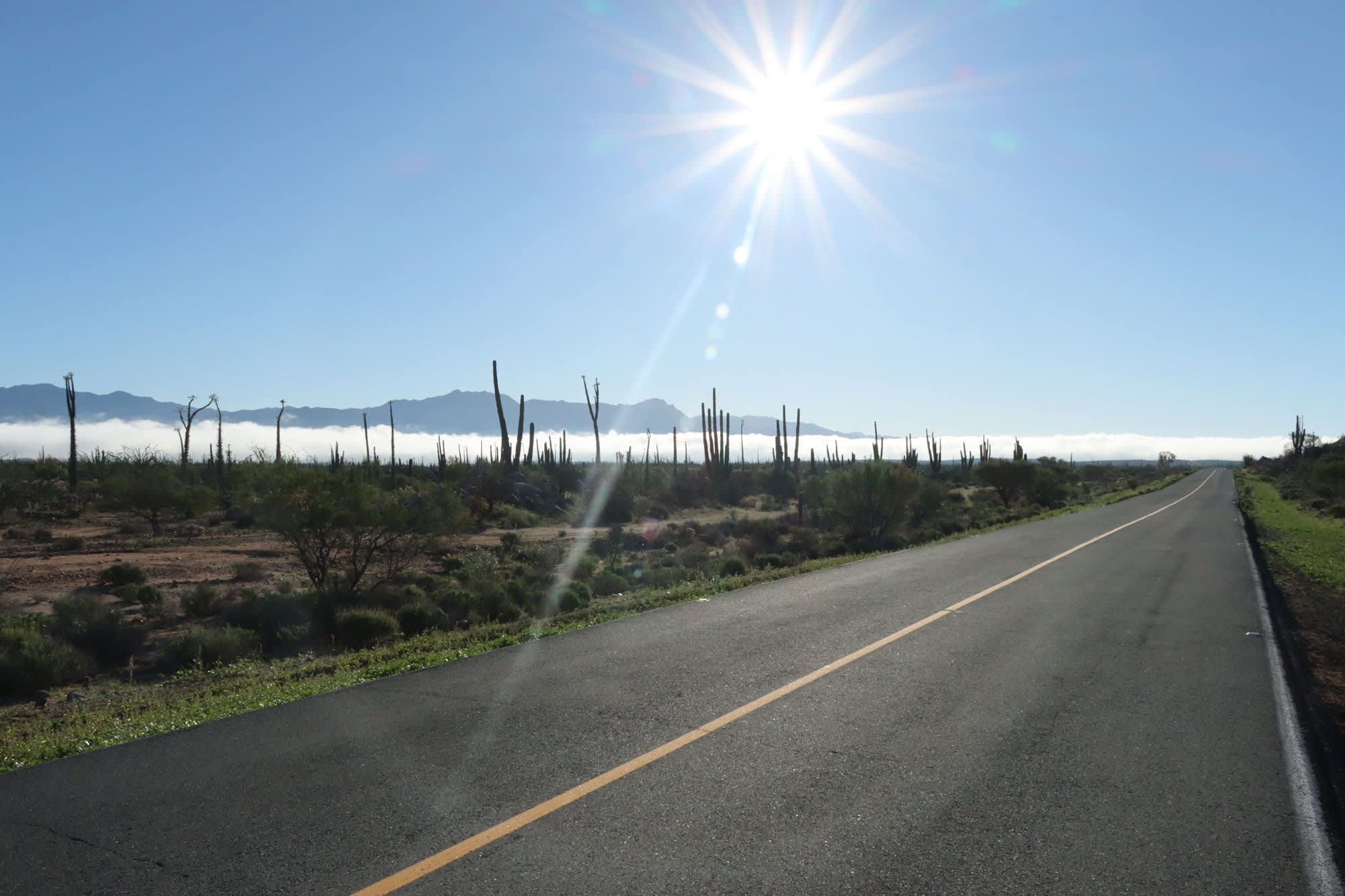
Highway 1
This was how Highway 1 was built and the route would be based on part of the road that Yuyi’s father built. Don Eugenio knew by heart all of the events and exact dates. He told me that in 1979 he started a lonchería in the ranch, just next to Highway 1, so any traveler could stop at his place. It was not until 2019 that the lunch shop closed and his daughter opened a restaurant a few metres from it: Restaurant Nueva Chapala. None of us would have imagined that this ranch, in the middle of Baja California desert, could hold so much history.
The next morning, we packed our tents, wet from the morning dew, and headed towards the Pacific Ocean following Highway 1, a road that had come alive since Don Eugenio had revealed its incredible story.
RELATED
TOUR
North American Epic
This incredible expedition is the only cycling tour that covers the entire North American continent, from the shores of the icy Arctic Ocean to the...
Alicia Arellano Nava is the Content Creator on the 2022 North American Epic. She sends this report from Mexico.
A long distance journey can have many effects on the participants undertaking such a challenge. Here are two things that I have noticed being altered on the the 2022 North American Epic Cycling Expedition.
Time
Our sense of time is lost when we are cut off from the rhythm of life that governs modern societies. Without thinking too much about tomorrow, about duties like shopping or cleaning the house, we live from day to day. Monday, Thursday or Sunday are all the same to us. We don’t really know what day it is. We are not excited if it’s Friday, because everyday is like a Saturday. We are more interested in the direction of the wind, whether the day is sunny or cloudy, our speed, the elevation of the terrain or finding spots on the road to refresh ourselves: lakes and rivers for example, but more often coke stops!
Such thoughts and interests remind me of Shackleton’s Endurance Expedition, where the ship’s crew drifted on the Weddell Sea for several months and the men were obsessed with the weather and the direction in which the wind was taking the ice pack on which they perched. I can’t avoid smiling knowing that I can understand, even a little, what occupied the minds of ancient explorers. Life on a long journey or on an expedition feels different. It’s like living another life.
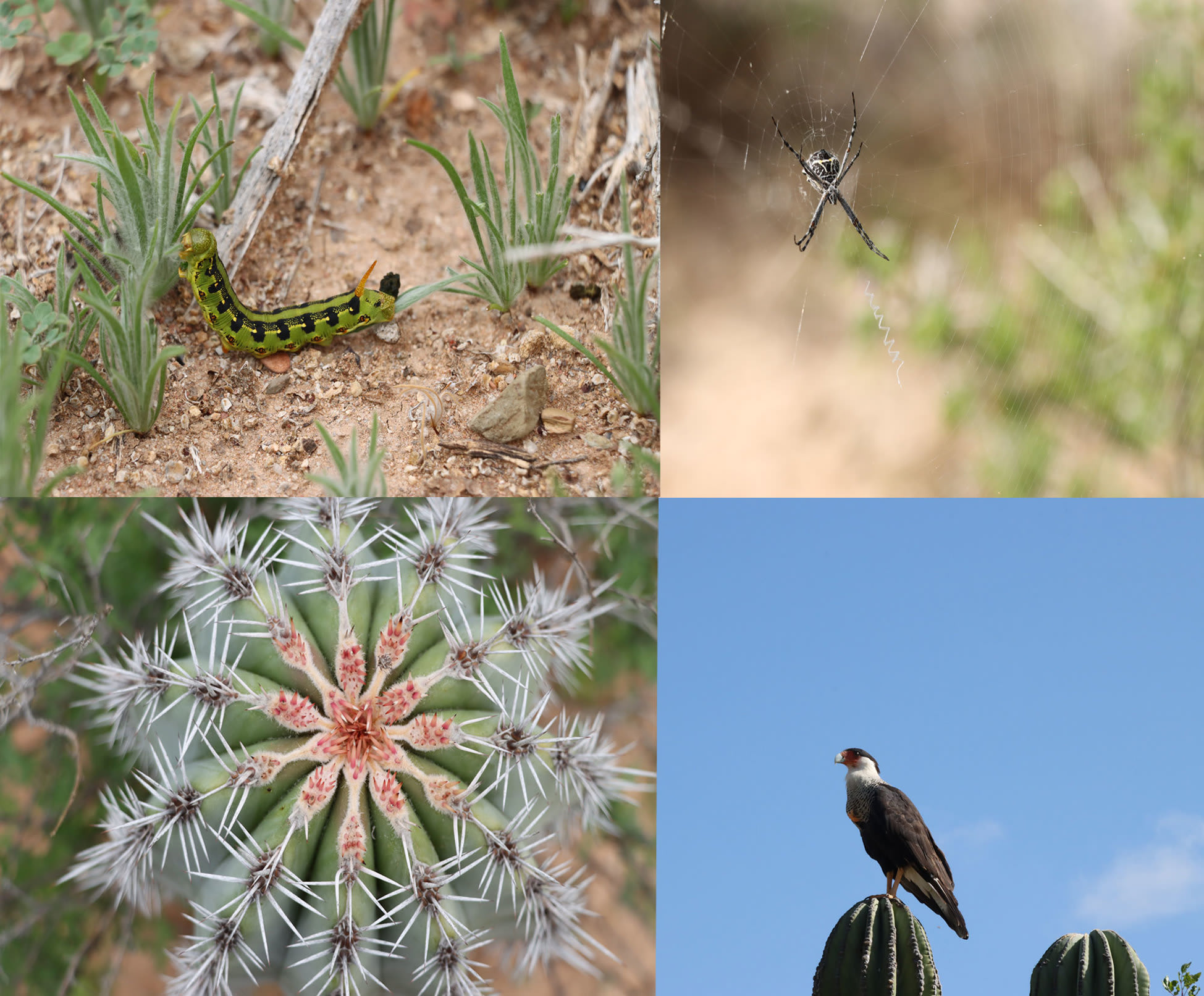
Time passes very quickly and at the same time very slowly. In a few days or weeks, we travel hundreds of kilometres, jump from one town to another and cross several borders, but in the course of days we can contemplate the land that surrounds us, the movement of the sun and the moon, hear the grass whispering, lie face up in a lake or ocean, and discover vegetation, flowers and animals that usually go unnoticed when travelling by car.
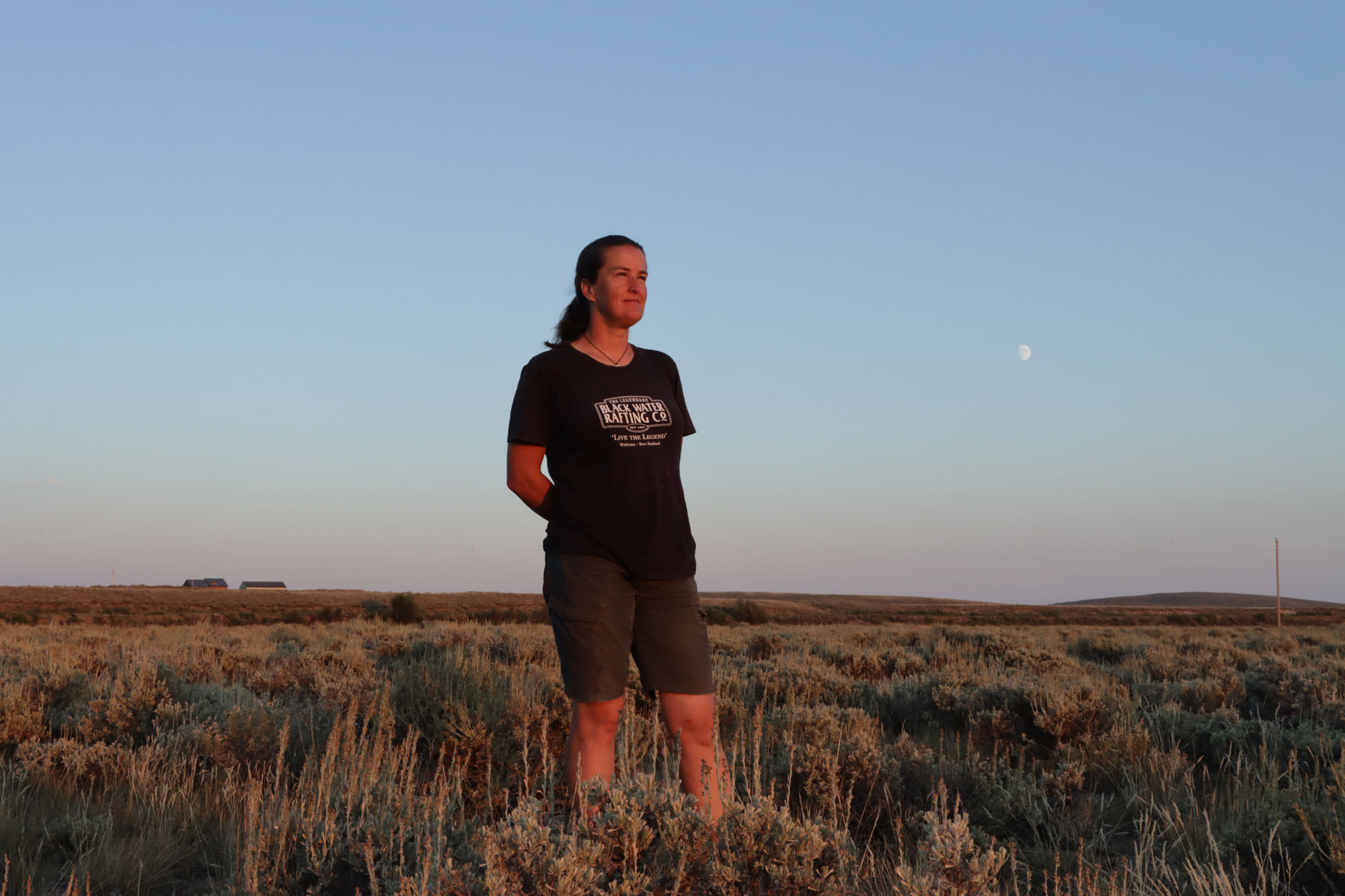
Colleen (the chef), always spotting birds in the distance and finding footprints
I have learned a lot from Christopher and Colleen, the medic and the chef of our expedition. From Oklahoma and South Africa respectively, both have spent a great amount of their lives surrounded by natural landscapes and wildlife, which seems to provide them with an innate curiosity to discover the world and learn from it.
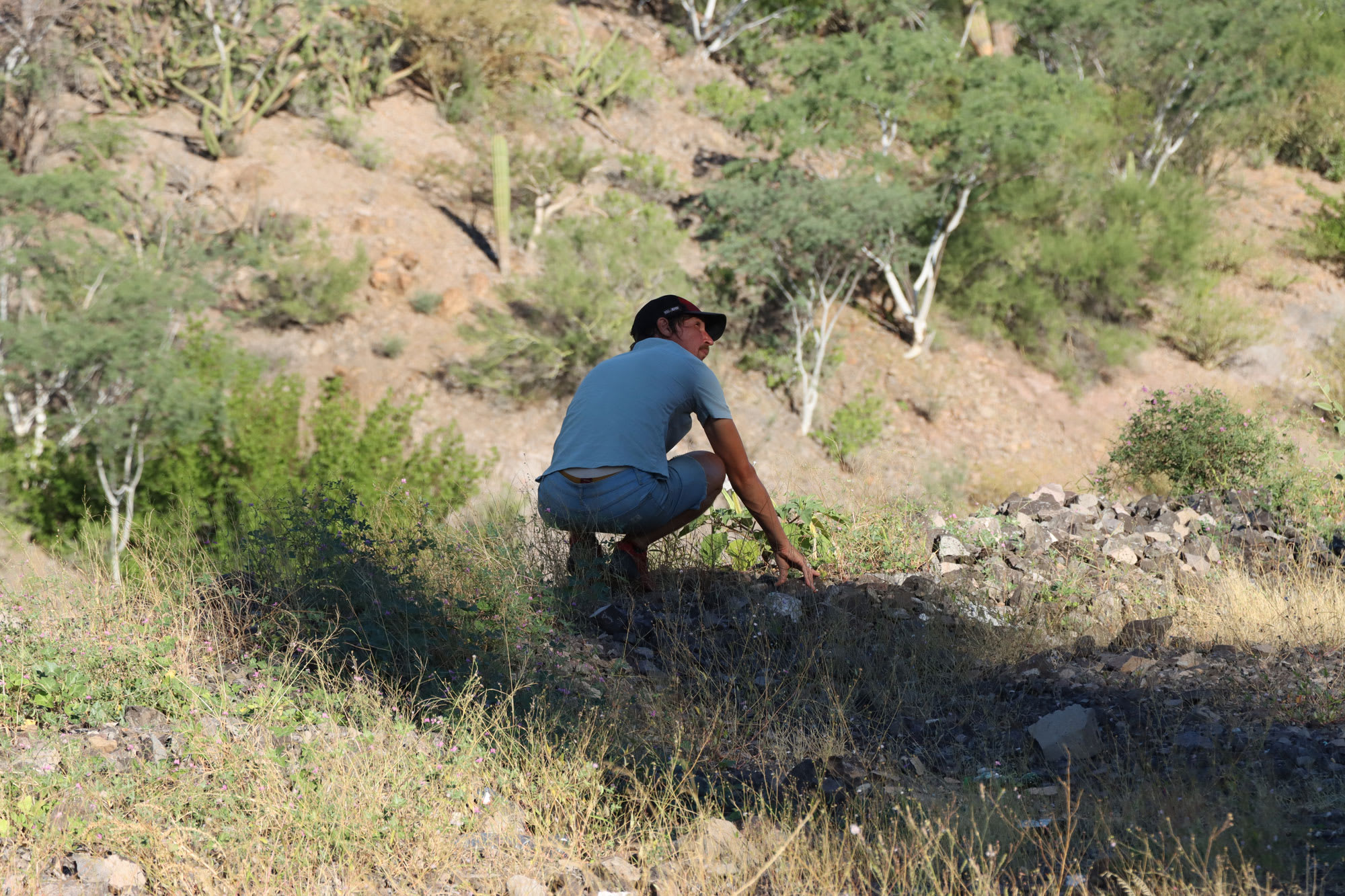
Christopher (the medic), always finding lots of creatures in places where seems to be nothing
Their bird’s eye view allows them to recognize any bird in the distance as well as distinguish the footprints or traces of different animals, plus a refined ear to identify the song of each bird.
Space
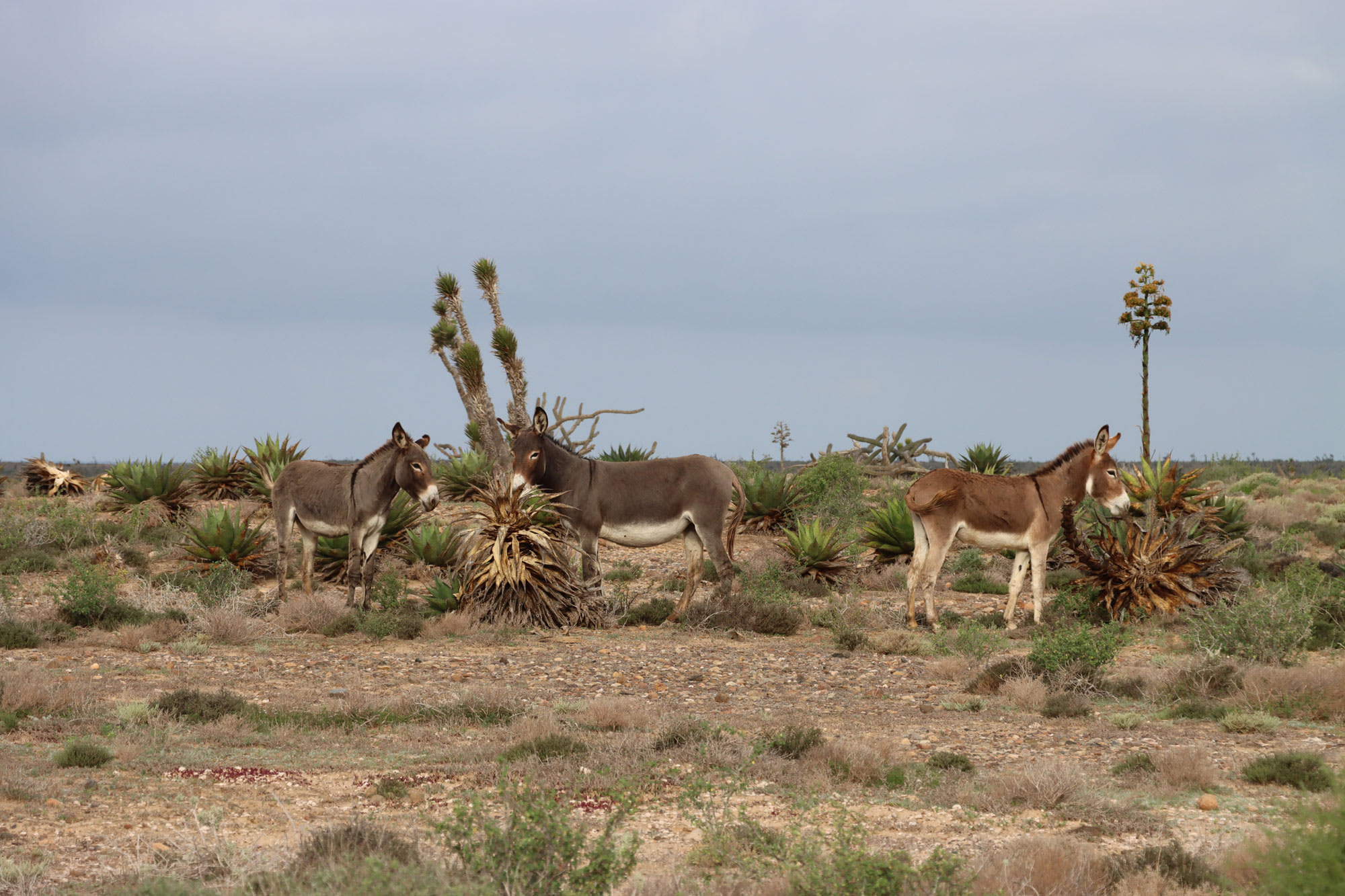
It has been fascinating to immerse myself back into the natural world after two years of lockdown. Observing all of this spectacle, in addition to blurring my sense of time, has also altered my perception of borders and territories. Human created divisions fade in the rhythm of our journey: we no longer recognize geopolitical divisions so much, but rather ecosystems and subtle and gradual changes in the terrain.
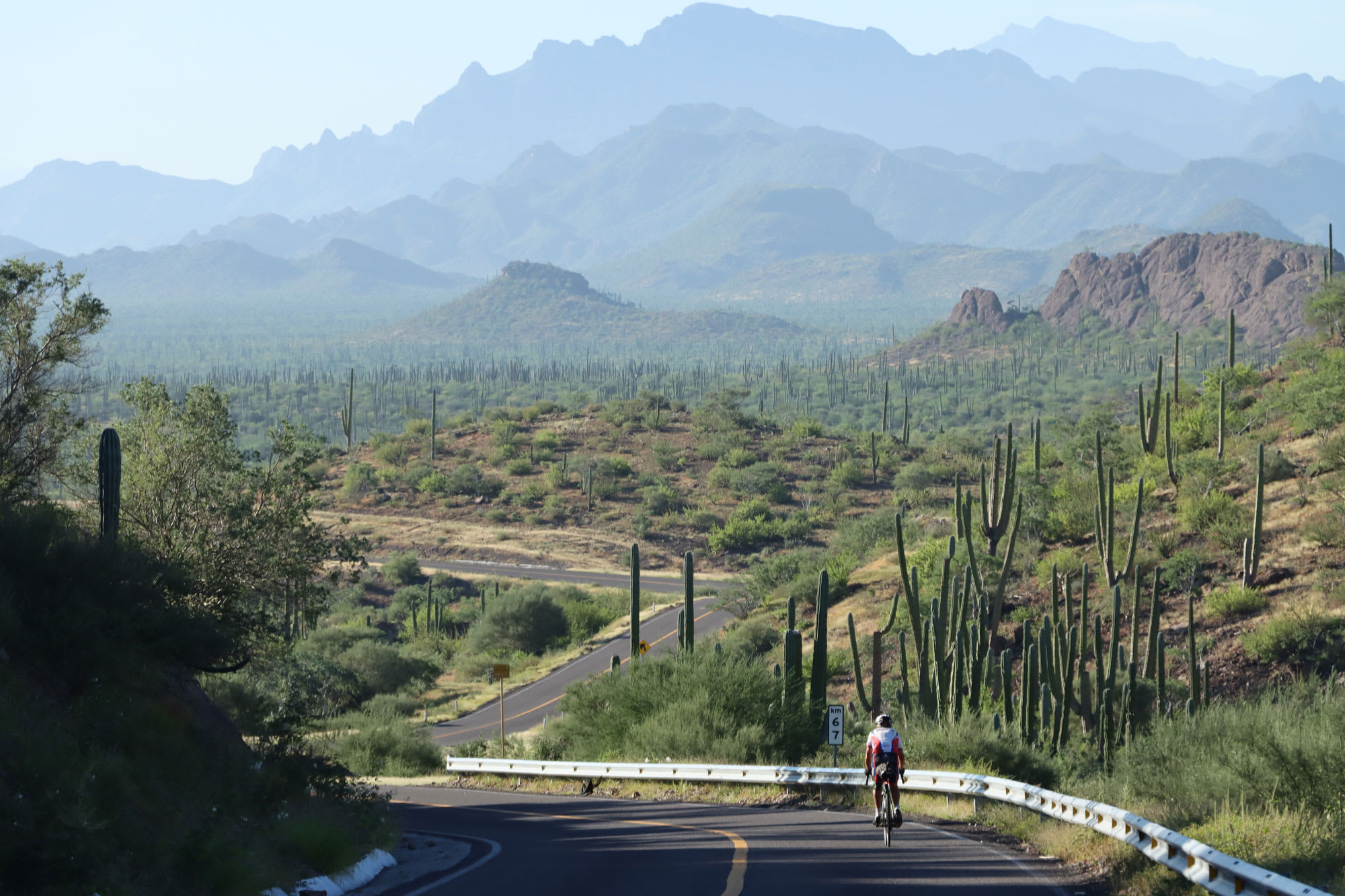
There is not much difference between the landscapes of Arizona and the landscapes of northern Mexico; however, there is a giant and ridiculous wall that marks when one place ends and another begins and that also blocks the migrations of various wildlife species such as coyotes, wolves, birds and insects.
Immanuel Kant tells us that the idea of time and space are qualities of human reasoning and they do not belong to the world itself. That is, through an idea that we build of time and space, how we perceive the world. And I believe that each member of this expedition has seen the conventional space-time constructions challenged multiple times. Therefore, we have perceived the world in a very unique and special way, far from ordinary.
RELATED
TOUR
North American Epic
This incredible expedition is the only cycling tour that covers the entire North American continent, from the shores of the icy Arctic Ocean to the...
Alicia Arellano Nava is the Content Creator on the 2022 North American Epic. She sends this report from Yuma, Arizona.
Almost all of the riders and staff on this tour remember the day we arrived in the ‘Land of Canyons and Fire’ – a Mars-like vision appearing before our eyes. Our jaws dropped and our pupils dilated. The mere sight of this rocky, red expanse burned into our eyes, appearing as though in a dream. Starting on flat and arid land, on one of the hottest and exhausting days we have had in the United States, we rode through a desolate landscape, but soon encountered a drastic change of environment: rock towers piercing the blue sky along narrow gorges, and canyons amongst a fire-red desert of plateaus. This scenery gave way to a thirst-quenching view of the green waters of the Colorado River.
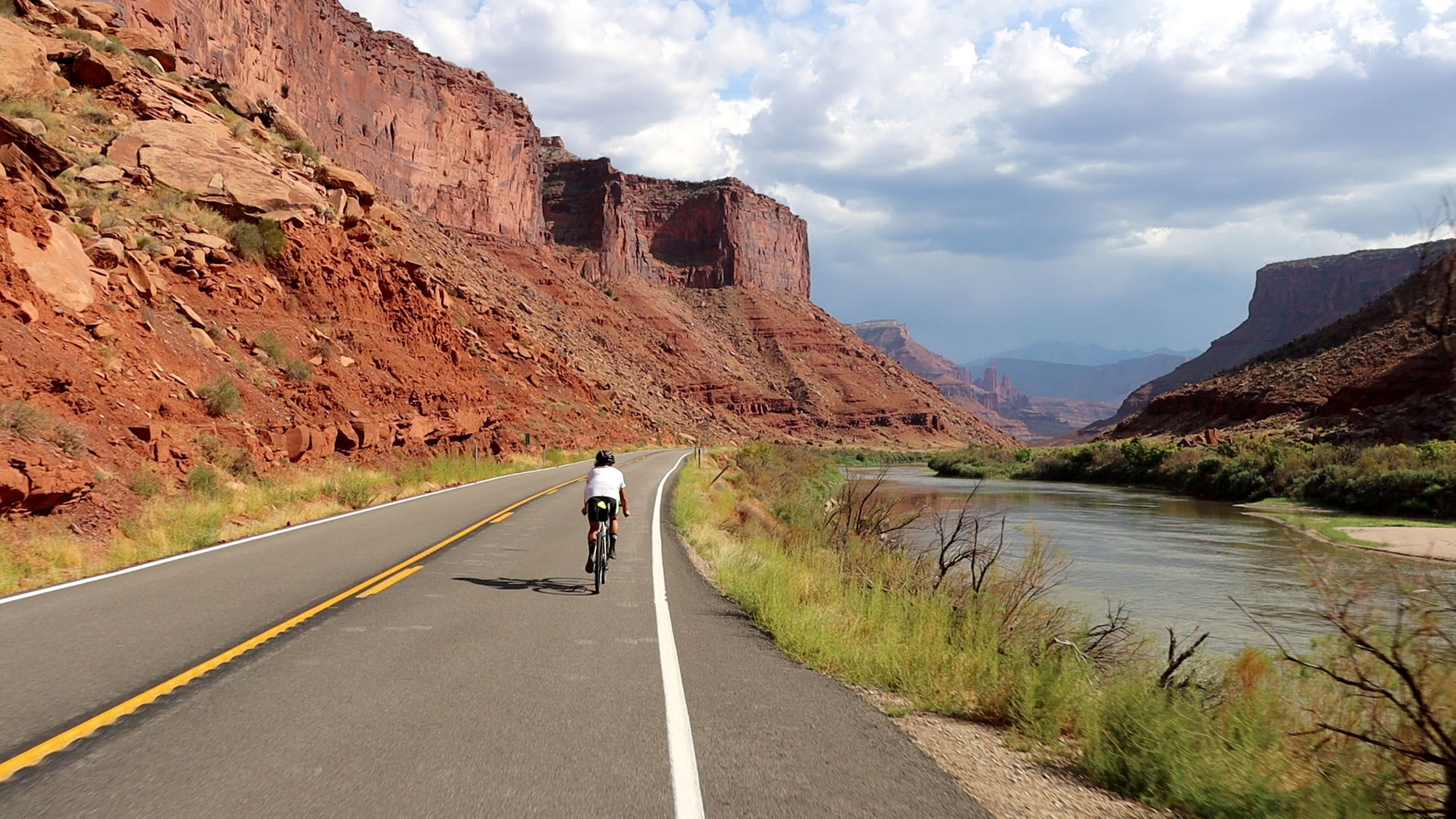
Along the Colorado River
This region is home to a variety of diverse National Parks: Canyonlands, Arches, Capitol Reef and the Glen Canyon National Recreation Area. The cyclists repeatedly joked about the ‘terrible’ views around them, especially when passing through Monument Valley in Arizona. This route has been seen by near everyone in old western films and the Looney Tunes cartoon where Wiley Coyote endlessly tries to catch the roadrunner. “Beep, beep.”
It was funny to see everyone gathering on Highway 163 to take their Forrest Gump runner photos, mimicking the moment in the film when he runs through Monument Valley. As we slowly made our way through this land, a rock appeared in the distance. The ‘Mexican Hat Rock’ gives one the image of a mariachi guarding the horizon, perhaps nostalgic about this land that once belonged to Mexico.
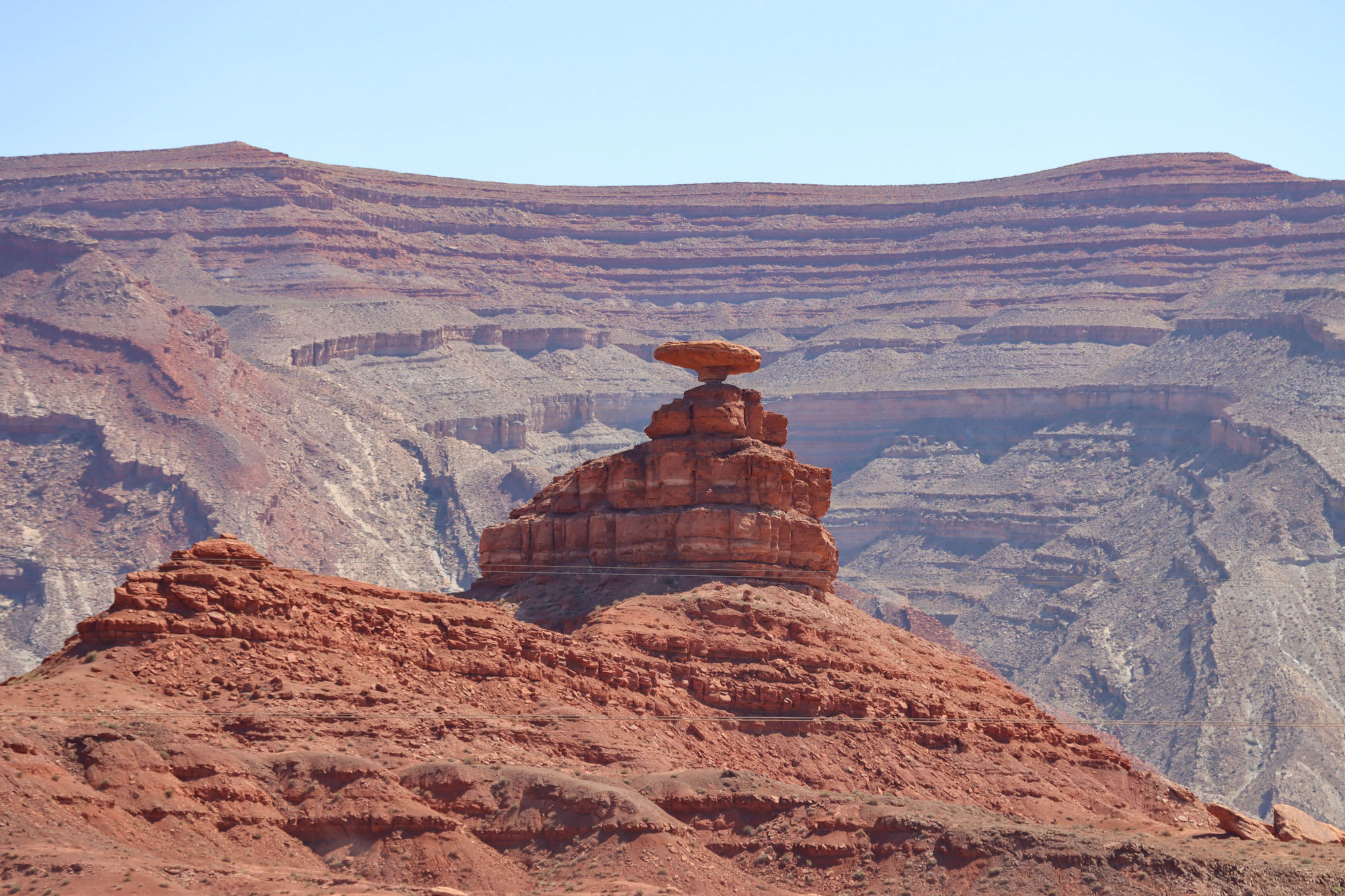
The Mexican Hat
This area stands as the gateway to the Navajo Nation, a large Native American reservation that encompasses the four corners of Arizona, Utah, New Mexico and Colorado. It is a self-governed land where many of the ancient customs and way of life are preserved. Given the awful impact of the COVID pandemic on the tribe, face masks are required and seen everywhere across the Navajo land, unlike in the rest of the USA. Additionally, the sale of alcohol is prohibited everywhere on the reservation. To be here, amongst the Navajo with their customs and traditions, it is easy to see the similarities to many other indigenous cultures across the American continent: the headdresses, the dependence on corn and their relationship with the natural world.
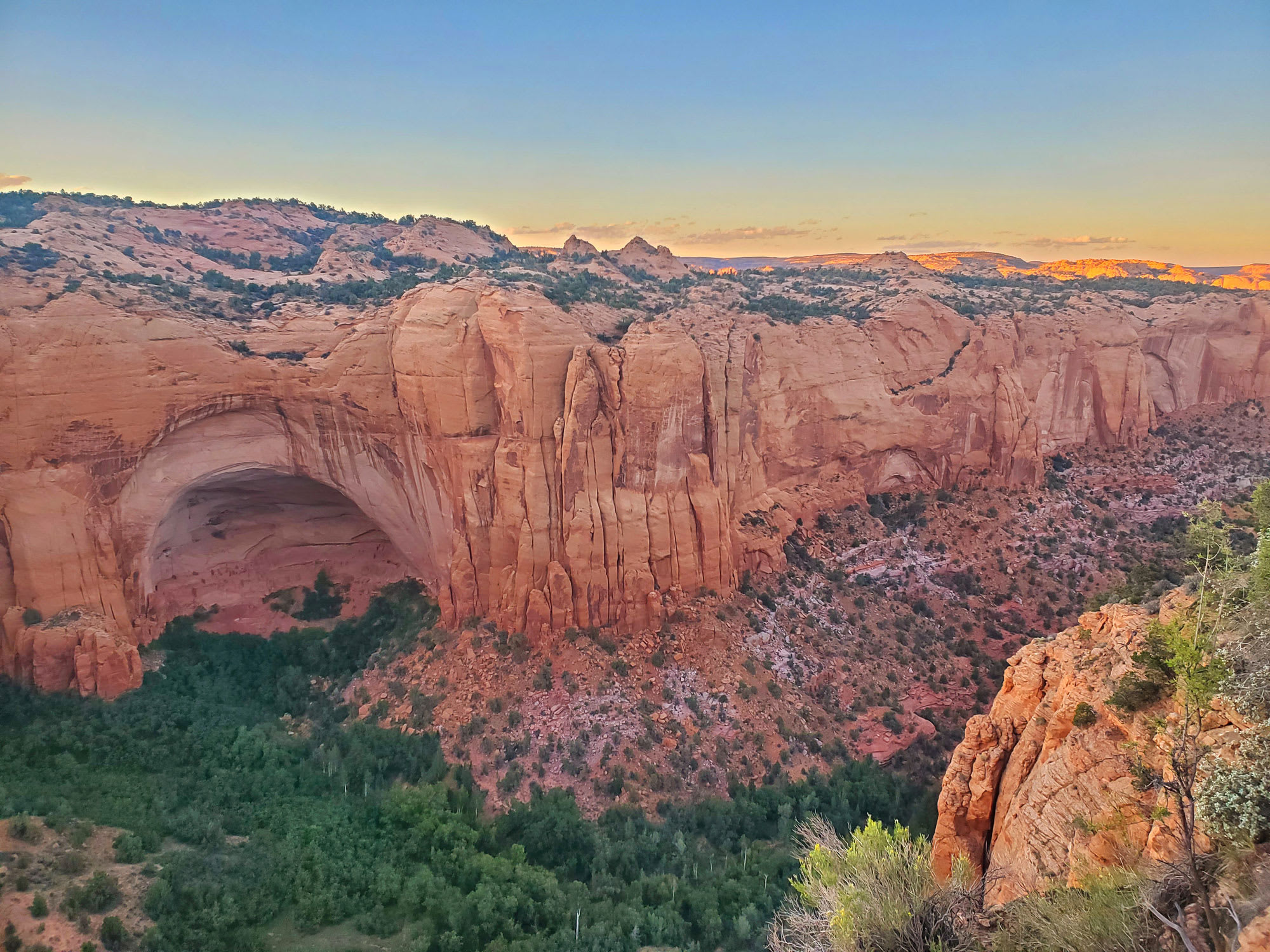
Navajo National Monument
Navajo National Monument provides the Navajo people with a personal connection to their ancestors that previously inhabited this area. It is difficult to measure where the natural world transforms into a village within the rock itself that once served as home to these ancestral people. Delicate Arch provides the backdrop to all Utah license plates, as does the Grand Canyon to those in Arizona, demonstrating a source of pride and a reference point to the inhabitants of these states. The North American Epic brings the riders right to the edge of the Grand Canyon, where the scent of ponderosa pine overwhelms one as much as the vastness of the canyon itself. One is immediately awestruck by the changing colours and texture of rock when peering over the precipice. Only an aerial photograph could demonstrate the breadth of this place.
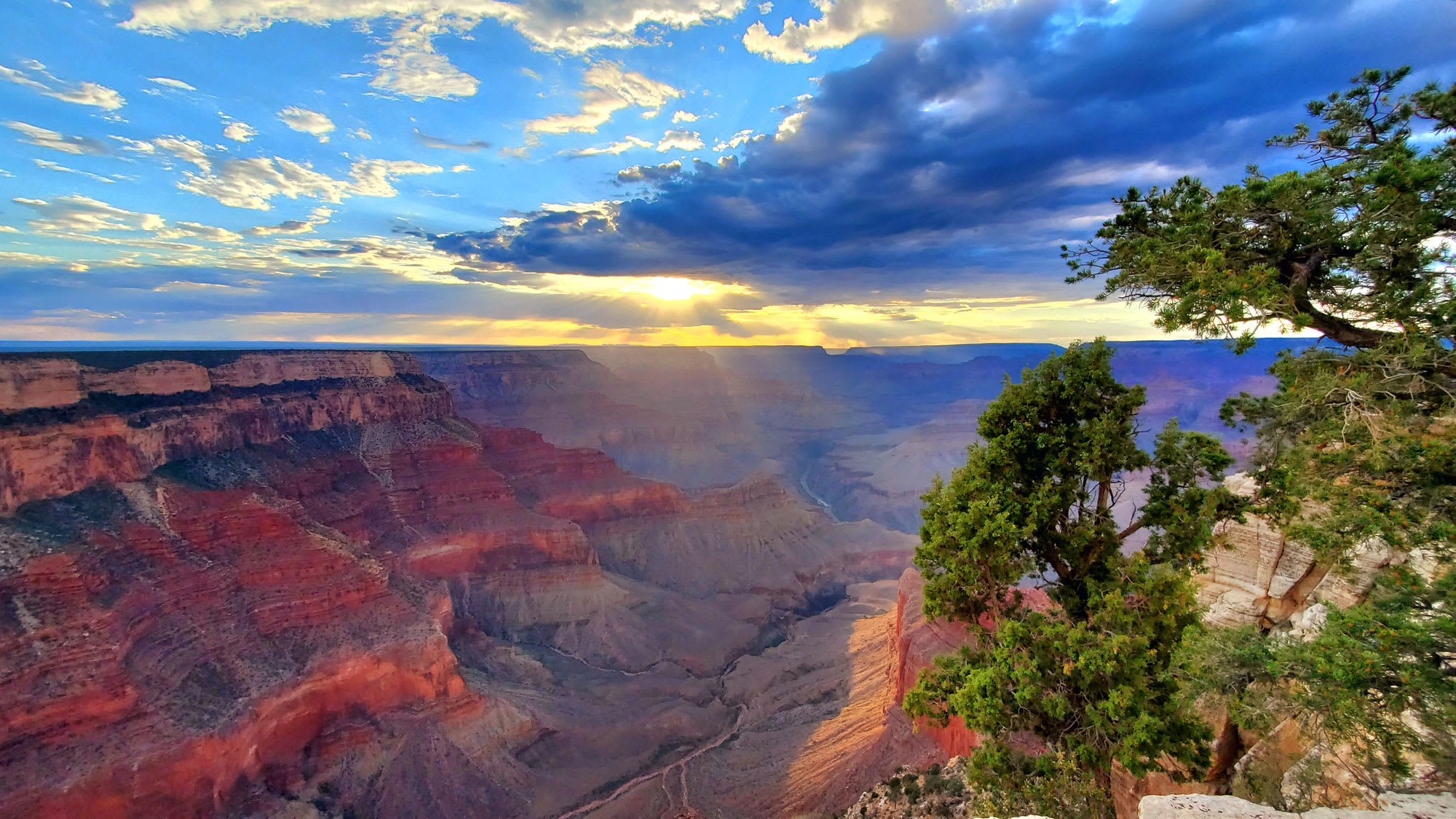
The Grand Canyon
Kim Payne, one of the tour cyclists, spoke of her previous visits to the Grand Canyon by way of hiking and helicopter but concluded that the perspective from her handlebars was even better. While we expected to find only desert-like conditions when crossing Arizona, to our surprise, we encountered cooler weather, clouds, and a large forest in the higher elevations near the rustic towns of Sedona and Jerome. These mountain towns represent an oasis from the warmer temperatures and desert. In the middle of Arizona, a few days from the Mexican border, the tour crossed the halfway point of 7,000 kilometres. This milestone represents a mark of what we have done thus far, and the adventure that the road ahead still holds for us. The celebration took place in a friendly trailer park in Yarnell, Arizona with toasts, laughs and some dancing.
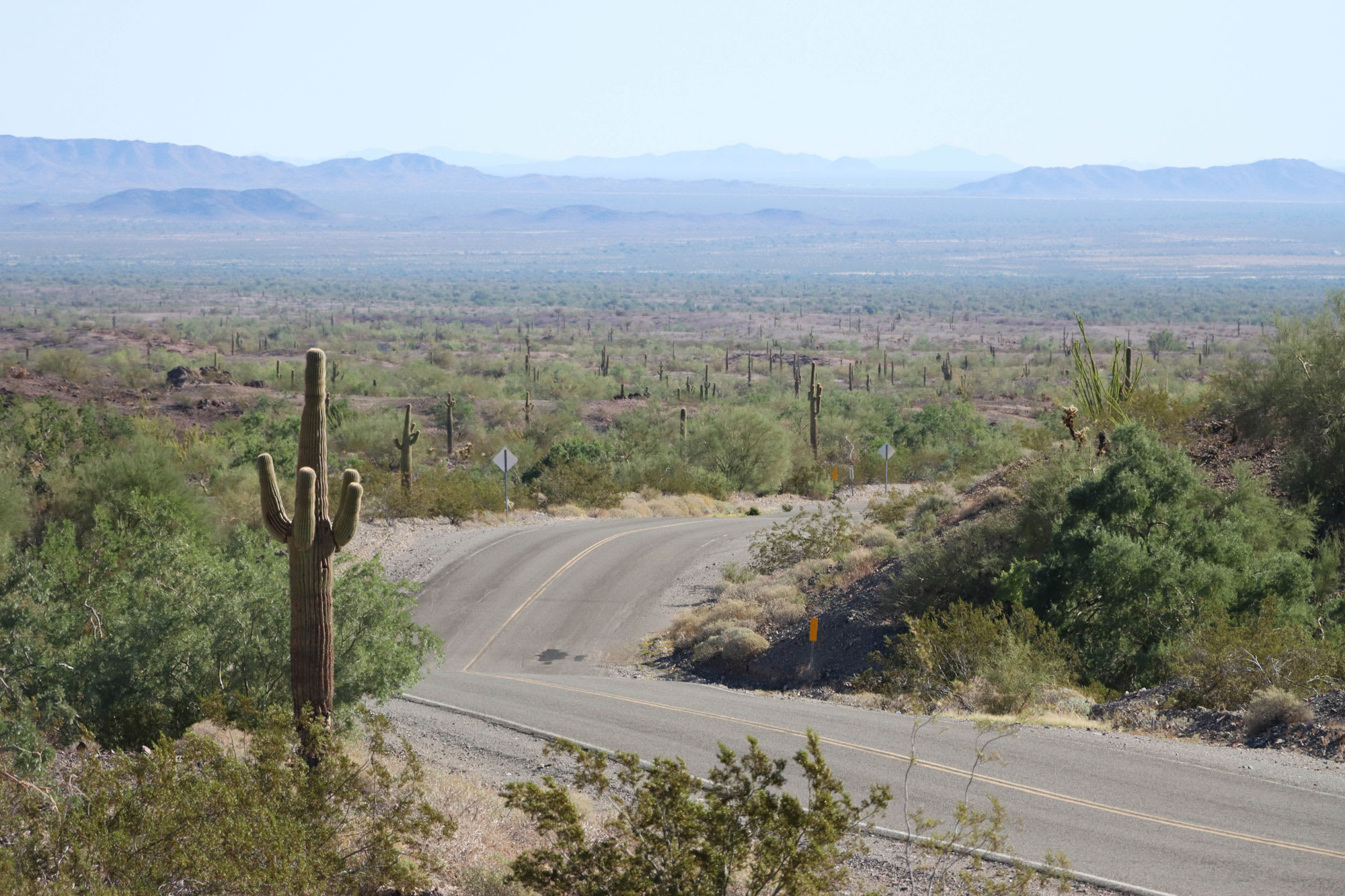
A forest of cacti
Descending from Yarnell the following morning, we captured the first sight of the impressive saguaro cacti that would be waiting for us with open arms as we make our way into Mexico. These cacti, coupled with buzzards, roadrunners, and tiled dry land, as well as 43° Celsius heat, accompanied us on our last days riding across the USA.
RELATED
TOUR
North American Epic
This incredible expedition is the only cycling tour that covers the entire North American continent, from the shores of the icy Arctic Ocean to the...
Throughout 2022, as travel started opening up, there was a surge in interest in our tours and many of you were disappointed to find yourself looking at a list of sold out tours and wishing you had registered sooner. We do expect the interest to continue well into 2023 and in fact some of those tours are already reaching capacity – both the Tour d’Afrique and the Journey to the East for 2023 are sold out and waitlists have been started. Many other tours are marked as ‘limited space’ remaining, while some others have several places left, but have a history of selling out.
Here is our list of tours (and tour sections) for 2023 not to miss out on…
Hippie Trail – Cycling Across India
Several places remain but there has been a sharp uptick in registrations over the last two weeks. We would recommend to register soon to secure your spot. Watch our video series to see what it’s like…
Read more about the Hippie Trail…
Magical Madagascar – the ‘8th Continent’
We only have 3 or 4 spots remaining on this tour, so we recommend registering as soon as possible. Many of the hotels we use in Madagascar are quite small so we have a hard cap on the number of people who can participate and this tour nearly sold out in past years. You can watch our videos from the 2019 tour to get inspired…
Read more about Magical Madagascar…
>>>RELATED: Find the tour that’s right for you
The Fabled Silk Route
Our re-imagined Silk Route – which starts in Almaty, finishes in Istanbul, and includes Khiva, Uzbekistan for the very first time – is nearly sold out! Just a few spaces remain. Historically the Silk Route has been one of our most sought after tours. While the 2023 Silk Route is not our traditional Beijing to Istanbul route (which we have scheduled for 2025), we highly recommend not missing out on the incredible highlights of our 2023 route. Watch one of our most popular videos, Cycling the Silk Route…
Read more about the Silk Route…
North American Epic – Arctic and Northern Canada Sections
The 2022 tour had overwhelming interest. The tour is soon to cross into Mexico after having cycled all of Canada and the USA top to bottom. The section that started the tour – along the famed gravel road from Tuktoyaktuk – sold out early and there were some interested riders who missed out. So now is an ideal time to secure your spot for the northern sections or the full tour. Watch our video on cycling the Inuvik-Tuk Highway…
Read more about the northern sections of the North American Epic…
Golden Buddha Ride – Newest Tour of SE Asia
Southeast Asia continues to be a very popular destination for our cyclists. This year’s Bamboo Road, starting next month, sold out in August. The Golden Buddha Ride – our newest tour in SE Asia covering Vietnam, Laos and Thailand runs in October, 2023. This is shaping up to be equally popular and has a good chance of selling out by next spring. Watch our Bamboo Road videos to get a taste of SE Asia cycling…
Read more about the Golden Buddha Ride…
What’s Next?
You can review all the 2023 tours on our calendar. Remember that registration is $150 US and you can pay this with a credit card on our website. This holds your place until the payment deadline and gives you access to myTours where you will see a series of bulletins with important information on preparing for the tour including travel insurance, what to pack and much more. See you in 2023…
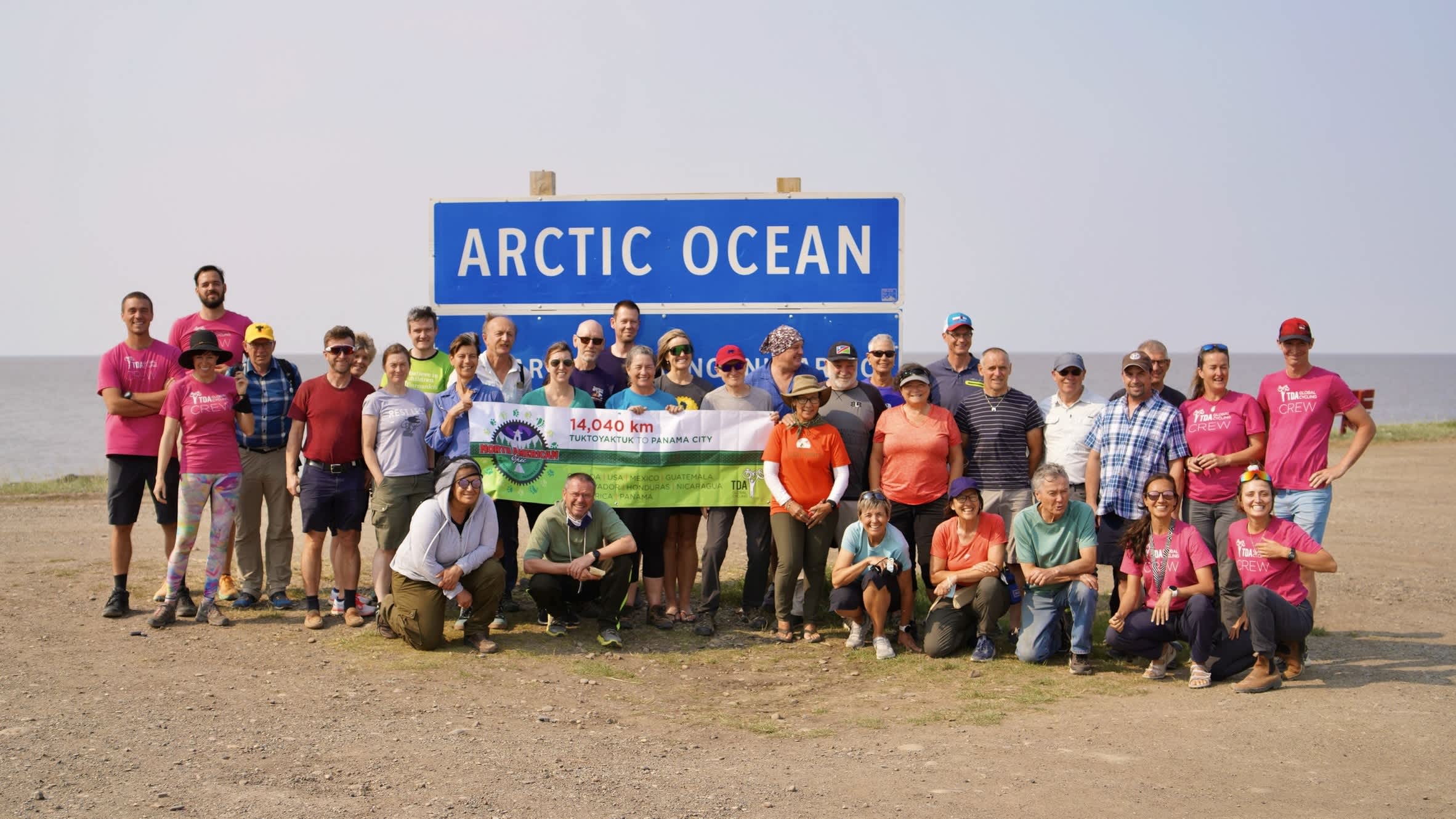
]]>
Alicia Arellano Nava is the Content Creator on the 2022 North American Epic. She sends this report from Moab, Utah.
When the North American Epic Cycling Expedition enters the United States, it soon begins a stage known as ‘The Great Divide‘. It’s called this because we go through the heart of a mountainous and hydrological divide that splits the entire American continent and extends from the Bering Strait in Alaska to the Strait of Magellan in Argentina and includes the Rocky Mountains in the north and the Andes in the south.
This section is quite peculiar because in a short period of time we cross five American states. Beginning in Montana, we slowly zig zag down into Idaho, Wyoming, Colorado and Utah. These states are home to the last peaks of the Rocky Mountains and it is here that the landscape stretches as far as the eye can see, with large, flat expanses of land. It is the end of August and the beginning of September and temperatures during the day reach 35 degrees Celsius, while at night they range from 5 to 15 degrees.
It’s not for nothing that Montana is known as ‘Big Sky Country.’ It a state of wide open spaces under uninterrupted skies. This state, along with Wyoming, bears a strong resemblance to Canada: pristine lakes, green forests and grizzly bears that at night make us store away belongings that could attract them (toiletries, cosmetics and food). If you’re not used to this, it’s truly an otherworldly experience (spooky, yet daring), going to sleep knowing that bears may be nearby.
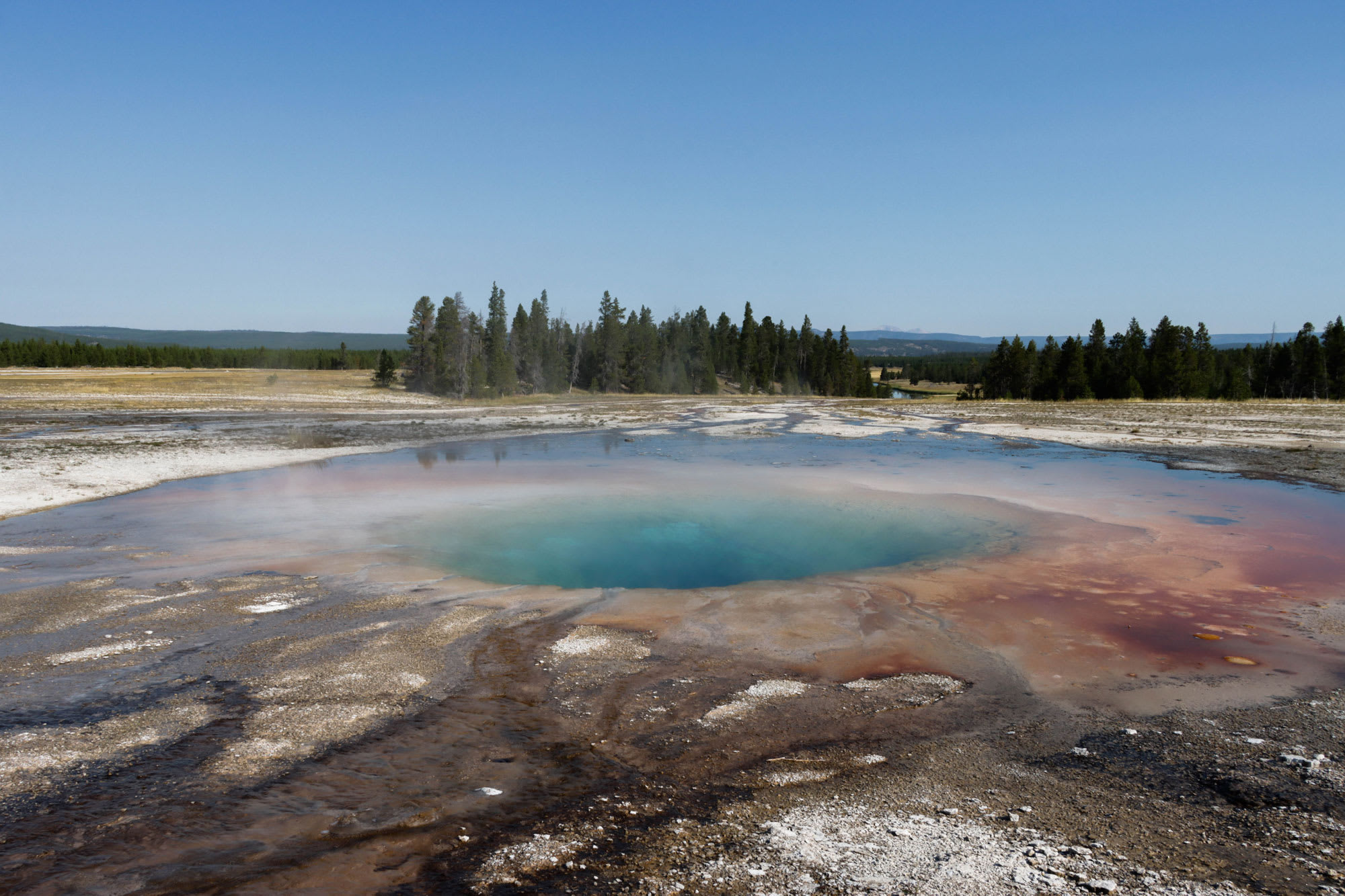
As we rode south into Wyoming, we entered Yellowstone National Park, the first National Park in the world created in 1872. It is a must-stop for one of our rest days. The orange, red, yellow, turquoise blue and green colours of the geysers are a delight for the eyes, as well as the steam that springs from them and the textures and patterns found on the ground that reveal intense geothermal activity. Not forgetting, of course, the pungent smell of sulphur that lingers in the air.
As the tour’s Content Creator, the icing on the cake was found in Hayden Valley, a place where hundreds of American bison roam. They are truly imposing and majestic creatures. My heart beat faster and my breath was briefly taken away. There they were, right in front of me, in this vast green valley. I have seen them in countless documentary films but now I was the one behind the camera, capturing their beauty . These amazing animals are to the American continent what wildebeest are to the African continent. They are icons and emblems. The feeling you get from being in wild and untamed places like national parks is peculiar. Sensations of strangeness, wonder and disbelief for the natural world arise. Urban life distracts us so much that we forget perhaps the strange way most of us live.
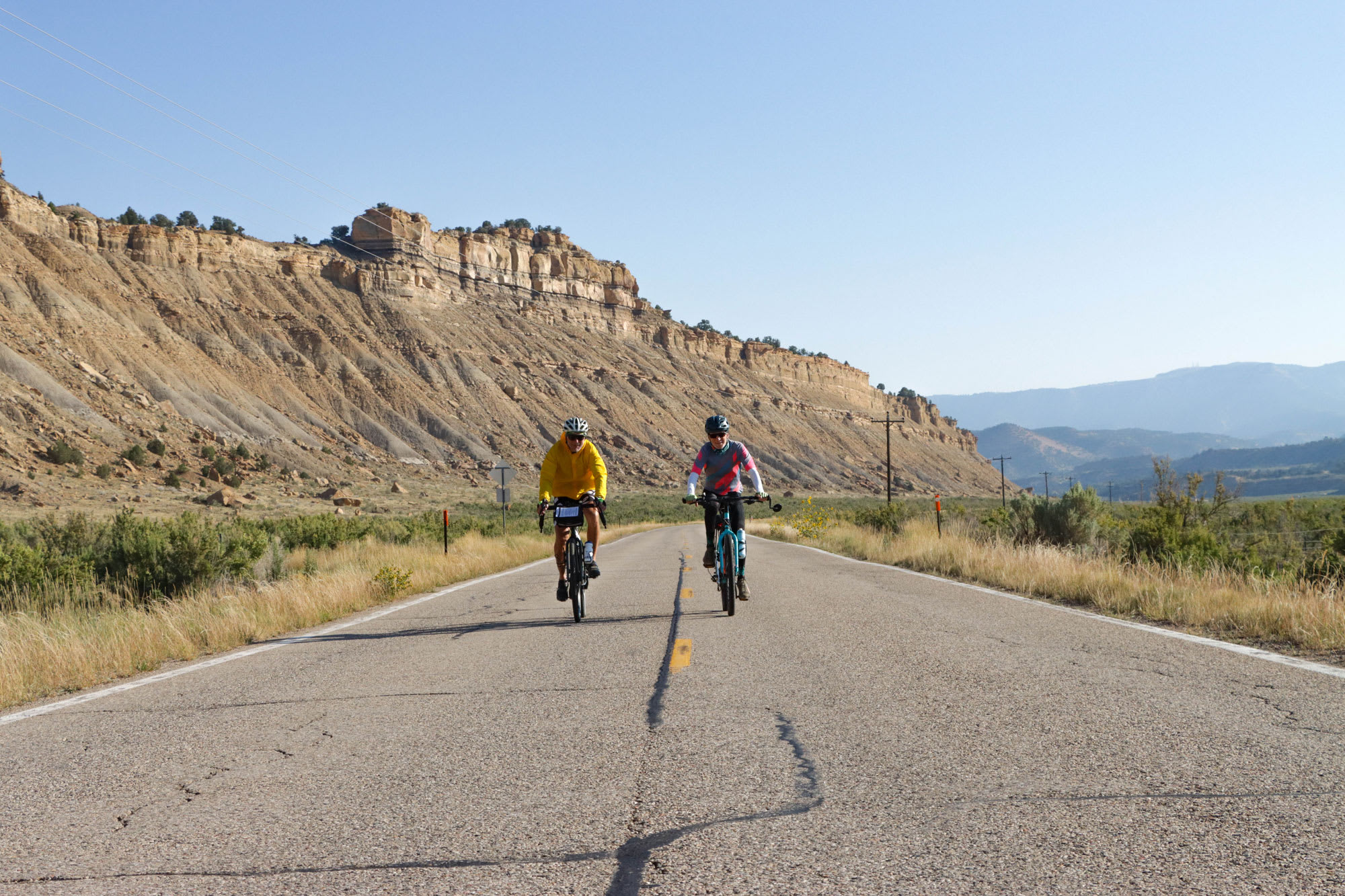
We continued our journey south on the roads of Idaho and Wyoming with a scorching sun and blue skies every single day, usually pedalling 90 to 150 kilometres a day. I don’t know if cycling is a national sport in England, but the English cyclists in our group are always the first to arrive and make it seem as though 150 kilometres a day is like riding a bike around the block.
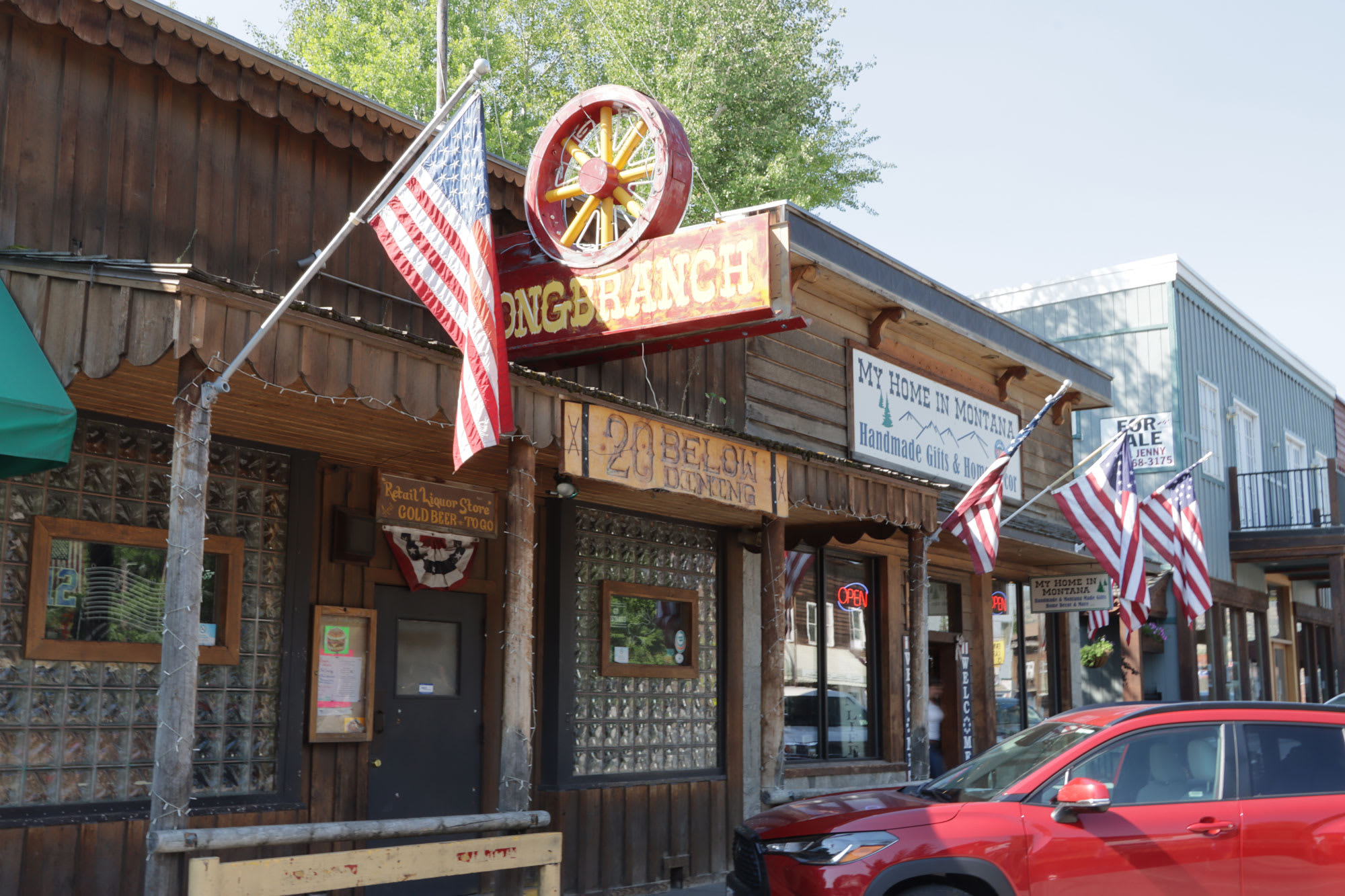
‘Howdy stranger. Yonder is Jackson Hole. The last of the Old West,’ reads one of the welcome signs for the town of Jackson Hole in the state of Wyoming. It is here that the old west begins to be felt in the architecture, the streets, the photographs and paintings that adorn the buildings, as well as in the landscape where horse stables abound. On our way south it’s not hard to fantasize about gunslingers, stagecoaches, outlaws and legends, as there are several old vintage pieces displayed. What a desire I have to travel back in time to be able to observe what life was like then!
However, it is not only the old west that stands out in these lands. In addition to sculptures of bears, cowboys and horses, huge figures of dinosaurs begin to appear everywhere. Millions of years before cowboys arrived, these huge reptiles ruled these territories. There is even a town called Dinosaur in the state of Colorado. It truly is a land rich in fossil finds and it is now easy to understand Hollywood’s fascination with Jurassic World. Colorado roads have been fantastic, with little traffic and good views, but one of the biggest challenges for cyclists has been the heat. No one misses the opportunity to jump into a river or lake or soak their clothes in water before starting to pedal.
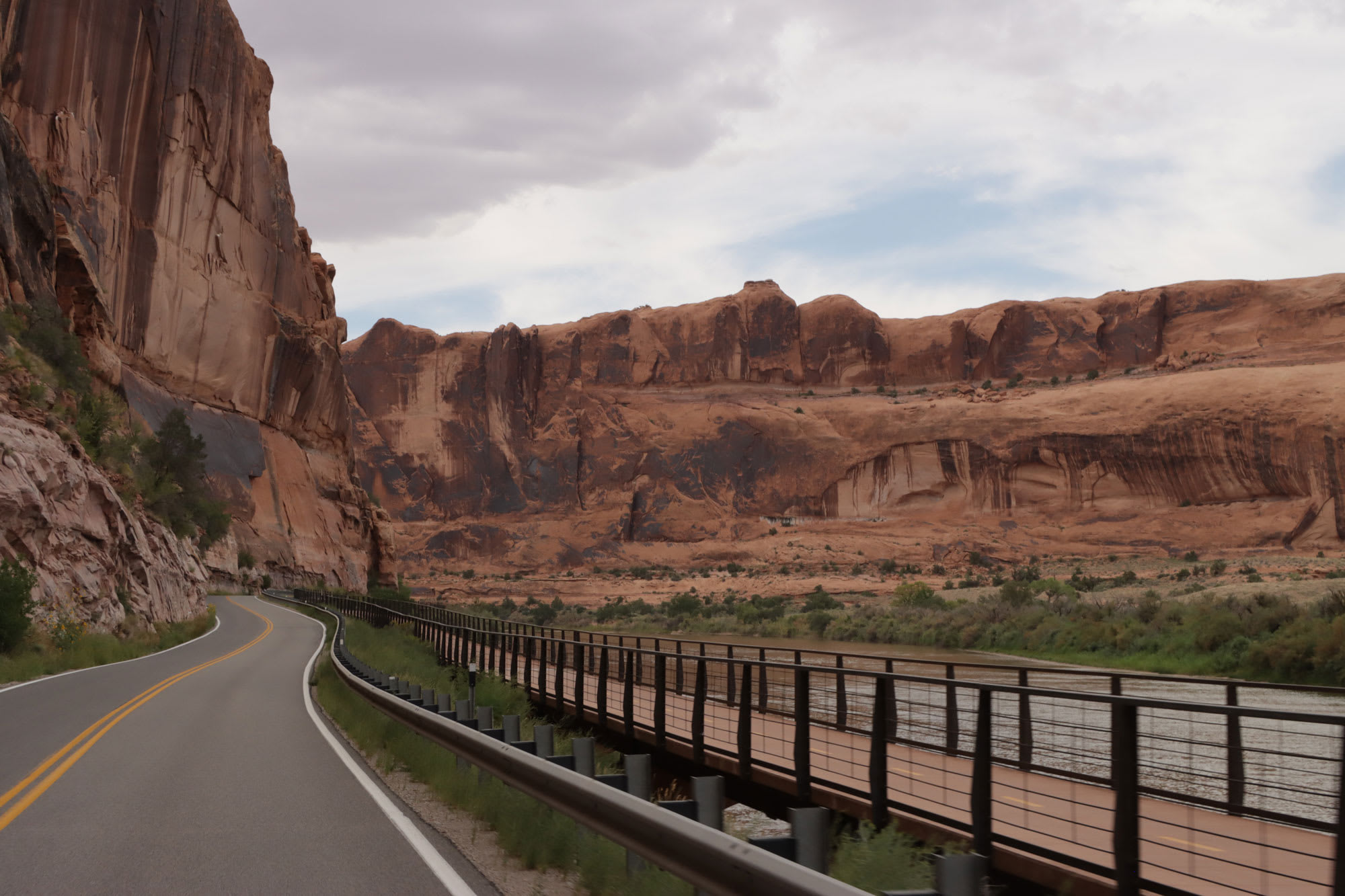
The more we advance into the south, little by little, steep rocks emerge out of nowhere. Orange and red colours begin to claim territory. The land of the canyons is close and on our way to Moab it becomes crystal clear: a land of rock towers, narrow canyons and crimson colours that glow as the sun sets. The Colorado River flows like an oasis in this land of fire. Our eyes can’t believe what they see. We wonder what the next few days will bring?
RELATED
TOUR
North American Epic
This incredible expedition is the only cycling tour that covers the entire North American continent, from the shores of the icy Arctic Ocean to the...
Alicia Arellano Nava is the Content Creator on the 2022 North American Epic. She sends this report from Montana – looking back at the month and a half of cycling through Canada.
North American Epic cyclists have now been on the road for almost two months. Many of them think it is like living a thousand lives in a very short period of time. That’s the feeling long distance travellers get when they escape from their routines and each and every day is loaded with new experiences and places. They pedalled across the Arctic Circle and rode into the provinces of British Columbia and Alberta. This is an area that boasts the Rocky Mountains and is so beautiful that one runs the risk of losing one’s breath. “Canada is like being on another world or another planet. You see these huge mountains, forests, glaciers and beautiful lakes,” exclaims Judith, a rider from South Africa.
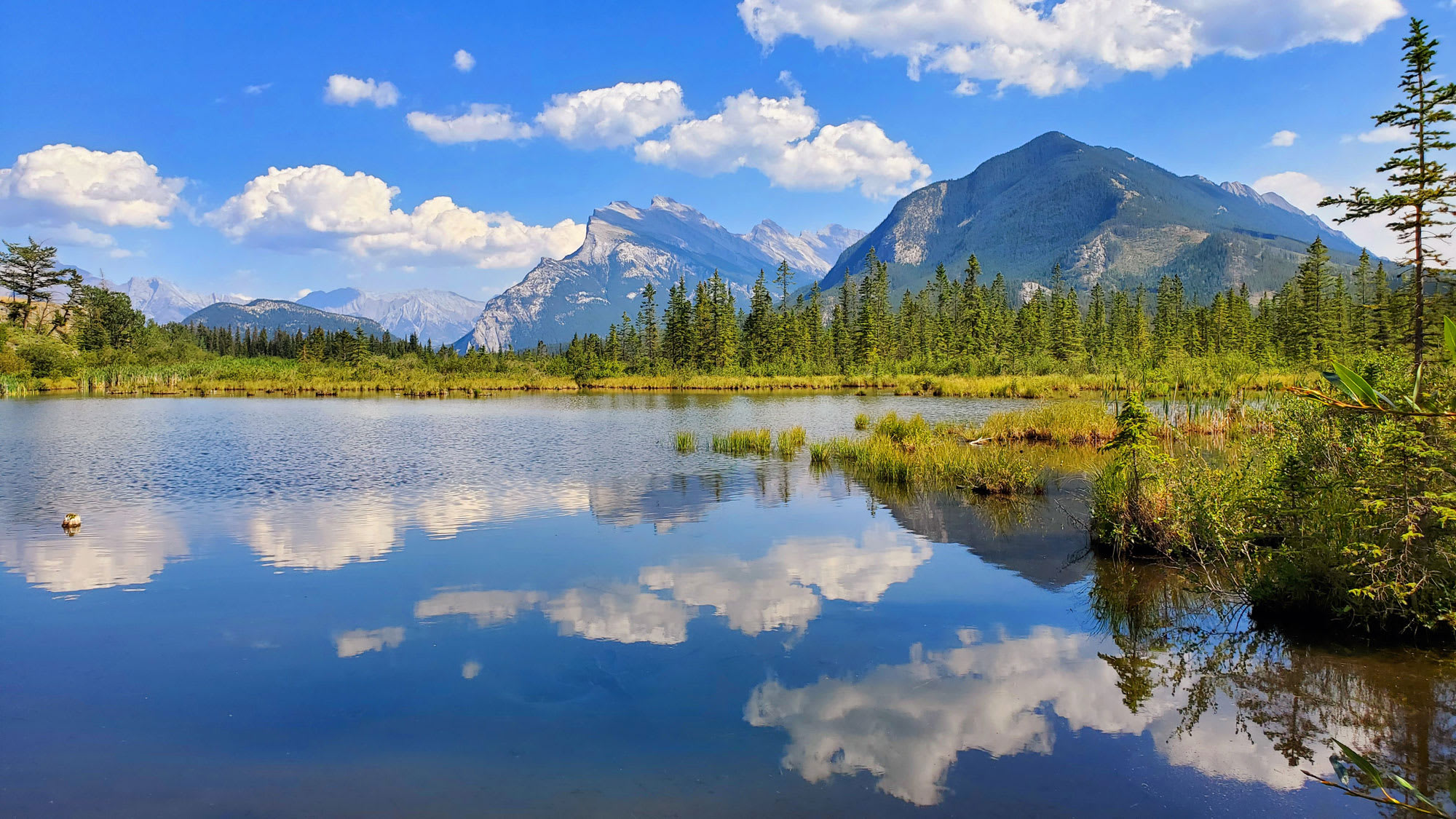
“I am from Canada and I’m kind of used to this, but Jasper’s mountains really blew my socks off, they are literally right in front of your nose. Jasper is also known as Gasper,” said Odessa Kelebay, a Tour Leader Trainee on this expedition. While biking under a blue sky dotted with clouds, in front of mountains touched by sunbeams, she felt like she was releasing the stress of more than two years of the pandemic. Two years that have been really hard for almost everyone, no matter where they come from. Two years without exercising one’s body. Two years of uncertainty. Two years indoors. Two years without feeling the freedom we are all feeling now. Tears streamed down her face that day in Jasper.
Other cyclists agree that this expedition has given them the satisfaction of being able to move their bodies and stay fit, as well as exploring places in a unique way. Isla, a rider from Scotland who has previously worked as an English teacher, says that, “For me the thing that I love the most is the fact that my body is managing to do this difficult trip. It’s tough, it’s long, it’s high, there’s hot days, there’s cold days, there’s days you don’t sleep because the campings could be cold or wet or whatever. I think for me the amazing thing is that I am managing, that every day I can get up and I can get back on my bike and carry on doing this journey all the way to these amazing places. The second thing I love is the freedom on the road. It’s just me on my bike.”
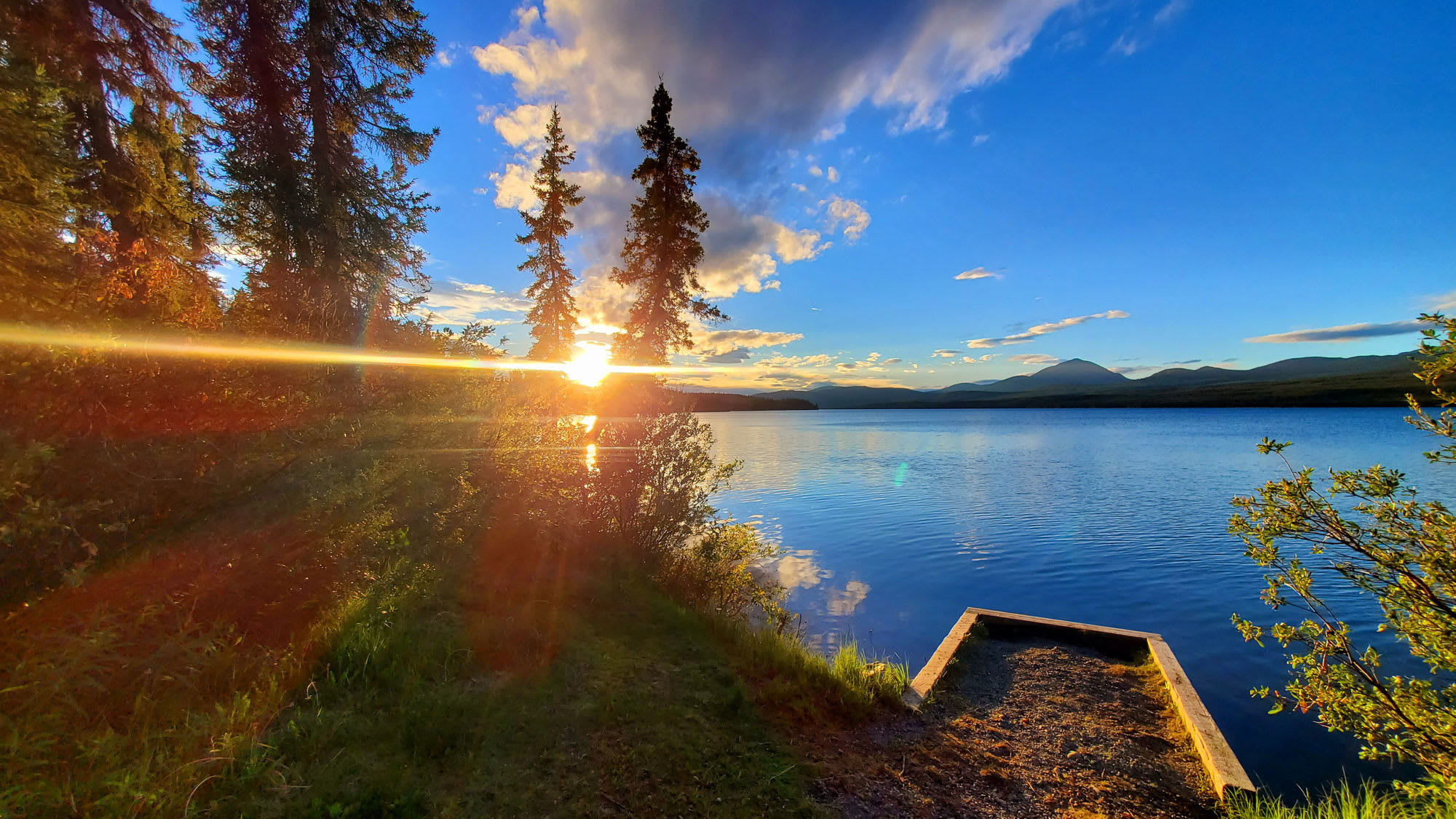
The pesky mosquitos and unbelievable and unusual extremely hot weather that the riders experienced in the Arctic are now far away but so is the incredible untouched scenery – endless green forests, soft moss, the smell of the earth – and the courteous and considerate people of Canada. During these months the riders and staff have met each other and found support, solidarity and company. They have shared breakfasts, laughter, tears, kilometres and dinners. They have discovered Canada from the north to the south and begun a new stage on the highways and back roads of the United States. Seven more countries await them and they are eager to continue this incredible journey. Not every day has been easy but the cyclists have been learning to build a good attitude in the face of adversity. Cycling and traveling for long periods of time is not only about collecting miles, the riders have discovered it is more about collecting memories and good friends.
RELATED
TOUR
North American Epic
This incredible expedition is the only cycling tour that covers the entire North American continent, from the shores of the icy Arctic Ocean to the...
Brian McCloskey is a TDA alumni who rode the TDA’s Great American Roadtrip in 2021. This year he joined us on the ‘Road to the Sun‘ section of the 2022 North American Epic and sent this report of his experience cycling from Banff, Alberta to Helena, Montana.
After nine spectacular days in the company of TDA’s North American Epic, I realized that I had hit a home run. My cycling adventures hinge upon 3 distinct objectives. First I’m seeking to share time and the road with avid cyclists from every corner of the planet. Social interaction and friendship are something I truly value. I enjoy people; people of all shapes, sizes and colours; people with all of their quirks, smiles and laughter. Secondly I’m seeking a physical challenge with the bike. The sights, smells, rain and sun transform this form of activity into a magical adventure; day after day after day. The third and final piece for me is “light”. I want to ride where the light, clouds and landscape join forces to produce a surreal display that only nature can bring.
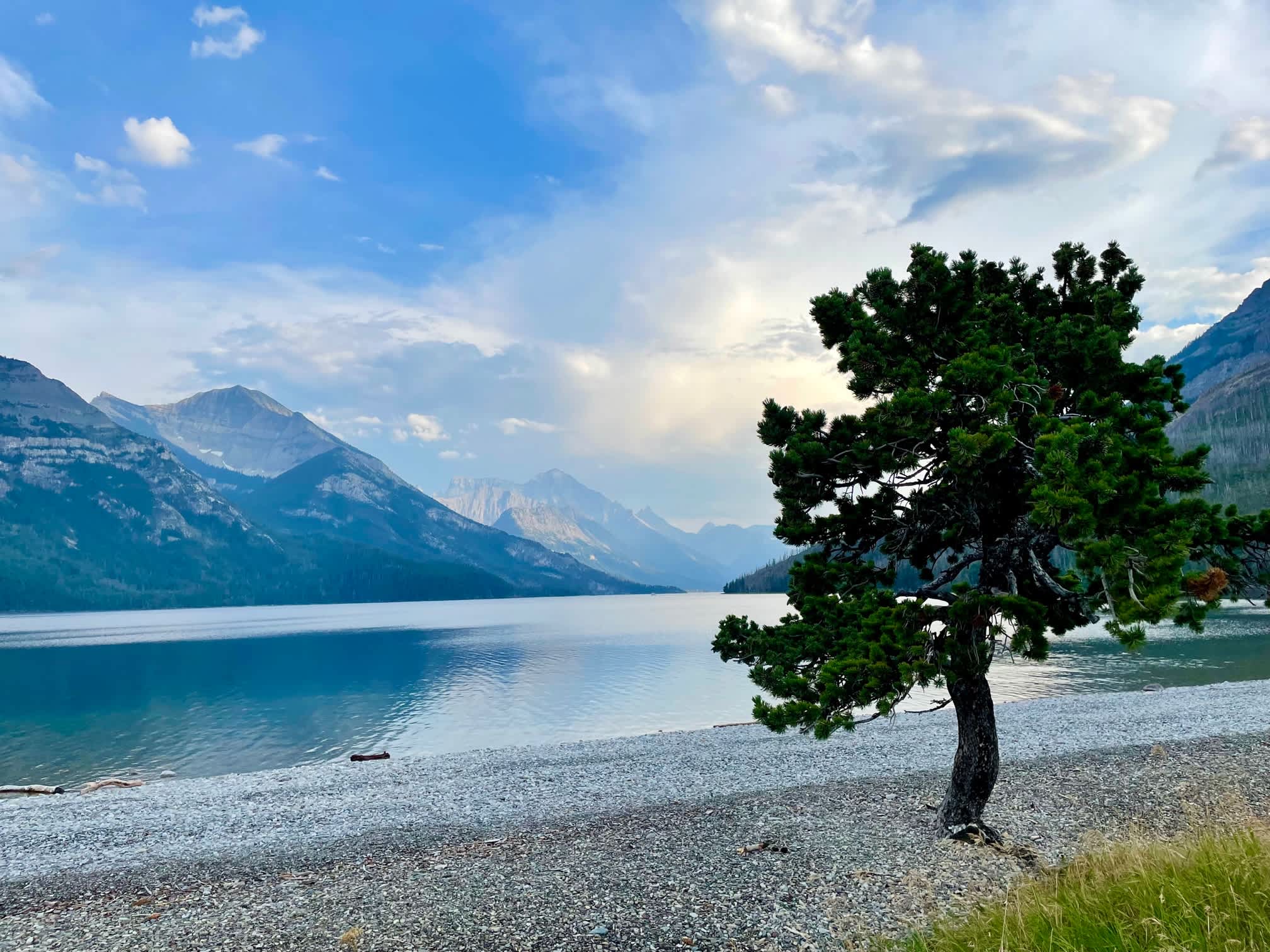
The Banff, Alberta to Helena Montana section of the North American Epic hit the sweet spot on all accounts. From the very first day, as I spun my way out of Banff towards the small town of Canmore with my TDA’s Great American Roadtrip alumnus Tom Perlmutter, it was apparent that my decision to jump on board and become a sectional rider was a good one. For the next four days we navigated the beautiful southern Alberta foothills, ski country and provincial parks. The highlights were daily, but the ‘magic’ really took hold once we pedalled our way into Waterton Lakes National Park. Forest fires from Montana had cast a haze over the area upon arrival, but an evening thunderstorm washed it away, revealing one of this leg’s many gems. The light and clouds were performing their magic as the daylight faded away. I was thrilled.
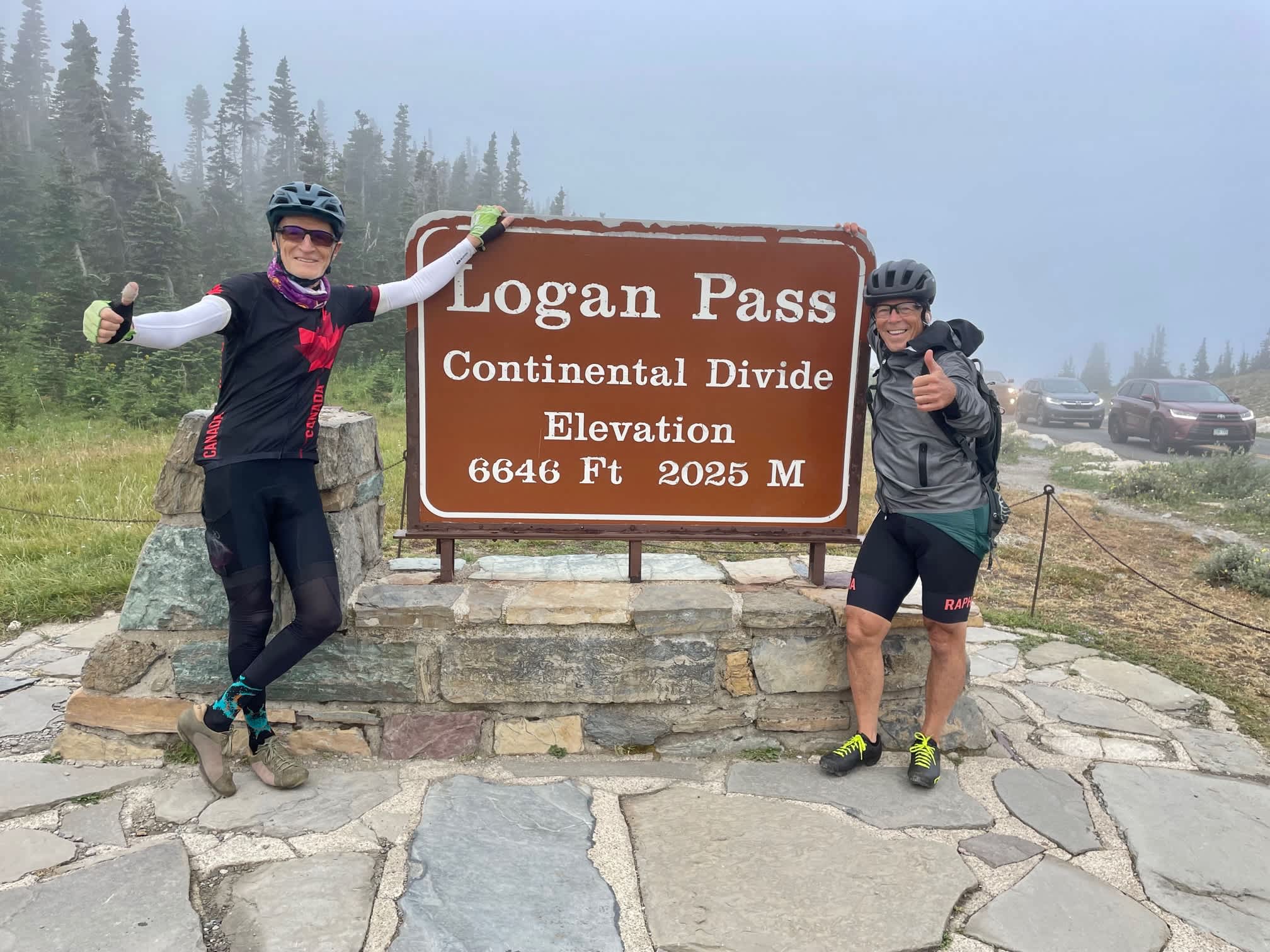
The next day the mountain splendour continued as we swept east out of the park and then south towards Glacier National Park. The two ‘sister’ parks, Waterton Lakes and Glacier, may well be the most beautiful in all of North America. We camped on the eastern edge of Glacier anxious for what awaited us. Despite having riders from all over the world, everyone knew that the challenge of riding ‘The Going To The Sun’ road would be a lifetime event. It did not disappoint. Despite a dawn ascent up Logan Pass with heavy cloud cover, we all soldiered on to the top. Halfway up, we were swallowed up by a persistent cloud. Hurried photos and a very cool summit had us debating whether to wait it out or push on. The decision was easy, it was just too darn cold.
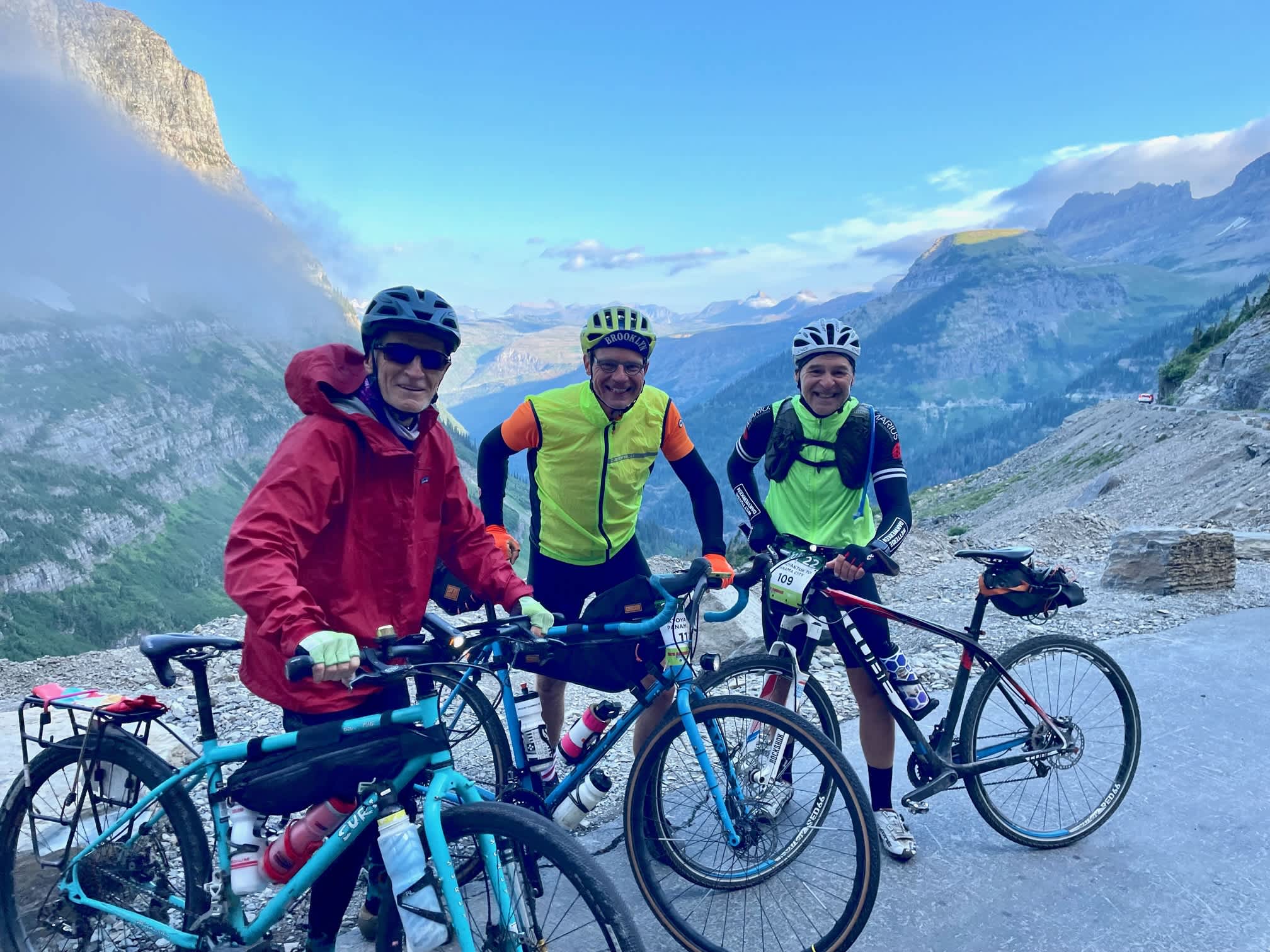
Once again we were rewarded as one by one we burst out of the cloud cover less than a half kilometre off the top. Below was a stunning series of valleys and a spectacular road that carved along the very edge of the mountain. Our gang were joyous. The excitement was palpable. For the next hour, we swept down towards the valley below, gravity handling all the pedalling. At the small village below where we all stopped for coffee, there was a euphoric buzz circulating amongst our riders. Mother Nature had gifted us a thrill of a lifetime.
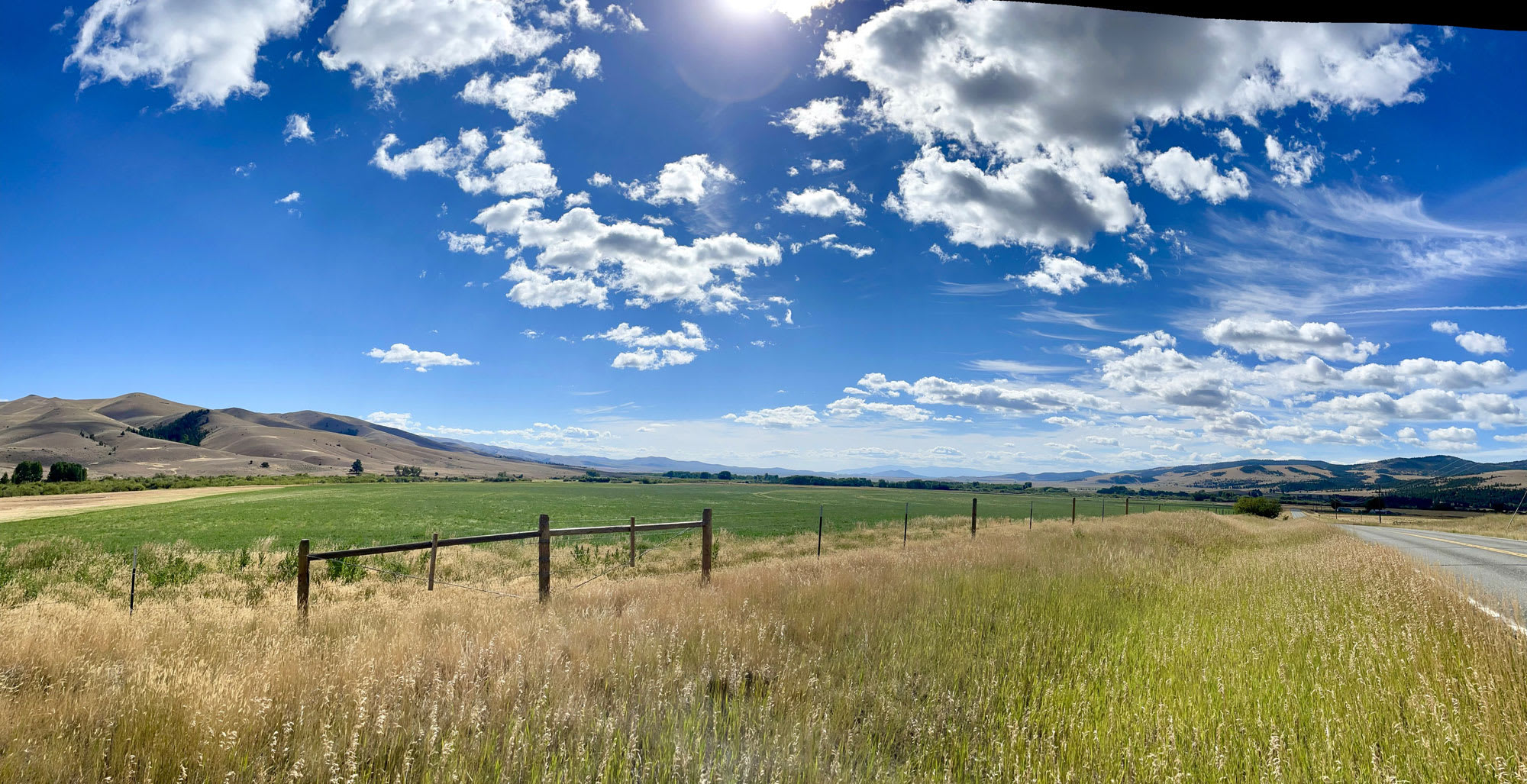
We settled in Whitefish for a well deserved rest day. From there, we pushed south for four more days with beautiful high plains, forests of ponderosa pines and enticing lakes. We shared evening thunderstorms that bolted us upright in our tents, a campsite impromptu concert by a pair of traveling musicians with a David Bowie repertoire, deer and their young wandering amongst our pitched tents at dusk and dawn, stories of shared adventures on other TDA trips and, as always, the wonderful camaraderie of our group. Two weeks flew by. The etched memories of this sectional adventure will stay with me forever.
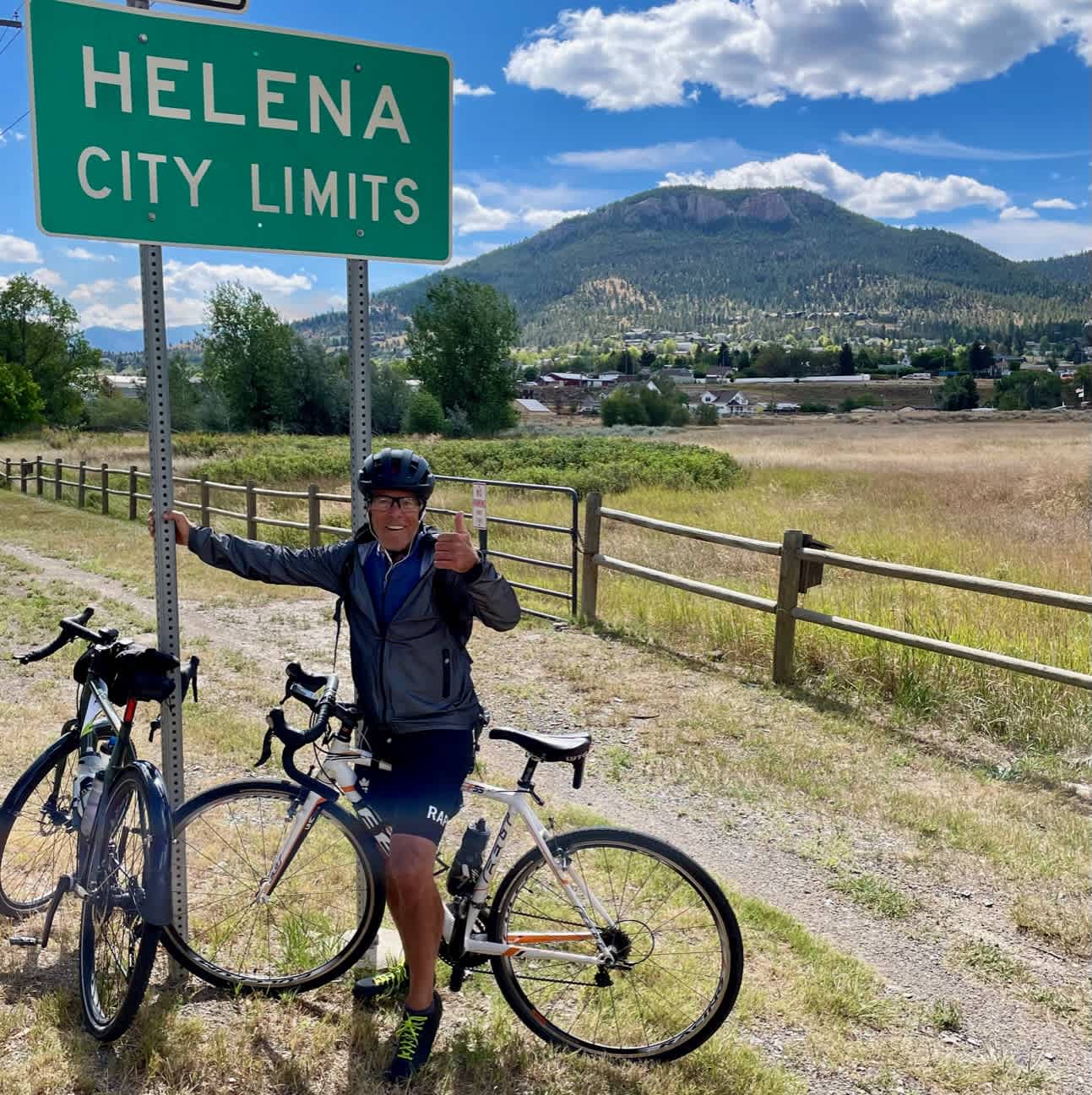
Our group leader Caro, our chef Colleen, our mechanic Malcolm, our medic Chris and their incredible array of talented assistants made this journey all the better. It was bittersweet saying my goodbyes in Helena. I had grown intensely attached to this diverse, eclectic group of passionate cyclists. At camp, on the second to last night of this particular section, our group was approached by 2 female musicians who were exploring America in a camper with their 4 pugs! “Could they play for us” they asked? Of course, was our response. They opened with my request, David Bowie’s, ‘Heros’. There’s a verse in that song that made me reflect on this group, this journey, this ride, this adventure.
“I, I can be King You,
you can be Queen
Nothing, nothing can keep us together,
But we, we can be Hero’s,
just for one day”
For truly, we had all been Kings or Queens, just for one day.
RELATED
TOUR
North American Epic
This incredible expedition is the only cycling tour that covers the entire North American continent, from the shores of the icy Arctic Ocean to the...
Alaska Highway
Winding in and winding out
leaves my mind in serious doubt,
as to whether the lout that built this route,
was going to hell or coming out!
– Sergeant Troy Hise
If you think that cycling the North American Epic is all just fun and games, you are wrong. If you are following the tour, reading the different blogs or from the cyclists you are in touch with, you already know that every day, we are facing hordes of relentless mosquitos. Some of us try to protect ourselves with the various chemicals that the modern world has created to protect against them. Some of us use a variety of nets to cover ourselves. But we also have another option – we can participate in a scientific project simply called the ‘Mosquito Project’.
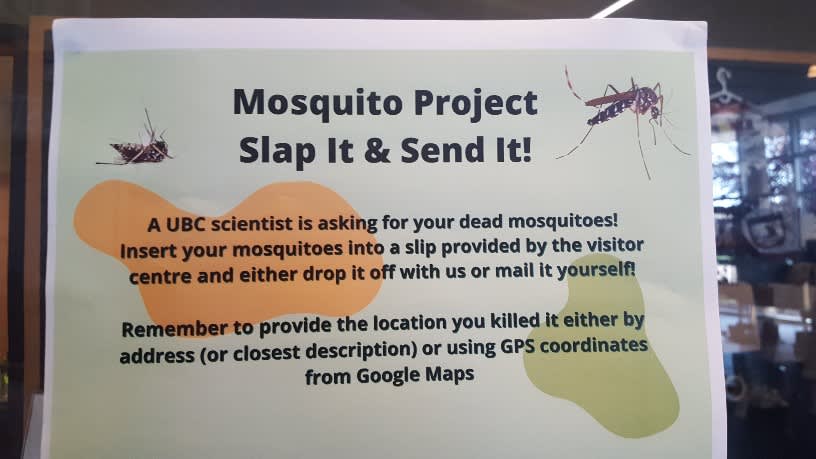
If you do choose to become a participant in this University of British Colombia Zoology Project, here is what you must do. When the hordes attack you, you must go on full alert and choose one particular mosquito, preferably the leader of the pack. Then when you are ready, your adrenalin flowing, your reflexes at full attention, you “Slap It & Send It”. Once you have done that, you can go peacefully to sleep knowing that you have done your part to contribute to scientific knowledge.
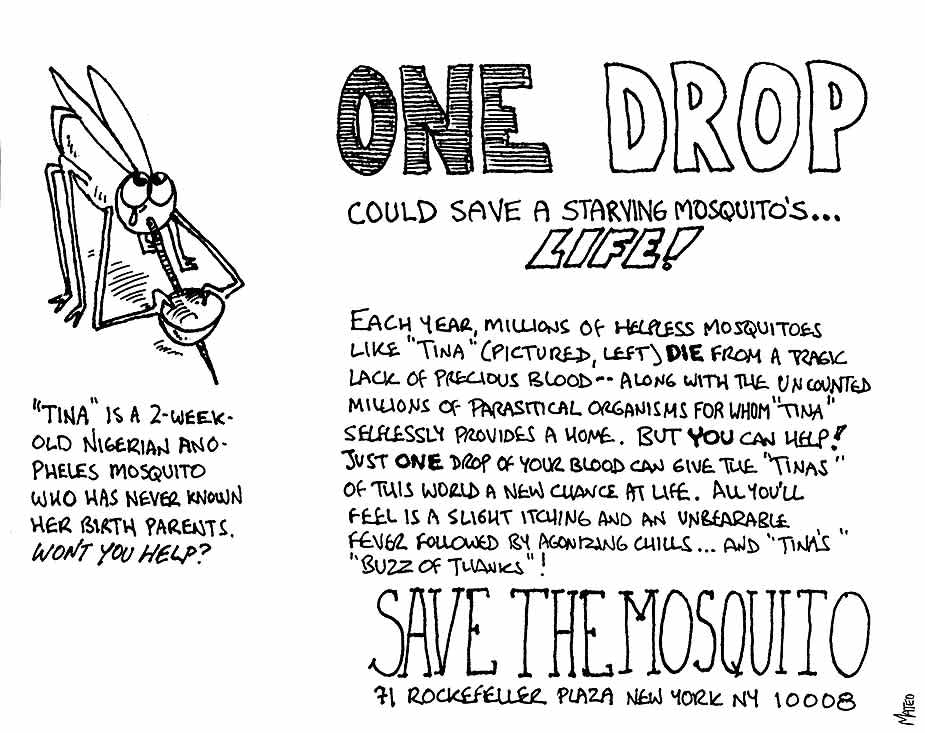
I do, however, want to point that we at TDA do not want to be accused of being biased and not presenting alternative point of views and thus I present another perspective here to you brought by a participant Mateo Burch on TDA’s West Africa en Vélo Tour in 2018.
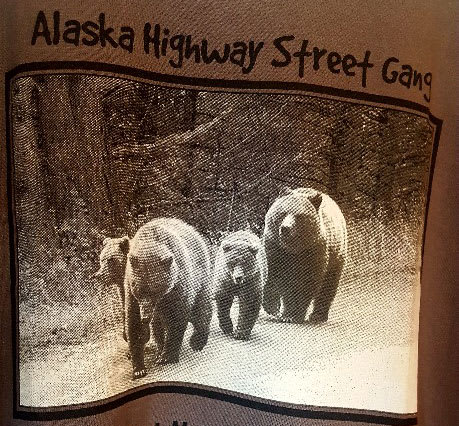
Of course, if you are already cycling on the Alaska Highway, you can also keep your eyes open and see if you can catch sight of the ‘Alaskan Highway Street Gang’ and report them to the proper authorities who will be forever grateful for the information.
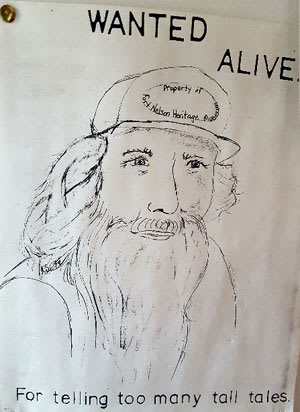
Talking about appropriate authorities, if you happen to see this character, please also report it to the authorities. I have it from reliable sources that their job is particularly difficult as there apparently are many suspects who have been reported for same reasons. Any resemblance to the author is purely coincidental.
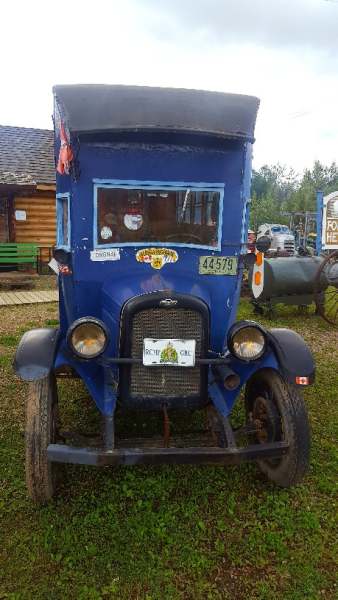
And check out the vehicle the local authorities are using. For those of you who are not from Canada, RCMP stands for Royal Canadian Mounted Police. However, now due to unexpected shortages of horses, they are forced to use these vehicles. Though I do want to point out that during the gold rush fever that happened in this part of the world over a century ago, the RCMP did a hell of a job, keeping the crazy masses from going completely mad.
Of course, it wasn’t always like that around here. When the US government decided in 1942 to build the Alaska Highway, they needed to recruit the appropriate manpower. And here is how they did it:
THIS IS NOT PICNIC.
Working and living conditions on this job are as difficult as these encountered on any job ever done in the United States or foreign territory. Men hired for this job will be required to live and work under the most extreme conditions imaginable. Temperatures will range from 90 above to 70 below (for those more familiar with Celsius, 32C to -minus 56C).
Men will have to face swamps, rivers, ice and cold. Mosquitos, flies and gnats will not only be annoying but will cause bodily harm. If you are not prepared to work under these conditions, do not apply.
I suppose, with some small modifications and, of course, with permission of the US government, we could use this as an advertisement for future North American Epic tours.
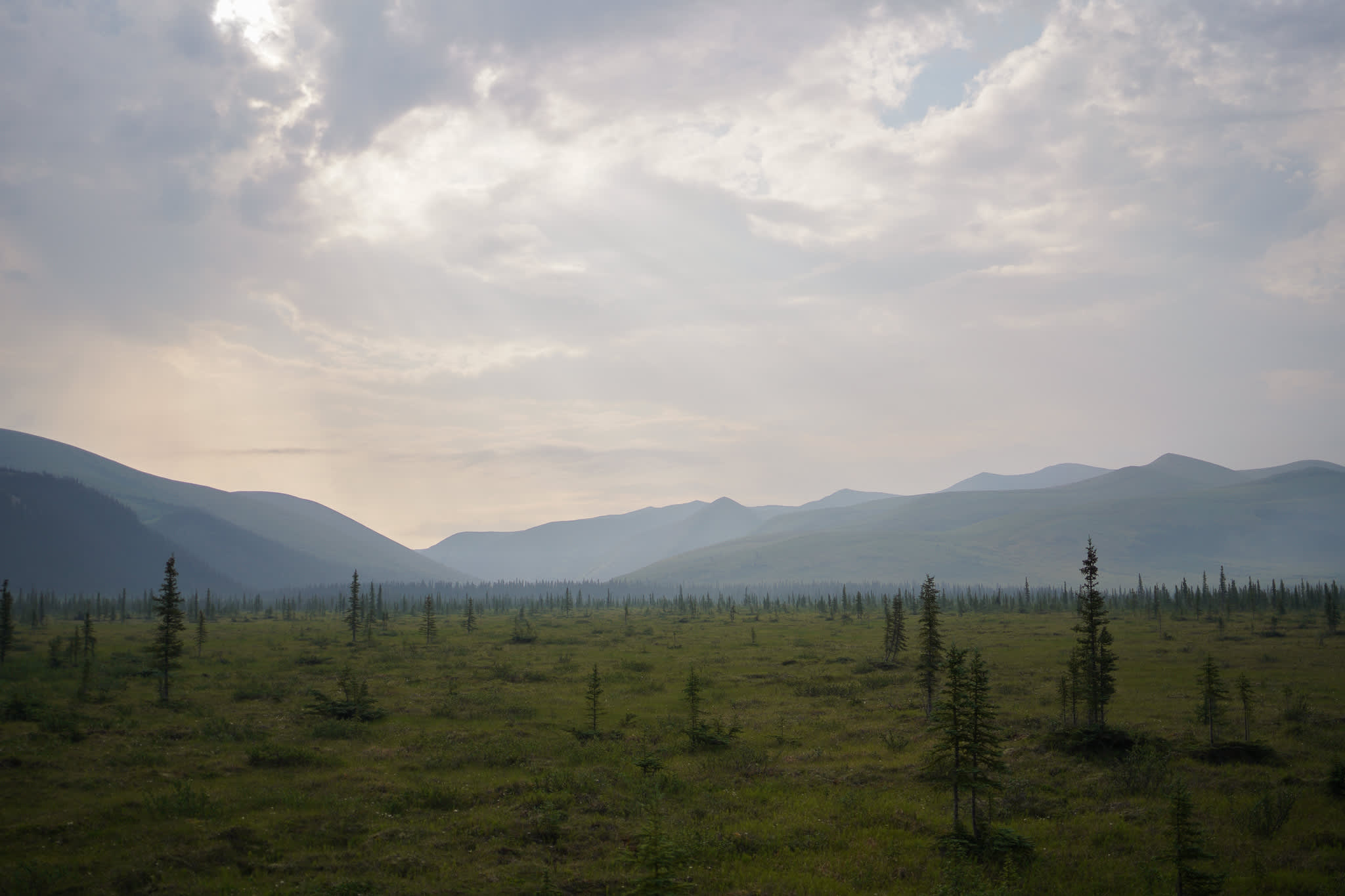
To end this meandering report from Historic Mile 300, which happens to be in Fort Nelson where our riders are enjoying a rest day, we are all well. Even though the riding against the wind with all the elevation gains and the daily rain has been tough, we are looking forward to more sightings of moose, bisons, elk, bears, caribous, eagles, mountain goats and the incredible scenery that has been rightfully called a Global Treasure.
RELATED
TOUR
North American Epic
This incredible expedition is the only cycling tour that covers the entire North American continent, from the shores of the icy Arctic Ocean to the...
Sime Baricevic was the Content Creator on the 2022 North American Epic for the Arctic Spirit section. This is his final report.
‘Wondering where the lions are’. Great song, but I never clearly understood what the real meaning of its lyrics were. I searched the depths of the internet to find the answer but to no avail. Bruce Cockburn, the famous Canadian singer/songwriter, really left it open to interpretation it seems.
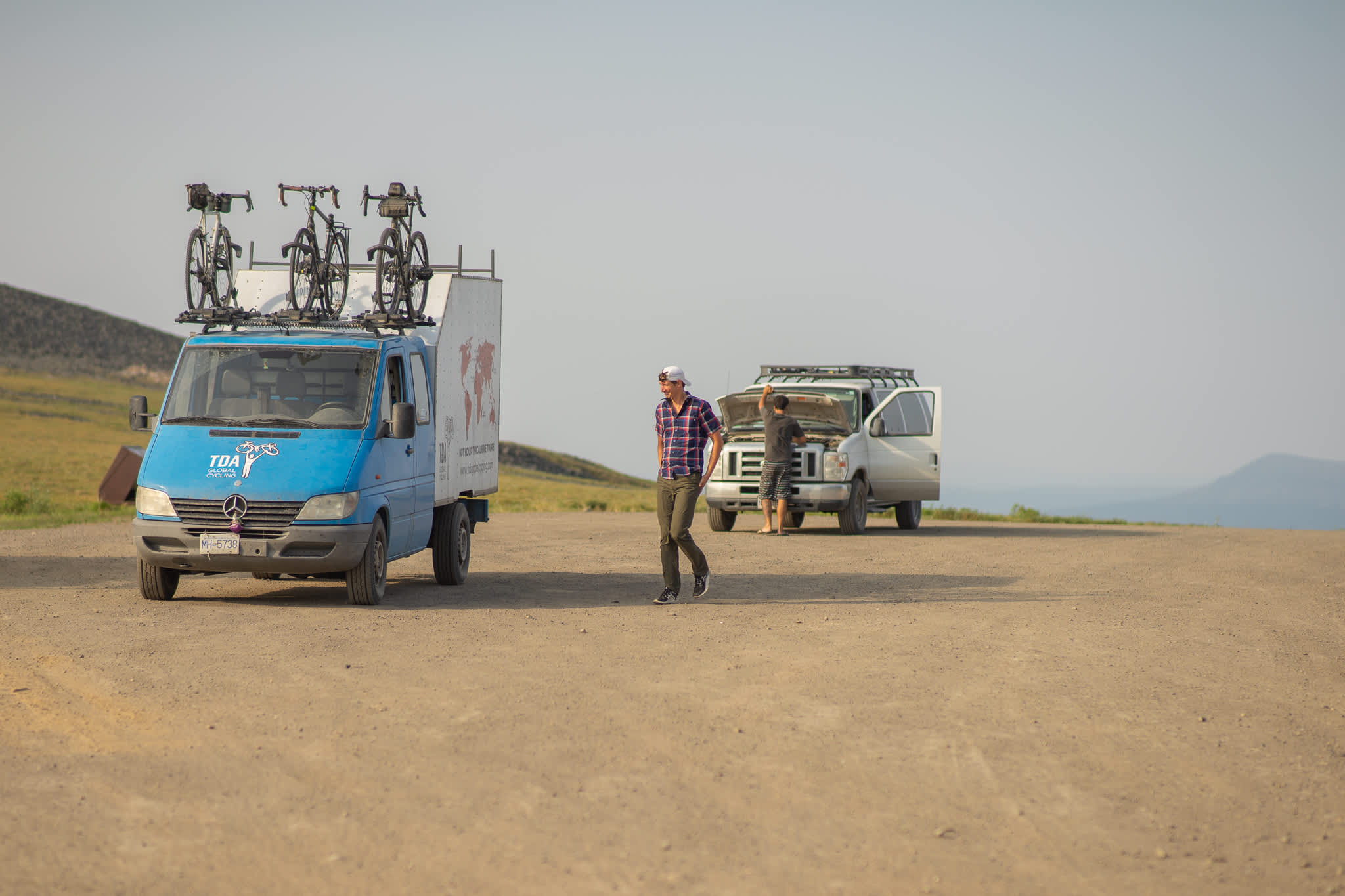
I was manning two cameras, two drones, countless mobile phones and a big Chevy pickup truck. It was day one of the 2022 North American Epic. Our three support vehicles, conveniently named – Baby Blue, Dinner Truck, and Kidnapper – were not enough to transfer all the riders to the starting point, Tuktoyaktuk, from Inuvik where we had gathered a few days earlier. As a result, we had to rent four more pickup trucks, load them with bikes and riders, transfer them north and return them the next day.
I was tasked with returning one of those vehicles – a big black Chevy Silverado. This allowed me the freedom of moving up and down the Inuvik-Tuktoyaktuk Highway and capturing whatever I wanted; photos, videos, drone shots…you name it. BEST JOB IN THE WORLD! The weather was perfect. Blue skies, 30+ degrees Celsius, visibility excellent, the Chevy’s A/C blasting, and on the radio, via bluetooth, Bruce Cockburn singing “Wondering where the lions are”. I took the liberty of interpreting this song as a reminder that, no matter how perfect things seem, problems, lions, are always somewhere, lurking, waiting for an opportunity to strike. It didn’t take long, only 3 days for the first lions to show up.
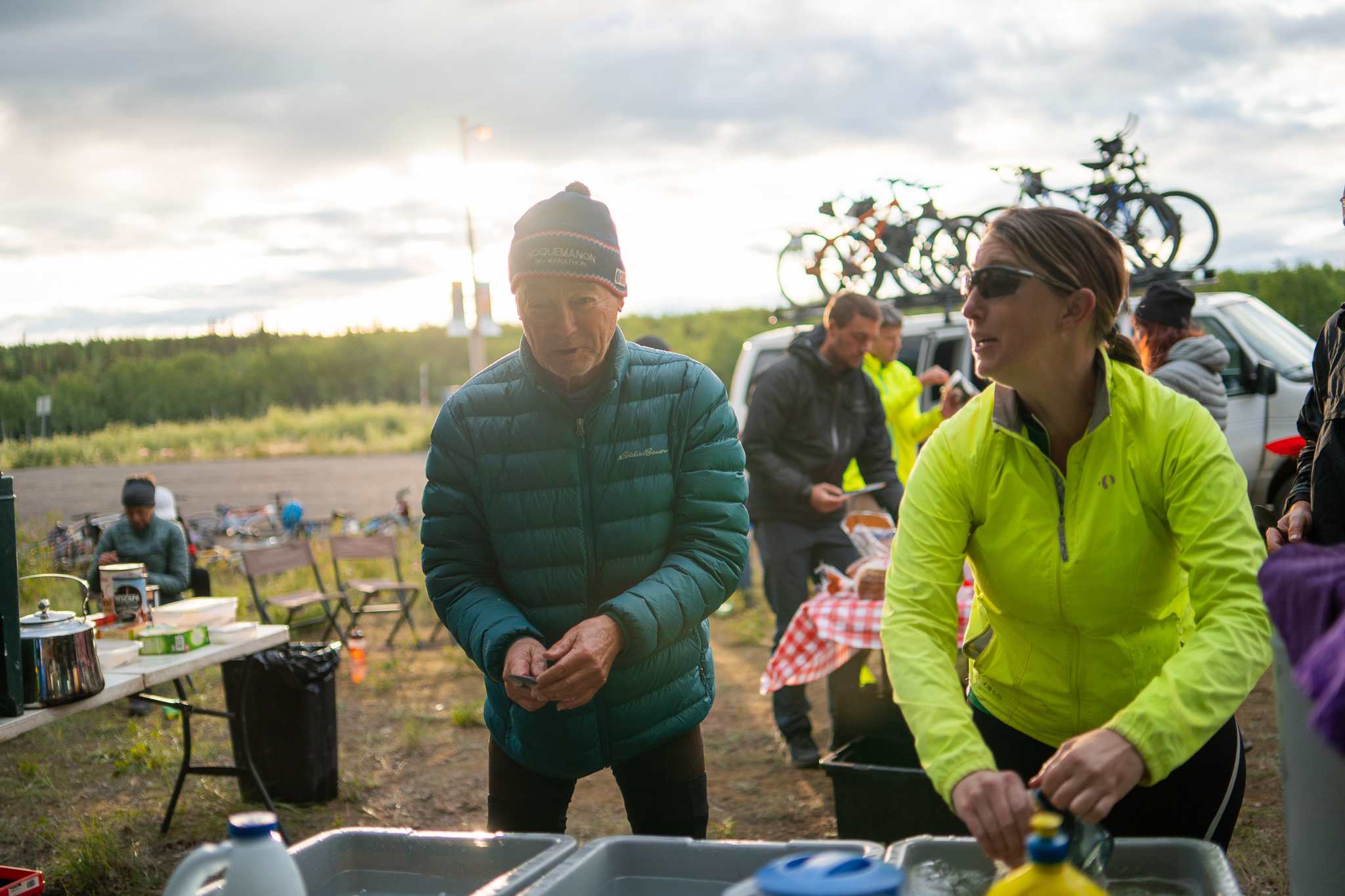
TDA founder Henry Gold, who was with us on this tour, tested positive for COVID, along with another rider. In one of the most remote places in the whole wide world, this little virus found its way to disrupt the peace of this adventure. How convenient! It didn’t take long for more people to test positive. Then a day before we reached our first rest stop, Eagle Plains, one of our riders, Tom, lost control of his bike on one of the descents and had a pretty nasty fall. Luckily there were no serious injuries, but a day later, in Eagle Plains, to add salt to his wounds, Tom tested positive for COVID. Being in the middle of the Dempster Highway didn’t help as we had to find a way to send everyone to Dawson City to self-isolate for a few days. Looking for transportation was another logistical issue. Luckily there were locals who were willing to help and make an extra buck in the process.
With a small chunk of riders gone for the moment, we continued south from Eagle Plains. The first morning was supposed to be an early start but a thick fog disrupted our plans. Very stubborn and persistent, this fog lingered on and on. Cautiously, the riders started moving, but the fog stayed with us for the next two days. Dawson City was four days away, and these four days were going to be even more remote than the stages before Eagle Plains. There was no cell reception anywhere on that stretch of the road, not a problem for most, but for my role as a content creator, it was a major inconvenience for sure. To add even more inconvenience to the adventure, on the second day of the fog, after a very cold night, I woke up with a bit of a sore throat. I credited that to the lack of insolation from the ground on my sleeping mat. It would let just enough air out during the night so that my bum rested directly on the cold permafrost. I pushed on, still the best job in the world.
Close to the end of the second day the fog finally came to an end, and in spectacular fashion. As we reached the top of one of the many rolling hills we crossed, still sitting in clouds with zero visibility, I had the idea to try and fly my drone above the fog. Some 10 minutes of setting up and 30 seconds of flying later, a screen showed the colour blue. Sky. And in the distance, mountains, endless line of mountains just chilling above the white blanket of clouds, with the whole rest of the world underneath it, including us. And then, like magic, the fog just started clearing up, and as riders were arriving, it opened its curtains and that little picture I saw on the screen was now right there in front of us.
As we pushed on, the scenery started getting nicer with every turn of the crank. We were closing in on Tombstone Mountain Territory Park. What a spectacular sight. Mountains, serrated with canyons and creeks, rivers, hills and valleys combined to create an incredible visual stew. And cutting through it all like a ray of bright light in this green/grey universe – the Dempster Highway. Even the fastest riders couldn’t help but slow their pace to stop and admire the view. BEST JOB IN THE WORLD.
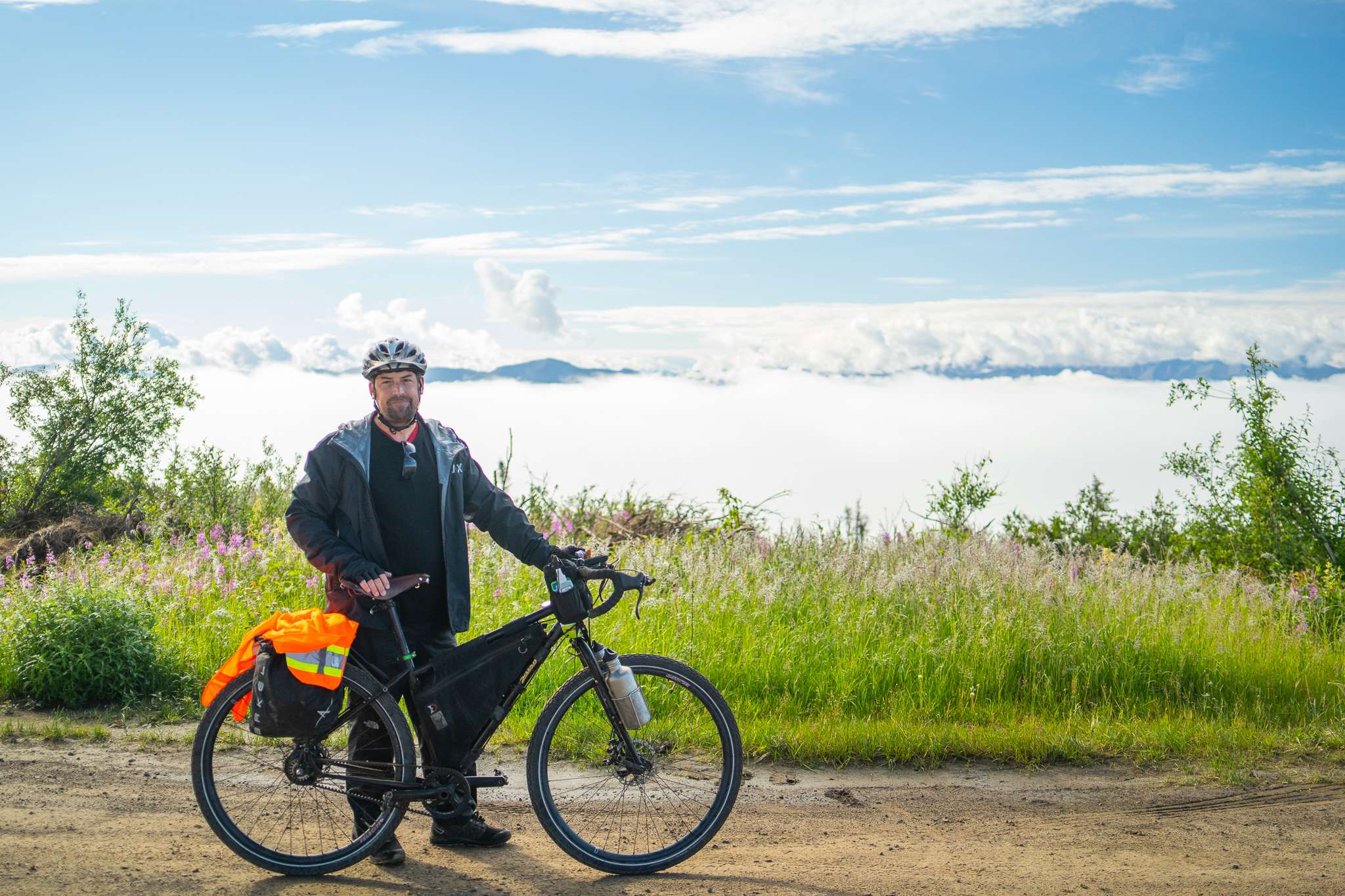
“So that’s where the lions are” I thought to myself as Chris, our medic, and I were staring into the little line next to “T” on my COVID test. Positive. Inevitable. Luckily, we were getting closer to Dawson City and the end of the Dempster Highway, where I too would self-isolate and await the clearance to rejoin the crew. Henry has already written a blog about Dawson City so I will not focus on that in this story.
The riders and the rest of the crew pushed on, luckily with no more positive COVID cases after Dawson City. I was bummed as I had plans to capture some interesting content between Dawson and Whitehorse, especially Gary and his sons and their gold-digging property next to Gravel Lake where we had stayed for a night. The gold rush never ended for this family and their massive machines, held together by duct tape and rust, still dig tirelessly in search of this precious metal. A story of its own that I wish I might get the chance to capture fully one day. My assignment was ending in Whitehorse, but I might be able to join two days before that and capture as much as I can before my return to Toronto.
Dawson City was a rest day for our riders. The motel we stayed in was a few kilometres outside of the actual city so in order to avoid a possible DUI on our bicycles, the tour leaders, Carolina and Cristiano, enlisted, ‘The Guy’, Dawson’s only “taxi” driver to haul everyone around in his early 2000’s Chevy Cavalier. To explain the quotation marks on the word “taxi” the Guy was going to register his business soon. The papers are in the glovebox.
The pandemic had killed all the transportation businesses in Dawson City, so the only way to get from Dawson to Whitehorse is by flying. Since I wanted to joint the crew two days before Whitehorse, flying was no option for me. And with all public transit gone I had only one option – The Guy. Twenty minutes later than scheduled, mid-day, on a sunny but muddy street in front of the Downtown Hotel, a little black Chevy with manual transmission pulled up. A full ashtray was slowly expanding way past its borders, the whole lower portion of the console was covered in ashes and there were cracks in the windshield, an obvious sign of history of this vehicle on Dempster Highway. The Guy was leaning over the roof, smoking a cigarette procured from far away for $60 per carton. How do I know this detail? For the next four hours I did not ask a single question, nor was I asked a single question. Regardless, there was not a single moment of silence during the drive.
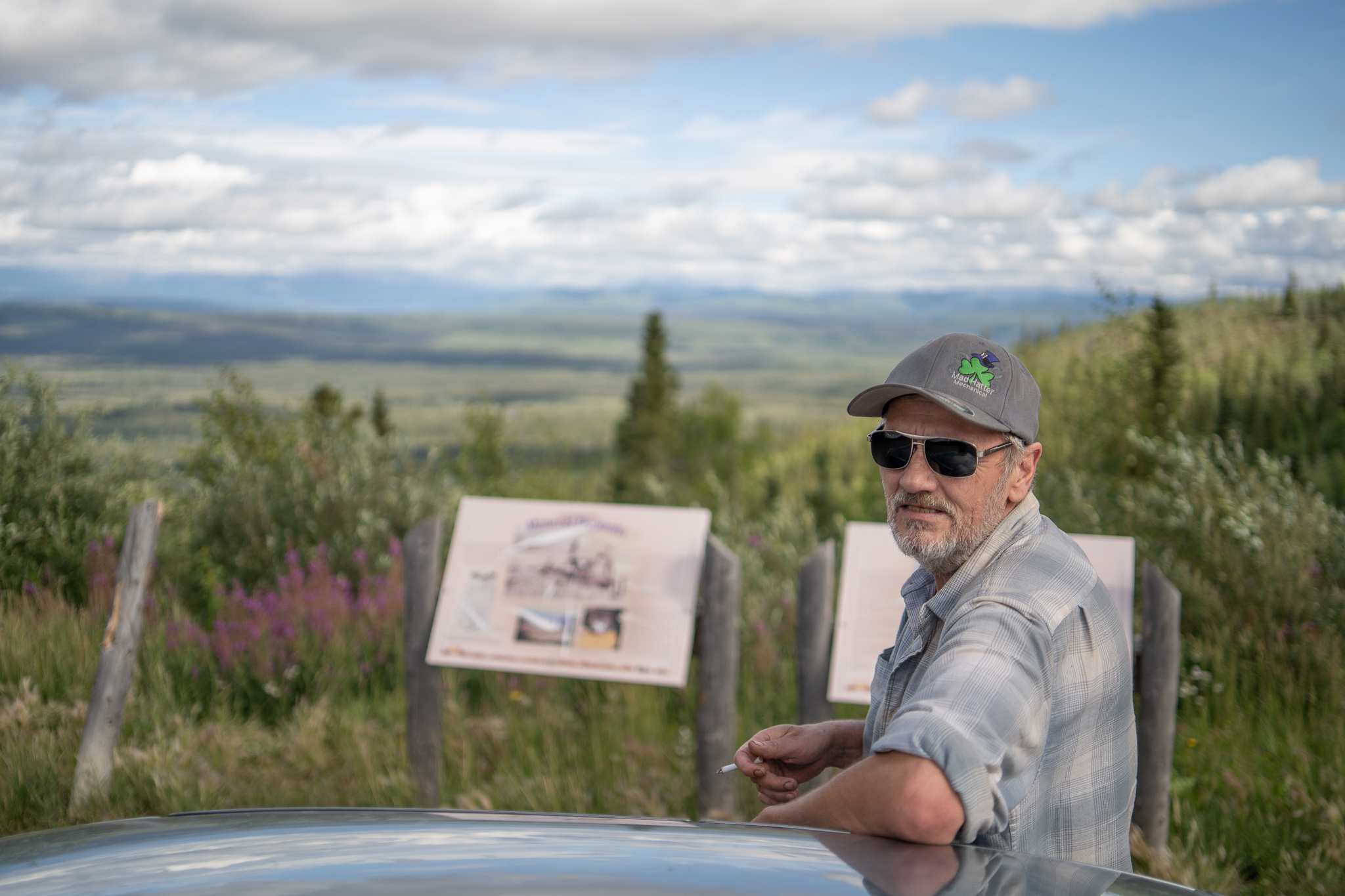
The Guy chatted away. I learned that he was an heir to the throne of the kingdom that at one point in history ruled the whole of Europe, but then the Freemasons came and took everything away from him. Now they dwell in Dawson City, constantly messing with The Guy, taking notes, preventing him from succeeding. He’s also writing a letter to the Queen. We pulled over on the hill overlooking the mineral rich valley next to Dawson City. The Guy claimed he hadn’t had a cigarette in 20 hours. It was an incredible sight, gold everywhere. An eventful ride for sure.
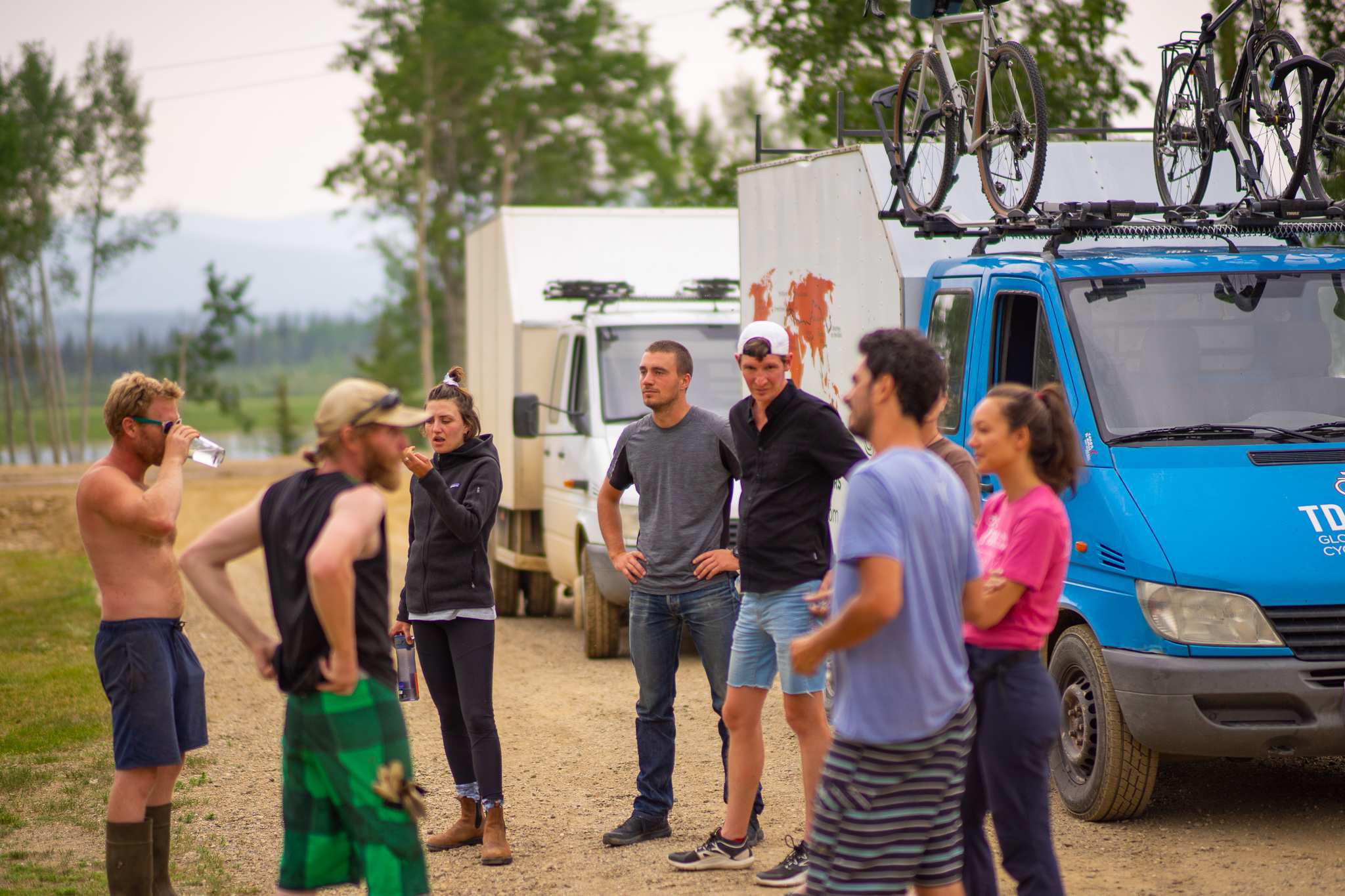
I was glad to be back with the riders and staff. On long trips like this, at some point, the lines between people who work and people who participate get a little blurred. The group looked very coherent, some riders found friends in staff, some staff in riders, some riders were jumping in to help with any task any chance they had. We were pushing through this expedition together. I guess the landscape is not the only beautiful sight on this trip, but also the friendship and smiles on these tired faces. THIS was the hardest thing for me to leave behind when I departed in Whitehorse. What an amazing group of people, both riders and staff. Hopefully, the problems are behind them and luck, joy and the road are the only things between them and Panama City. After all, lions really belong on the Tour d’Afrique, not to the North American Epic.
RELATED
TOUR
North American Epic
This incredible expedition is the only cycling tour that covers the entire North American continent, from the shores of the icy Arctic Ocean to the...
“Chanting aloft in the pine tops,
the wind has lessons to teach.”
– Robert W. Service
If you, like us, are traveling through the Northwest Territories and Yukon, it is inevitable that you will encounter a reminder of the latest chapter of what began in 1492 and no doubt will go on for much longer. For example, today I decided to do a ‘walkabout’ of Whitehorse. My objective was to get a sense for the place and to take a look at the white waters from which the name of the city originates. As it was past lunch time, I saw a place – Le Petit Maison – that was serving crepes and I thought, that would be a good place to have a bite to eat. The place was full of young people enjoying the menu but what struck me immediately were two large posters labelled ‘150 Acts of Reconciliation’.
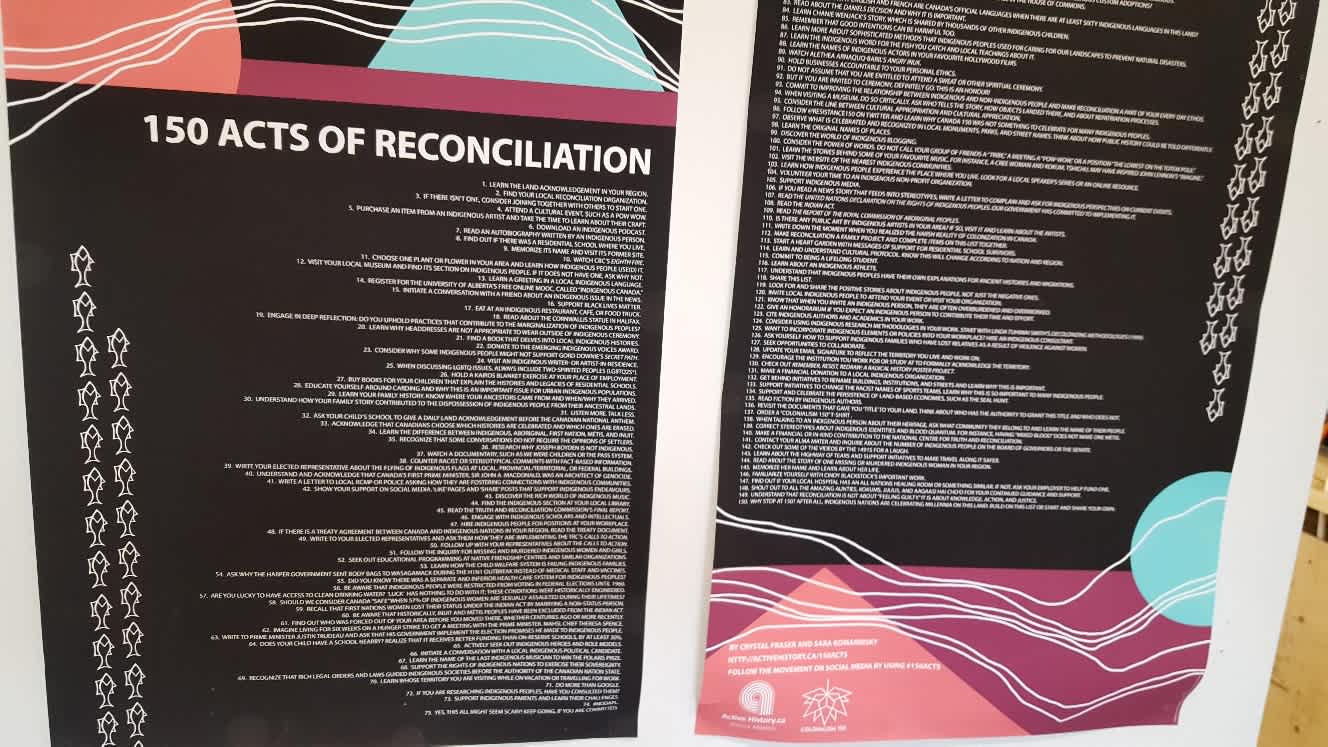
For Canadians the word reconciliation has been now thrown around for a while. The Canadian Encyclopedia says: “the process of reconciliation is tied to the federal government relationship with indigenous people. The term has come to describe attempts made by individuals and institutions to raise awareness about colonization and its ongoing effects on Indigenous peoples. Reconciliation also refers to efforts made to address the harms caused by various policies and programs of colonization, such as residential schools. For some, the word represents an opportunity to reflect on the past, to heal and to make right. For others, however, current gestures of reconciliation are merely performative and lack meaningful action to address the harms done by colonization.”
In other words, reconciliation is a loaded word and it was no wonder that I was immediately drawn to the poster rather than the menu. I walked over to the poster and started with Act 1 – Learn the land acknowledgement in your region. The list is long, worth reading and thinking about, particularly as one sees in one’s mind the images of broken cultures and hears stories such as described by one of our riders on this tour, Tom Perlmutter. The struggle and the pain are so much of their lives that even those who seem to have a healthy and productive lives have hard time talking about it, not to mention making any sense of it.
In 1991, in preparation for a United Nations Environmental and Development UNCED conference, I was privileged to be part of a couple dozen Canadian NGO workers on a ‘fact-finding’ mission to discover what Canadians could do to help preserve the Brazilian rainforest. For three weeks we were driven around Brazil to meet politicians, NGO workers and indigenous leaders. At one point, as I was walking in the forest with an articulate charismatic young chief and his translator, she suddenly asked me. “You are different than the rest. You understand. How come?” I was taken aback and was silent for a bit. “Well maybe because I come from family and culture that was destroyed and disappeared.” “I could tell” she said.
The pain and sorrow never disappear. As I travel to many other parts of the world and encounter, over and over, the pain and stories of what mankind tends to do to each other in the name of vainglory, riches, a piece of shining dust, power or just plain stupidity, I ask myself what can be done. How do we reconcile our actions with each other? Is reconciliation possible? Is humankind able to modify its instincts and actions?
I have no answers. What I do know is that the white waters after which Whitehorse is named no longer exist. They were eliminated by a dam. The pain, however, goes on.
]]>
“Life is not always a matter of holding good cards, but sometimes, playing a poor hand well.” – Jack London
The North American Epic Cycling Tour has finished riding the Dempster Highway all the way from the Arctic Ocean, arriving in Dawson City, the centre of the Klondike gold rush from 1896 to 1898. I, however, have had the pleasure of being in Dawson City, or to be more exact in a hotel in Dawson City, for six days and nights. To read about the experience of cycling the Dempster Highway you will need to read other blogs. My blog is more about ‘playing a poor hand well’.
Dawson City
I have been in a Dawson City hotel because, on the 3rd day of the tour, I developed an itch in my throat and asked our medic for a COVID test. The rest is history. Another rider and I had to arrange a taxi that drove all day along the Dempster Highway to deliver us here. At least we had the pleasure of seeing the scenery from the window of our cab! And thus, I joined millions of others around the world in experiencing the joy of this virus.
Jack London’s cabin
After several days of being stuck in a hotel room, I went for a walk with a couple of other riders who had also arrived here early for the same reason, to get a feel for the spirit of this place. One of my favourite writers from my younger days Jack London, lived and wrote here for a period of time, so my destination was the cabin in which he wrote his stories. Dawson City is small, so it was not difficult to find the cabin, rebuilt from the original logs.
Jack London lived a short life. He died at 40 and left behind ideas and thoughts that speak to me. Perhaps you may also find that they speak to you. Here is one: “Ever bike? Now that’s something that makes life worth living!…Oh, to just grip your handlebars and lay down to it, and go ripping and tearing through streets and road, over railroad tracks and bridges, threading crowds, avoiding collisions, at twenty miles or more an hour, and wondering all the time when you’re going to smash up. Well, now, that’s something! And then go home again after three hours of it…and then to think that tomorrow I can do it all over again!”
Jack knew a thing or two about life; “The proper function of man is to live, not to exist. I shall not waste my days in trying to prolong them. I shall use my time.” “And how have I lived? Frankly and openly, though crudely. I have not been afraid of life. I have not shrunk from it. I have taken it for what it was at its own valuation. And I have not been ashamed of it. Just as it was, it was mine.”
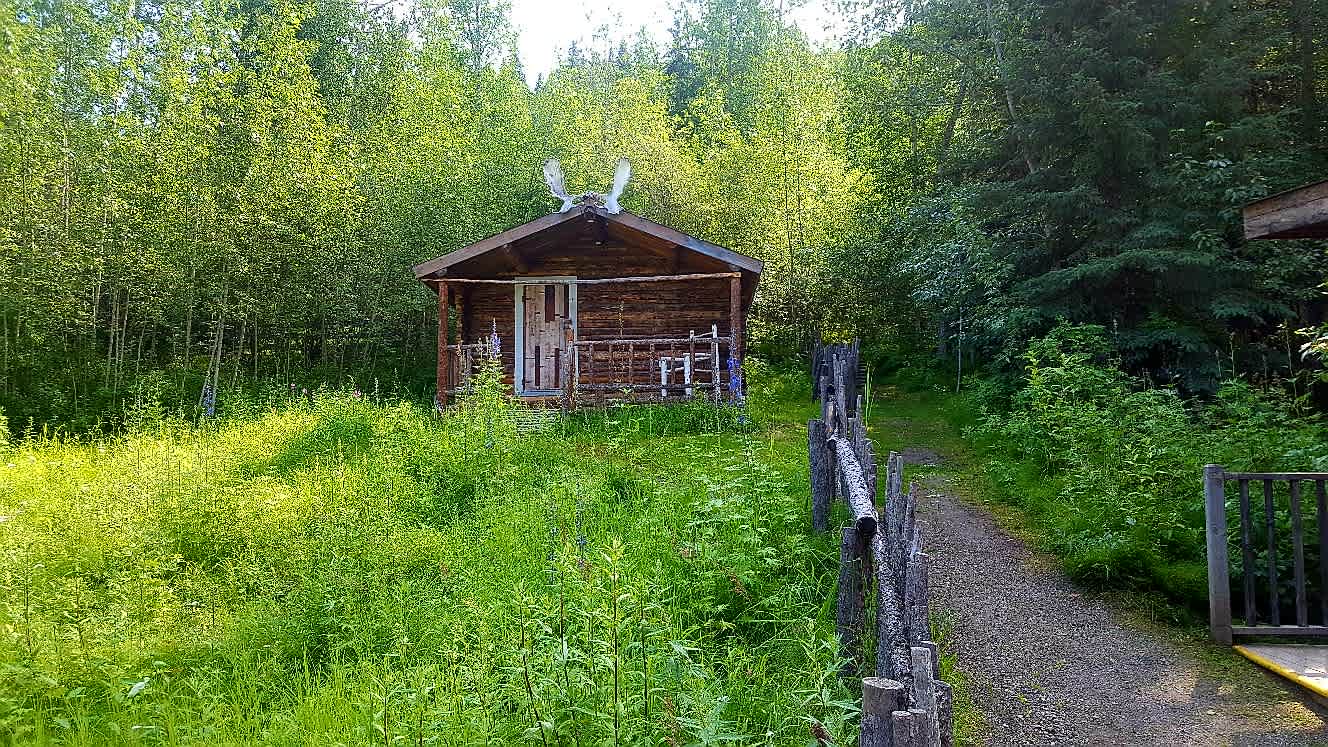
Robert Servicee’s cabin
Another individual who lived, wrote and was inspired by this place and whose cabin is situated close to Jack’s, was the poet Robert William Service who penned this:
Have ever you heard of the Land of Beyond,
That dreams at the gates of the day?
Alluring it lies at the skirts of the skies,
And ever so far away;
Alluring it calls: O ye the yoke galls,
And ye of the trail overfond,
With saddle and pack, by paddle and track,
Let’s go to the Land of Beyond!
Have ever you stood where the silences brood,
And vast the horizons begin,
At the dawn of the day to behold far away
The goal you would strive for and win?
Yet ah! in the night when you gain to the height,
With the vast pool of heaven star-spawned,
Afar and agleam, like a valley of dream,
Still mocks you a Land of Beyond.
Thank God! there is always a Land of Beyond
For us who are true to the trail;
A vision to seek, a beckoning peak,
A farness that never will fail;
A pride in our soul that mocks at a goal,
A manhood that irks at a bond,
And try how we will, unattainable still,
Behold it, our Land of Beyond!
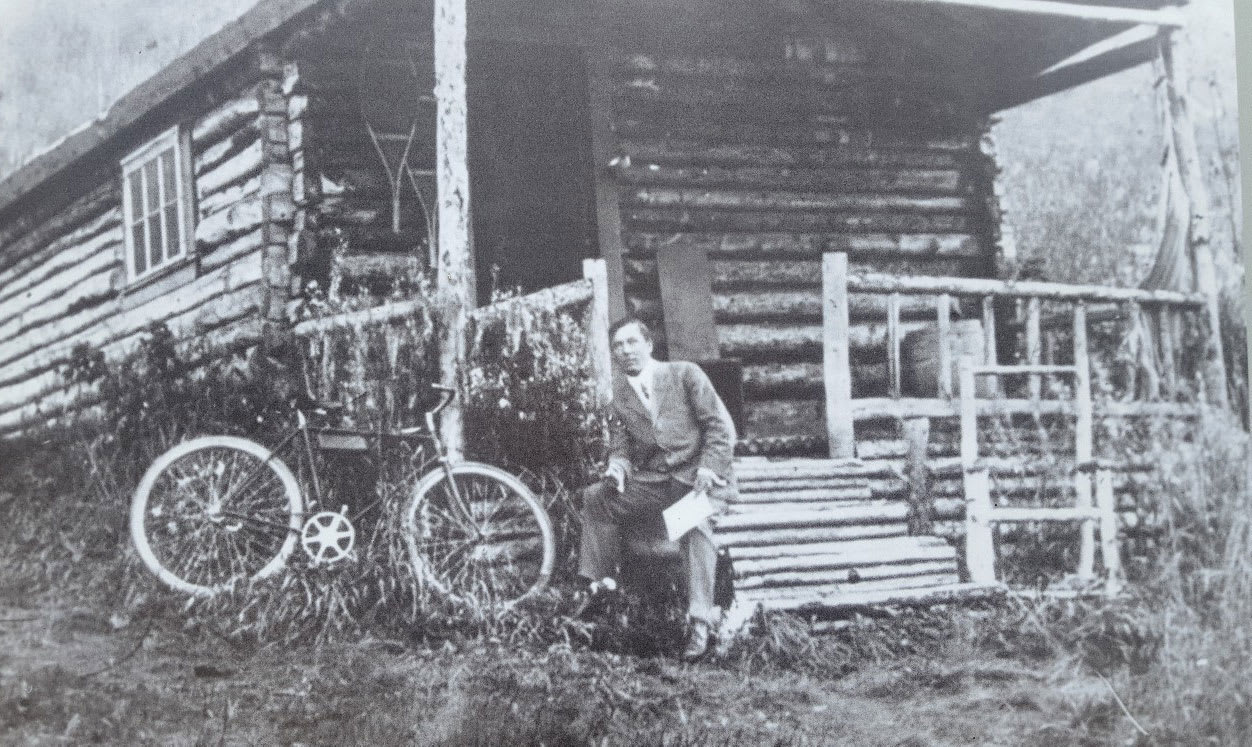
Robert Service and his bike
I have had a rough 18 months. There have been recurring health issues, there have been crashes and injuries that don’t heal and then there are the everyday challenges of a world. To quote Jack London again, “Intelligent men are cruel. Stupid men are monstrously cruel.” But I thank God that there is always a ‘Land of Beyond’. And that I will seek it until the end of my days, even though it may mock me.
]]>
Sime Baricevic is the Content Creator on the 2022 North American Epic. He sends this report from Eagle Plains, Yukon Territory.
“The Point. That’s where you need to take pictures,”said Steven, the local guy, as our convoy of trucks full of riders stretched across Tuktoyaktuk, semi-lost. It had been only about 48 hours since our staff and riders got together in Inuvik with the intention of starting the 2022 TDA North American Epic. Mostly still strangers, by the time we reached Tuktoyaktuk, a slow social cohesion was beginning to build. Upon arrival at the Arctic Ocean, the camaraderie was quite visible through the camera’s viewfinder, although one might easily assume this to be the end of the road, rather than the start. For our 29 riders, this was only the beginning of the long way down the continent. Five and a half months spinning over permafrost, tundra, mountains, deserts… with one major goal in mind – reaching sunny and warm Panama City.
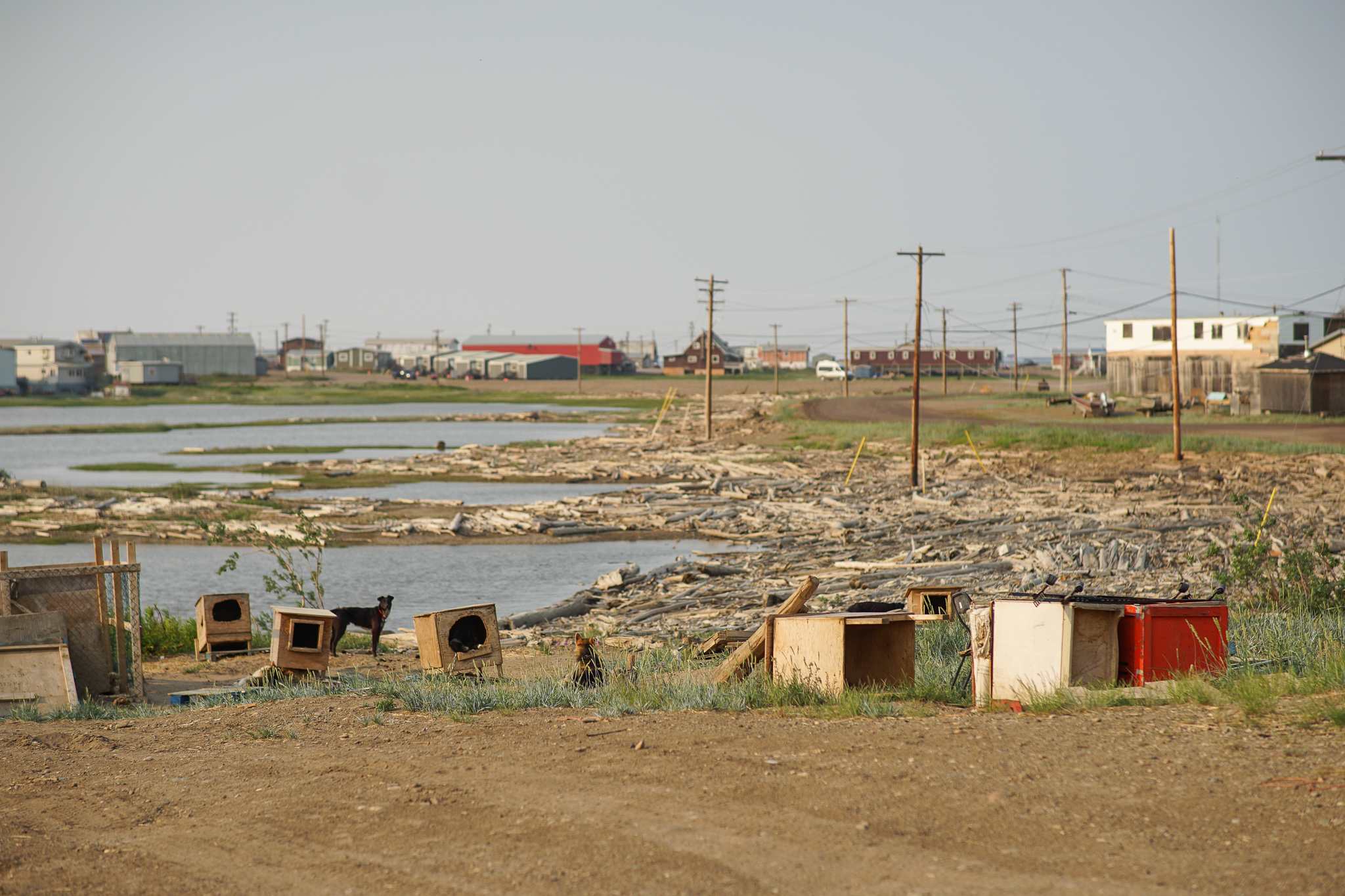
It is easy to give a city close to equator an attribute like sunny but no one would dare to do the same for the town of Tuktoyaktuk, the northern-most place in Canada accessible by road. It is located in the Arctic Circle, where the delta of the mighty Mackenzie River connects with the Beaufort Sea, part of the Arctic Ocean. As we stood there, in the scorching 30+ degree Celsius heat, swarmed by mosquitos, you could only be frustrated by such bad representation of the Arctic in the media as this ‘forever cold’ place. We were also here in July, the time of the year when the sun never sets but just keeps circling around like a curious observer.
The Arctic sun certainly didn’t help our jet lagged riders get an adequate amount of sleep before the big day. Oh, and what a day it was going to be. At 6AM the thermometer was already closing in on 25 degrees, the sun was pretty high up in the sky and the clouds of mosquitos were forcing some riders to start pedalling sooner than they intended. “It’s all part of the adventure”, said one rider while pulling mosquitos out of their peanut butter sandwich. You could only admire such positivity after a bad night’s sleep and the immense task that lay ahead. Over 150 kilometres of gravel road, the Inuvik-Tuktoyaktuk Highway was a final addition to the legendary Dempster Highway and we were going to cross it in one day, with hopes to reach Inuvik before sunset, pun intended!
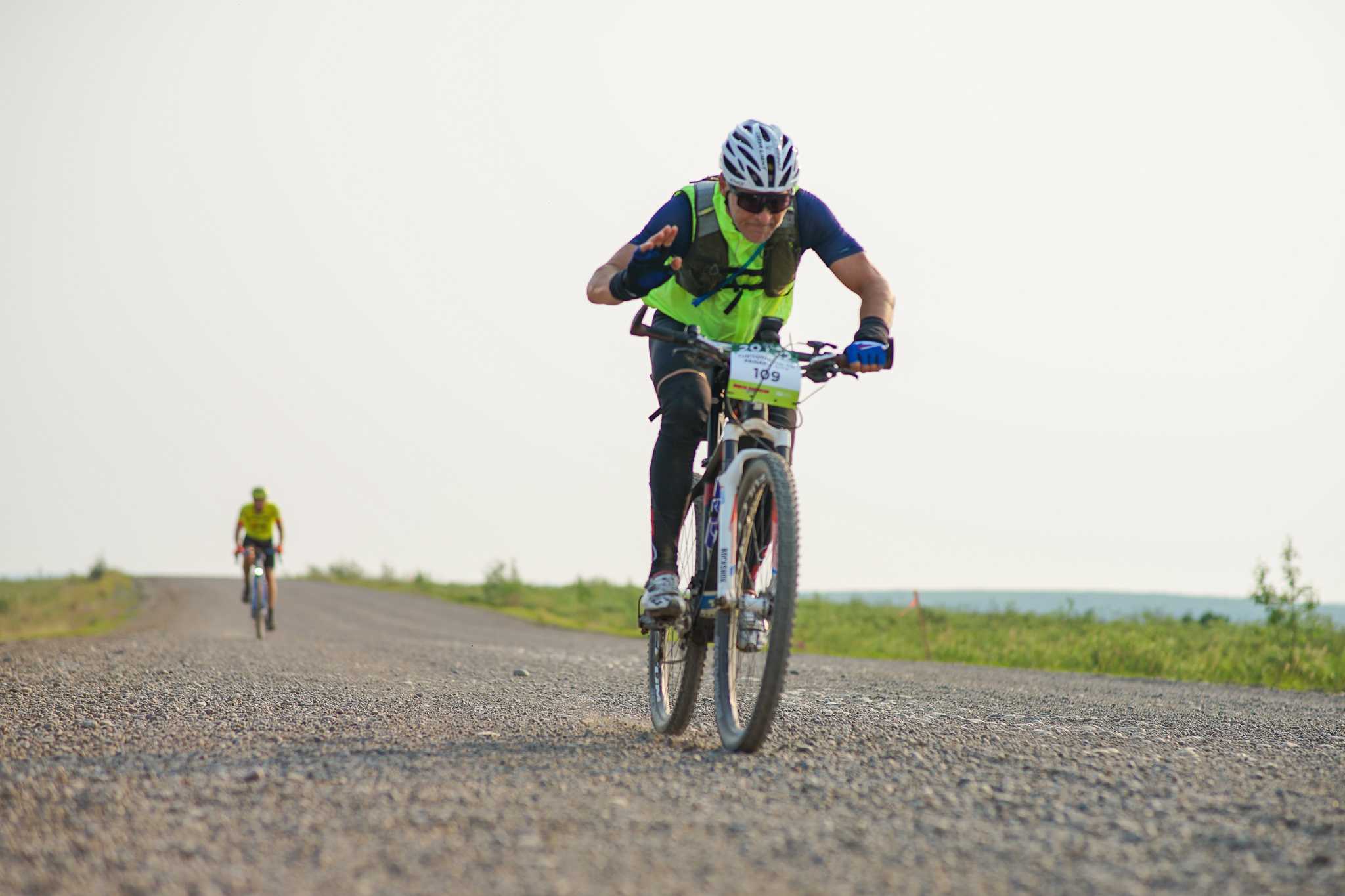
The road seemed endless, stretching over the permafrost landscape. Freshwater lakes were everywhere, in all shapes and sizes, sometimes guarded by Pingos, these distinctive mounds of dirt and rock that resemble mini volcanic hills. The scenery was out of this world and the riders were enjoying it. Nothing but smiles and excitement as their still fresh, relaxed leg muscles pushed their bicycles across this vast stretch of beauty.
It was going to be a long day, possibly the longest one on the whole tour. With no place to stop and camp, we had no option but to reach Inuvik. Baptized by the fire of the Arctic sunlight, without a single tree to provide shade, it soon became obvious that water would be in high demand. Some riders were overheating, some ran out of water very quickly, and our staff were constantly moving up and down the highway trying to supply everyone with enough water to stay hydrated. A tough day for sure, but in the end, a very successful one as we all reached Inuvik right before dinner time.
The next day we woke up with very different weather. You could almost say it was a bit cold. Fog was slowly lifting over our camp stationed next to the Mackenzie River. Riders embarked on another day’s cycling, dressed in long sleeves, with hopes that they warm up in the process. The landscape looked nothing like the day before. Suddenly we were surrounded by these short trees and endless tundra. Water would most likely not be a problem today, but boredom might, as the road stretched straight out for miles on end.
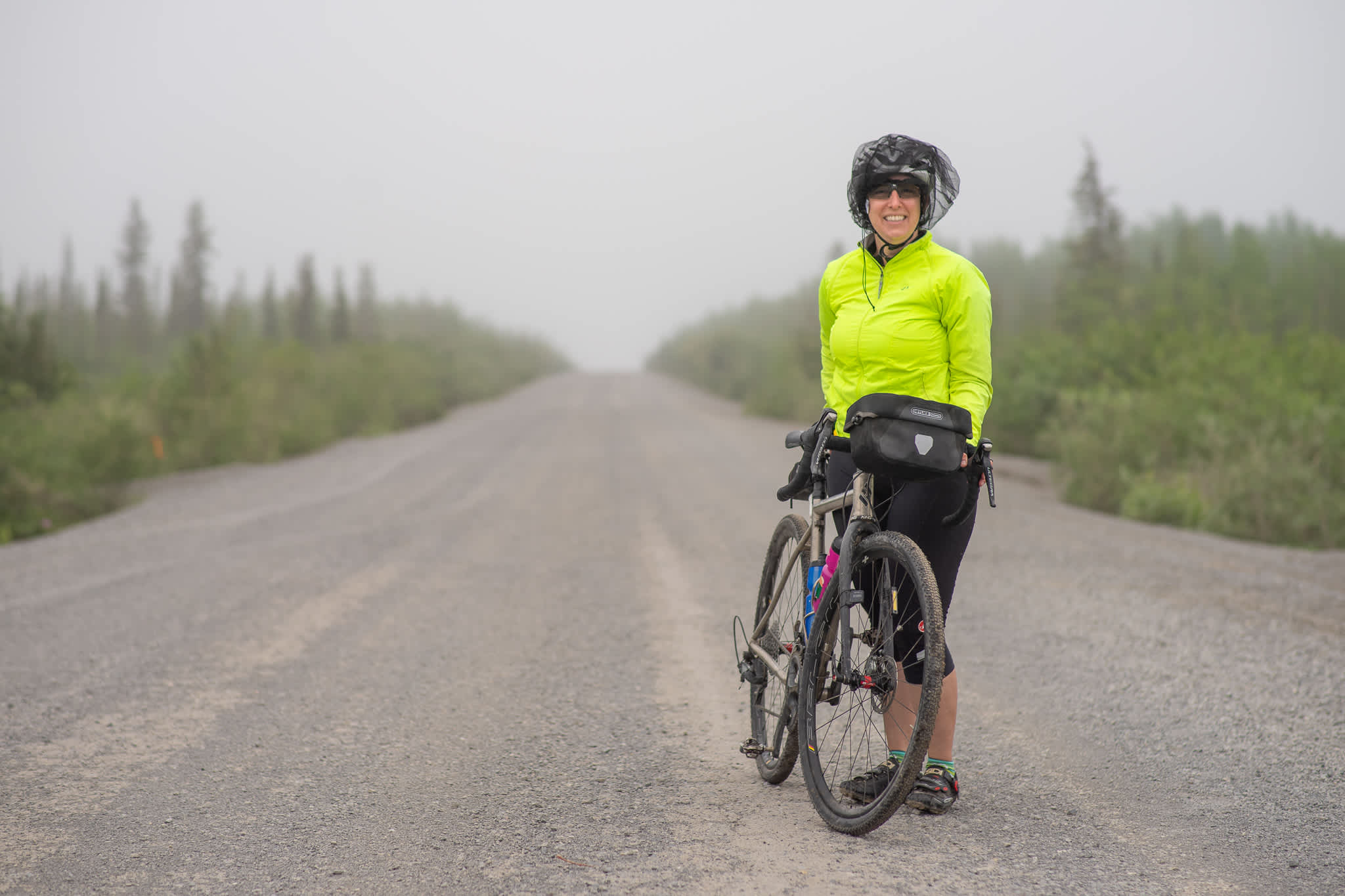
We were continuing South to the town of Tsiigehtchic, situated at the end of the Arctic Red River, where its massive amounts of water spill into the MacKenzie River. We were so used to the concept of south meaning “down”, that it was hard to comprehend that MacKenzie is flowing “up” or north. “Very easy, very enjoyable”, one rider described day two. Even though it was still a long 130 km day, the weather made it much easier than day one.
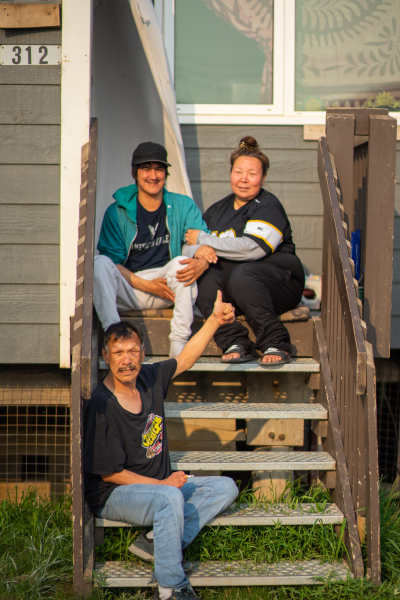 We received a very warm welcome from the Gwich’in community in Tsiigehtchic that afternoon. A young guy named Jared spoke about their community and the ways some of them are trying to preserve their way of living, threatened by the ever expanding globalization that reaches in even the most remote places like this one. Our camp was sited on the top of a hill overlooking the town and the two massive rivers. The only way to cross over the Mackenzie and Arctic Red Rivers is by ferry. This town is only accessible in summer and winter – summer by ferry and winter by ice roads the locals build every year. In the spring and fall, massive chunks of ice flow down both rivers, sometimes resulting in jams that block the water from flowing downstream and raising water levels by up to 100 metres.
It was hard to leave Tsiigehtchic the next morning, and many riders expressed regret at not taking a rest day here. But it was too soon as there was still a lot of riding to do and the Dempster Highway was calling. With still some 800 km of gravel left to cover, we had no time to waste.
The next place we were going to spend the night was a camp named Nitainlaii, right next to small town of Fort McPherson. The landscape was forever changing, once again different from the day before. The road was slowly turning orange, almost red, as a result of all the iron brought down from the mountains via the Arctic Red River and other streams. It was a short day, less than a 100 km ride and the riders appreciated that, most of them completing the day, some even stopping for coffee in Fort McPearson on their way to camp. Refreshing showers in the camp were welcomed as many cyclists just wanted to wash the dusty Dempster’s red dirt off their bodies and refresh themselves for the hard day of climbing that followed.
Day 4 ,with over 2000 m of climbing was not going to be easy but most riders were excited about crossing the border from the Northwest Territories into the Yukon. While staff were fighting the logistics battle of sourcing water in Fort McPearson, riders were booking it uphill, trying to find the best spot with the nicest views. Once again, the landscape was altered and suddenly this flat red road started turning into steep climbs with a first glimpse of the distant mountains. You could see the Dempster Highway far in the distance, reaching over the mountains and hills and the fastest riders way in front looked like tiny specs on it. We stopped at a wild bush camp we named Snowball Camp, not the place we originally planned to stay but a good alternative.
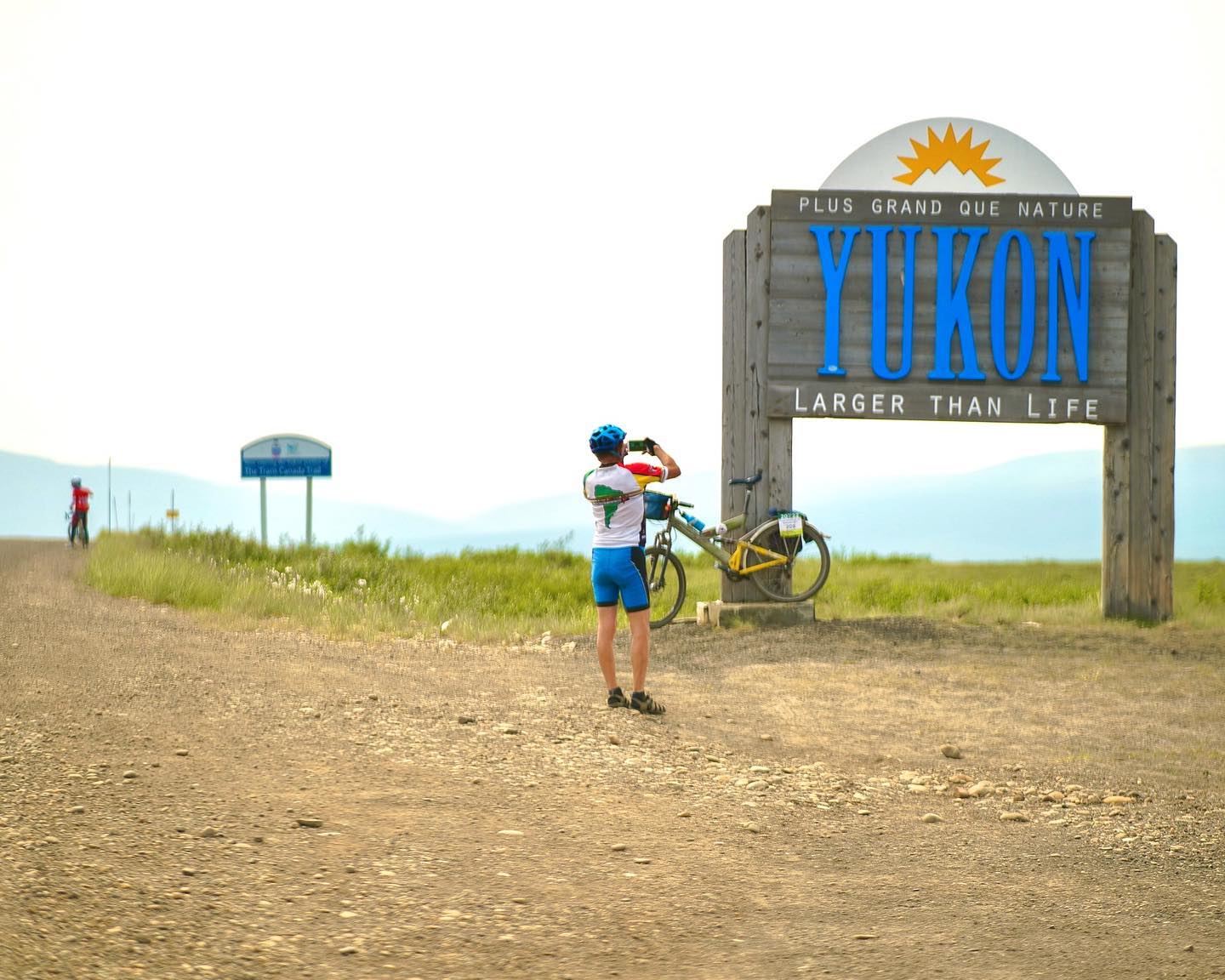
The original plan was to stay in Rock River camp, some 10 kilometres further down the road but Rock River seemed like the mosquito capital of the world! So we chose the wild camp on a higher point instead. Completely open, with a constant breeze that kept the mosquitoes, ‘Canadian national birds’ away. The breeze was very welcomed, but it looked like it was slowly starting to take shape of a more intense wind.
A little after midnight, the riders and staff were already in a deep sleep, the tents rustling in the constant wind, when suddenly there was a big thump! Our kitchen awning had smashed against one of our trucks, while another one flew across the highway, crashing into the bush 200 m away. Everyone got up, trying to peg their tents to keep them from flying away. The wind was reaching hurricane proportions and clouds were rolling angrily towards us from the nearby mountains. With no place to hide, no phone reception and no help anywhere close by, we could only hope that this was the worst of it. As we secured our tents as best as we could and collected our broken awnings, everyone tried to go back to sleep. Suddenly the wind stopped, almost like someone had flicked a switch, taking away even the hint of a breeze.
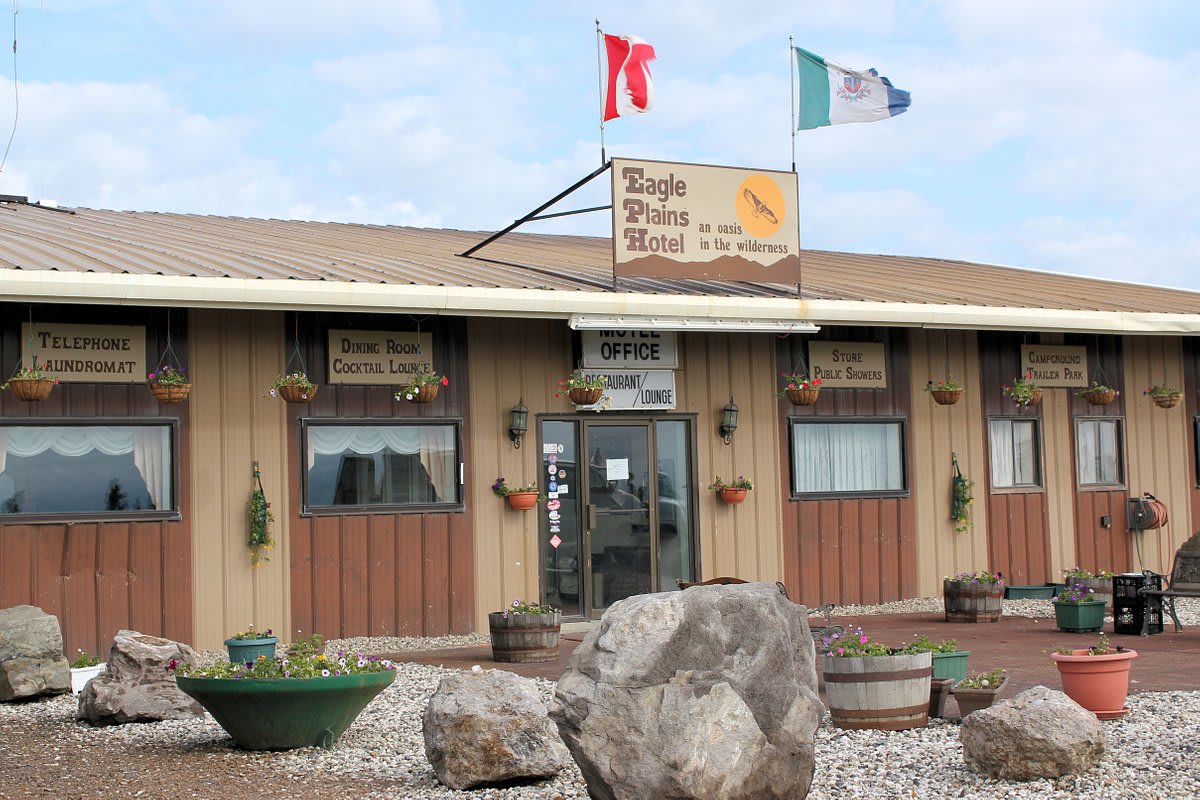
Credit: TripAdvisor
No breeze meant, you guessed it – mosquitos! There were many, many of them around us as we prepared to depart towards Eagle Plains for our first rest day. This was another shorter day, but a very special one. We were leaving behind the Arctic as the riders crossed the Arctic Circle around the day’s halfway point. There was lots of climbing again, but the thoughts of a real bed, a shower and a restaurant meal in the Eagle Plains Hotel gave the riders the needed energy to keep pushing onwards.
The Eagle Plains Hotel, described as an oasis in the wilderness, is exactly that. Located around a third of the way from Dawson City to Inuvik, with no other facility anywhere nearby, it serves as a rest spot for many travellers and workers, offering fuel, mechanics, a warm bed, food, and most importantly, hot showers. The riders definitely needed it, as they arrived covered in red dirt, mostly as a result of trucks passing them on the road. The traffic was becoming busier as we rapidly approached the paved Klondike Highway and one vehicle per hour was suddenly one vehicle every fifteen minutes.
Rest days are always welcomed on long tours like this one. Camping and long days of riding definitely make people appreciate the things we take for granted in our everyday life – a warm shower, a comfortable bed, even the roof over our heads. The first portion may now be over, but the North American Epic has just begun. Dawson City awaits and the Dempster Highway is both our main obstacle and our only path.
RELATED
TOUR
North American Epic
This incredible expedition is the only cycling tour that covers the entire North American continent, from the shores of the icy Arctic Ocean to the...
Our epic cycling journey from the Arctic Ocean to the Panama Canal, the North American Epic, has turned out to be the most popular tour in our stable of adventures for 2022. And with good reason!
Starting in Tuktoyaktuk on the distant Arctic Ocean – one of the world’s most remote communities – the route will take you through 9 countries and countless variations in landscape, culture, language, cuisine and roads. You’ll experience Inuit culture in the far north, the hospitality of the indigenous people of Chiapas state in Mexico, the vast tundra of the Arctic and the endless beaches of El Salvador’s Pacific Coast. Riders will pedal the challenging Dempster and Alaska Highways and spin along the gorgeous Icefields Parkway and Road to the Sun in the Rocky Mountains. They will have the opportunity to explore some of America’s stunning National Parks – Yellowstone, Canyonlands & Arches – as well as the historic Mexican towns of Guanajuato and San Miguel de Allende.
Riders on this year’s edition of the tour are preparing for their July start. Many signed up well over a year in advance and began planning and mentally preparing for the big ride well ahead of time. You can follow them on social media – #tdanorthamericanepic – in order to get excited about the next edition which will start in July, 2023 and is expected to follow the same route as this year’s tour.
To get you even more inspired and excited to be part of the 2023 ride, take a look at our fantastic 20 minute video covering the 2019 edition of the North American Epic. The participants give you a great overview of the route and what the experience of cycling for such a long time with a group of strangers (soon to be friends) is like. To jump to specific sections of the video in Canada, United States or Central America, follow the links below.
See What It’s Like With Our 6-Part Video Series
Parts 1 & 2 – Canada
“The north. I don’t know why I find it so attractive. A lot it has to do with the complete separation from, well, normal life.. whatever that is.”
The riders cycle from Tuktoyaktuk, Canada’s northern community perched on the shores of the Arctic Ocean, through the Northwest Territories along a road build on permafrost, then along the famed Alaska Highway through northern British Columbia and Alberta. The participants then spin along the Icefields Parkway with its dramatic Rocky Mountain views. This video ends as the riders cross into the United States in Montana.
Parts 3 & 4 – America
“It’s been quite different in the United States. Some days I just wanna cycle hard, and other days I quite enjoy stopping in at some of the towns and to chat to the locals in the local shop. It’s all the small things that make the trip unique.”
The route continues through Montana and along the famous Road to the Sun and passes by Glacier, Yellowstone and other incredible national parks. The southern US presents more challenging heat and intense dry desert conditions. A day riding through Monument Valley and stops in places like the mountain-biking mecca of Moab are truly unique experiences.
>>Rider Reviews from 2019 North American Epic
Parts 5 & 6 – Mexico & Central America
“We’ve been to a lot of areas that, they’re not used to seeing cyclists around. I get a lot of expressions from people as though I’ve just fallen out of a spaceship, but they’re still really nice.”
Entering Mexico, the biggest cultural shift of the tour happens as riders are greeted with new foods, a new language and plenty of new experiences, on and off the bike. The Arctic Ocean and the barren tundra that tested cyclists five and a half months ago are now a distant memory, replaced by humid temperatures, lush forests, and architectural wonders that keep them motivated and focused during these final weeks.
>>Registration is now open for the 2023 North American Epic
RELATED
TOUR
North American Epic
This incredible expedition is the only cycling tour that covers the entire North American continent, from the shores of the icy Arctic Ocean to the...
The 2019 North American Epic Cycling Expedition was our highest rated tour ever in terms of rider reviews. Here is what some of the cyclists thought of their incredible cycling experience.
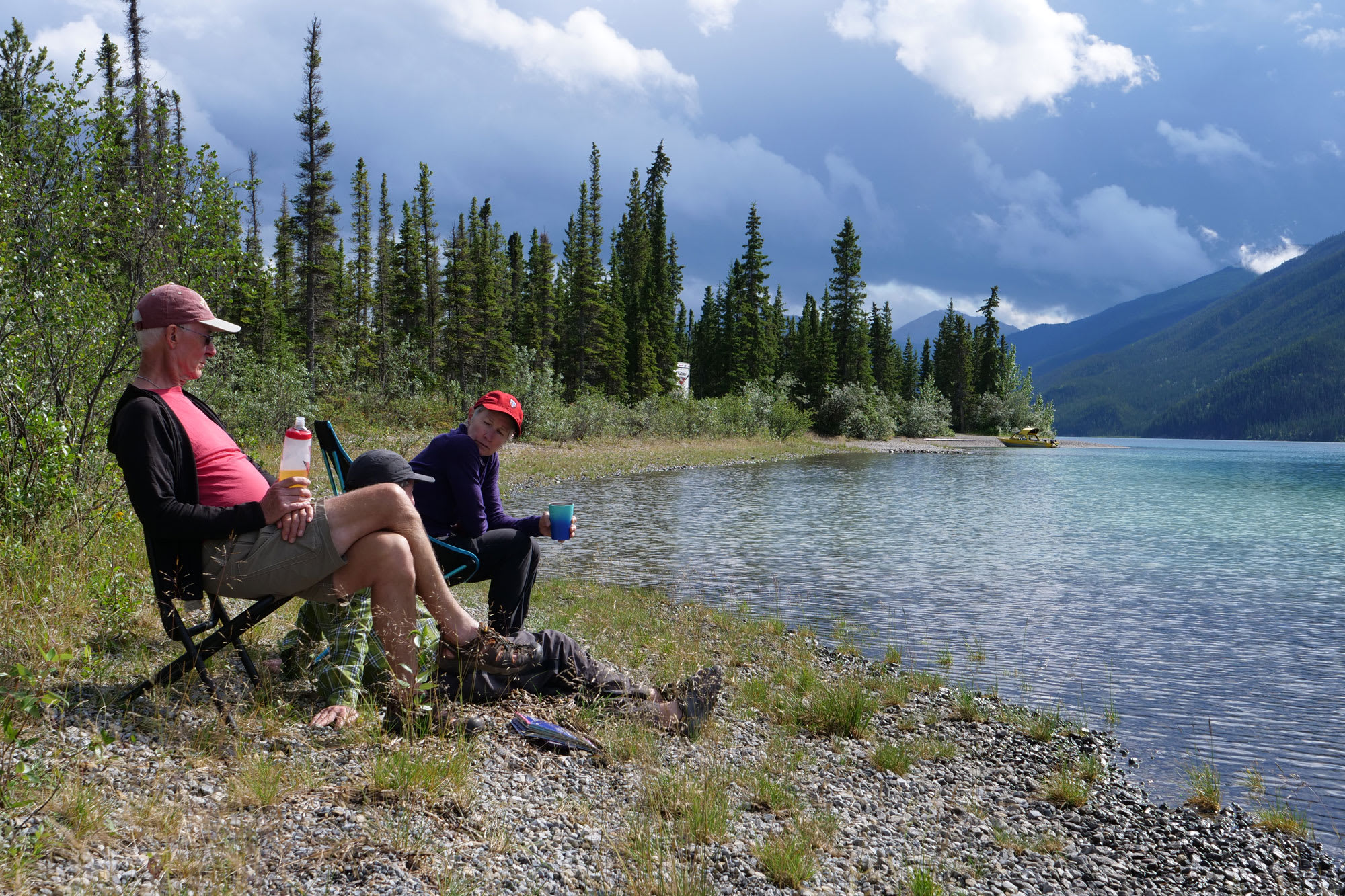
Riders relax by Muncho Lake after a long day on the road
“You can really go wild on this tour. Dip in the Arctic Ocean. Camp with grizzly bears. Gravel grind for days. Enjoy endless summer sunlight. Fend off countless mosquitoes. Race bison along the road. Enjoy hot springs on a rainy day. Spot eagles, bears, lynxes, bobcats, elk and moose (all in the same day!). And this is just for starters before you even leave Canada.” – Mark Heim (USA)
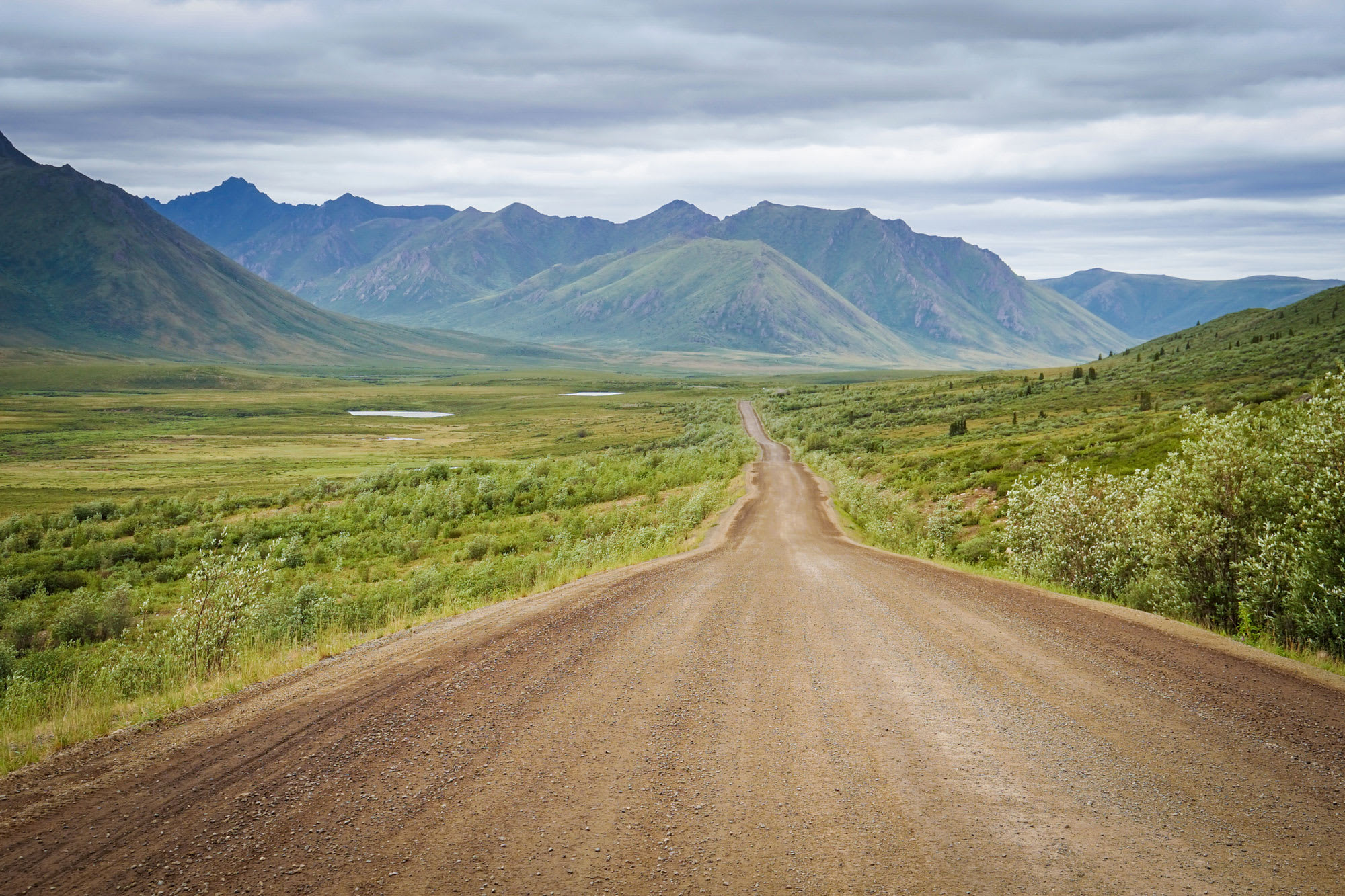
The Dempster Highway
“The Arctic Spirit was exceptional because it was a unique opportunity to cycle the new road from Tuktoyaktuk to Inuvik and the Dempster Highway with the support of an experienced outfitter. Highly recommended” –Steve Wahl (Canada)
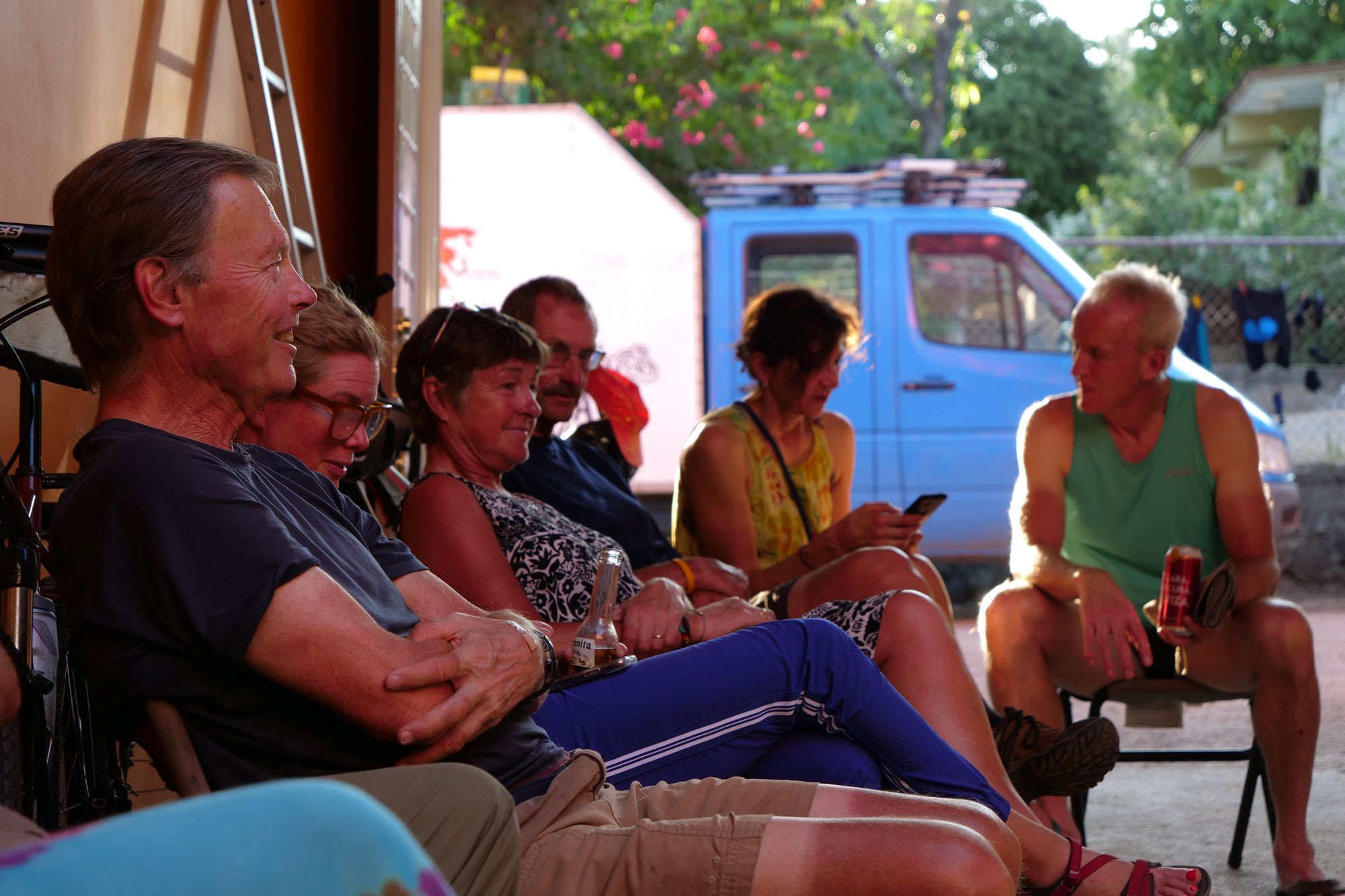
Relaxing riders after a long and hot day of cycling in Mexico
“Each day brought new experiences and for me, new challenges, which I embraced as best I could and was always happy with my performance at the end of each ride. Every rider brought something positive to the group as a whole. There was always lots of encouragement and positive words offered by every rider and always lots of smiles at the end of every day. All staff contributed greatly to the overall success of the tour.” – Bonnie Blundon (USA)
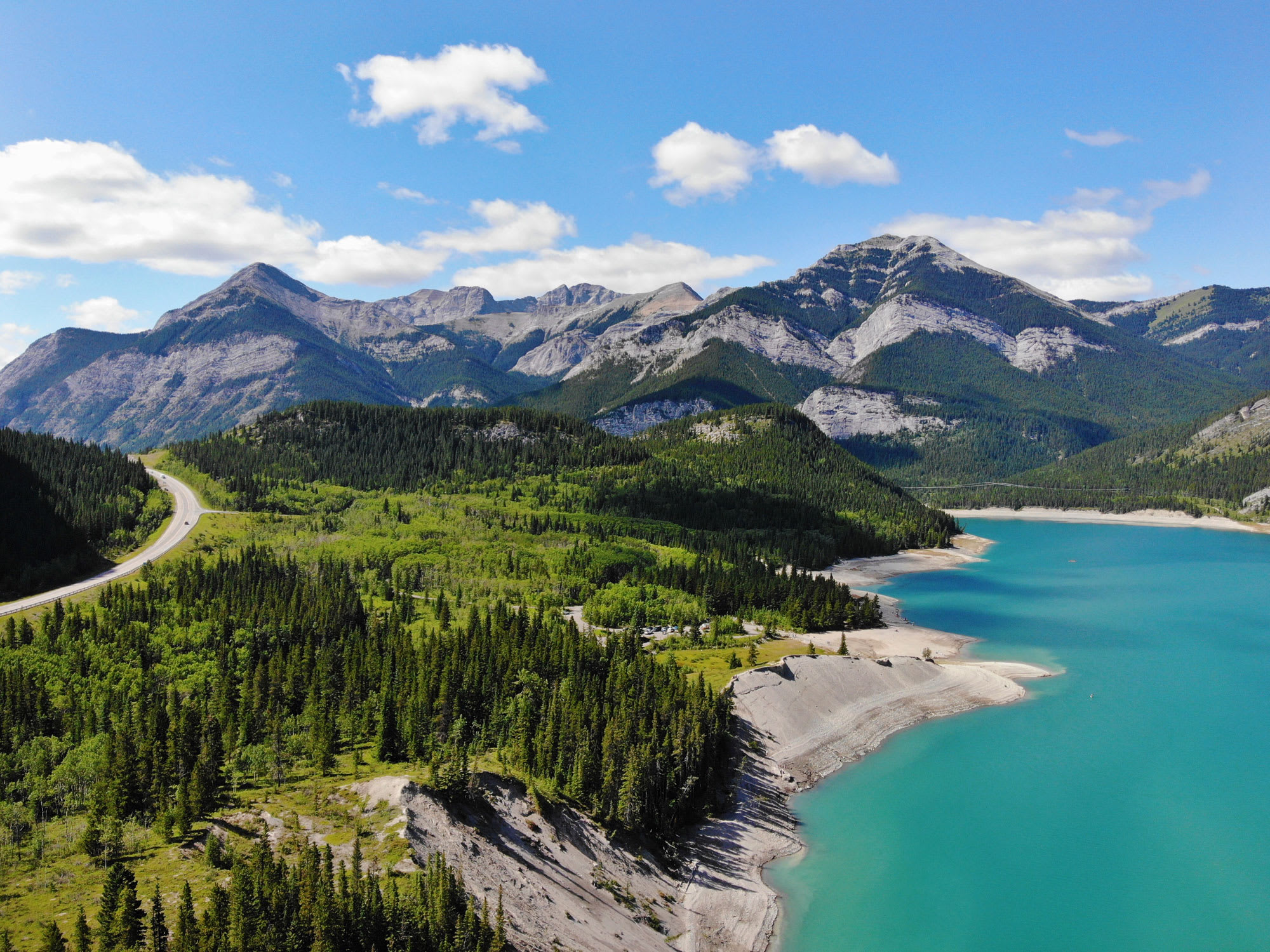
One of our last pristine turquoise Canadian lakes before crossing into the USA
“The scenery was spectacular. Some of the climbing was very challenging. (eg Flaming Gorge). The field staff are very, very good and are really what make TDA trips special.” – Richard Russek (Canada)
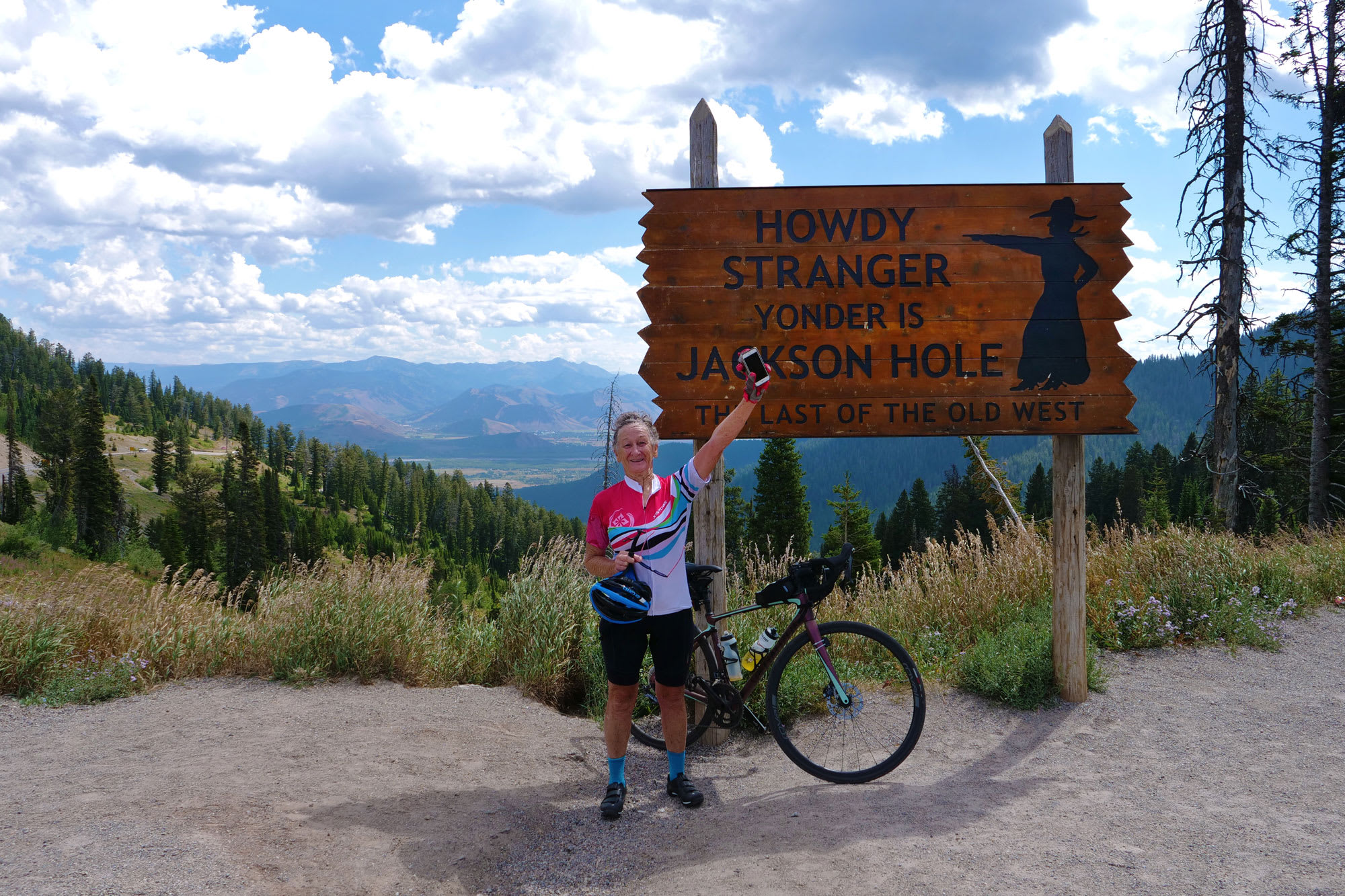
Carmel summits the arduous Teton Pass
“Great group of cyclists, lots good banter, fun excursions along the way, good food and cold beer.” – Carmel Morsi (Australia)
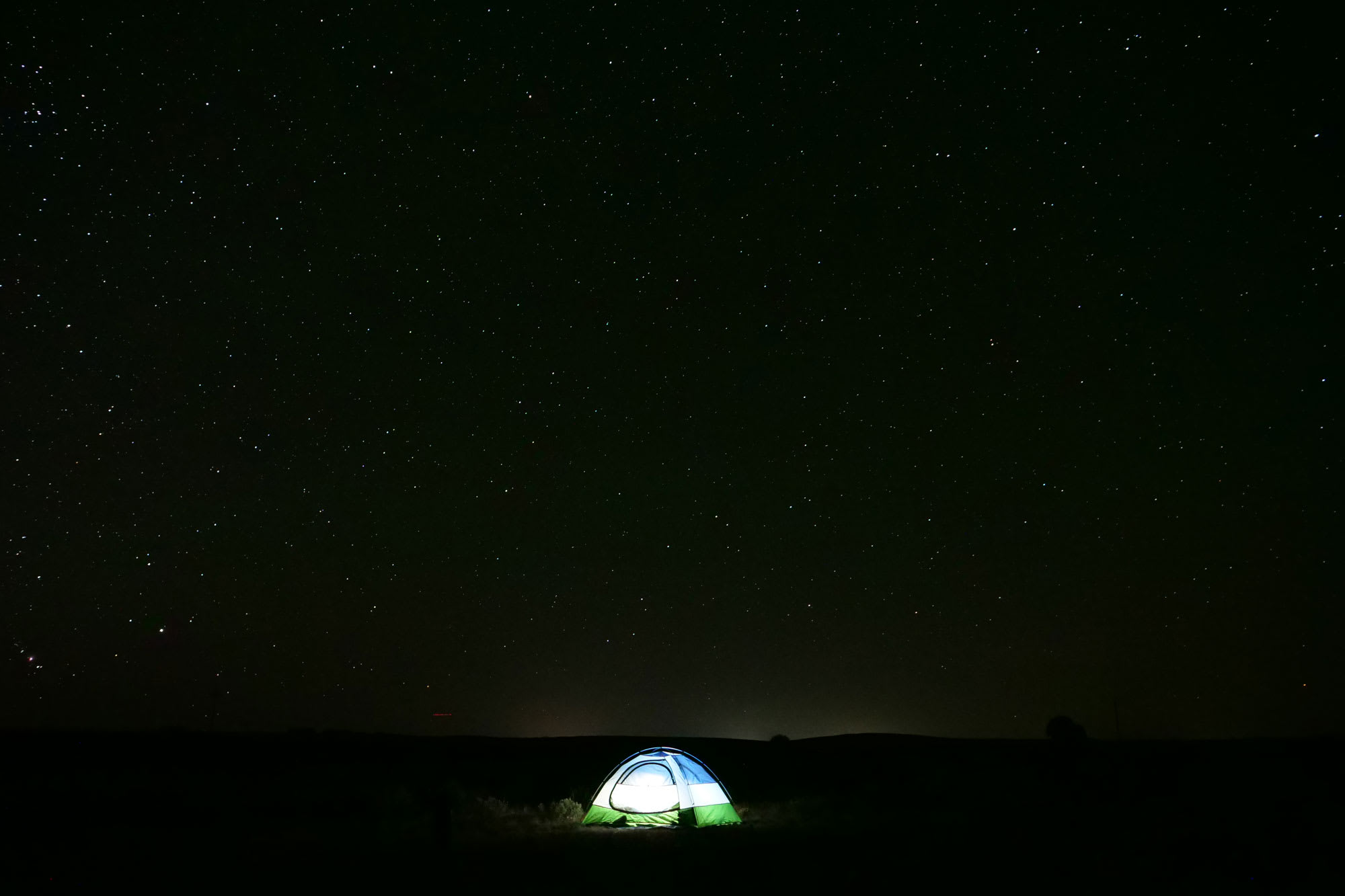
A starry Wyoming night at camp
“TDA tours are the complete package: outstanding staff, challenging routes and unparalleled adventure.” – Cindy Smith (USA)
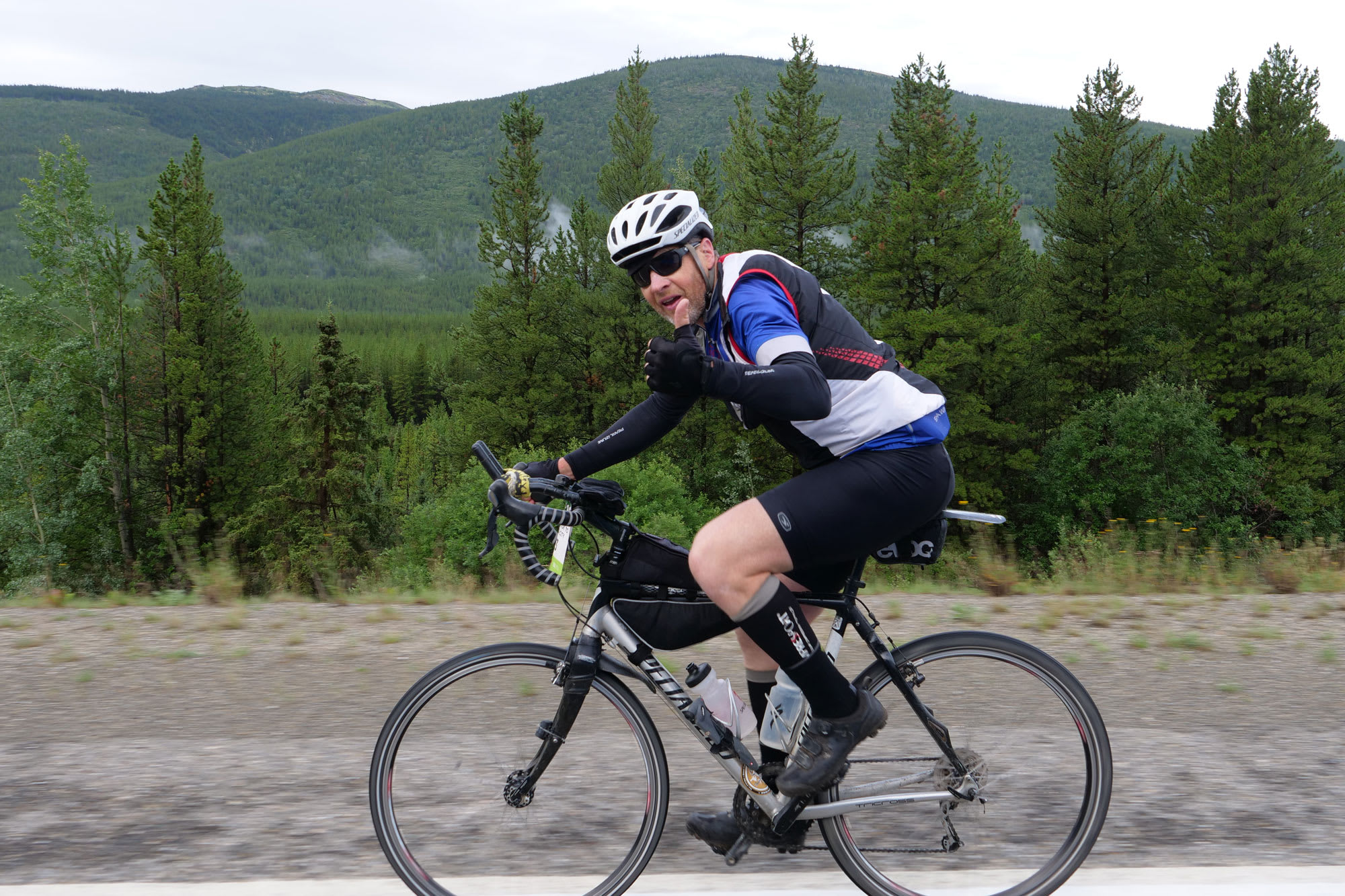
Chris happily speeds ahead of the group one early Yukon morning
“From the shores of the Arctic Ocean to the Panama Canal- Beluga Whales and Bison to Monkeys, Sloths, Macaws and Toucans- Truly the trip of a lifetime! What better way to experience the North American continent with all your senses? The people, the culture, the Landscapes- priceless!” – Chris Wille (Canada)
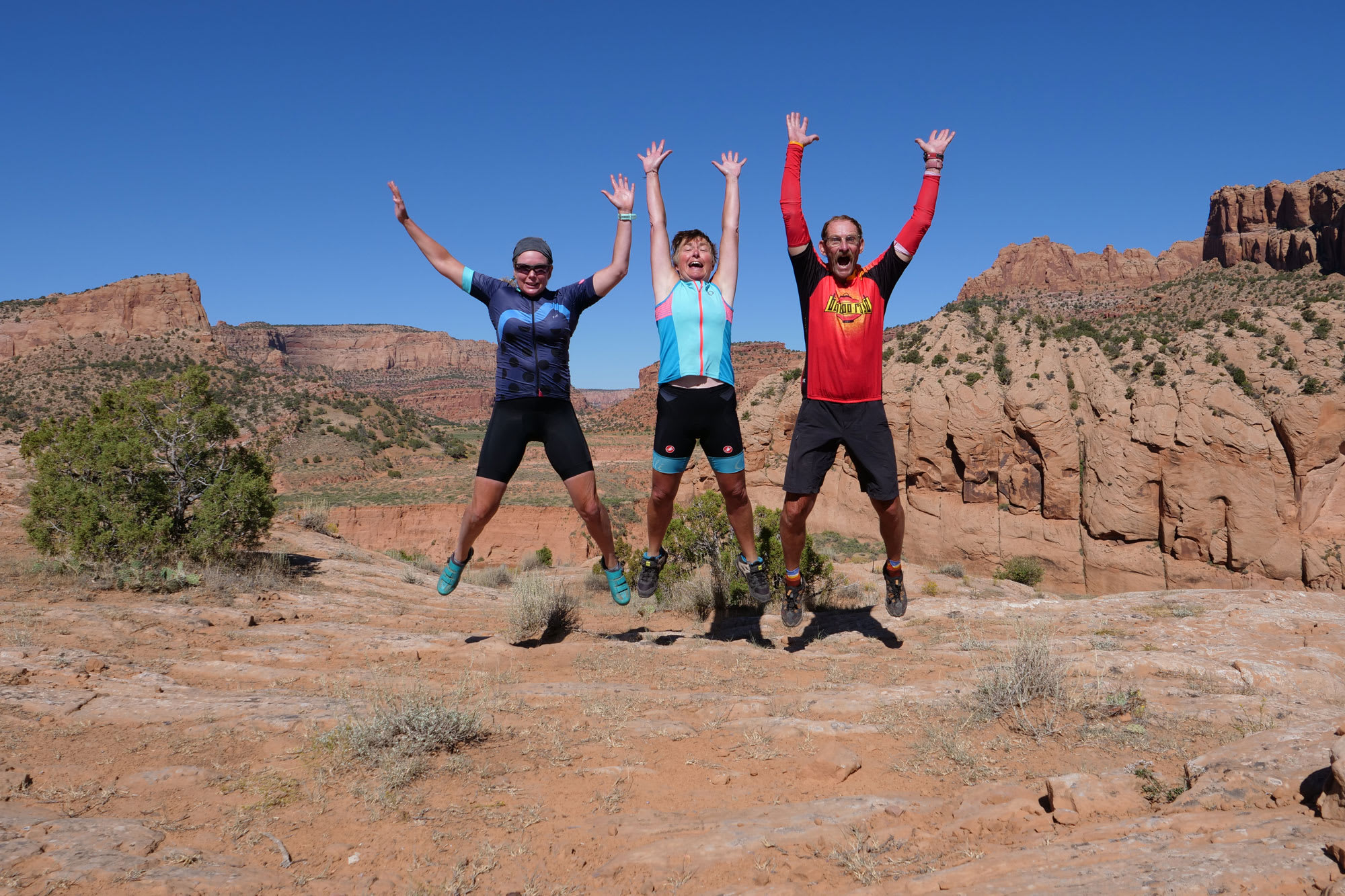
Kim, Debbie & Svend jump for joy in the Navajo Reservation
“This was the perfect tour for me: the variety of environments we cycled through was more diverse than on any other tour – I used the word ‘awesome’ far too much; the people, both staff and fellow cyclists, made the difference between a good trip and a great trip.” – Debbie Jenner (UK)
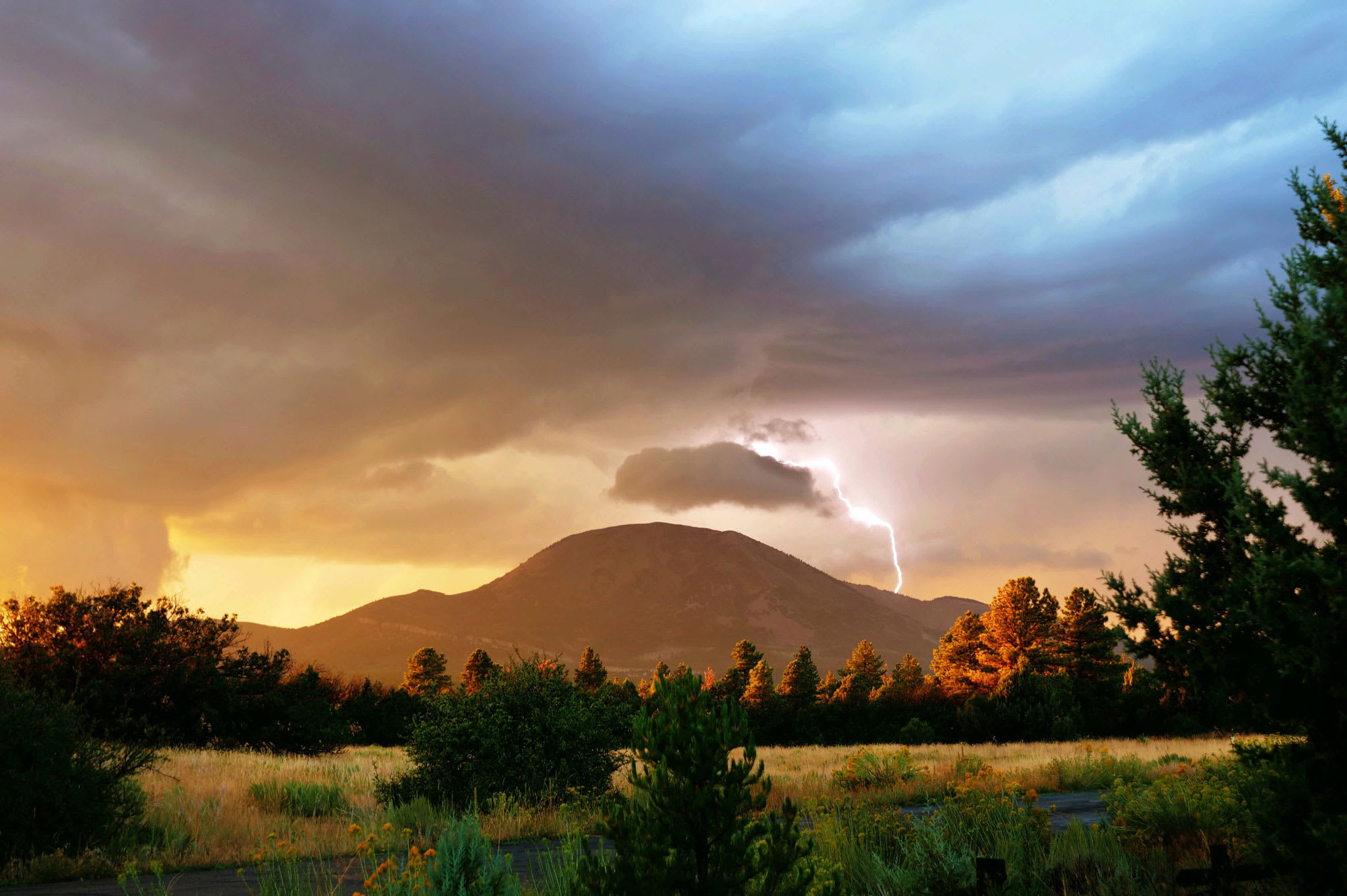
A warm storm off in the distance from camp in Utah
“Fabulous tour full of incredible jaw dropping scenery, diverse culture, wonderful people including the riders and staff.” – John Hemmen (USA)
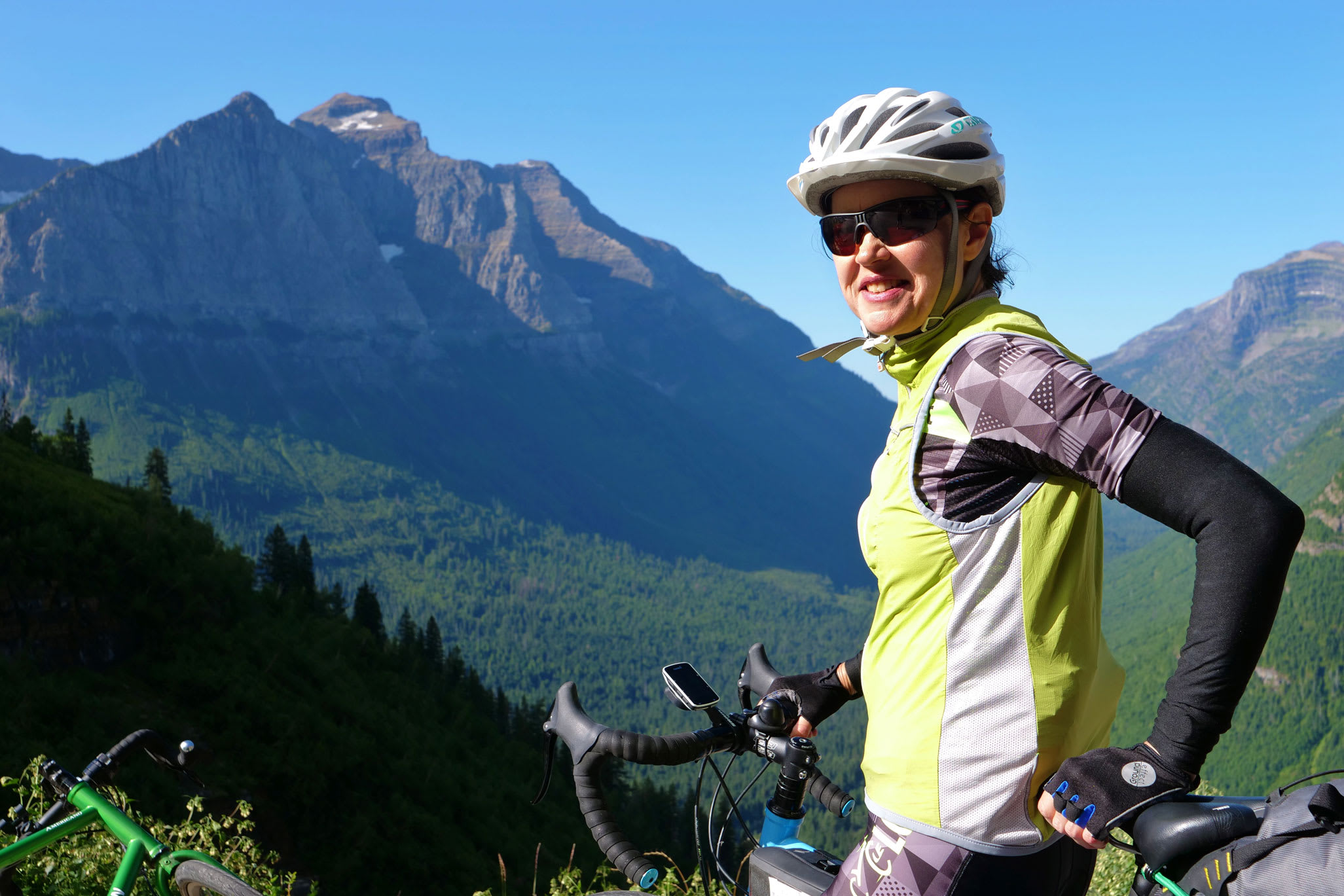
Judy stops to take in the scenery overlooking Glacier National Park
“A wonderful experience which certainly took me out of my comfort zone. The staff were excellent and all the food supplied by TDA was nutritious and filling.” – Judy Sole (New Zealand)
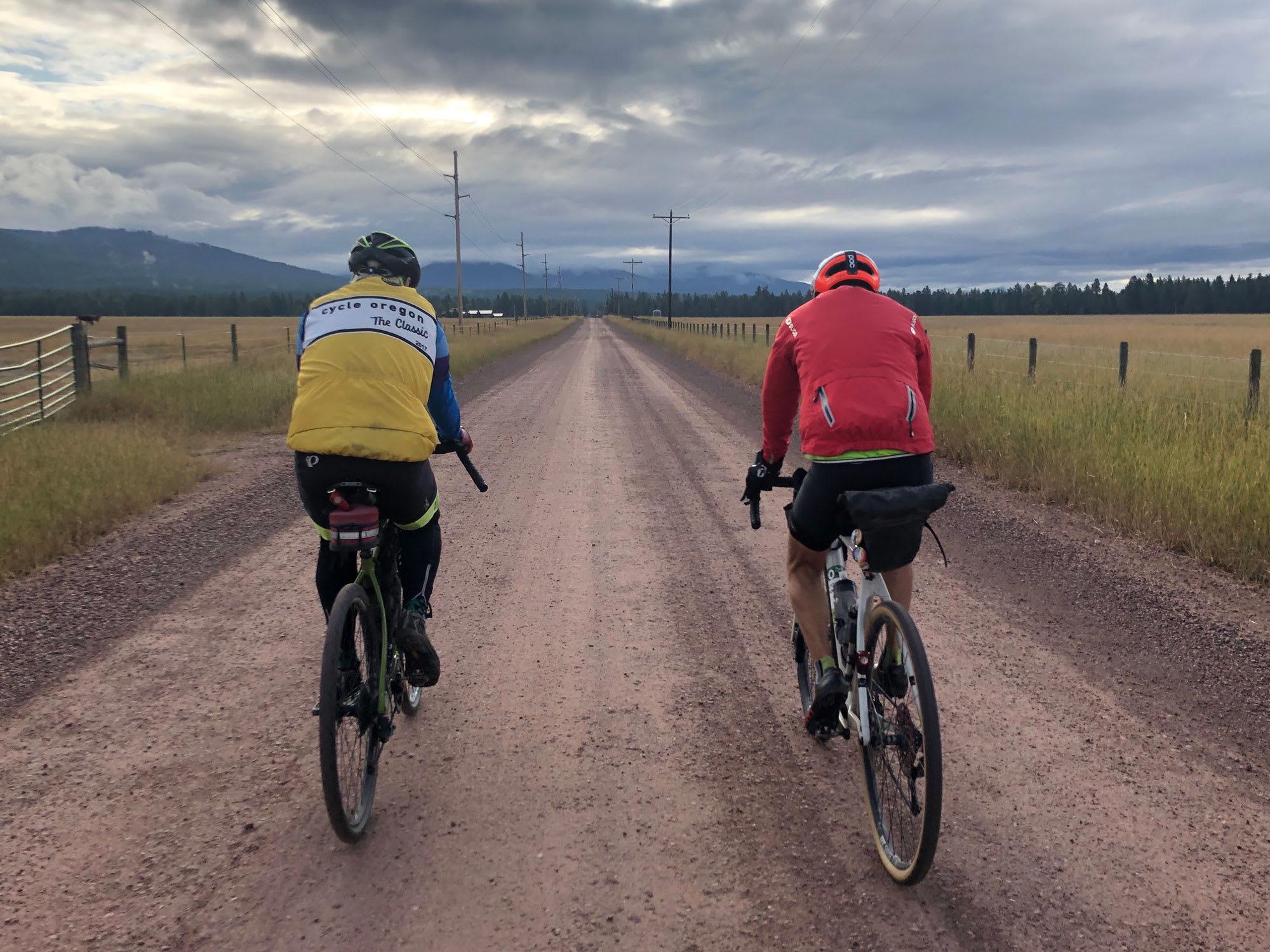
A glorious gravel road in the heart of Montana
“Riding the tour teaches you to go beyond what you think your own personal limits are and realizing that you can accomplish it.” – Edward Sokol (USA)
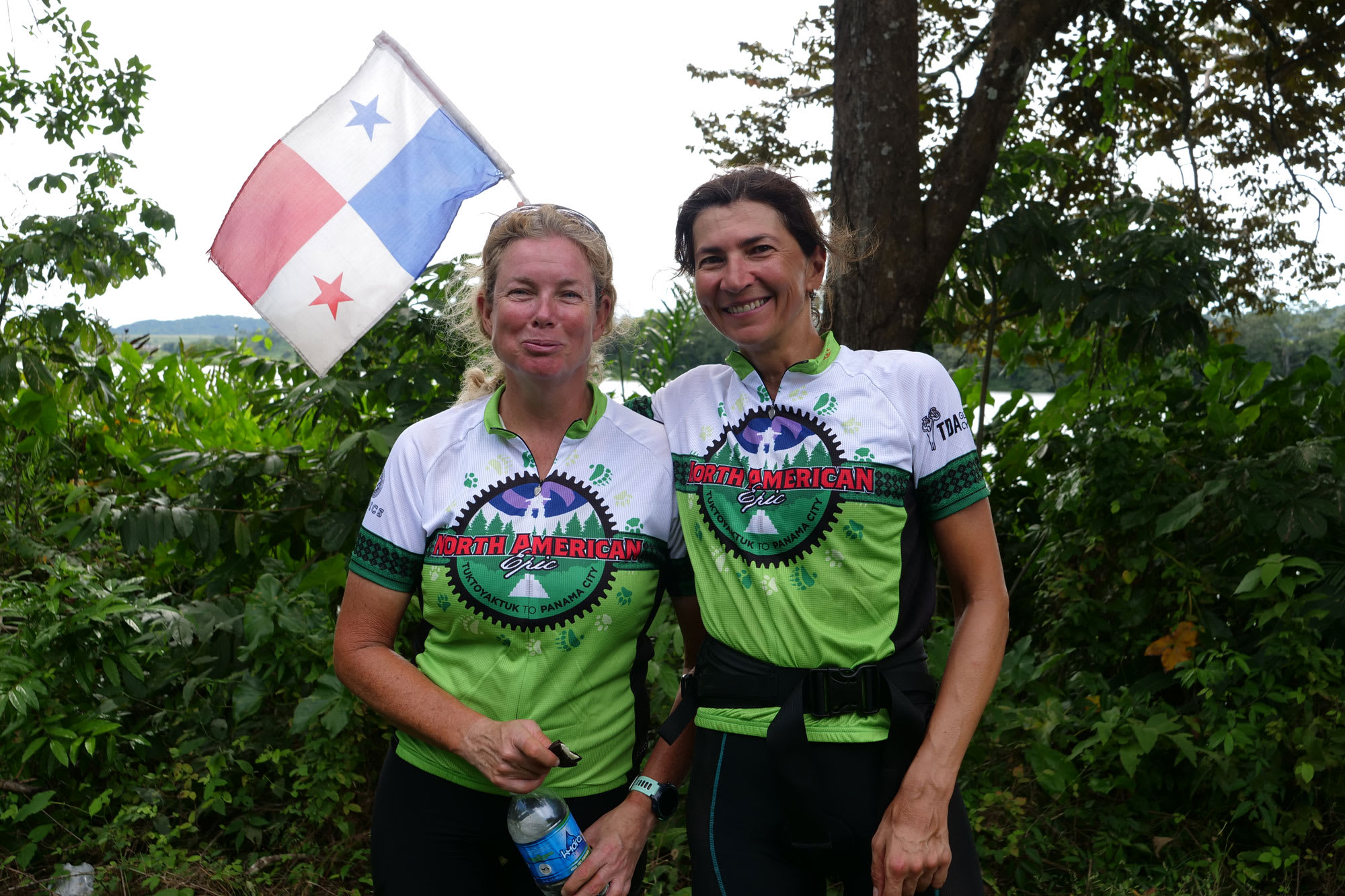
Benedicte & Kim celebrate their arrival in Panama City!
“A magical experience in remote areas but always well guided and feeling safe. I loved every minute. The staff and other riders made it the most memorable adventure!” – Benedicte Therien (Canada)
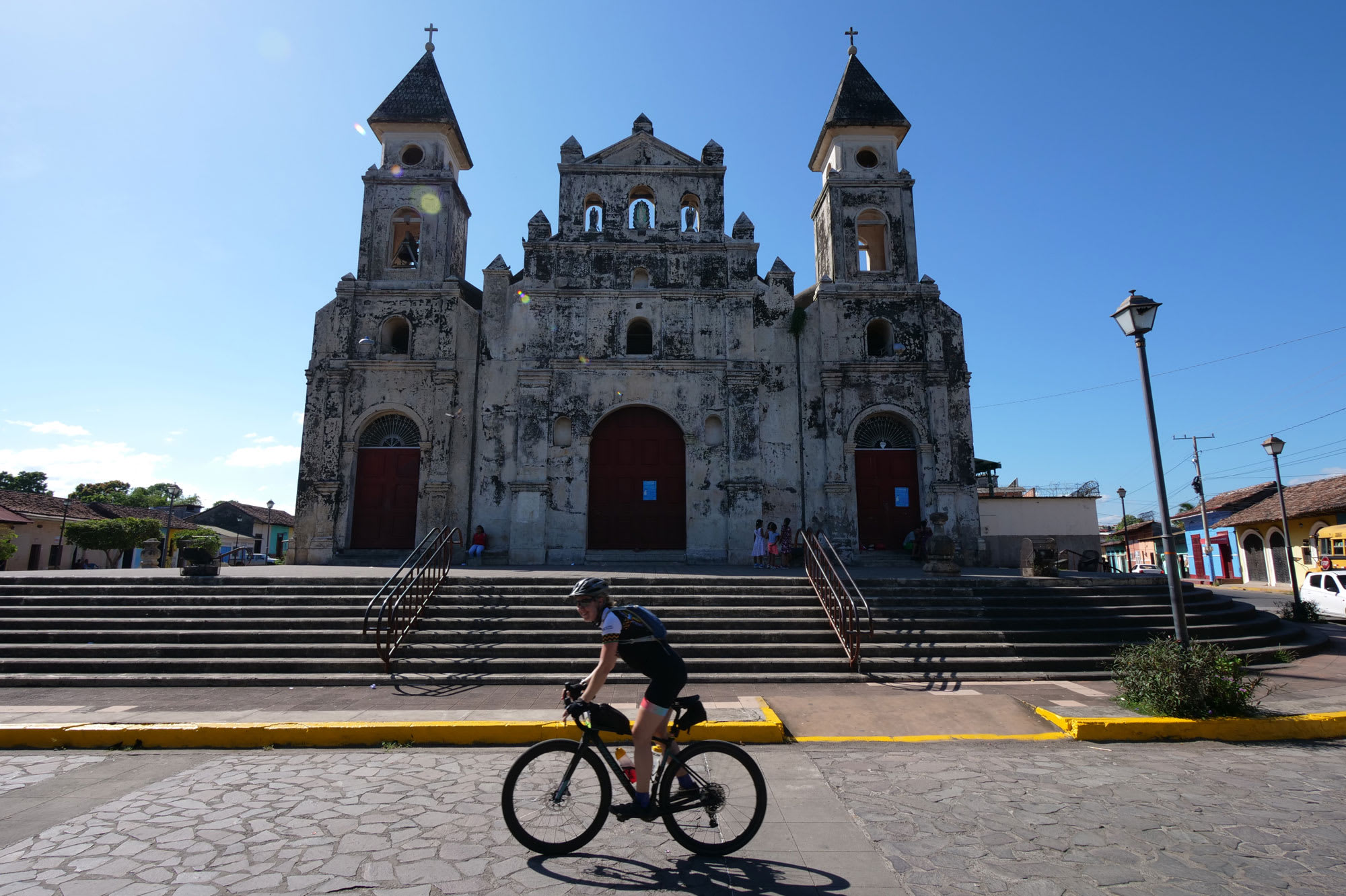
Jess passes the local church in Granada, Nicaragua
“Fantastic staff and brilliant support means that all you have to do is ride, eat, sleep, repeat – it’s perfection! Beware, these tours are addictive – I already signed up for the next one while I was in the middle of this one!” – Jessica Moyer (Canada)
RELATED
TOUR
North American Epic
This incredible expedition is the only cycling tour that covers the entire North American continent, from the shores of the icy Arctic Ocean to the...