Blog
 REGISTER NOW


The Day I Crashed…And Kept Riding
Birgit Hermann was a rider on the 2014 Tour d’Afrique Cycling Expedition.
I was about to turn 33, a Schnappszahl, as we call it in German. That’s one of those numbers that comes with a bit of mischief. The kind that makes slightly questionable decisions feel like a good idea.
On paper, my life was already good. Stable job, strong community, a place that felt like home in Aotearoa New Zealand. Nothing was missing. And still, something felt… unfinished. Not in a dramatic way, just a quiet sense that I had settled into something that worked but wasn’t stretching me anymore.
Then one evening, I came across a story about a group of cyclists riding the length of Africa. Twelve thousand kilometres. Heat, dust, long days, basic roadside camps. And something clicked. Instantly, I knew: that’s it. It didn’t feel sensible, but my gut said I want to try this.
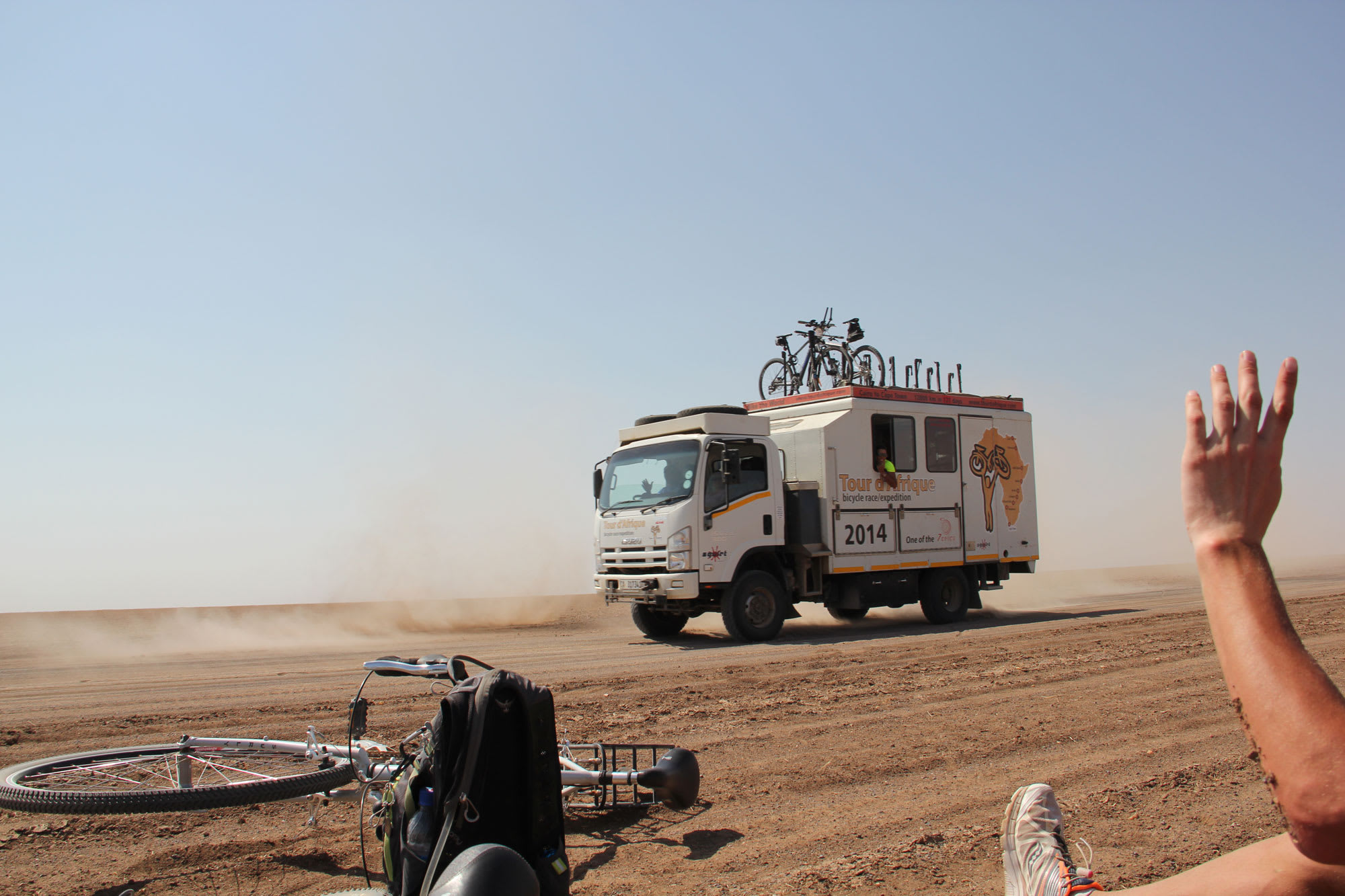
Credit: Birgit Hermann
So I signed up for the Tour d’Afrique, despite never having ridden 100 kilometres in one go. Somewhere in that decision was a simple thought: this is slightly ridiculous… but I’m doing it anyway. At the time, I had no idea how few people had actually done this. Looking back, it’s a surprisingly small group, fewer than those who have summited Everest. In hindsight, that might have been useful information. Then again… maybe not.
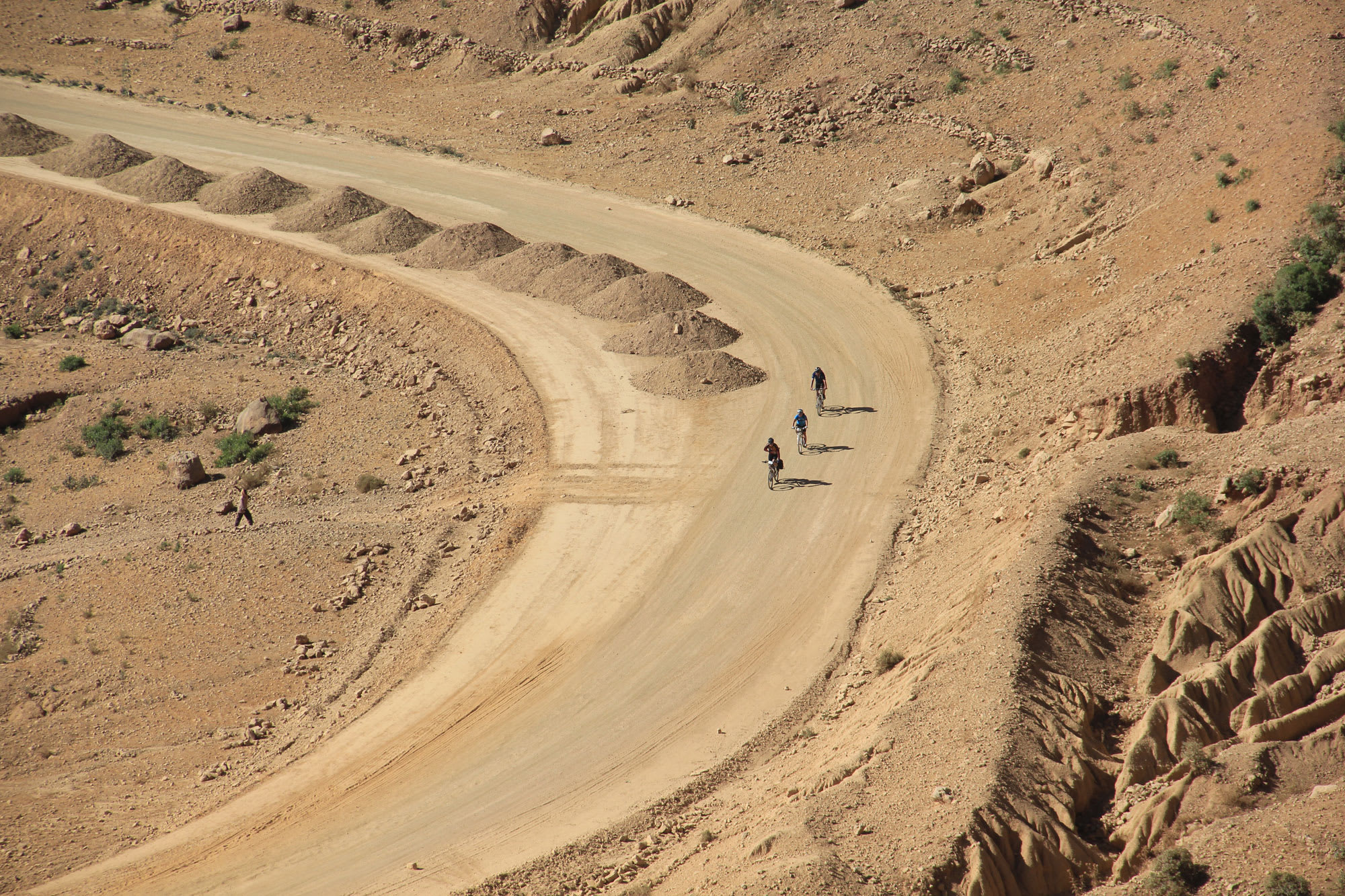
The plan was to start in Cairo and ride south but that’s not how it played out. Due to political unrest in Egypt, the route changed. We started in Khartoum in Sudan instead and headed north first, straight into the wind. These were the winds that usually push riders south, helping them settle into the rhythm of the ride. That year, we met them head-on. It was a rough way to begin without any easing in. No gentle start, just heat, resistance, and the immediate realization that this was going to be harder than expected.
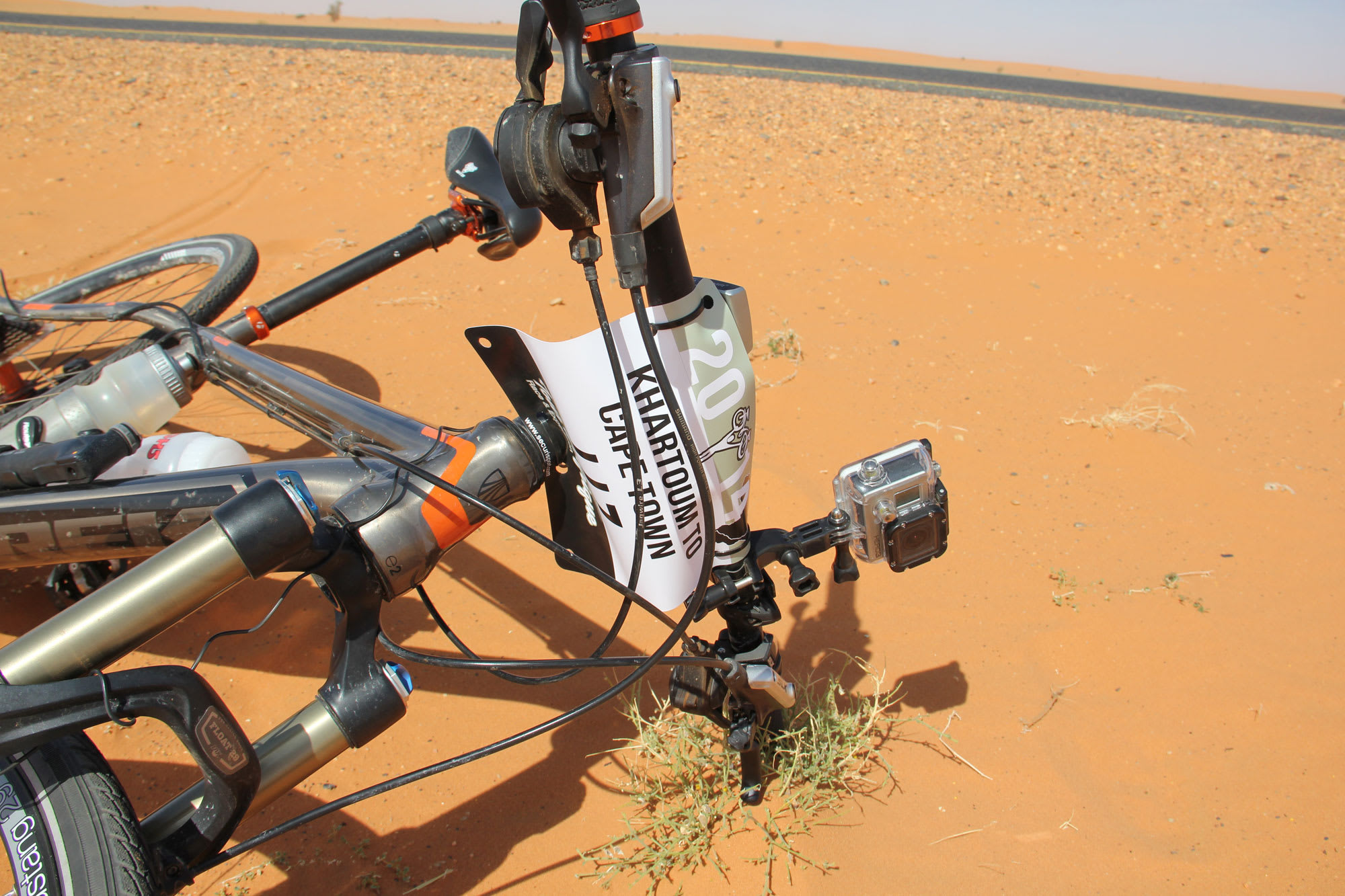
Credit: Birgit Hermann
We rode in a loose peloton, rotating through the front, trying to shield each other. It required precision, timing, and experience—all of which we didn’t have. A small miscalculation was enough. Our handlebars touched. My balance shifted. And I hit the ground. A crash in week one! The pain came immediately.
I got back up quickly, more out of instinct than anything else, but as the day went on, it became clear this wasn’t just a bruise. By evening, even the smallest movements were difficult. I needed help taking off my tight sports bra. The pain was excruciating, unlike anything I had felt before, and left no doubt: something was wrong.
Credit: Birgit Hermann
There were no proper medical facilities nearby. Just a field assessment by the tour medic and a likely diagnosis: broken collarbone.. Which left me with a choice: Stop and get treatment. Or keep riding.
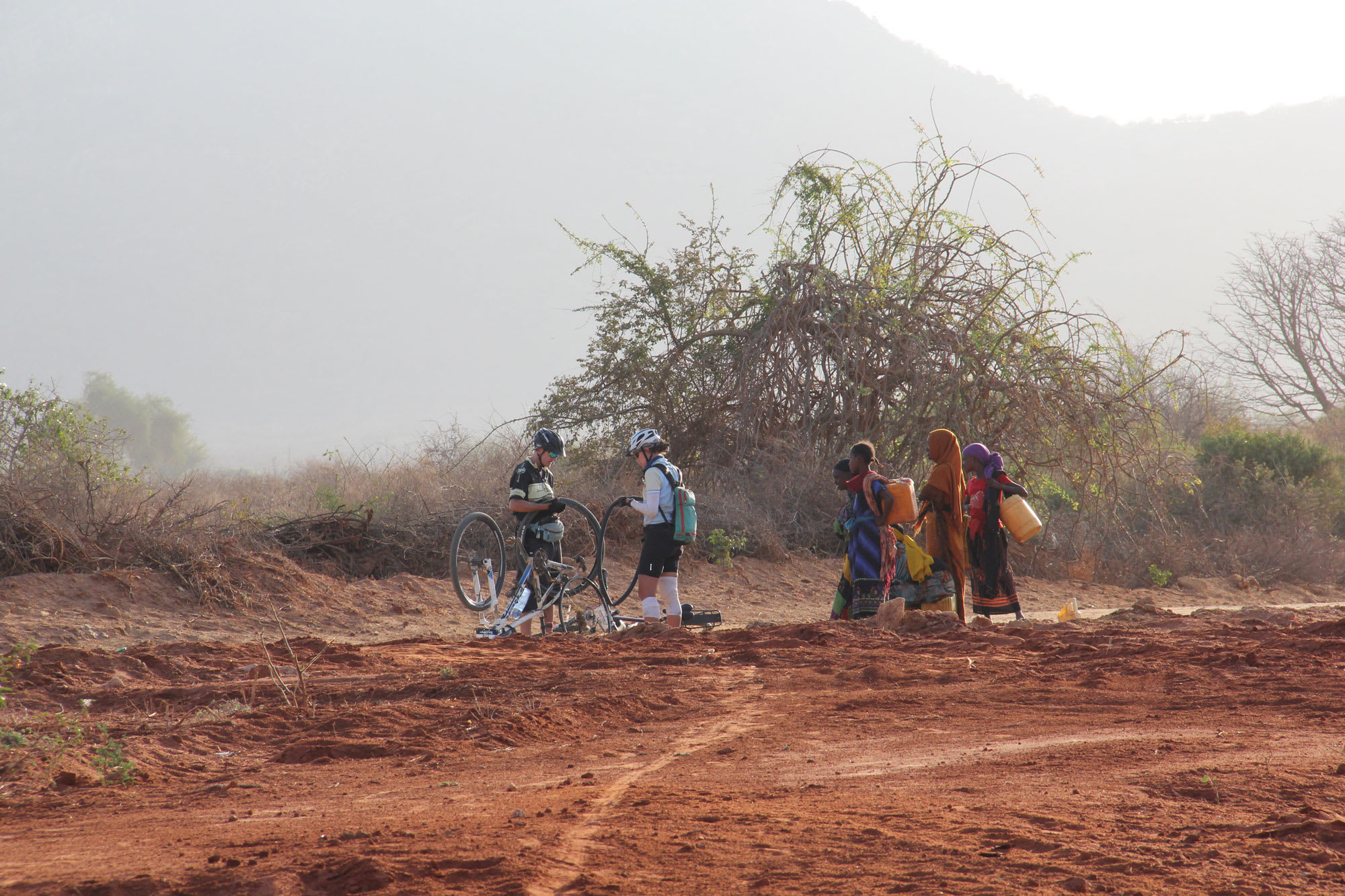
The conditions didn’t make the decision any easier. The heat in Sudan was relentless. At lunch stops, tyres would literally pop from the pressure of sitting in the sun. You’d hear it across camp…another one gone. So instead of us resting in the shade, we dragged our bikes there first. Protect the tyres, protect the rims, protect whatever we could. I had never seen tyres blister before. Out there, in over 40 degrees on long, exposed roads through the Sahara, they did.
Credit: Birgit Hermann
Everything was under pressure. Equipment. Bodies. Focus. And now, my shoulder. That night, lying in my tent, I wasn’t thinking about the distance ahead. I was thinking about whether I was done. There was no drama in it. No big internal speech. Just a quiet question: Is this where it ends? No one expected me to continue. No one would have questioned it if I stopped. But I knew I wasn’t ready to leave. So the next morning, I got back on the bike.
From that point on, the ride changed. Every movement required attention. Every adjustment mattered. I rode differently: more carefully, more consciously, constantly adapting. And mentally, I had to simplify things. Because thinking about the full distance wasn’t useful anymore. Whenever we were down to 42 kilometres, I’d say, sometimes to myself, sometimes to the riders around me: “Hey… that’s a marathon distance. That’s what other people run. Come on, we can easily cycle that.” It became a bit of a ritual. Even when we were completely exhausted, with no shade in sight, and when “easy” was the last word any of us felt.
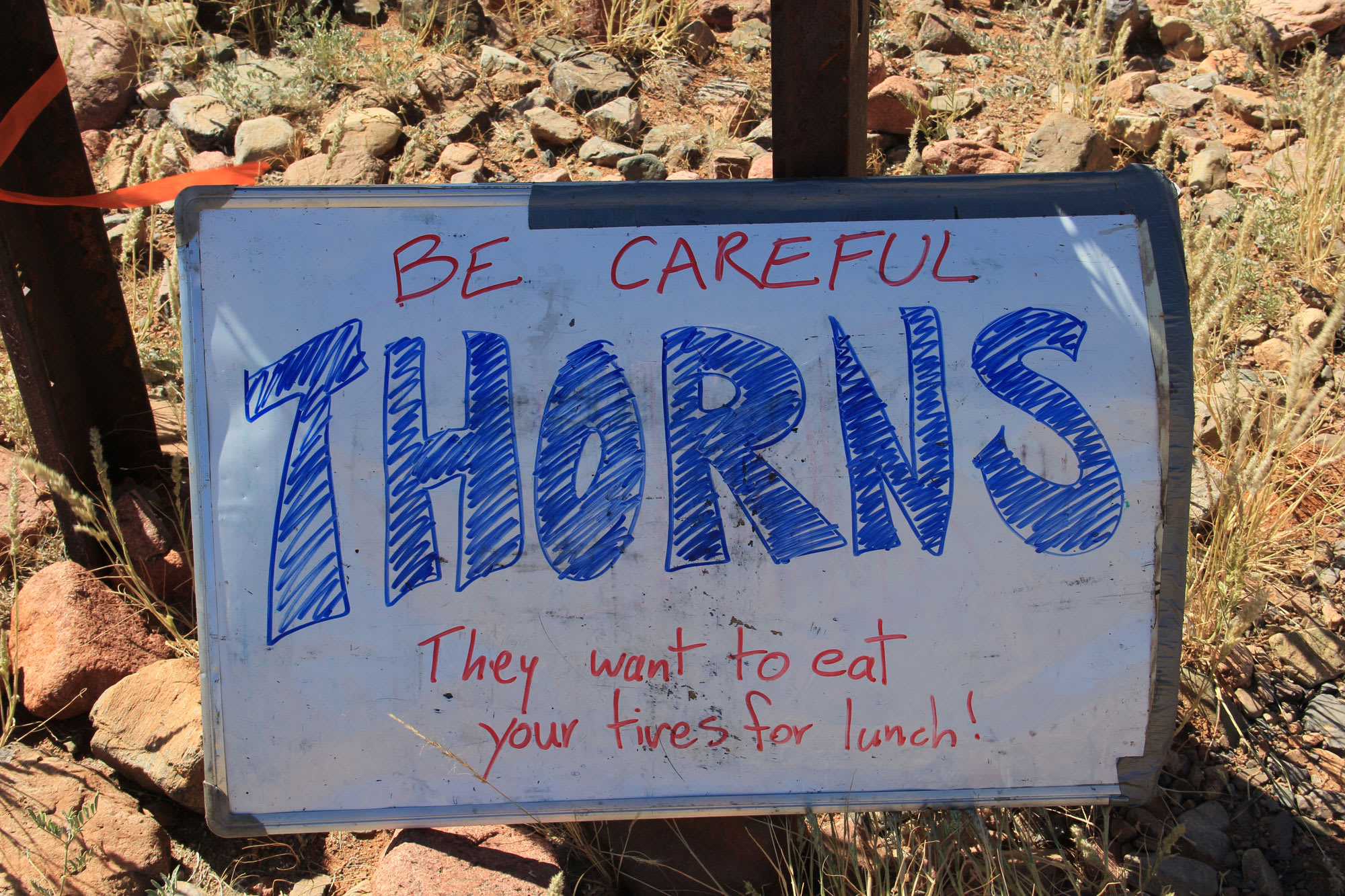
I also started creating small rewards along the way. One of them was those infamous sports bars we were given. Some South African brand that, in the heat, turned into something closer to a concrete block than anything you’d normally call food. Chewing them mid-ride felt like a challenge in itself, but I’d save them for certain milestones, telling myself I’d earned it once I got there. It didn’t make the kilometres shorter, but it made them feel more manageable.
Somewhere along the way, the focus shifted. I stopped thinking about finishing and started paying attention to what was right in front of me. The next kilometre. The next decision. When to push. When to ease off. When forcing it made things worse instead of better. It wasn’t about riding harder. It was about staying in it.
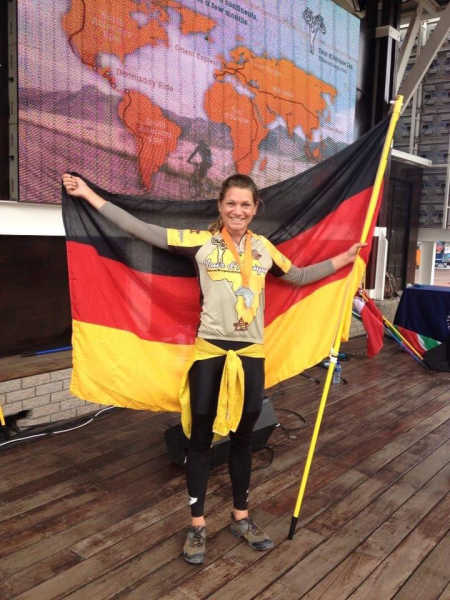
Crossing the finish line in Cape Town months later was emotional, but it didn’t feel like the dramatic breakthrough I had imagined at the start line in Khartoum. It felt quieter than that. More like something had settled. The biggest shift wasn’t physical. It was in how I approached uncertainty and trusted myself to move forward, even without having everything figured out. What stayed with me was a deep sense that if I set my heart and mind on something, I could achieve far more than I had once believed.
The hesitation that used to hold me back didn’t disappear, but it lost its authority. I had seen what happens when you keep going anyway, and that changes how you show up long after the ride is over. You don’t wait until everything feels aligned or until you feel fully ready. You decide. You take the first step. And then you take the next.
Looking back, I thought I had signed up for a bike ride. What I didn’t realize was that I was stepping into something that would change how I make decisions, how I deal with discomfort, and how I move through moments where things don’t go to plan. Only later did I start to see how much of that carried into other parts of life, and into my work.
Credit: Birgit Hermann
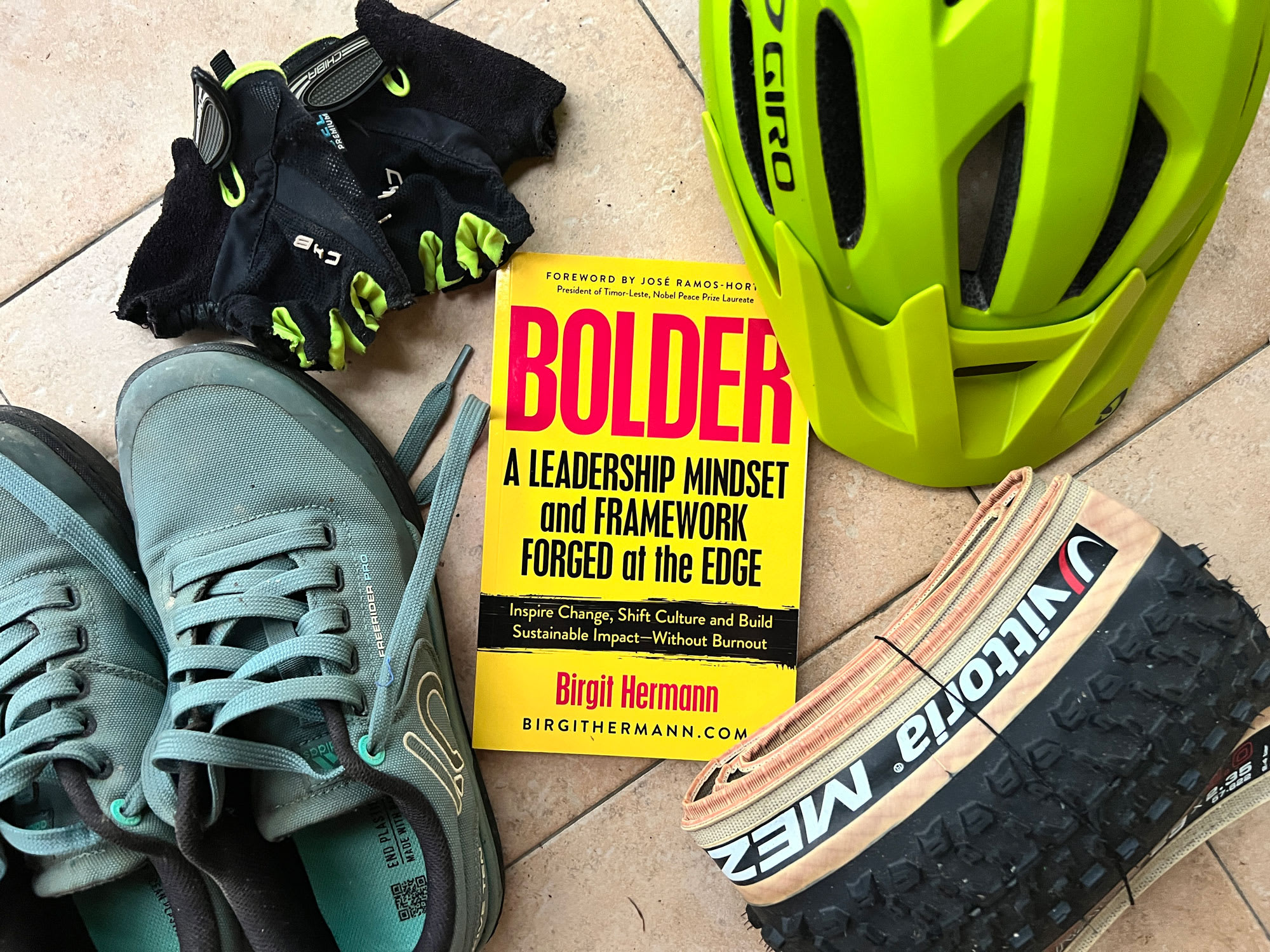
Experiences like this quietly became the foundation for what I would later capture in my leadership framework and book BOLDER. Because the pattern is the same. You don’t wait until everything feels aligned or until you feel fully ready. You decide. You take the first step. And then you take the next. Sometimes, that’s all it is: One decision. Then another. And eventually, without quite noticing when it happened, you’ve gone much further than you thought possible.
RELATED
TOUR

Tour d'Afrique
The trans-African crossing from Cairo to Cape Town has long been one of the world’s epic journeys and an iconic goal for global adventurers. Over...
Leave a Comment for "The Day I Crashed…And Kept Riding"