Blog
 REGISTER NOW


Adventures On The Olive Route Cycling Tour
Many of us, myself included, when thinking of visiting Italy, perhaps think of Rome, Tuscany, Palermo or Pisa but what about places like Alberobello, Matera, Sulmona and Perugia? No doubt you have heard the expression, ‘hidden gems off the beaten track’. These are just some of the places on the route of the inaugural Olive Route tour that meet this criteria but they are not the only thing I have learned about so far on this tour.
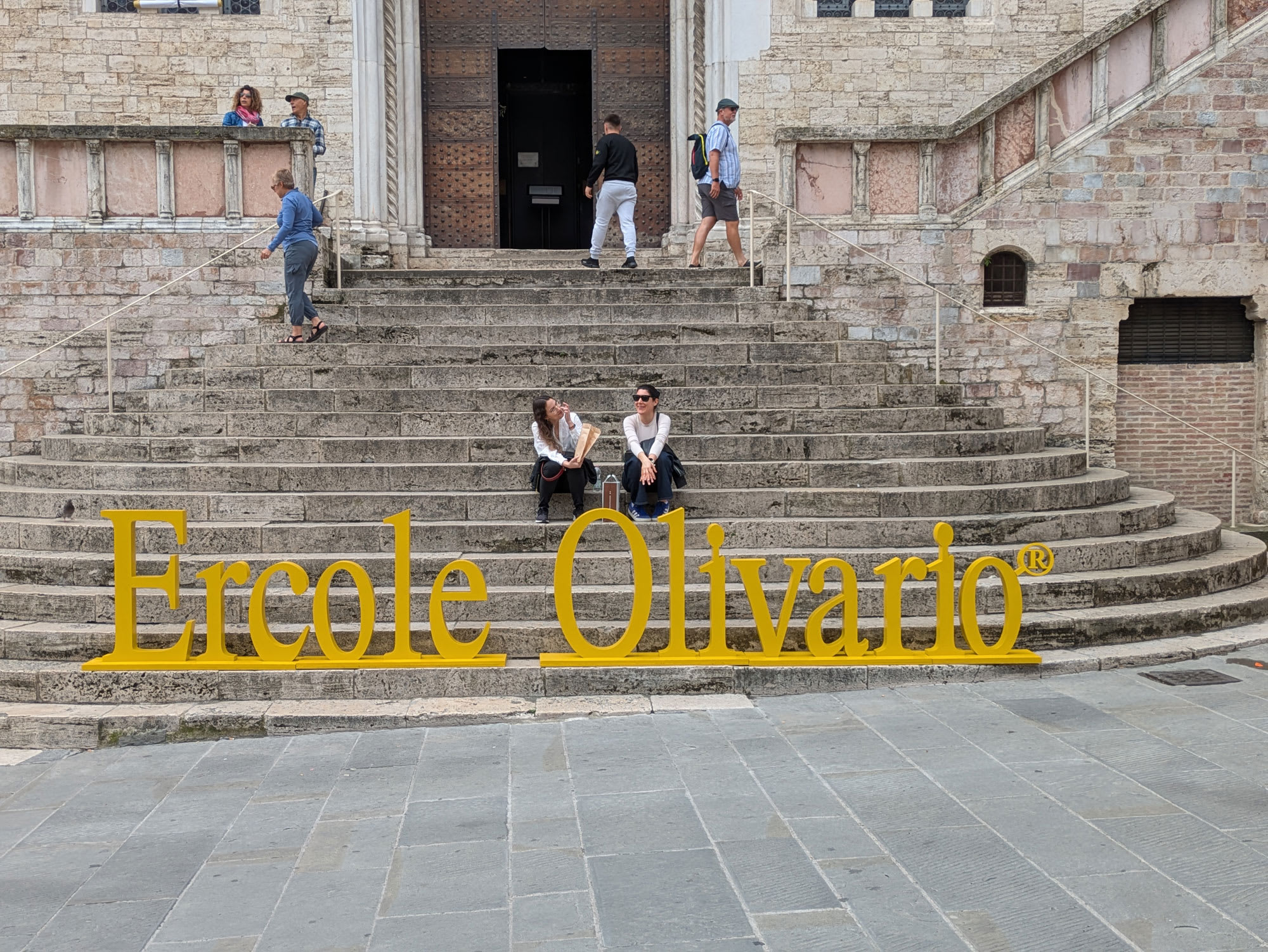
For example, how about something called the ‘2025 Ercole Olivario’ whose literal translation is Hercules Olive Tree. You are probably imagining some immense olive tree similar to those I have seen while cycling past olive orchards. You would be wrong. So, what is the Ercole Olivario? In short it is a competition where the winners of various categories dealing with olives are announced – from the best table olives to the best extra virgin oil. Think of it as the ‘Oscars of Olives’ or in Italian, “Oscar dell’Olio”.
Some of the categories for which awards are presented are for the best olive oil, the best organic olive oil, the best young olive oil entrepreneur, the best oil tourism, etc. Anyways, you get the gist. Unfortunately for our Olive Route participants, the televised ceremonies are by invitation only and are fully booked but enough about the Oscar dell’Olio. I will, however, tell you one thing I have learned from the Olive Route so far. Ruth and I consume a lot of what we consider to be good olive oil in Toronto but after trying the local Italian olive oils, it now feels like we have been consuming minor league olive oil back home in Canada!
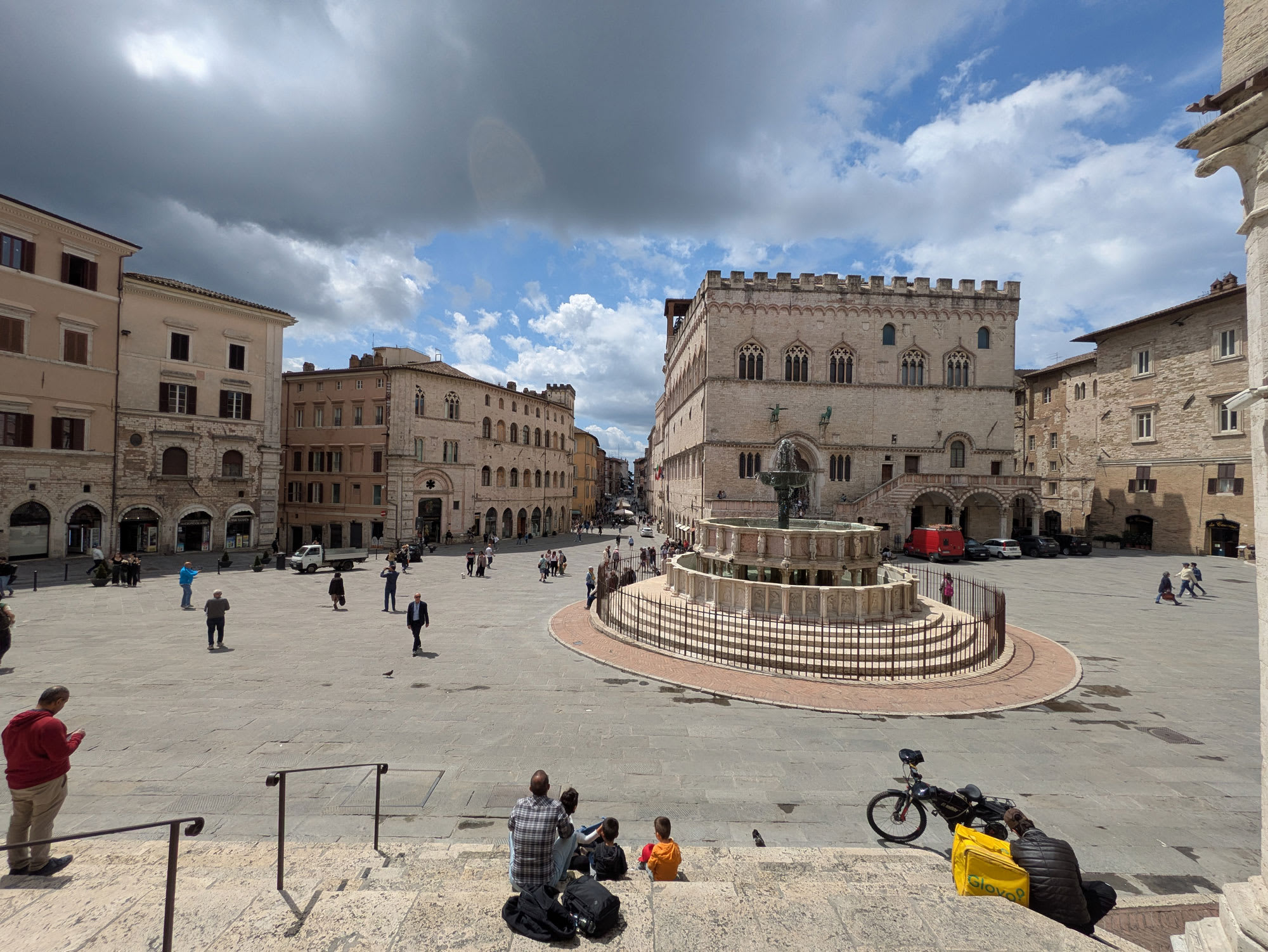
Perugia, Italy
By the way, I came across the ‘Oscar dell’Olio’ simply by wandering around the fascinating city of Perugia. After leaving our hotel I started my little pilgrimage by heading up a hill to the Rocca Paulina (Papal Fortress) built by Pope Paul III (well, not built by him, but rather on his orders) after the local Perugian folks got a bit upset (you could call it an uprising) about an increased Papal tax on salt. All I can tell you is, walking around the fortress, it must have been quite an uprising. I could go on and on and bore you about the architectural details of the building but personally I was more interested in a story about the Baglioni family.
They ruled Perugia for many years and in the summer of 1500 organized a wedding that kind of ended, well, badly. It is now remembered every July 15th as the ‘Bloody Wedding’ in which apparently more than 200 members of the family died. Yes, Italy is full of wonderful historical intrigues. If Netflix is not working on this series yet, I suggest they get started. It has the potential to run for many seasons. Come to think of it, one of the participants on the Olive Route tour used to be script writer. Maybe he will take notice!
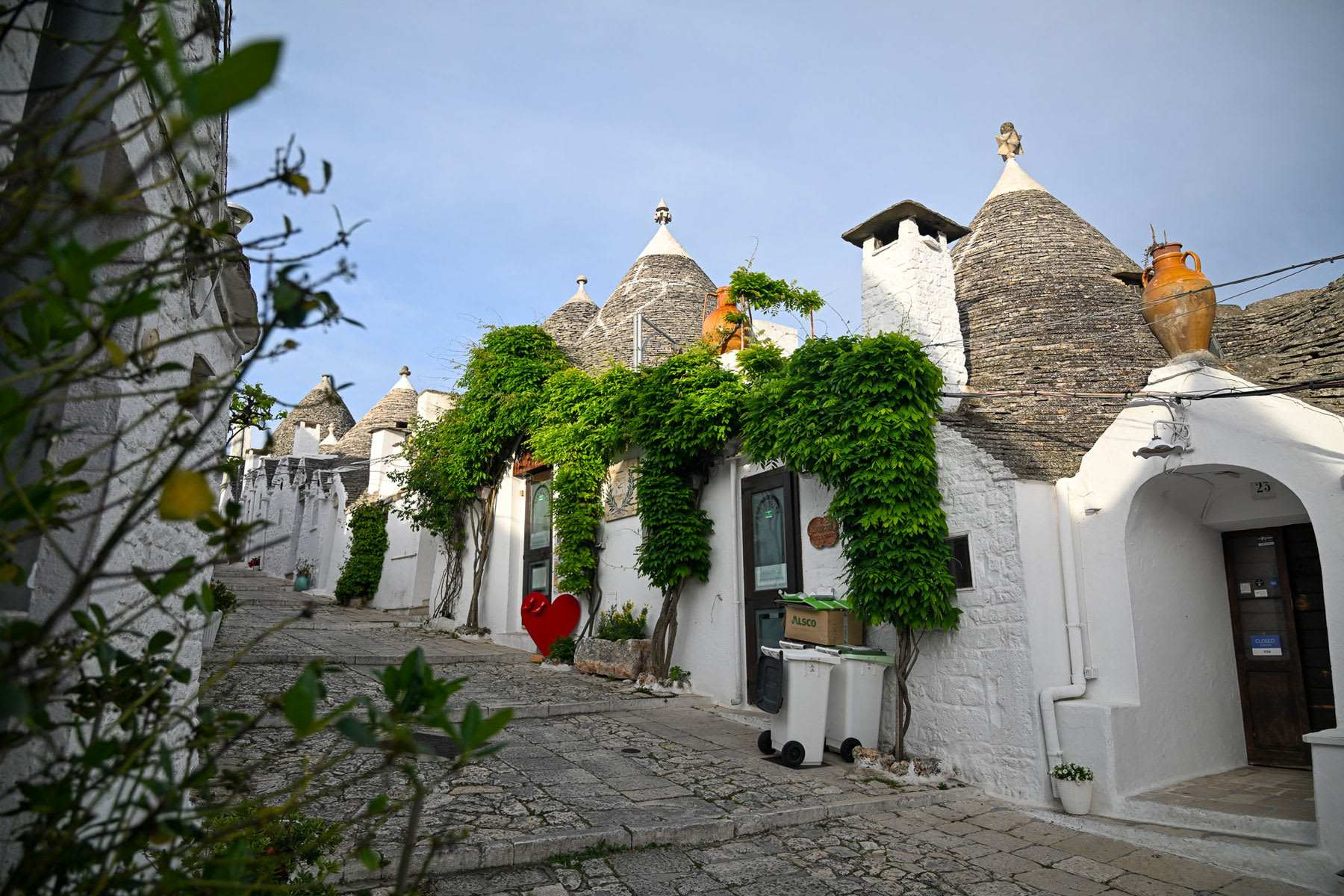
Alberobello, Italy
Which brings me to Alberobello, literally meaning, beautiful tree. No, we did not stay in an actual tree but rather in a fascinating small town, a UNESCO site with its unique trulli buildings – traditional dry stone huts with a corbelled roof. The town looks like something out of a fairy tale and it doesn’t take long to begin to think that you are actually in one. Until, of course, you wake up in the middle of the night, decide that you need to use the bathroom, and forget that the header of the door is at your nose level. Anyway, enough of such nightmares.
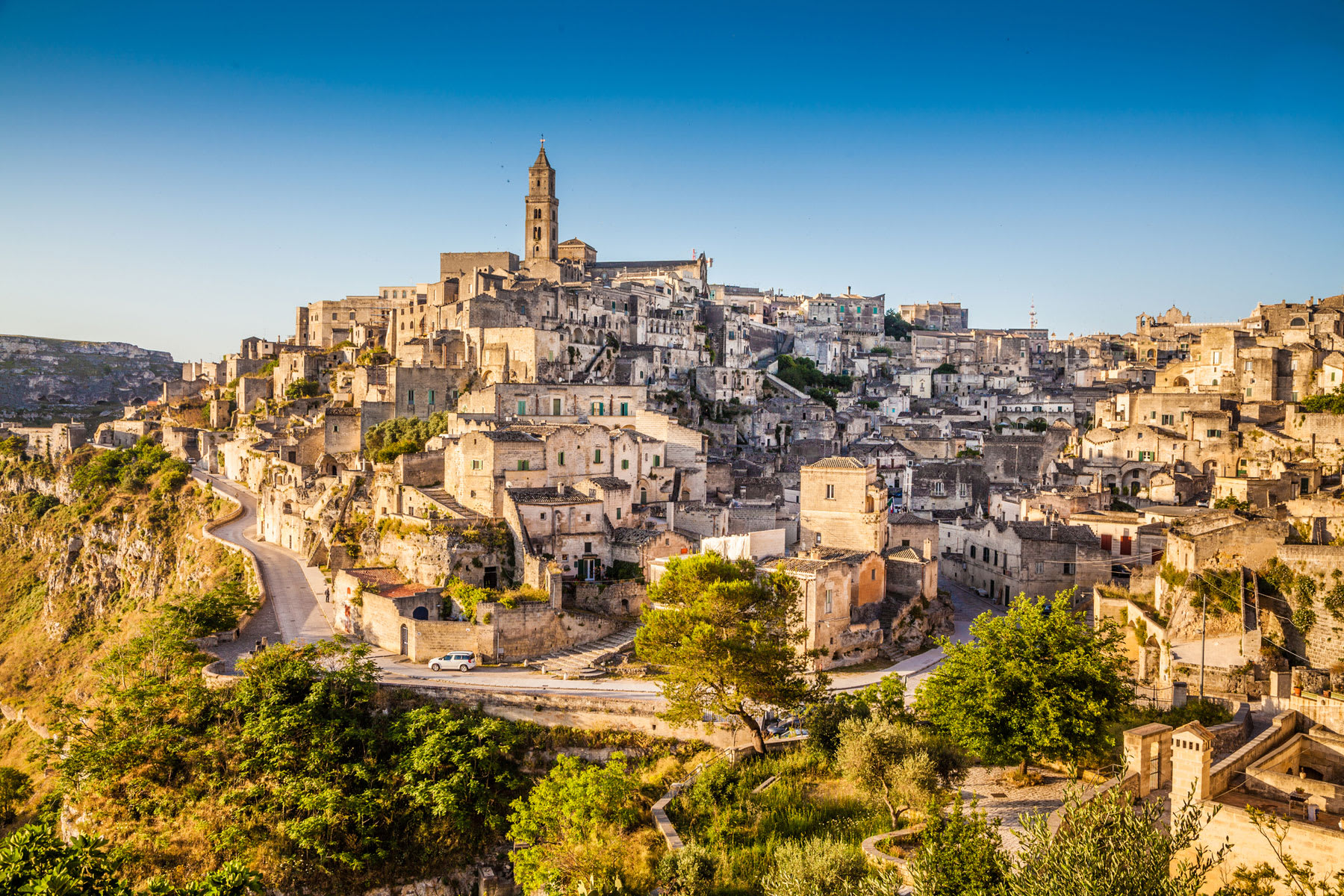
Matera, Italy
Another most fascinating town we visited and enjoyed a rest day in was Matera, which according to Wikipedia has had continuous human habitation going back to 10th millennium BC. That makes it, give or take, 12,000 years old! When you walk the old city, you quickly understand that the area is a perfect site as an early and continuous abode for humans. Wikipedia notes that the city began as “a complex of cave habitations excavated in the limestone” eventually becoming a settlement that was burrowed into the rock. As time went by it became a city “of twelve levels spanning the height of 380 m, connected by a network of paths, stairways, and courtyards.”
The Sassi, as it is called, slowly became overcrowded and some of the better off inhabitants started moving out. By the early 20th century the city became unfit for modern life and in the 1970’s the inhabitants were forcefully removed. Then came its resurrection. In the 1980’s, as a result of government supported restoration, the area was reoccupied. A UNESCO World Heritage Site declaration quickly followed and with that came tourism. The Sassi is back in business, hopefully for another 12 millennia. We spent a wonderful day wandering about, ending as always in Italy, with a gourmet meal. Luckily for us, we had the whole next day to burn off those calories.
RELATED
TOUR
Olive Route
The Olive. The food most closely associated with Western European civilization. Olive oil. One of the most important ingredients in European cuisine...
Leave a Comment for "Adventures On The Olive Route Cycling Tour"