Blog
 REGISTER NOW


Sri Lanka & The Tea Route: A Personal Pilgrimage
Growing up in the white bread suburbs of Montreal in the 1960’s, my mind always wandered overseas, to all the exotic countries I so ardently planned (wished!) to spend my life exploring. One of those that especially interested me was the pearl-shaped island of what was then Ceylon. Over the years, much to my mother’s chagrin, I did manage to visit many distant lands but Sri Lanka always managed to remain beyond my grasp. In 1990, I spent many months in India but the aftermath of an armed revolt in Sri Lanka, led by the Marxist–Leninist Janatha Vimukthi Peramuna (JVP), nixed the idea of extending my trip to the island. I watched as Sri Lanka suffered through a long civil war and then the horrible 2004 tsunami, events that precluded any realistic plans to visit.
The tide turned in the fall of 2023 when we held our AGM which included some canoeing in Algonquin Park. One of meetings we schedule is always about future tours and this time I suggested a route through Southern India and Sri Lanka. Everyone agreed it was a good idea and, miraculously, I was going to help with scouting the Sri Lankan portion of the trip in late 2024. Finally, I thought, I am going to achieve my life-long goal of visiting the ‘Resplendent Island.’
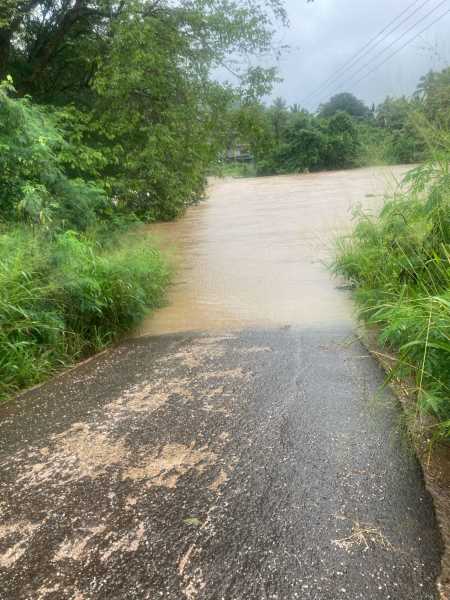
Stage 10 may need to be re-scouted
Forward to November 2024. Monsoon season in Sri Lanka. Add in a nasty tropical cyclone. Perfect scouting conditions. If the route worked in these conditions, it should be amazing during its scheduled January/February 2026 time slot.
Did the country live up to the high expectations that I had created in my own mind? Yes, absolutely yes! Having experienced many frustrating, irritating, confrontational, obstructive border officials in my time, my arrival in Colombo was a good omen. No lines. No chaos. A smiling customs official glanced at my passport and welcomed me to his country. Took all of 30 seconds.
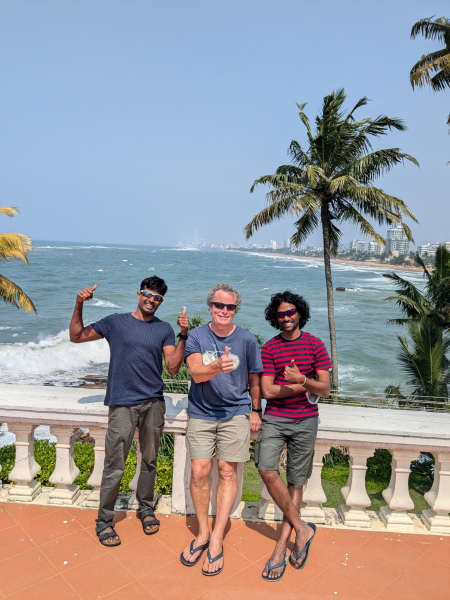
I met the rest of the scouting team in the beach town of Negombo, just north of the capital, Colombo where we had decided to begin the Sri Lankan section of the tour. In addition to myself, our group consisted of longtime TDA Master Mechanic, Baba, frequent TDA field staffer, Ezhil, who proved to be a virtual encyclopedia about all things Sri Lankan, as well as a resourceful local driver/guide, Shakoor.
Leaving this surprisingly Christian town, we headed inland toward Kurunegala, once a royal capital in the 13th century. Spinning past pineapple farms and black pepper vines, we spotted our first mongoose followed immediately by a ‘Beware of Peacocks’ sign. Hmmm…better note that in the tour manual! Verdant rice paddies lined the roads but in the distance, mountains begin to appear.
Fragrant jasmine bushes (thanks Ezhil!) covered in brilliant white flowers led us to the first of some amazing 6th century Buddhist ruins at Arankkele, sprawled amongst an ancient forest. As was to be the case throughout the island, we virtually had the place to ourselves. Incredible. The route continued north past the towering Yapahuwa Rock Fortress (be sure to make the climb!). The terrain began to flatten out and we spotted numerous treehouses that Shakoor informed us acted as lookouts for elephants and wild boar during the harvest season.
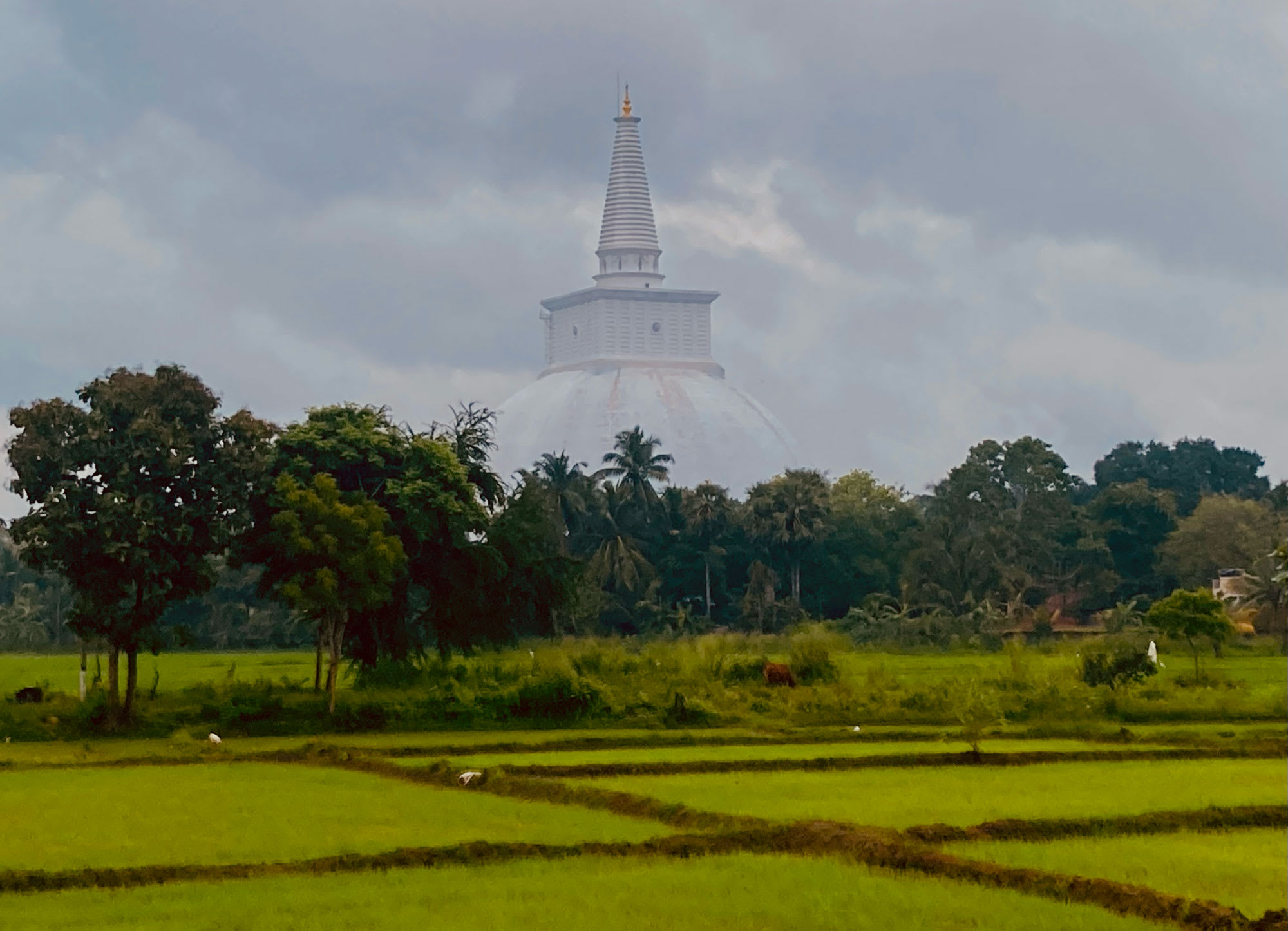
Buddhist Stupa, Anuradhapura
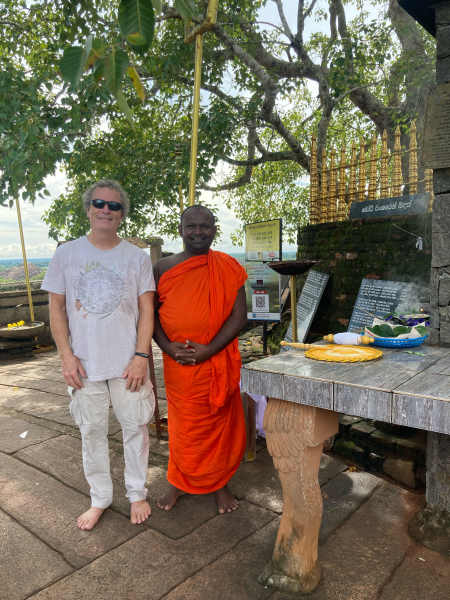 Our first scouting day came to a close in Anuradhapura, the country’s sacred city and a World Heritage Site. While the Tea Route riders will enjoy a rest day here to explore the city’s incredible history, we hurriedly headed northwest, try to stay ahead of the approaching cyclone. Winding roads seemed to bring new sights around each bend – monkeys, elephant fences, colourful birds, a cool temple with a long line of colourful Buddhas. Out of the corner of my eye, I noticed a small sign for the Thanthirimale Temple. Should we stop? Silly question, of course we should. Turned out to be another of Sri Lanka’s hidden surprises – a 3rd century temple spread out over a stunning rocky landscape. And we even received a Buddhist blessing from the resident monk.
Inspired, we pressed onward. The landscape now completely flattened out and it wasn’t just the scenery that was being transformed. We were now entering the Tamil influenced northern part of the country and encountered more cows and fewer people. Mosques replaced temples and the presence of the army was now unmistakable, a hangover from the country’s decades long civil war.
We encountered numerous wild donkeys, the descendants of animals sent to work on local coconut plantations in the distant past. There was now water, water everywhere. And the birds. Unbelievable. They filled the skies and the mangrove swamps that now lined the road. It is no wonder that this area is a magnet for birders around the world.
In Jaffna, we were now in the heart of the the island’s Tamil culture and, of course, reminded of the country’s tragic civil war. The government had banned any public mention of the Tamil Tigers, especially their colours – yellow, red, black, and white. While driving we kept seeing fields with posts and lines decorated with these exact colours and Shakoor informed us that it was Maaveerar Naal (Great Heroes’ Day), a day of remembrance for Tiger fighters that had died during the conflict and that the authorities were now turning a blind eye to small events like the ones we were passing.
We headed south, veering off through cool teak forests and past de-mining signs (Don’t step off the road to pee!) on the way to Sri Lanka’s undiscovered northeastern coast. We drove past endless mangrove swamps and the occasional salt farm or Buddhist temple but essentially it was just us and the endless flocks of birds – so peaceful. At the historic port city of Trincomalee, we headed inland. Up until now we had avoided the worst of the cyclone but that night, we watched out over the Indian Ocean as the skies grew dark, the lightning flashed and the waves grew fierce.
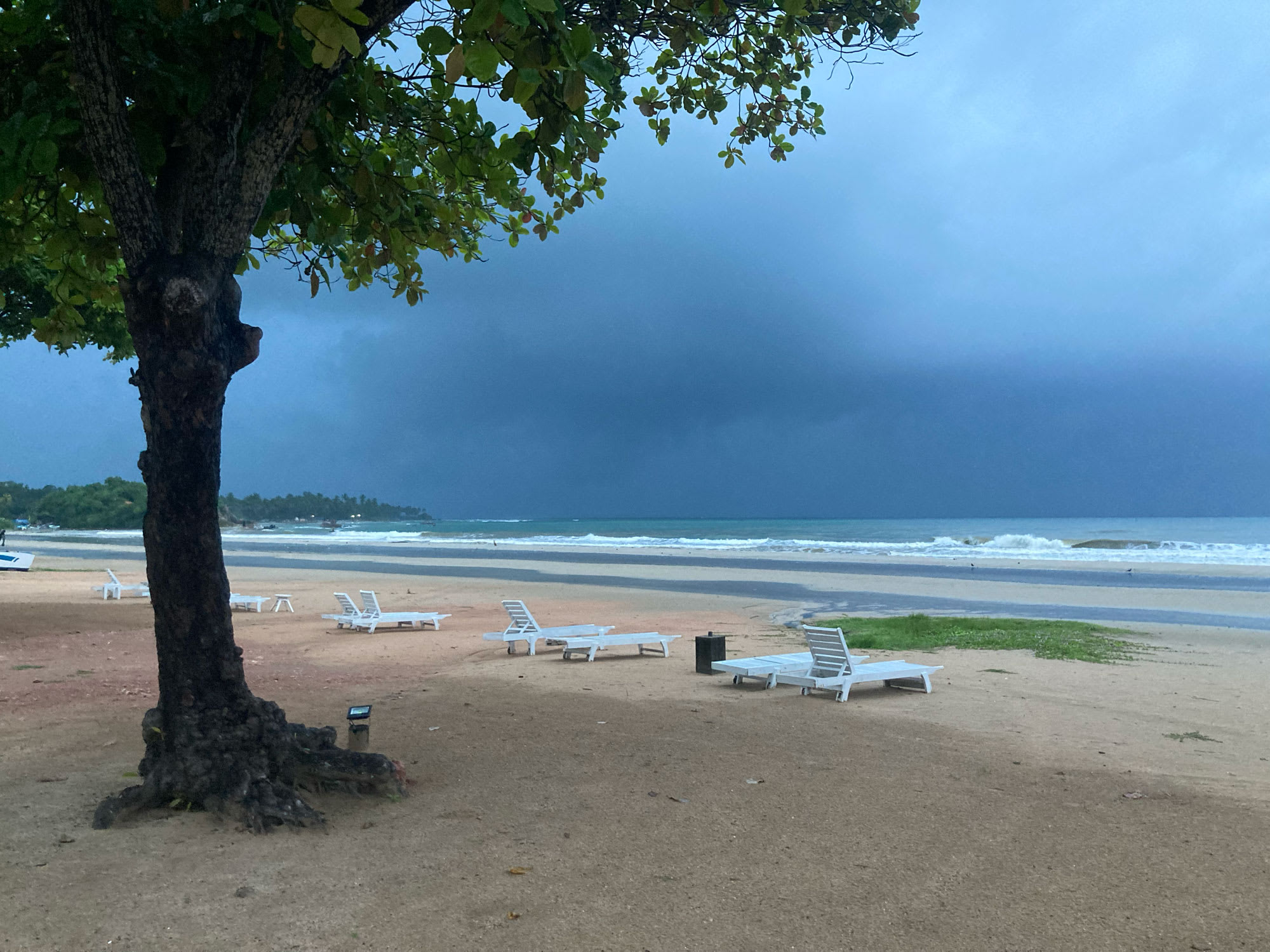
Cyclone Fengal approacheth
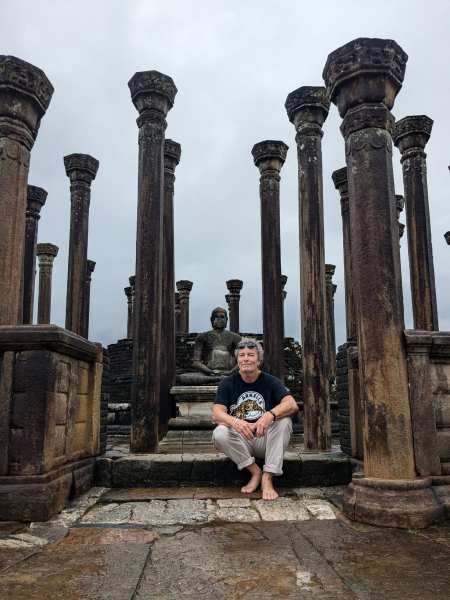 We drove through forests and rice paddies under a darkening sky. Suddenly another ancient monastery appeared, inviting us to explore it ruins accompanied by the friendly staff. Not another visitor in sight. Anywhere else in the world, it would be packed. A beautiful road along a canal led us into Polonnaruwa, another of the country’s stunning UNESCO World Heritage Sites. Our route continued the next day in a light drizzle, past the incredible 5th-century city rock fortress at Sigiriya and up into the hills of central Sri Lanka. Then the cyclone arrived. Roads were flooded and blocked by landslides. We struggled to remain on our planned route and took refuge for the night in hill city of Kandy, home to the famous Temple of the Tooth.
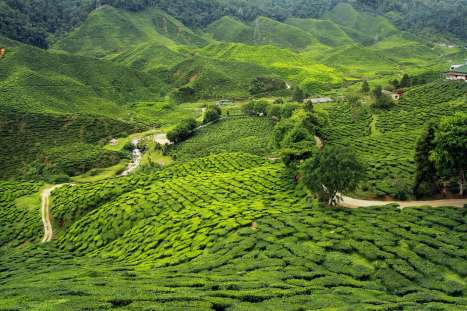
We left the next morning in a steady downpour but despite the conditions, the views were incredible. Suddenly we were in tea country with vast plantations spreading unchecked across the shimmering green hills. We passed endless market gardens and roadside veggie stands. We stopped to admire Black Tree ferns, the world’s largest and popped into a tea estate to sample their wares (delicious!). Eventually we started to descend out of the highlands and passed some absolutely spectacular waterfalls along the way.
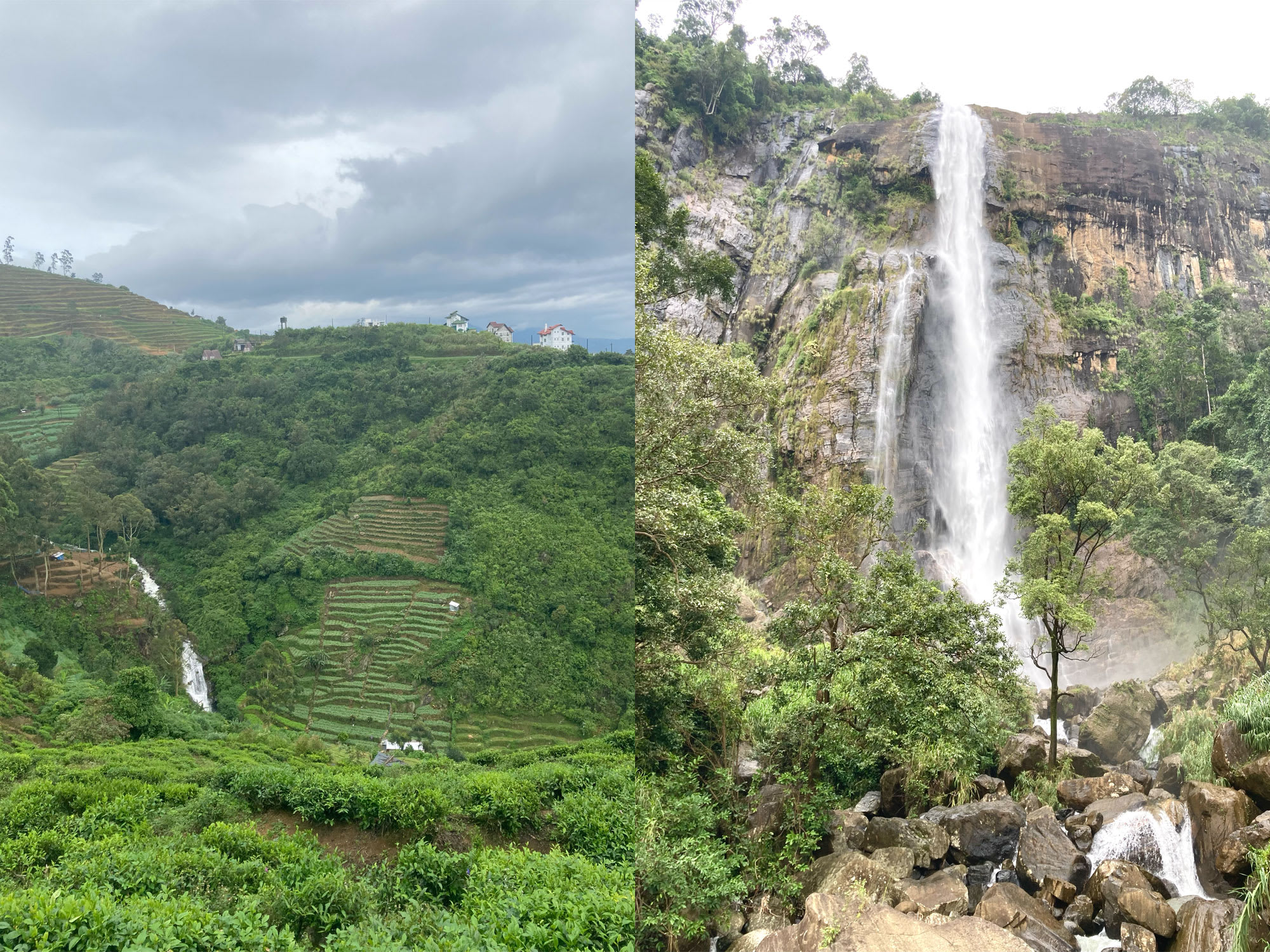
We spent another night in Tissamaharama, the base for exploring the wildlife in Yala National Park, before spinning west along the southern coast with its endless golden beaches and amazing birdlife. We passed fishermen perched on stilts in the sea and cinnamon branches lying by the side of the road to dry. We marvelled at the 16th century Dutch fort in Galle before heading north past more beach resorts to the finish line in Mt Lavainia, a historic town just south of Colombo.
So what sticks in my mind from this experience? The musical sounds of bakery tuk-tuks (the locals love bread products). The variety of themed tuk-tuks – Batman, Star Wars, etc. The brightly coloured buses. The heavy teak furniture. The lazy, lazy dogs. The incredible friendly and welcoming people. The lack of tourists. The cleanliness of the country. The temples, the tea plantations and the beaches.
RELATED
TOUR

Tea Route
Tea. It wasn’t until the British arrived that this wild plant was turned into a commercial crop both in India and in Sri Lanka, creating those...

Leave a Comment for "Sri Lanka & The Tea Route: A Personal Pilgrimage"