Blog
 REGISTER NOW


What’s Old Is New Again – My 2013 Kona Rove Ti
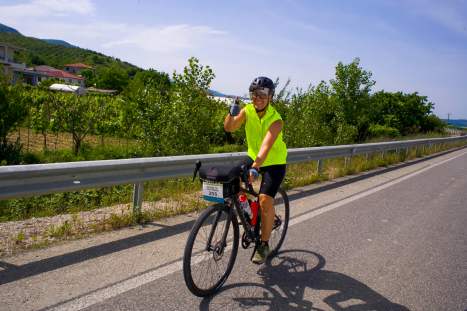
I bought this bike in 2013. I immediately rode it from Toronto to St. John’s, Newfoundland, and a year later, from Shanghai to Istanbul on the Silk Route. But over the next ten years, I used it only occasionally. When I’m in Toronto, I spend far more time mountain biking than touring, and on TDA tours, I ride my rigid mountain bike. I find it more comfortable for the relaxed pace of riding sweep, and it is also more durable for being carried in the back of the truck on most days.
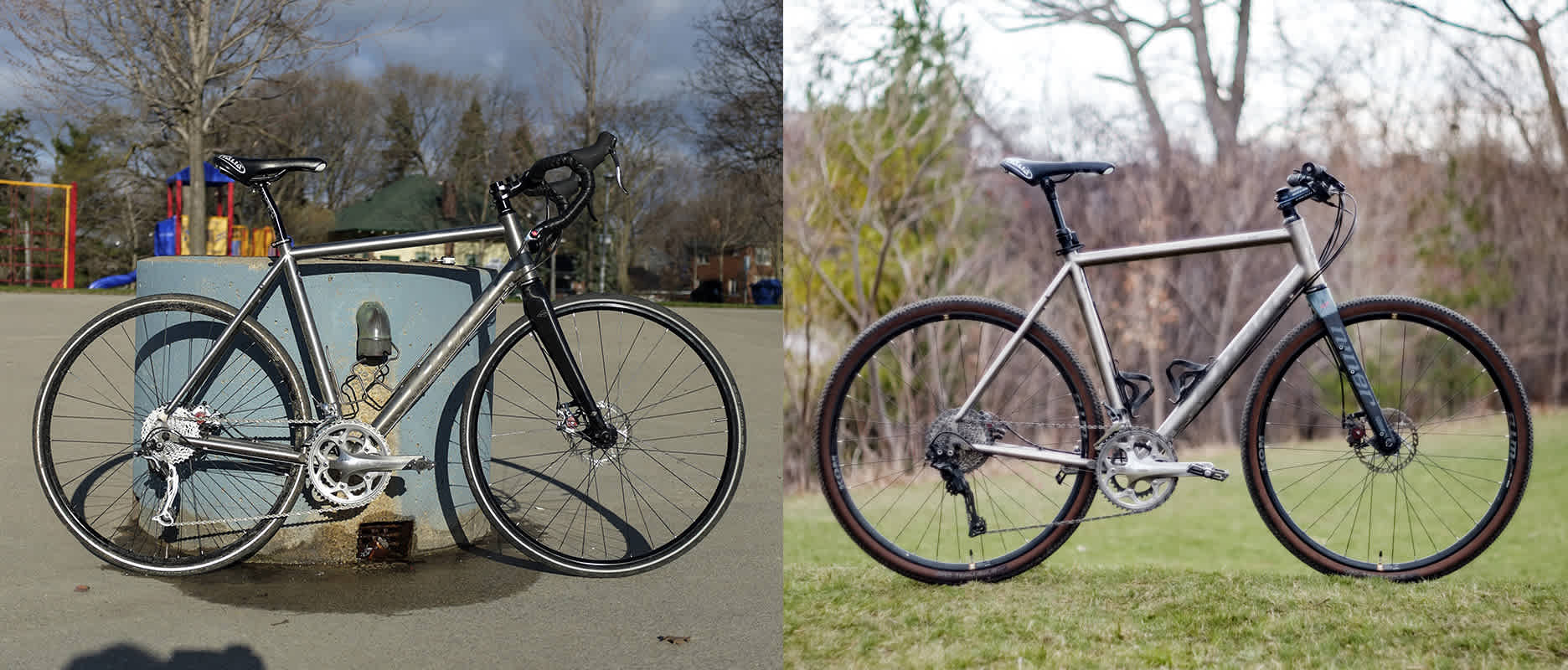
The previous two builds of this bike frame
So the Rove fell into disrepair. Eventually, I decided to rebuild it. I ordered all new components. Then those components, still in their boxes, sat next to the now bare frame in the garage for another two years. I just wasn’t motivated to rebuild this bike that I rarely ride, and had a frame that was old and scratched and scuffed.
I decided to first restore the frame itself. Titanium frames, since they don’t rust, are usually not painted. Instead, this bike had the graphics sand blasted. This creates a simple difference in the surface texture, and by masking off the shapes of the logos, graphics are created. Many other titanium bikes, though, instead use anodizing – where electrical current is applied to the titanium, causing it to change colour.
Some time last year, I happened upon an article about how to anodize titanium at home, with minimal equipment. Thus began a long process of research and planning. I had to buy a bench top power supply, and a vinyl cutting machine. I bought some scrap pieces of titanium for testing. I got in touch with the graphic designer at Kona Bicycles to get the retro logos I wanted to use. I sanded down the frame to remove the old graphics, and polished it to create a smooth surface for anodizing. After a long period of experimentation, I was ready.
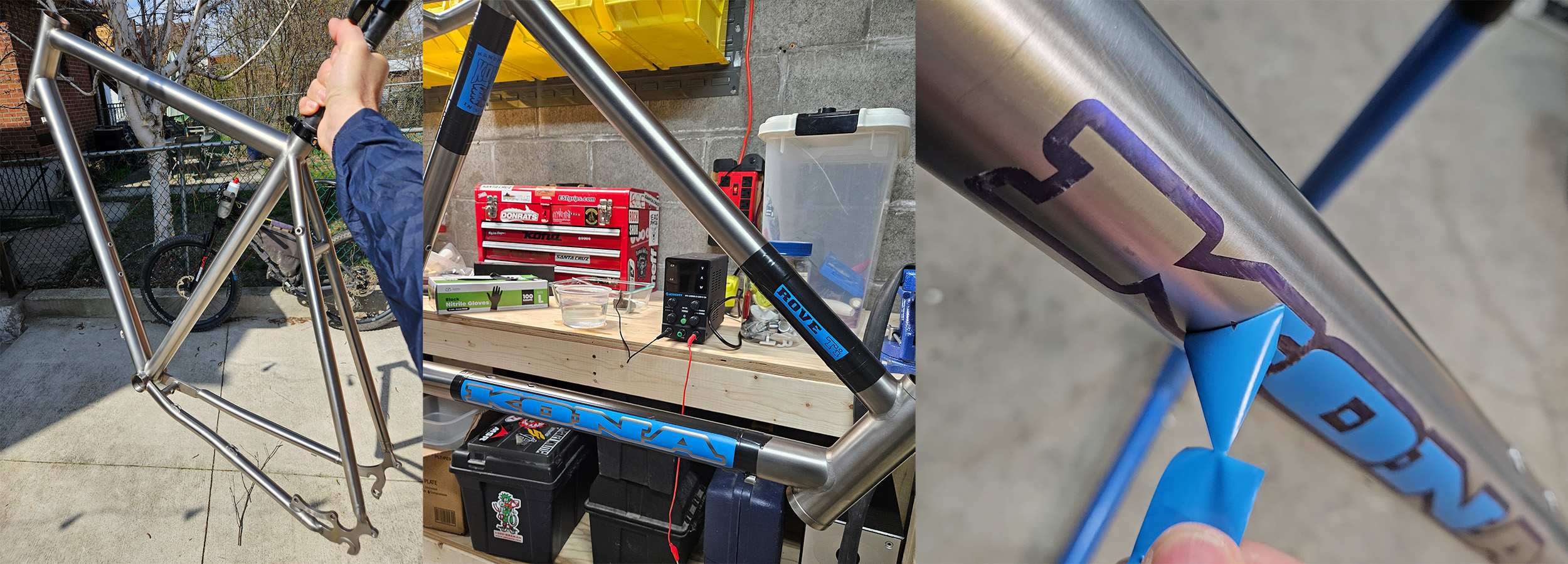
Once all that was done, the actual anodizing process is remarkably simple. I made vinyl masks in the shape of the various logos and labels. You attach one electrode to the frame, and attach the second to a brush. This brush is dipped in water mixed with baking soda. And then, wherever you touch the brush to the frame, current flows through, and the colour changes. The colour is determined by the voltage used – my testing found that 22 volts would produce this nice blue colour.
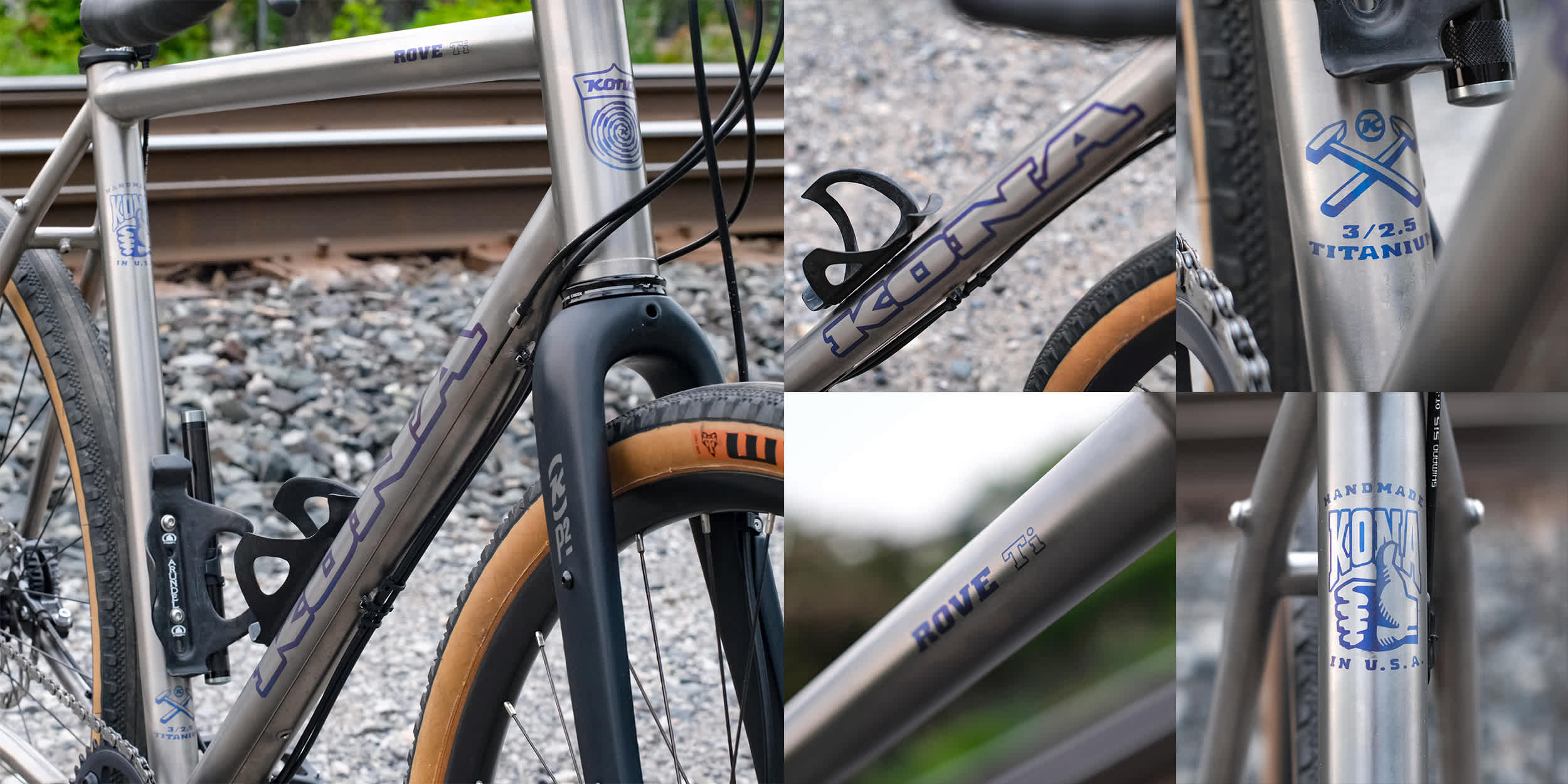
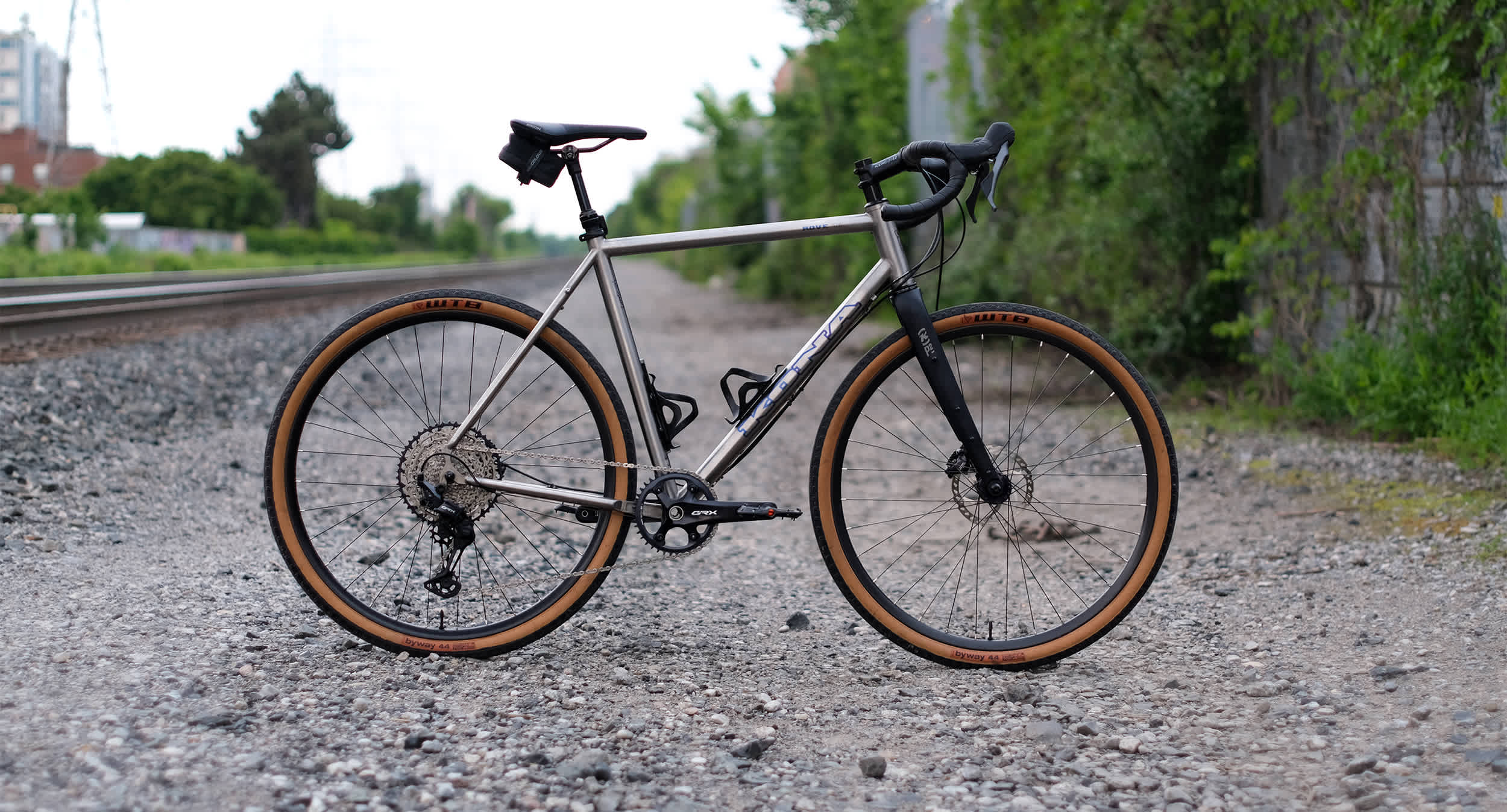
In the end I was so happy with the result, that I now have been finding every excuse to go and ride this bike, one that had sat unused for years before. I just needed the right motivation.

1 Comment for "What’s Old Is New Again – My 2013 Kona Rove Ti"
Marvelous. Well done with the resurrection. My Kona Ti remains my pride and glory. However may have to get a mountain bike for the trans himalayas