Blog
 REGISTER NOW


Climate Change & Cycle Touring
Founder Henry Gold shares his thoughts and insights in the aftermath of the cancelation of the 2025 Trans-Himalaya cycling tour.
‘Can you write a blog on Climate Change & Cycle Touring’- read the email from our Editor in Chief. This came while a large part of our senior staff was trying to deal with the situation created by unprecedented rains in northern India. Unfortunately for the cyclists and organizers, the Trans-Himalaya tour got underway just a few days ahead of these massive rains. Reading the email, a big sigh escaped from my mouth, one that could be heard clear across the room.
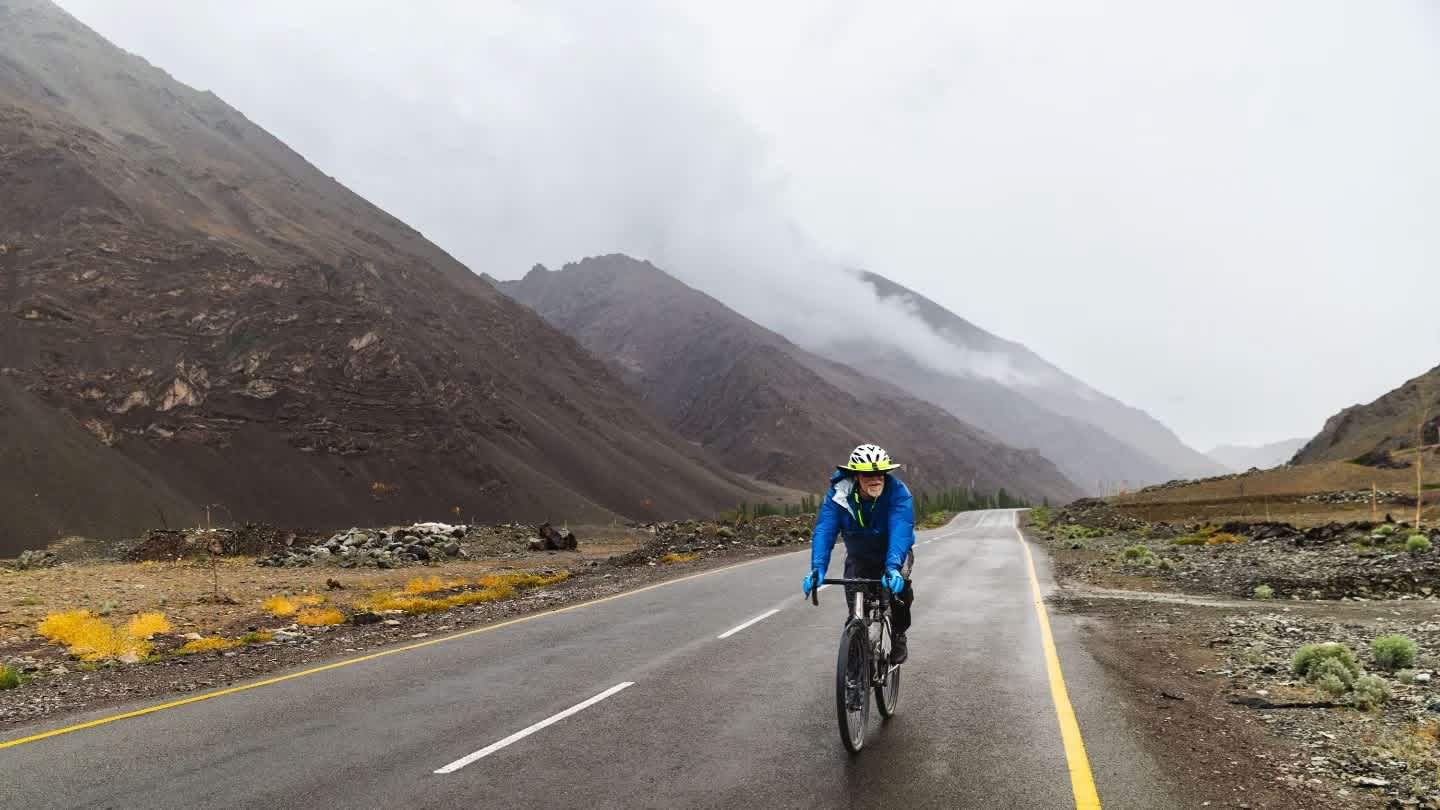
It is not like I am ignorant on the subject. After all, my first engineering job, fresh out of McGill University, was on an anti-pollution project with a company called Union Carbide in Beauharnais, Quebec, just outside of Montreal. Several years after I left the company, Union Carbide became famous worldwide, or rather infamous, for allowing the release of toxic gas from a factory producing insecticide in Bhophal, India that killed at least 2,600 people, and according to an Indian government report injured over half million people including 3,900 severely. Apparently, that is a low estimate. Encyclopedia Britannica estimates 15,000 to 20,000 deaths. Later, when I was heading a Canadian NGO called CPAR, Canadian Physicians for Aid and Relief, we initiated a fundraising project, called ‘Plant a Tree in Africa’ which allowed for the planting of 76 million trees.
So it is not like I don’t have an interest in what is happening on our small planet. However, I am not a scientist, a politician, and certainly not an investigative journalist so what can I add to the conversation on climate change? Except, of course, I am part of a small company that has wonderful, challenging and very adventurous bike tours all over the world. One thing is for sure, every year our company is now presented with striking evidence that things are changing and changing fast.
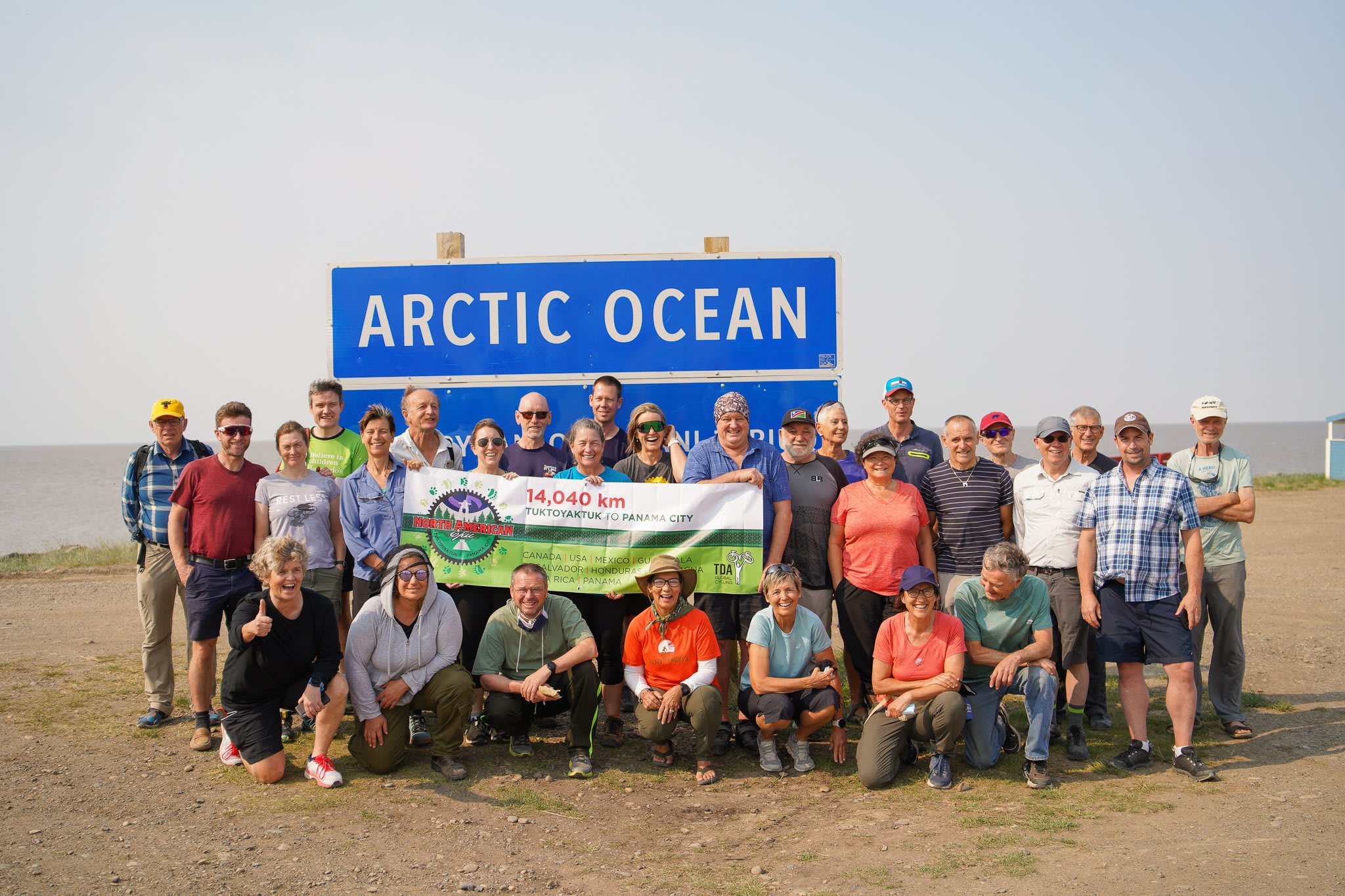
Three years ago, I had the privilege to be at the start of our North American Epic tour in Tuktoyaktuk, on the shores of Arctic Ocean. The area was experiencing an unprecedented heat wave with temperatures hitting as high as 30C (86 F). The elders had never seen anything like this, and their health system had a hard time adjusting. Two months ago, I participated on our inaugural Olive Route tour from Athens to Lisbon. It was when we hit Northern Spain that we started getting emails from friends and relatives asking us how we were dealing with the heat that hit Southern Europe. Fortunately, the area on the shores of Northern Spain where we were cycling, only had two days of extreme heat, as compared to weeks in the rest of Southern Europe.
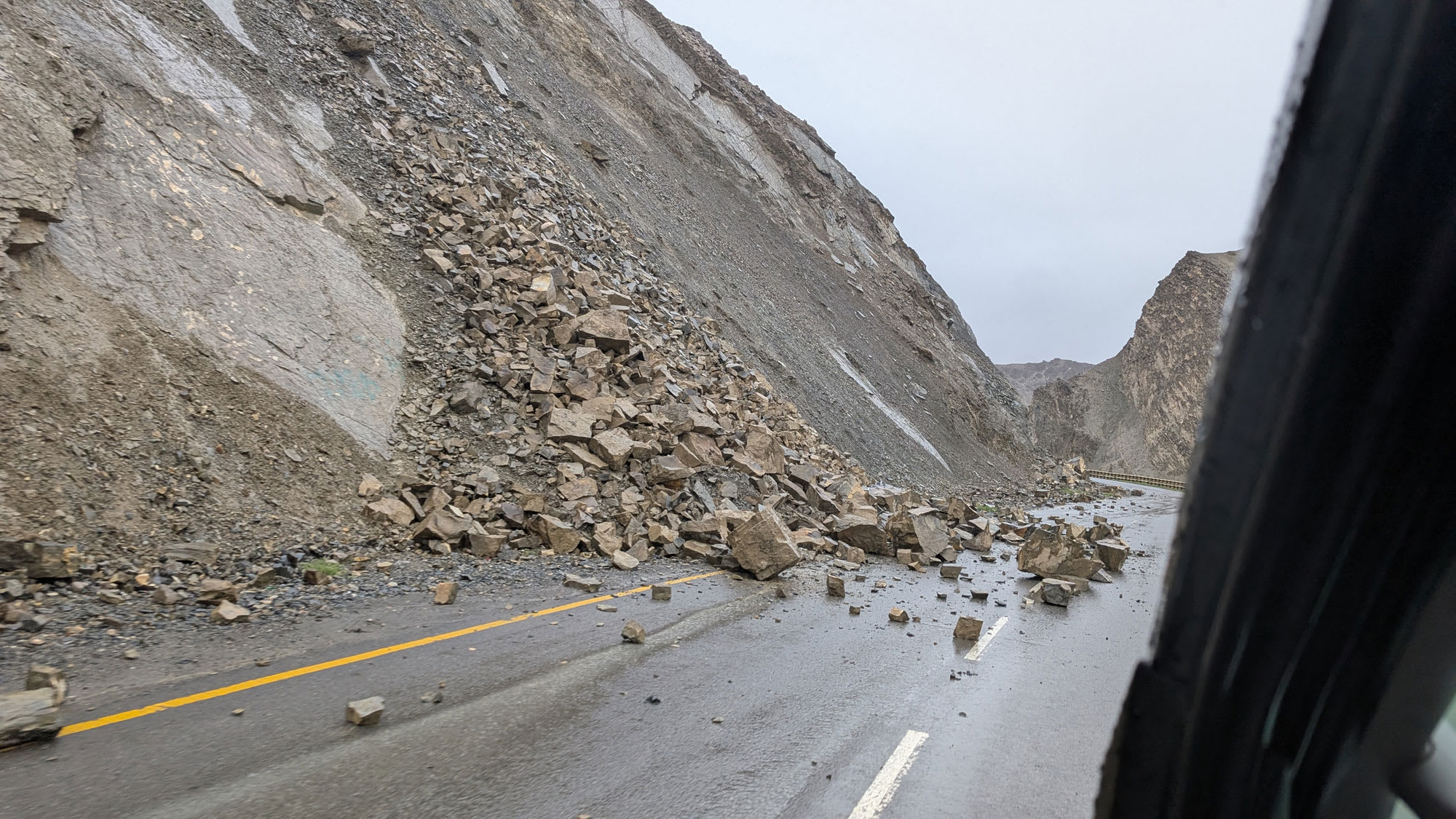
We were not so lucky in India. Just a few days after the Trans-Himalaya tour started, heavy rains started and with that came mud slides, dangerous rock slides and of course flooding. Roads and tunnels closed, vehicles were stranded, in short, chaos. TDA staff reacted quickly and managed to get everyone to a safe place in Leh. A couple of days later we decided to interrupt the tour and give cyclists an opportunity to fly out of Leh to pursue alternative adventures. We were to recommence again, further down the route in Shimla. In the meantime, the vehicles with bikes and bags would slowly make their way to Shimla. It turned out to be an optimistic idea. The rains didn’t stop and in some areas, intensified. Our vehicles got stranded for several days and the rains kept coming. Finally, realizing that we would face a similar situation (or worse) if the tour continued from Shimla, we made the difficult decision to cancel the tour. The participants were understandably disappointed – the adventure they had anticipated for many months was no more.
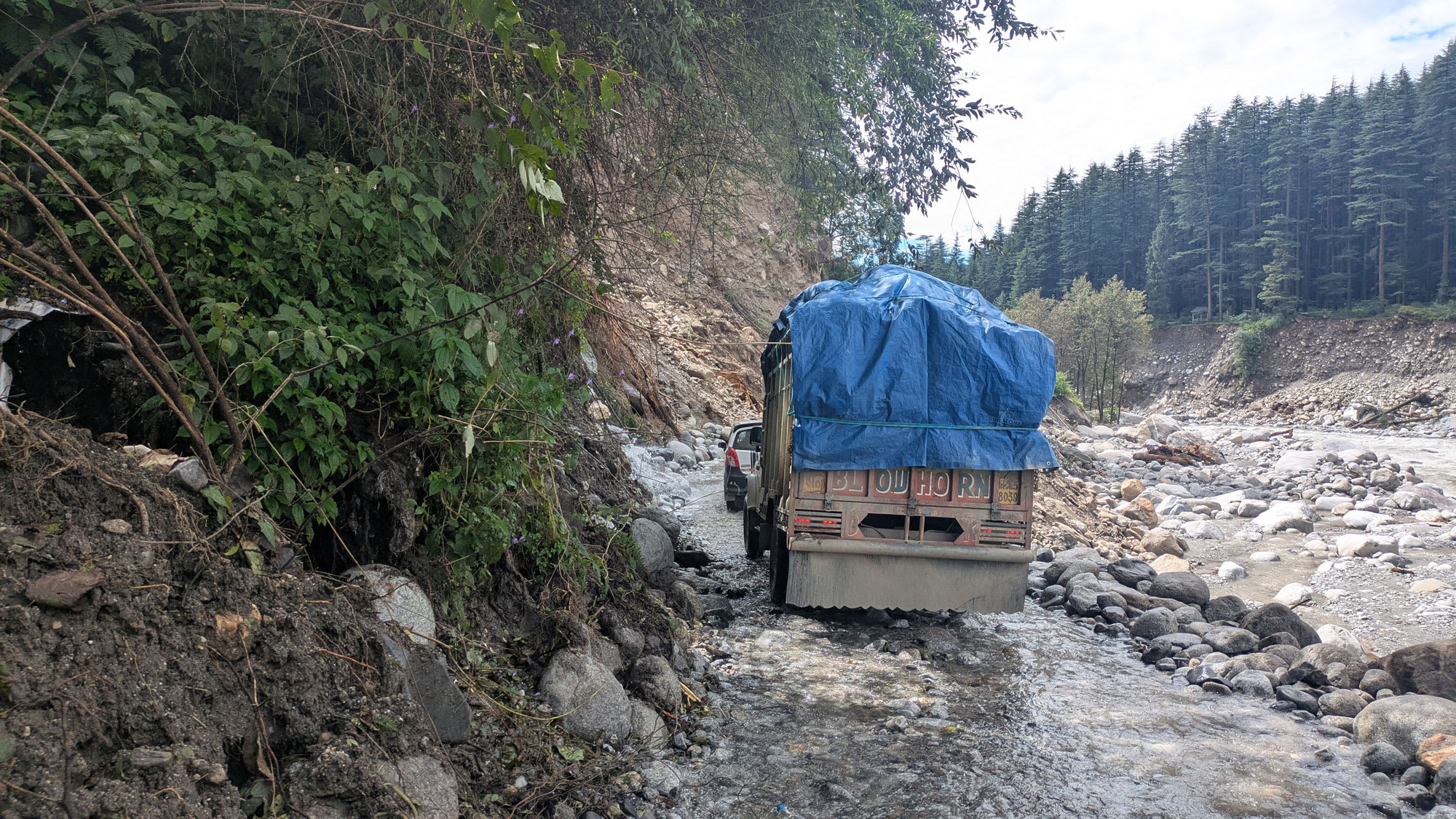
Credit: Doug Percival
If we ignore the cancelation of Tour d’Afrique tour in 2020 when the Covid pandemic was declared, this is the first instance that our company has had to make this unprecedented decision. A recent BBC article ‘Why monsoon rains have been so deadly in India this year’, talks about how the climate crisis is changing the behaviour of the monsoon. One thing I know for sure, the ‘behaviour’ is not predictable, not when it comes to rains, heat, cold and everything in between. What does it all mean for cycle touring? For one, when you hear us say ‘expect the unexpected’, it means that things will happen that we can’t predict and thus we all must be physically and mentally prepared to deal with the unforeseen issue whatever that may be. And get good trip interruption insurance.
Besides that, we all need to reassess what we do, where we go and what are reasonable and acceptable risks that we are willing to take. One thing, at least from our company’s perspective, is that we are not willing to quit cycling. In fact, cycling, second only to walking, is the least harmful activity humans can do. Going back to my McGill engineering days, I have a friend from those days with whom I had a climate discussion several years ago. An engineer, who among other things worked many years for General Electric, he didn’t believe that humans contribute to climate change. I tried my best to convince him, failing miserably.
Nowadays I don’t try to convince anyone as I know that I am also part of the problem. I don’t have a car that I drive in Toronto, I have solar panels on my home roof, try to recycle what can be recycled, I even grow some fruits and veggies in my backyard. But I do use airplanes, taxis, even occasionally rent a car. So, I can’t preach to anyone. Still, we should all try our best to reduce our impact on this precious little planet.
By the way, there was a journalist, Rajkumar Keswani, living in Bhopal, who raised the alarm about safety issues at the Union Carbide plant and tried very hard to convince the authorities that a disaster was coming. One of his articles was titled – ‘If you don’t understand, you all shall be wiped out.’. The more he tried, the more he was ridiculed. Even his friends thought he was crazy. When the explosion happened, he knew exactly what had happened, got his family into a car and drove away as fast as he could, saving himself and family. Unfortunately, with climate change none of us has that option.

1 Comment for "Climate Change & Cycle Touring"
I am so impressed with all the info I read as I always learn a lot.
Thank you.