Blog
 REGISTER NOW


Learning To Breathe Again: Tackling Changing Altitudes On The South American Epic
Camille Kirby is the Content Creator on the 2026 South American Epic Cycling Expedition.
When you sign up to cycle a continent, you know you’ll face vast and diverse landscapes. Some will feel like a breeze; others will test your endurance and mental resolve. Some challenges will be outright difficult, while others will creep up on you over weeks, just as the kilometres of climbing do to one’s thigh muscles in the Colombian Andes.
The South American Epic takes cyclists to nearly every crack and crevice of the continent’s terrain, but it is in the mountains, high above sea level, where a specific hidden challenge tests riders in a unique way: altitude.
Reduced oxygen levels and lower atmospheric pressure combine to test a human being’s relationship with their breathing—with the lungs that keep them alive. Put that human being on a bike and have them cycle toward the sky, and that relationship becomes even more of a battle. And yet, our 2026 cyclists have pushed their bodies to the limit without having to have a difficult conversation with their lungs. From volcano to volcano, here’s how the 2026 South American Epic has tackled the high elevations of Colombia and Ecuador.
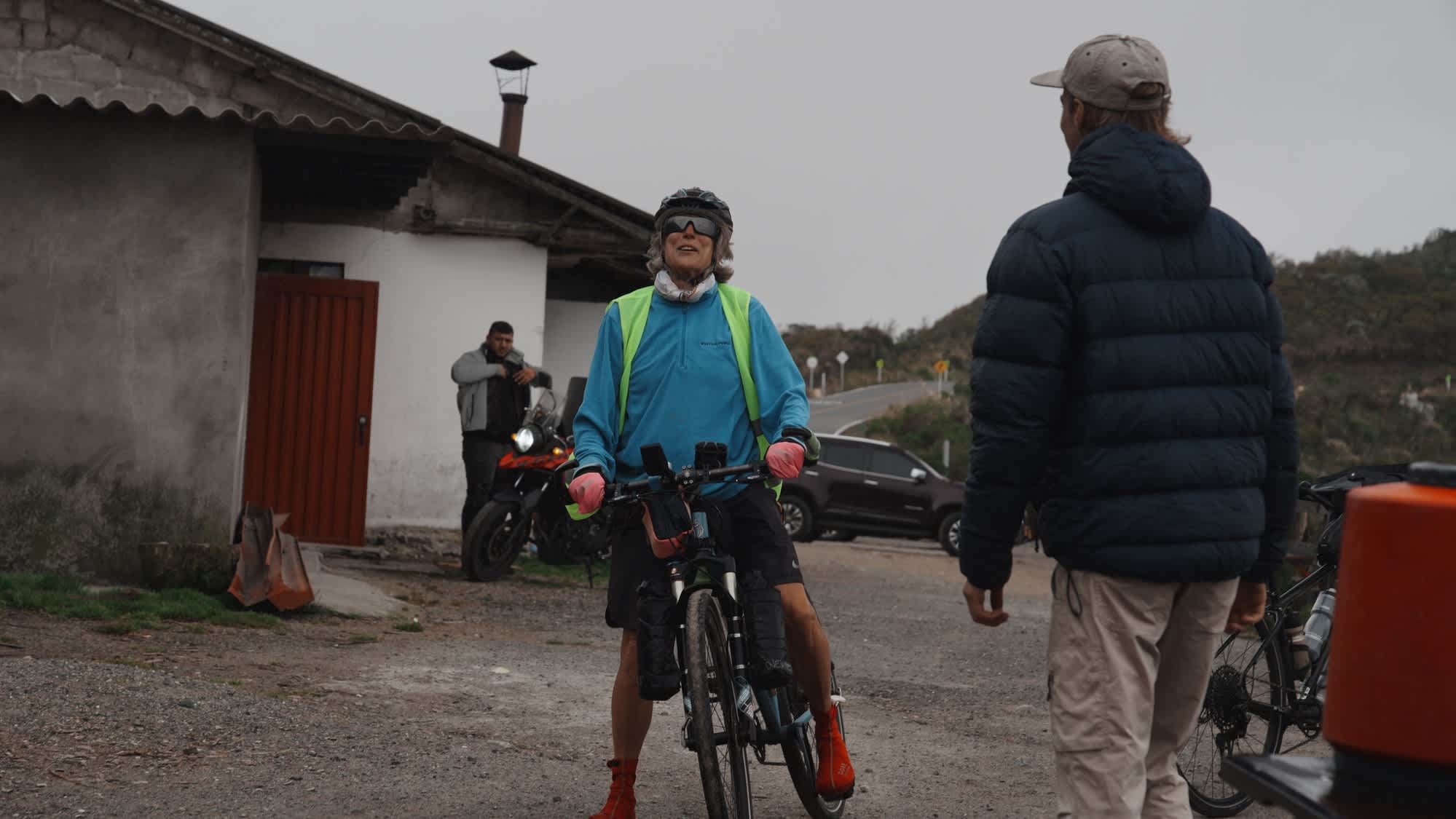
Anne Brooks reacts to arriving for lunch at 3,900 metres at the Nevado del Ruiz Volcano
Our first taste of thin air came after a slow but lengthy climb from the agricultural centre of Manizales up the slopes of Nevado del Ruiz. We ascended from 2,153 metres to 3,900 metres. The night before, Jessie Morgan, our medic, led a talk on what to look out for when climbing into the thinning atmosphere: dizziness, sudden and rapid fatigue, and a throbbing headache. She urged the cyclists to drink more water, snack often, and make sure they’re getting a full night’s sleep.
>>Related Post: Cycling At High Altitude
Lunch was almost freezing. With mist rolling in and out, you could barely make out Nevado del Ruiz, the towering volcano hidden among the clouds. Nancy Stueve, from the U.S., was the first cyclist to arrive. She said she felt fine until about 15 minutes earlier, when all of a sudden breathing became a conscious effort rather than a subconscious one. Riders arrived at lunch telling similar stories, but the descent into camp calmed the nerves and returned their lungs to a normal status quo. And just like that, we survived our first test!
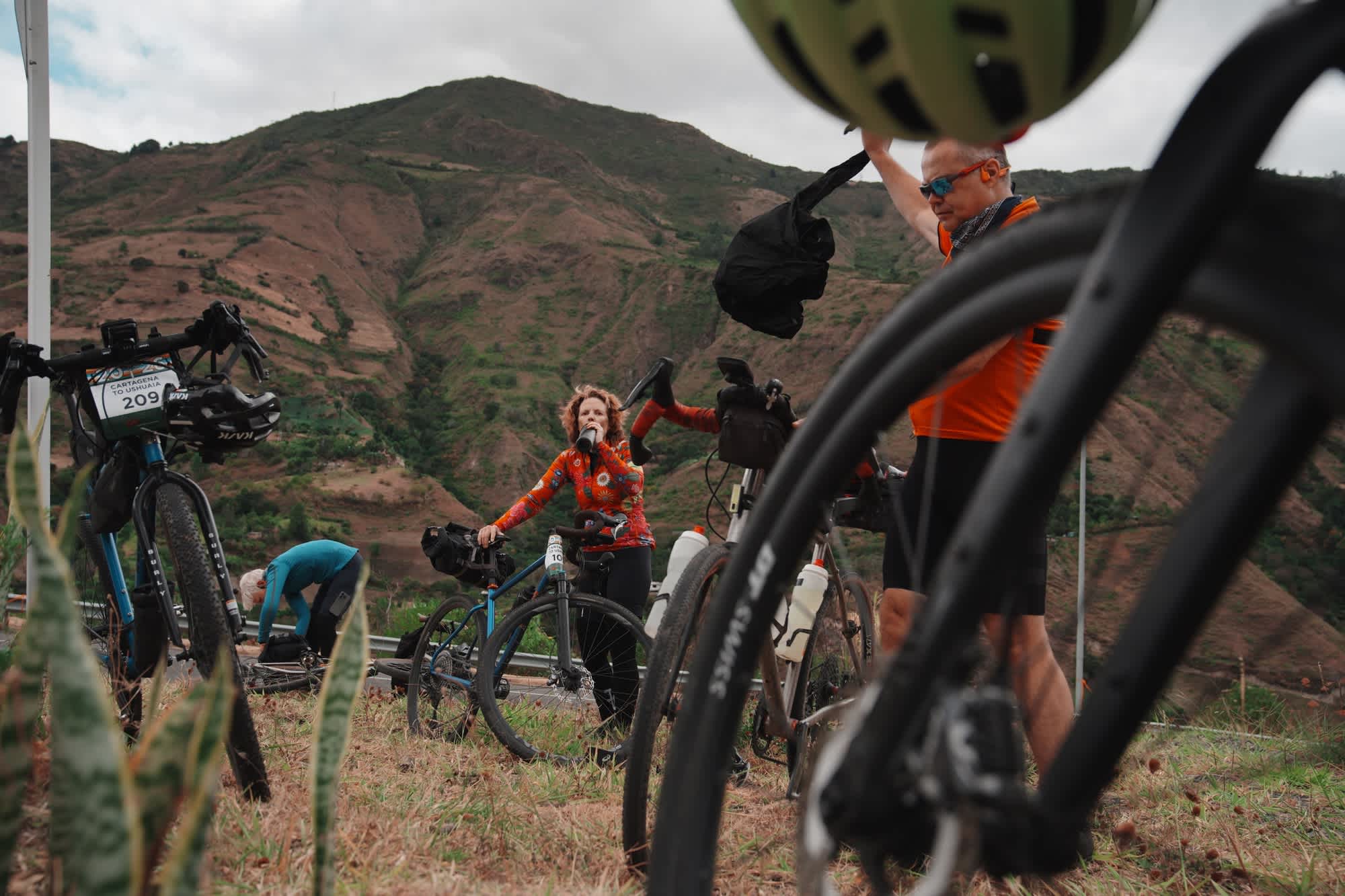
Riders adjust their layers and drink water as they head up to 3,200 metres outside of Pasto, Colombia
After a two-day bus trip due to civil unrest and safety concerns along our route, we arrived in the small city of Pasto, surrounded by Volcán Galeras and dozens of rolling green hills. Cycling out of the city, we felt the rise of elevation almost immediately. We cycled through the city which lies at 2,500 meters, but by way of steep gravel climb we reached 3,200 meters rapidly. The last two riders walked their bikes up a steep hill, only for us to round the next corner and find six more doing the same—not a single pedal stroke in sight.
“I didn’t think we’d get to 3,200 metres today,” says Karin Lind Hansen from Denmark, checking her Garmin. “The hill is hard, but the thin air makes it almost impossible.” Riders found it difficult to keep drinking water, with the frigid early morning temperatures making hydration feel far more like an afterthought.
At lunch, everyone agreed it must have been the three days off the bike that made the climb feel so punishing but it became clear that the rapid gain in altitude has caught up with us. We began to realize that our gradual ascent to Nevado del Ruiz may have been the key to maintaining steady breathing. Going from 2,500 to 3,200 metres on a 9% gravel climb is even harsher than it sounds. Even I, simply walking back and forth to photograph cyclists climbing the hill, felt my lungs demanding extra breaths.
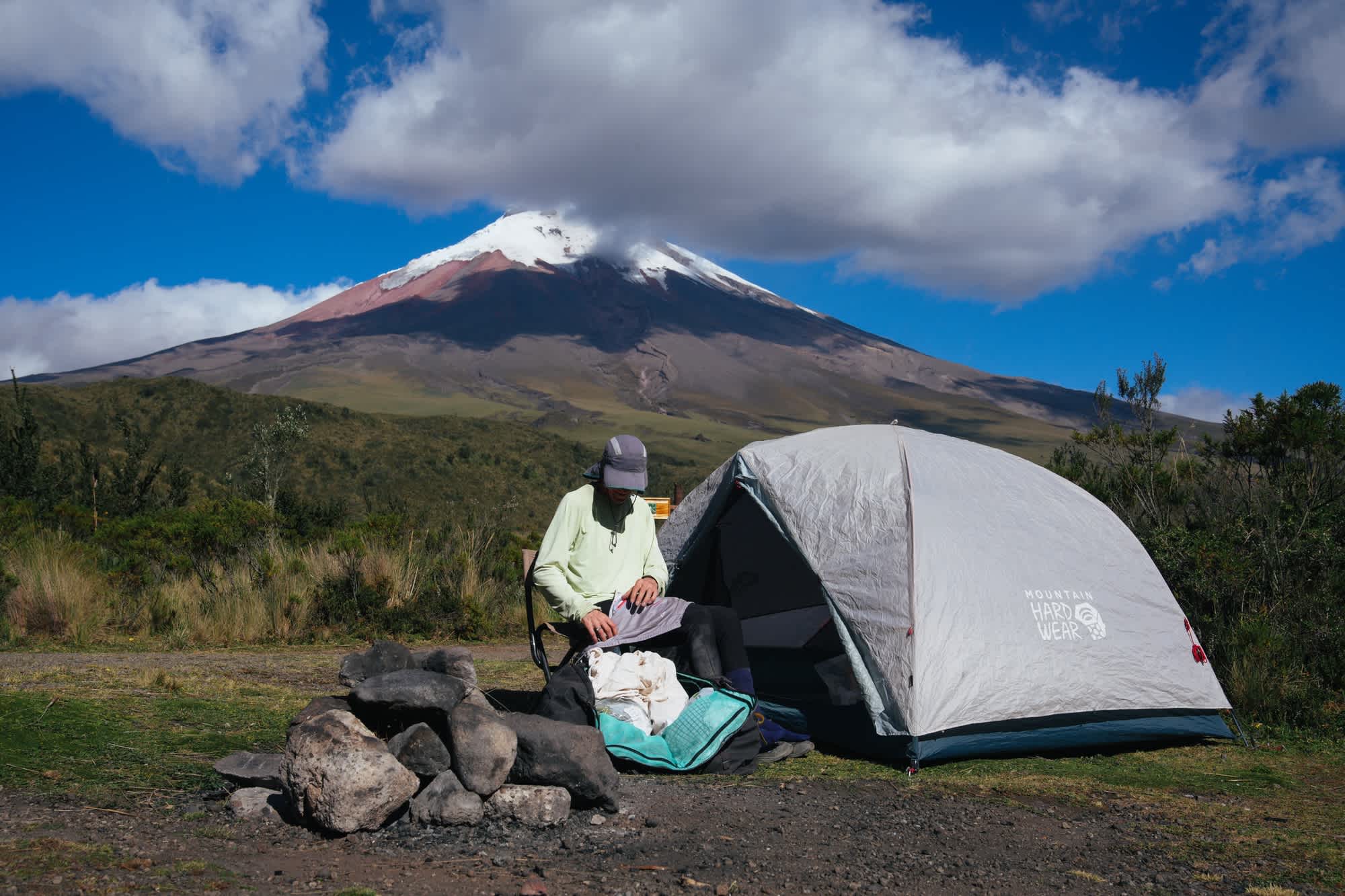
Rob Fisher sets up his tent under the watchful eye of Cotopaxi
The day has come. Today we’ll reach the highest elevation of the expedition. Two days earlier, Jess encouraged riders interested in taking altitude medication to begin their doses that evening. About half the group choose to take it.
When cycling—or doing any activity at altitude—you give yourself about 20 to 30 minutes to negotiate with your body about why you feel the way you do. Maybe you didn’t sleep enough. Maybe you haven’t had enough water. Maybe your muscles are simply sore. But after those 30 minutes, you realize the thinning air really is the culprit.
At lunch, at 3,300 metres, Jessie taped a sign to the drinking water jug: “Drink more. Eat more. Sleep more. Feel better at 3,900 metres.”
The sign proved more effective than you might expect. Riders returned to refill a second water bottle, then a third. Michaela Pye, our Tour Leader, made sure the staff are acutely aware of the symptoms of altitude sickness and encouraged the lunch crew to check in frequently with riders about how they’re feeling. We also encouraged riders to eat more than usual and stay on top of their water and protein intake. When assessing altitude sickness, you want to rule out every other factor first before concluding that the thin air is causing the problem.
The ride into camp that evening was defined by rough gravel and relentless winds, all beneath the towering presence of Cotopaxi. It’s was a tough day. Riders were pushed toward the opposite side of the road by powerful gusts, forcing them to constantly adjust while navigating the rocky terrain.
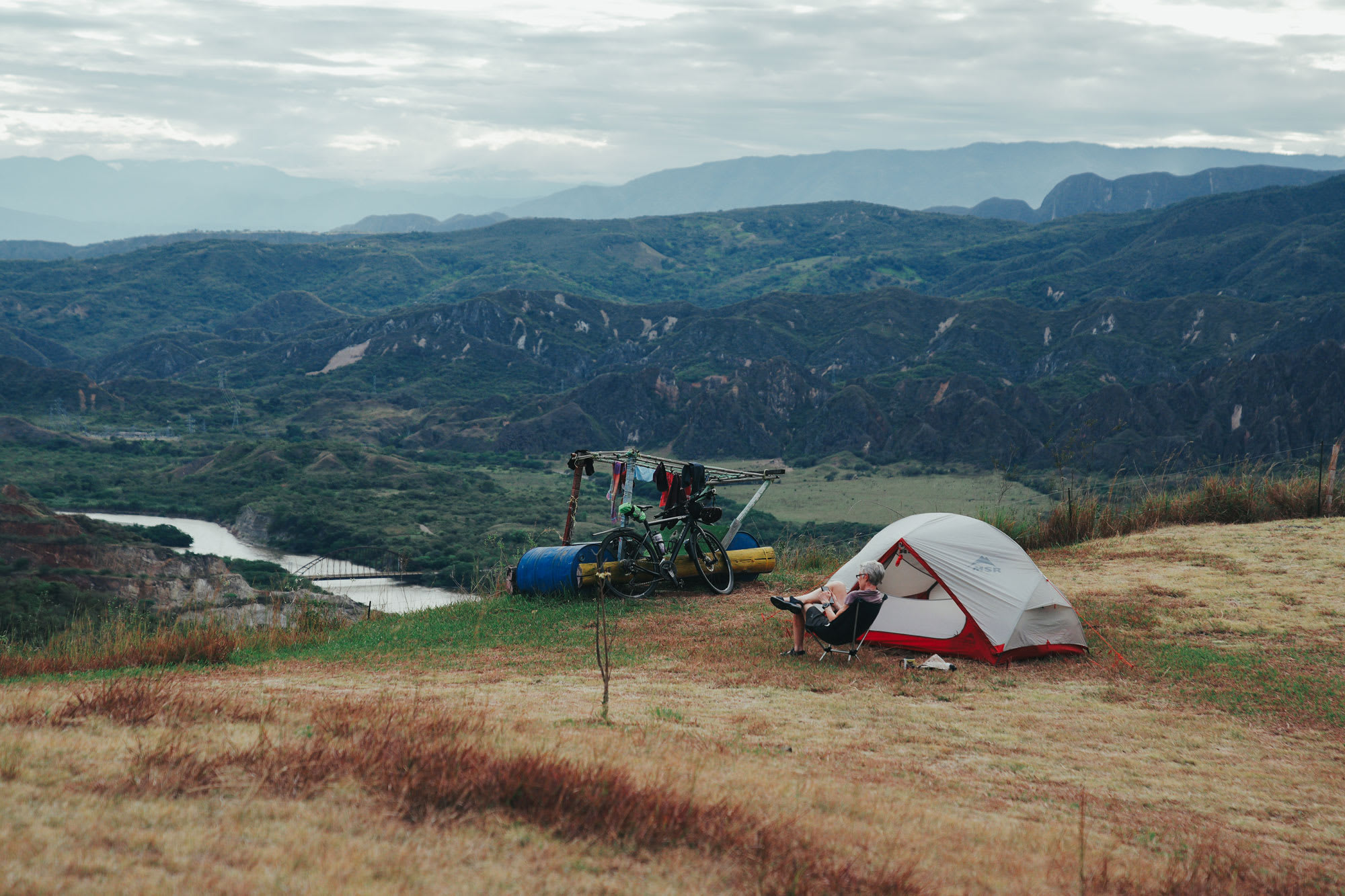
Room with a view
And yet, every cyclist rolled into camp—still under the watchful eye of the volcano—with a smile on their face and little mention of struggling lungs or pounding headaches. Maddy Holmes, from Australia, sumed it up perfectly: “To arrive at a camp with this view, you had to have had a tough day.”
Altitude can often feel like anxiety. Your breathing becomes shallow, your heart rate climbs, and your body feels as though it’s vibrating. There’s something to be said for this group’s commitment to drinking more water, eating more frequently, and getting enough sleep. Those habits have helped us listen to our bodies instead of getting caught up in the anxiety-inducing nature of cycling at altitude. Riders stop often, check in with themselves and each other, and know when it’s time to call it a day.
RELATED
TOUR

South American Epic
This challenging expedition offers you the best opportunity to explore the vastness and diversity of South America by bike. In keeping with the TDA...

Leave a Comment for "Learning To Breathe Again: Tackling Changing Altitudes On The South American Epic"