Blog
 REGISTER NOW


Iconic Dutch Windmills: Their Many Uses & How They Work
Jonathan Ruchlis was the Content Creator on the 2024 Pub Ride Cycling Tour. In this report, he examines the story behind one of Europe’s most iconic images – the Dutch windmill.
Bike touring is a great way to take in an area, not just the recognizable destinations, but also everything that comes in between. On a long tour, you tend to get a sense for the distinctive features of landscapes and countrysides in different regions and how they change slowly but surely with each day of riding. Along the Pub Ride route, while biking through the Netherlands (and a bit of Germany as well) we enjoyed lots of nice views of the old windmills that checker the countryside. They’re beautiful, massive, historical (between roughly 150 and 800 years old), awesome feats of engineering, and some of them are still functioning. But what do they do exactly and how do they work?
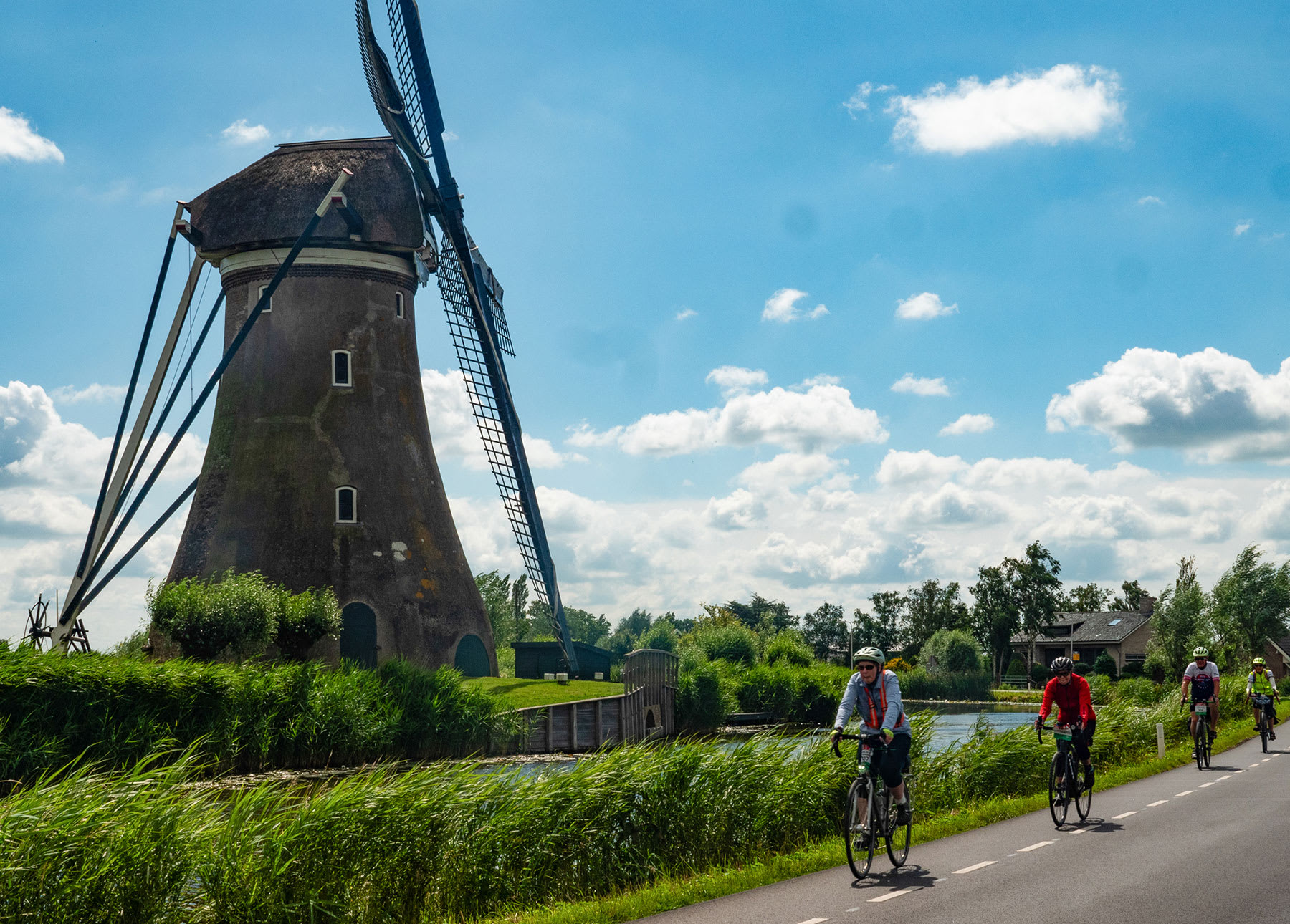
As it turns out, there are multiple answers to that question. One group of mills, known as ‘Industrial mills’ are used for grinding grain, sawing wood, making pigments and paper, or other production and processing tasks. Grinding grains is probably the most common industrial usage and functions by harnessing the rotation of the windmills blades into rotating one large stone that sits on top of another stationary as the grains are poured through (video example).
Sawmills, on the other hand, transfer the energy from the rotating blades into a linear movement, an arm that moves up and down using a crankshaft. Similar mechanisms are also utilized in water mills, sewing machines engines, and steering systems. The crankshaft attaches to a saw that moves up and down and the extra energy from the saw is frequently harnessed to reel the log in through the saw blades (video example). The development of this efficient way of splitting wood was quite significant to Dutch shipbuilding in the 1600s.
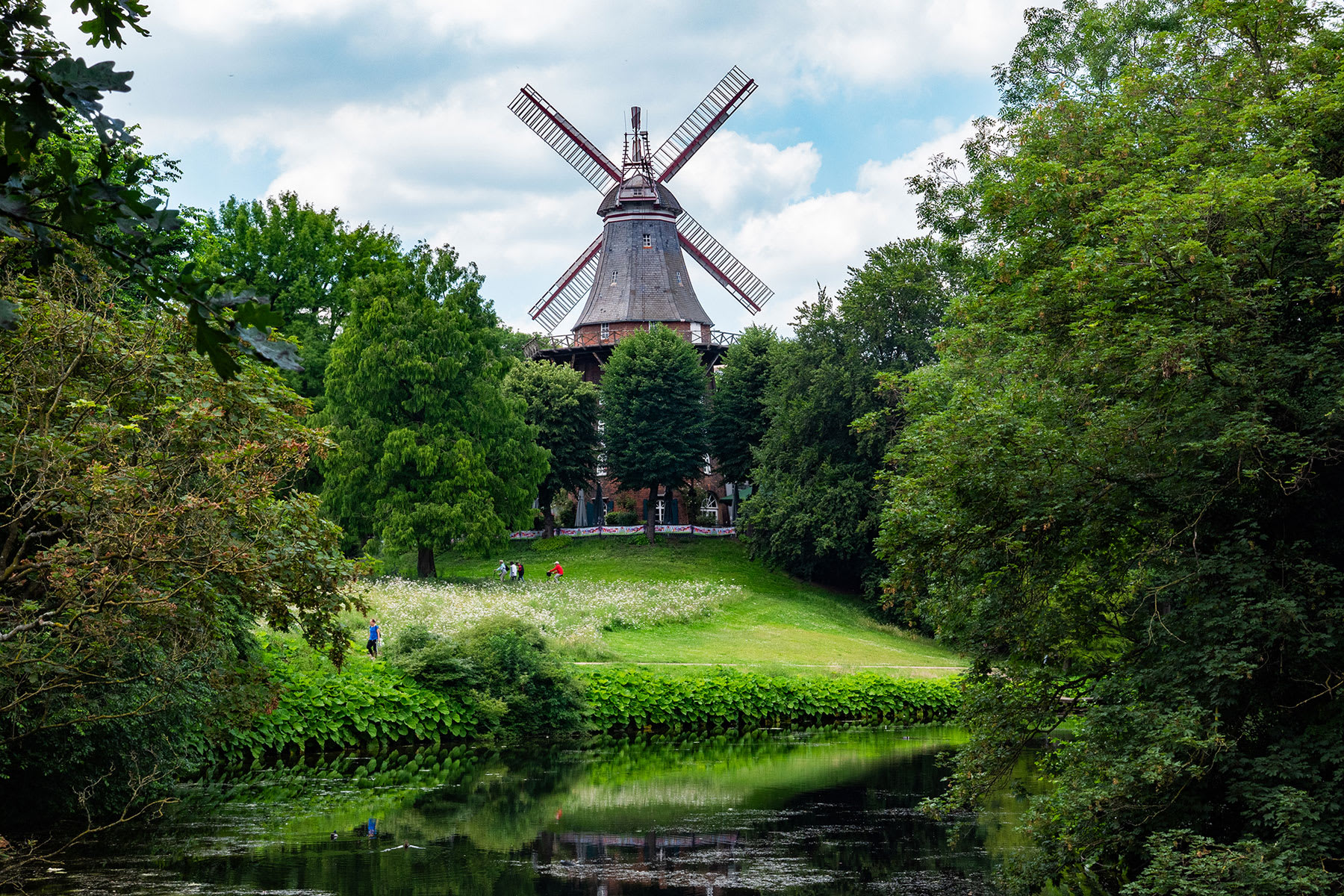
However, the type of mill that is most unique to the Netherlands is known as a polder mill. The function of polder mills is to pump water to drain the land. These mills were crucial in water management in the country for centuries. About a quarter of The Netherlands, whose name means lower-lying land, is below sea level. Without windmills that pumped the water and the modern day infrastructure that has replaced much of the work of the windmills (but not all), much of the farmland in The Netherlands would be underwater! The technology of polder mills has improved over the centuries in The Netherlands.
Initially, they used a paddle wheel, but this was limited in effectiveness and soon more efficient techniques were developed. First, a group of paddle wheel windmills, known as a molengang, was used to lift the water further than one paddle wheel windmill could alone. Eventually, that technique was replaced by using an Archimedean screw instead of a paddle wheel, which allowed for much greater efficiency (video example). These windmills and their history add so much, both visually and in terms of living history to the Dutch countryside. If I traveled the area again, I would go see the insides of some, especially those that are still functioning. Those that are open to the public fly a blue flag and on National Windmill Day you can also visit mills that aren’t typically open to the public. There are also some where you can stay overnight. There’s a trip just waiting to be planned!
RELATED
TOUR

Pub Ride
Over 5 weeks you will cycle from storied Dublin to the waterfront of Copenhagen. Through Ireland, Scotland, England, France, Belgium, The Netherlands...

Leave a Comment for "Iconic Dutch Windmills: Their Many Uses & How They Work"