Blog
 REGISTER NOW


Why I Would Love To Cycle The Magical Madagascar Cycling Tour Again
“Wisdom is like a Baobab Tree, no one individual can embrace it.” – African Proverb
Being the most senior member of our company, I have cycled most of our tours. One of the questions that I am often asked is, which was my favourite ride? This is a difficult question to answer, simply because each tour for me has its own attractions and rewards. Most of the time I simply respond that I love being outdoors on a bike. I enjoy exploring new areas, whether where I live or when I am in a new place, so each tour is special, rewarding and surprising.
Thinking about it in a slightly different way, I ask myself, Okay, which of the tours that I have been on would I love to go back and ride again? This is not an easy question to give a good response to either, because frankly I would love to do them all again. In my blog from the Viva Italia Cycling Tour – I Won’t Have Time, Won’t Have Time – the reality of the human life span says it all. Still, if you twist my arm hard enough, I will come up with handful and at the top of the list is the Magical Madagascar Cycling Adventure.
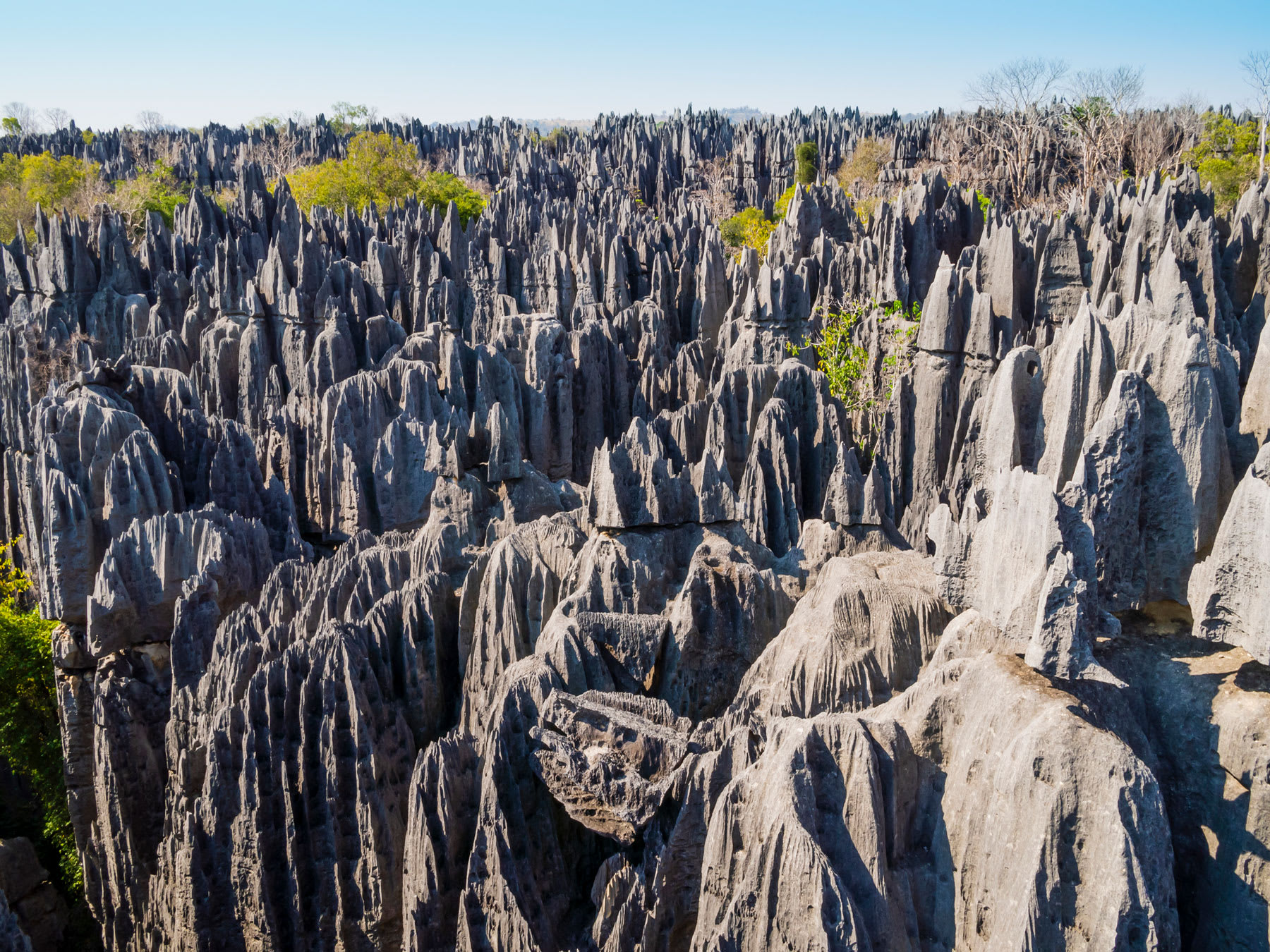
Tsingy
If you ask me why, I will respond that it is simply magical. And don’t take my word for it. The UK based Daily Mail had a story over a decade ago called – The Magic of Madagascar: Staggering landscapes and breathtaking natural beauty in the world’s most unique ecosystem. So why do I want to go back? I missed the Tsingy (in Malagasy it means ‘where one cannot walk barefoot’) which National Geographic describes as a “labyrinth stone of jagged spires and lutes like the towers of some Gothic cathedral.” It is extremely difficult to penetrate and thus much unexplored.
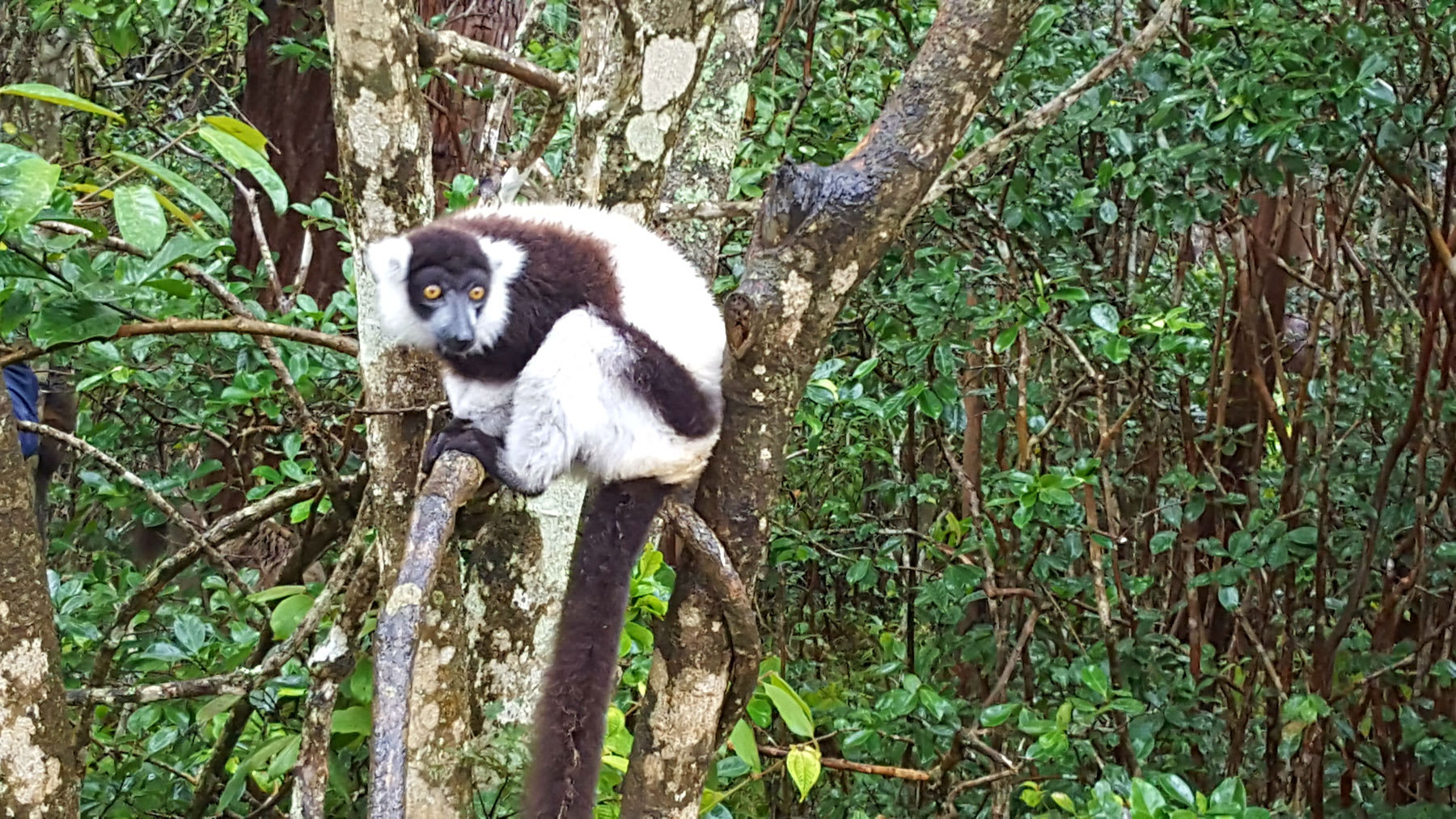
New species of animals and plants are still being identified including one lemur recently named in 2005, the John Cleese lemur. Yes you read that right. There are many other lemurs that I saw but I never did manage to see the dancing and singing lemurs, videos of which you can find on YouTube. Suffice to say, catching that would be a hell of wildlife watching experience.
>>Related Post: 8 Things You Don’t Know About Lemurs (And Why You Should Cycle Madagascar)
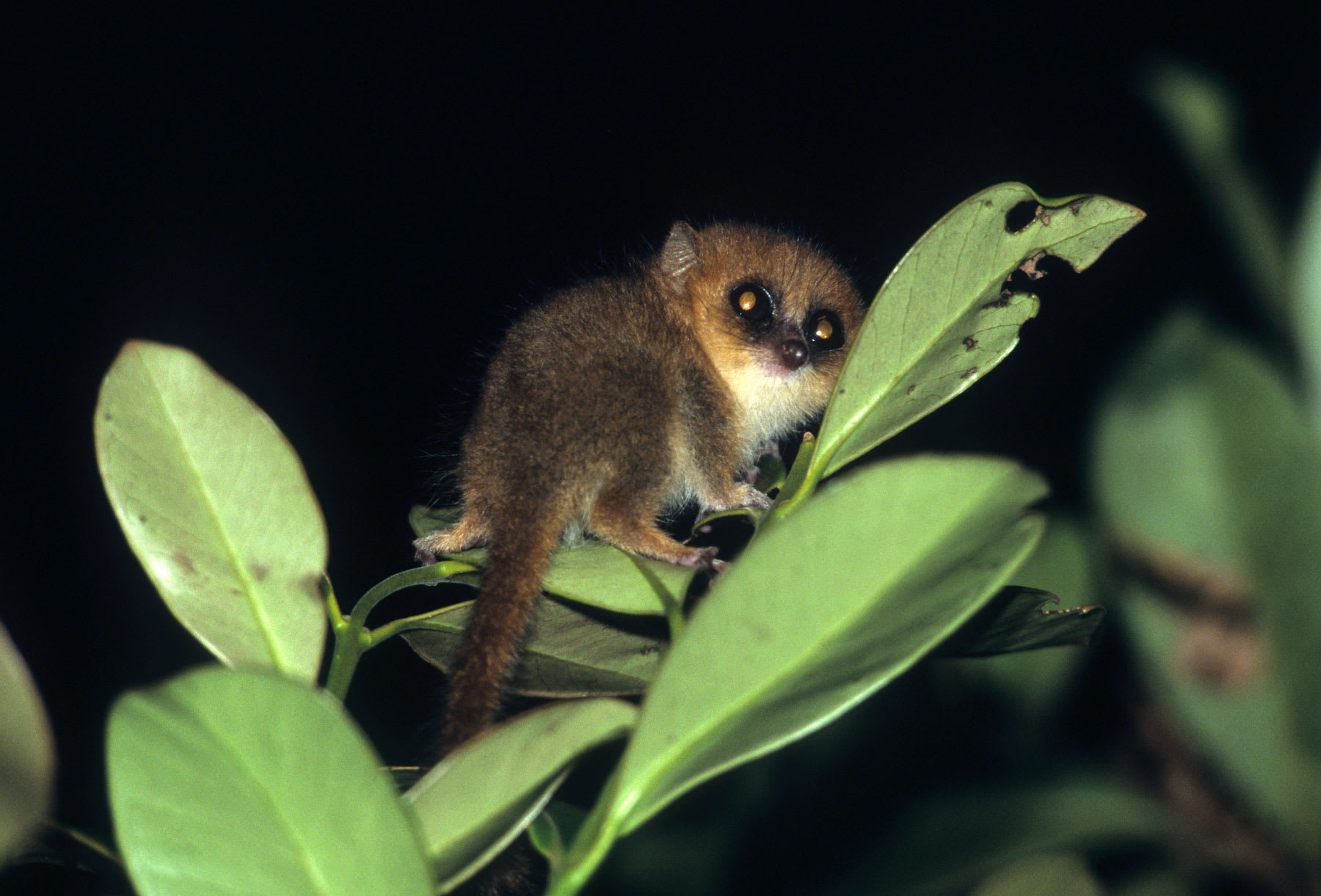
Russet Mouse Lemur
Another wonderful wildlife experience I would love to experience again was our night safari on a road near the lodge where we were staying. With a flashlight, our guide pointed to numerous nocturnal creatures including a nocturnal mouse lemur that grows to be between 20 to 30 cm, the smallest mammal on the planet. One can spend a very long time observing and being amused by fauna that you will find only in Madagascar – colourful reptiles, frogs and birds – and still see only a fraction of the different species that exist on the island.
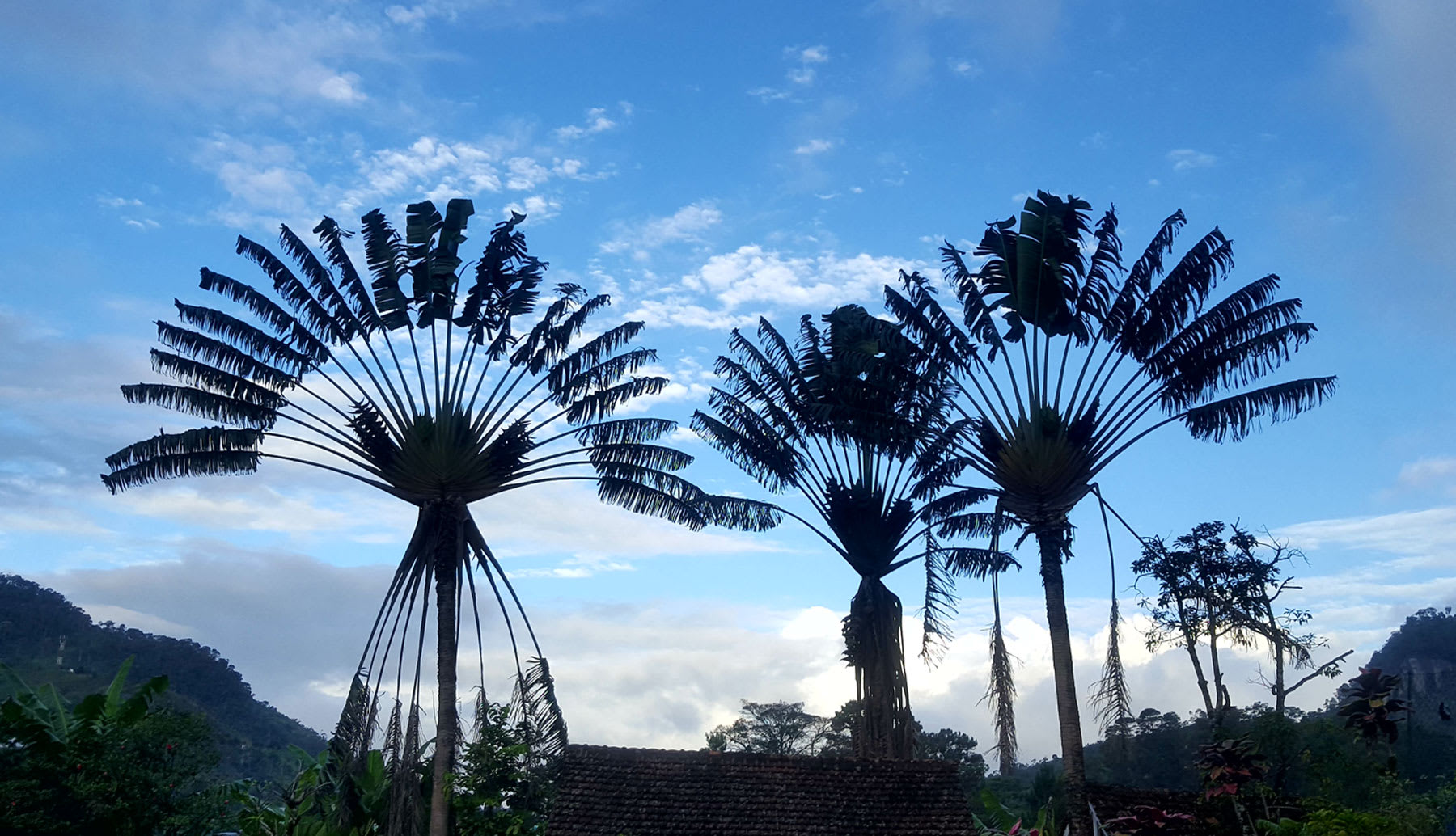
Traveller’s Palms
There is the endemic flora. My favourite, of which I took dozens of pictures, is the Traveller’s Palm. It is actually the logo of Air Madagascar so I guess I am not the only one who is enamoured by the ‘false’ palm. Here is what the Brittanica website says about the tree – “Named because the water it accumulates in its leaf bases has been used in emergencies for drinking. The fan of leaves also tends to grow roughly on an east-west line, providing a crude compass for travellers.”
Then there are the Baobabs, known also as the ‘upside down tree’ because its branches resemble roots marooned in the sky. Also known as the elephant tree, of the nine species that grow on the planet, six grow exclusively in Madagascar. My collection of Baobabs pictures is even bigger than that of the Travellers Palm.
The Baobab tree grows to immense girth and height with the inside hollowing out and has been used by humans in variety of ways. In his book – Elderflora: A Modern History of Ancient Trees – the author Jared Farmer writes that “In addition to shade, shelter, and storage, African baobab gives foods, medicines, and textiles. Its velvety seedpods contain roastible seeds surrounded by vitamin-rich pulp that can be eaten raw or processed into meal. (In French, the species goes by ‘monkey bread tree’; in Afrikaans, ‘cream-of-tartar tree.’) Leaves can be cooked; roots can be nibbled. People peel the bark and convert it into rope for weaving.”
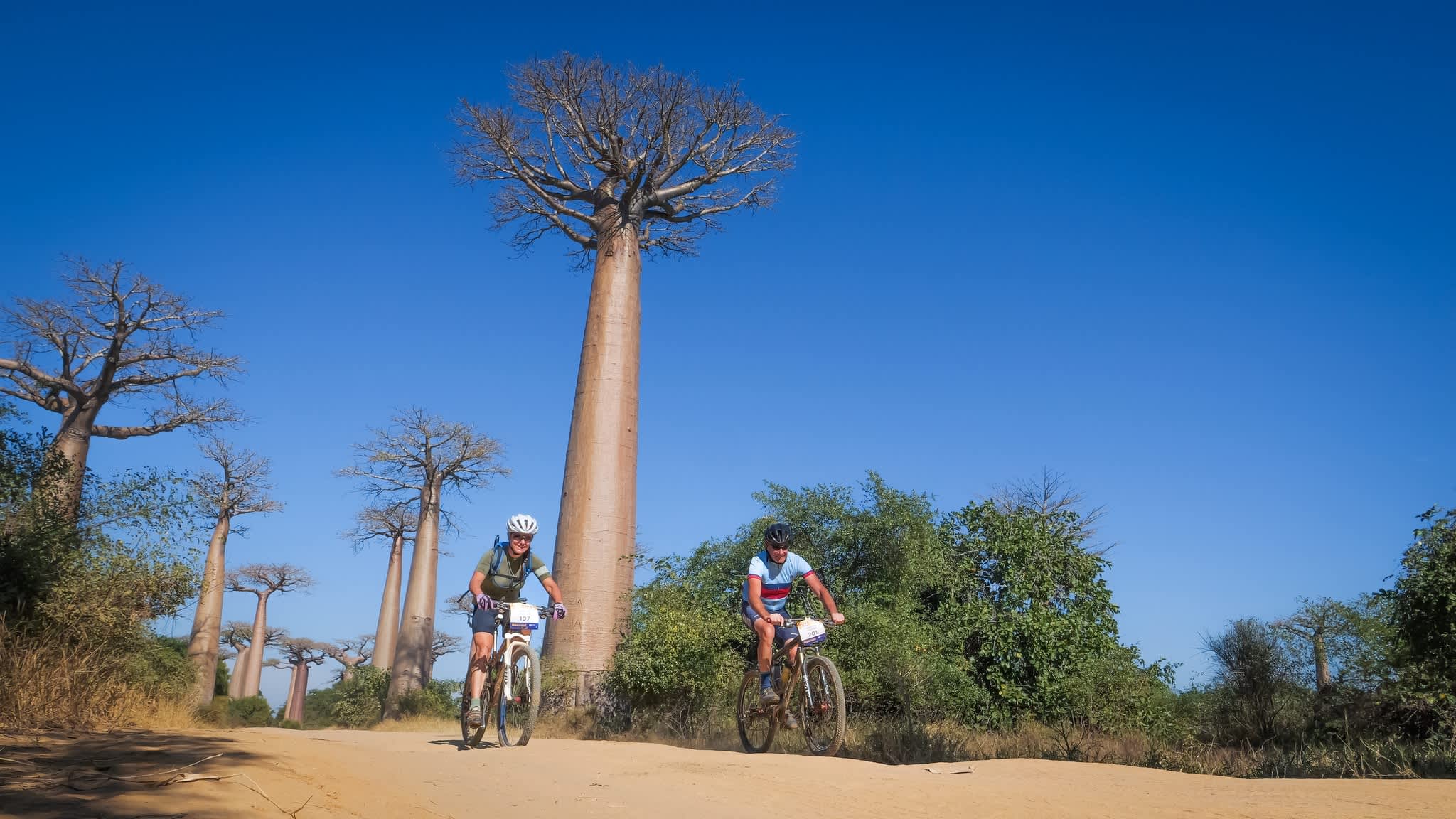
The Baobab even impressed the great Arab traveller, Ibn Batuta, about whom I wrote in my last blog from the Morocco: Kingdom of The West Cycling Tour just last spring. In his book Jared Farmer writes, “He [Batuta] saw trees of ‘great age and girth’ on the road to Mali. ‘I was surprised to find inside one tree, by which I passed, a man, a weaver, who had set up his loom in it and was actually weaving.’” Is it then any wonder that the majority of blogs from the Magical Madagascar Tour have pictures of Baobab Trees?
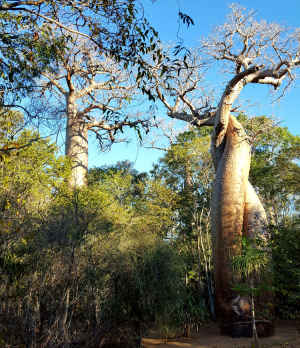 I could go on about how the Baobab tree symbolizes strength, resilience, perseverance, wisdom, longevity, and the accumulation of knowledge passed down through the generations but for me, I just like to be in their presence. If one day you end up traveling to Madagascar, make sure you don’t miss famous Baobab Amoureux (left)– two baobab trees twisted together. There are wonderful folklore stories inspired by these two trees alone.
I could go on. I could tell you about the fascinating culture of Madagascar and their traditions, I could tell you about the wonderful time I spent at the end of the tour in Nosy Be, or my search for enlightenment at the end of the tour but I think you get the gist.
Thinking of going back to Madagascar brings a smile to my face.
RELATED
TOUR
1 Comment for "Why I Would Love To Cycle The Magical Madagascar Cycling Tour Again"
Absolutely agreed, Henry. Madagascar has remained one of my favourite destinations since I was fortunate enough to participate in the first edition of the Magical Madagascar tour. People who have an interest in absurdly unique plants and animals will love Madagascar. People who enjoy tackling a variety of cycling terrain will love Madagascar. And people who treasure meeting friendly, curious, funny, warm people will love Madagascar.