Blog
 REGISTER NOW


The Joy Of Bicycle Gearing: Everything You Need To Know
HOW TO PREPARE: An 8 part series to get you ready for your first TDA tour. Click here to read more.
“I wish I had an easier gear” – Many a TDA cyclist
We have previously written on the topic of bicycle gearing in our Choosing A Bike For A Supported Cycle Tour blog as well as in our pre-tour bulletins but this post will provide you with even more detail in order to help you make the right choice in terms of gearing for our cycling adventures.
Read on to learn all about gear ratios, and our recommended gear ranges for cycle touring. If you are shopping for a new bike and find one that doesn’t match our recommendations, ask your bike shop if they can change the gears for you.
Not interested in the detailed calculations and just want to know what gears to look for on your new bike? Please click here to skip to the summary.
Gear Ratio
What is a gear ratio? For bicycle touring, we are mostly interested in the gear ratio of the easiest gear combination on the bike – the one you will use for climbing hills. To calculate the gear ratio, you divide the size of the smallest front chainring (for example 34 on a 34-50 double crankset) by the size of the largest cog on the rear cassette (for example 36t on an 11-36 tooth cassette) so 34 ÷ 36 = 0.94. That would be the gear ratio in this case.
What gear ratio should you have? For tours where you will be riding long stages for multiple days in a row, it is important to make sure that your easiest gear is one that allows you to complete long climbs even when you’re tired. At a minimum, you should look for a gear ratio of 1.00 or lower (a lower number means an easier climbing gear). In our example in the previous paragraph, a gear ratio of 0.94 would be considered just low enough to be suitable. If you know you struggle on steep climbs, you should aim for a gear ratio around 0.7.
Front Chainrings
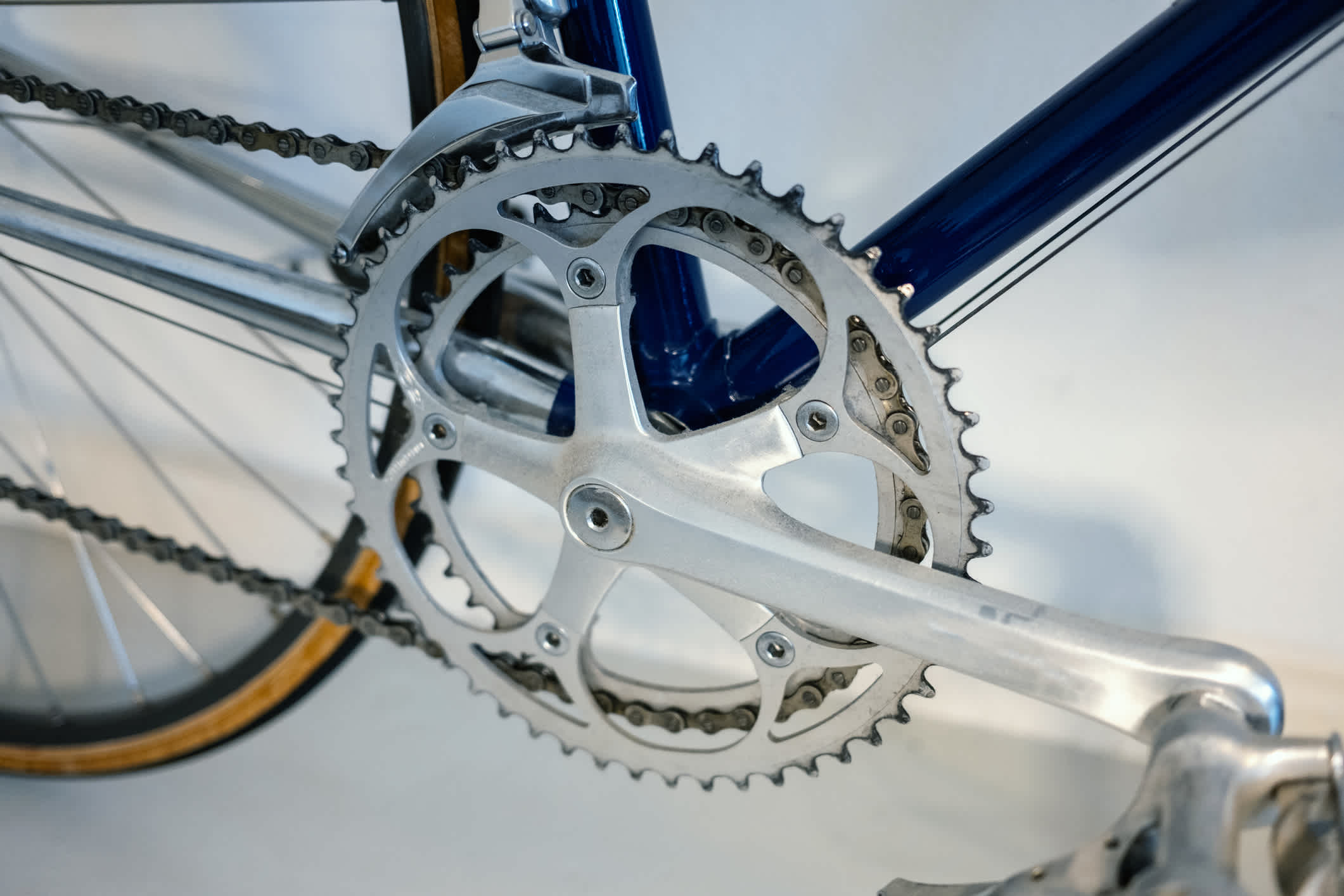
It is now common for new bikes to have only one front chainring. While your bike shop may tell you that these bikes still have easy climbing gears, that is not always the case. You should still check the gear ratio. The next most typical setup is to have two front chainrings. These, however, still come in a wide range of sizes. Lastly, some touring bikes come with three chainrings, although this is no longer widely available.
The most important thing to know is that a smaller chainring makes for easier climbing.
Rear Cassette
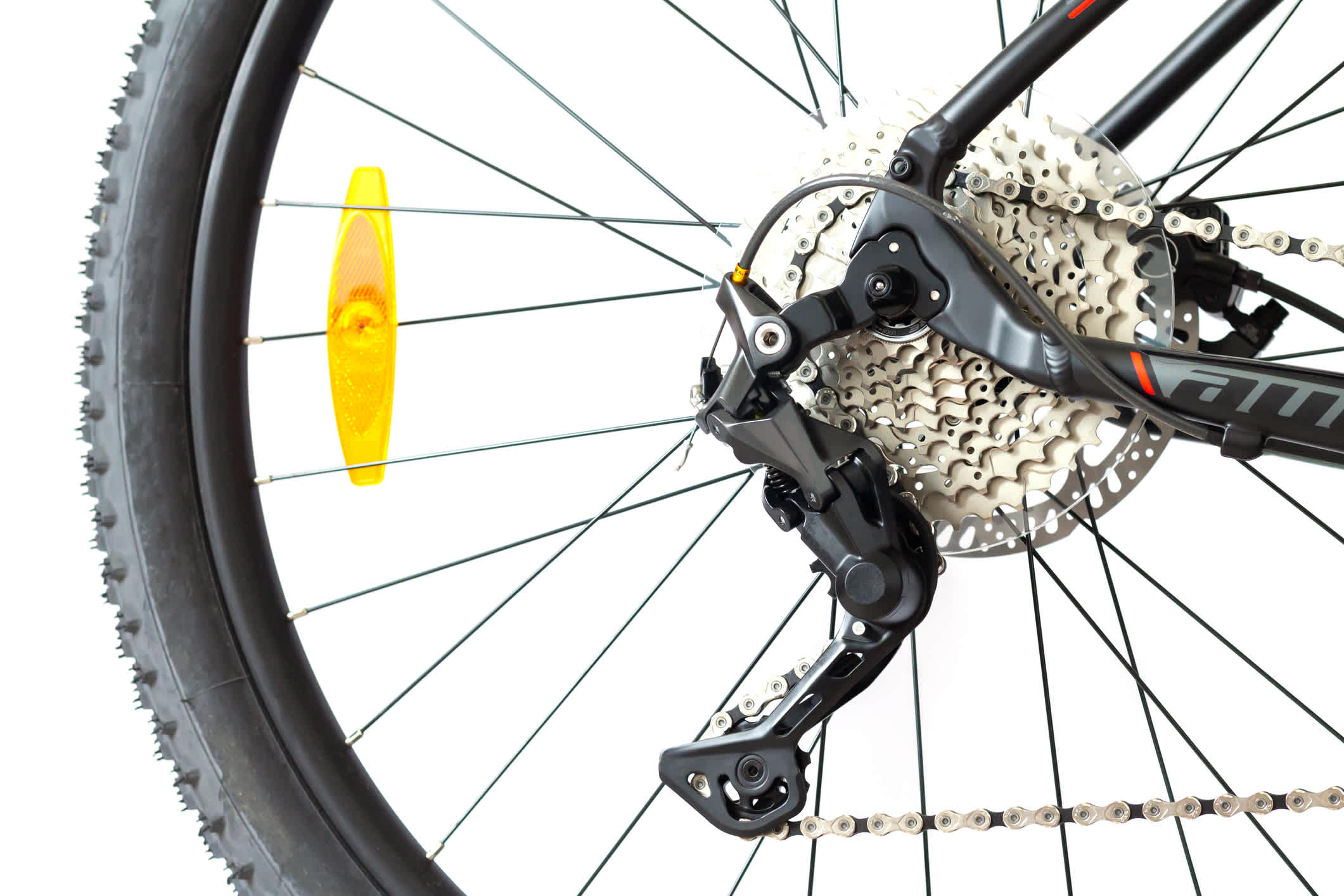
Rear cassettes come in a large variety of options, in terms of both the number of cogs and the difference in size between the smallest and largest cogs.
The most important thing to know is that a bigger largest cog makes for easier climbing.
Downhill Speed
Wondering why this blog post is only talking about climbing hills? In our experience, this is the area where most cyclists wish they had better gears – for climbing steep hills. If you do choose your gearing for climbing, it is true that you may give up some ability to pedal downhill at a high speed. However, even with a gear ratio of 0.7 as mentioned above, you can still pedal up to about 40 km/h. If you are on a steep or long hill, you can stop pedalling and coast up to a higher speed if the terrain allows. It only becomes a limitation if you are trying to ride in a peloton behind faster riders, something we don’t recommend, for safety reasons, on our tours in any case.
Suggested Gear Combinations
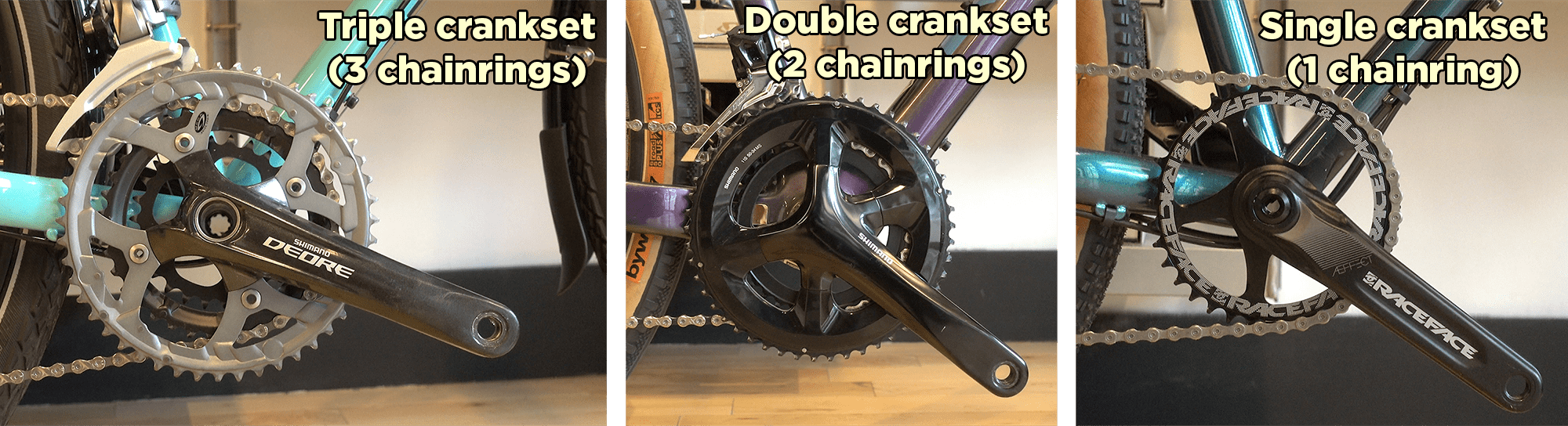
For bikes with a single front chainring:
- Look for the largest rear cassette available – these go up to 52 teeth but these larger sizes may require a different shifter and/or derailleur.
- For all but the strongest riders, we suggest a cassette with a 50, 51 or 52 tooth largest cassette cog and, at most, a 42 tooth chainring. The majority of riders will be happier with a smaller chainring size, such as 36.
For bikes with two front chainrings:
- With a 34 tooth small front chainring, we suggest a largest cassette cog of 40 or 42 (or larger).
- With a smaller front chainring (eg: less than 30), you can use a smaller cassette too (like 36).
For bikes with three front chainrings:
- The smallest chainrings on these bikes are usually small enough that the cassette size is already adequate – for example a 28 tooth smallest chainring and a 34 tooth largest rear cog.
Electronic shifting
Many bikes now come with electronic shifting. While these drivetrains do tend to work very well, they have a somewhat higher chance of running into issues that can’t be fixed on the road. In our experience this doesn’t happen often, but it is a risk you should be aware of if choosing to use these components. For simplicity and repairability, we continue to recommend regular mechanical drivetrains.
Summary
For anyone interested in the numbers, I hope this has been helpful but if you just want to know if your bike has easy enough gears for long climbs, this is all you need to know:
- Smaller front chainring = easier climbing
- Larger biggest rear cog = easier climbing
- At a minimum, we recommend a chainring that is the same size as the biggest rear cog, but lower is better (eg: a chainring that is smaller than the rear cog).
That being said, plenty of very strong cyclists over the years have completed our tours on gear ratios harder than those recommended here. Kudos to them! For the rest of us, these recommendations will help you enjoy your tour to the best of your ability.
How to Prepare
An 8 part series to get you ready for your first TDA tour. Click here to read more.

Leave a Comment for "The Joy Of Bicycle Gearing: Everything You Need To Know"