Blog
 REGISTER NOW


2025 Cape to Kili Cycling Expedition: Q & A with Australian Cyclist Michael Viljoen
Rihab Gwayed is the Content Creator for the 2025 Cape to Kili Cycling Expedition.
Michael Viljoen is one of the riders who joined the first section of the TDA Cape to Kili Expedition, cycling from Cape Town to Windhoek. He has been one of the most generous riders on the tour, always delighting others with the incredible photographs he captures along the way. With a true artist’s eye, Michael sees the world in a unique way and immortalizes those moments through his lens, sharing his vision and inspiring fellow riders with every shot.
Background & Motivation
Q: Can you tell us a bit about yourself?
I was born in South Africa and now live in Australia. I’m married to Linda from Scotland, and we have an Australian son. I have a passion for quite a few things – cycling is one, photography is another. I also enjoy a good glass of wine from time to time, and I’m a total Rugby Union fanatic.
Q: What inspired you to take on this tour?
When I stopped working last year, I wanted a challenge. I came up with the idea of cycling 1,000 km on each continent. It seemed like the perfect way to combine cycling, travel, and photography. Most of my rides so far have been more like photographic cycling trips. Last year I did the Munda Biddi Trail in Australia, and earlier this year I rode the Wild Atlantic Way in Ireland. On those rides, I filmed with a drone and action cameras while cycling. This tour is another step in that journey.
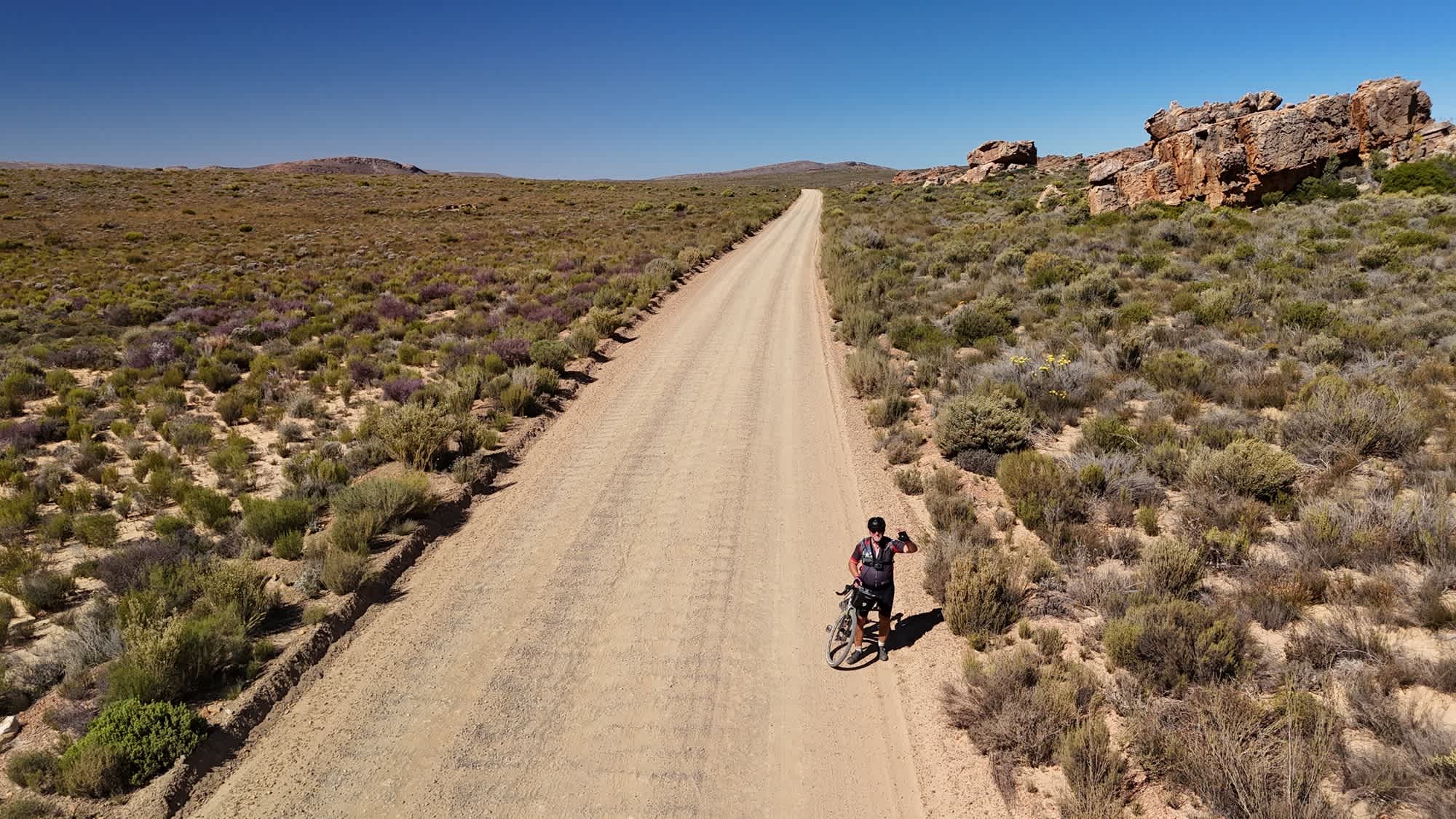
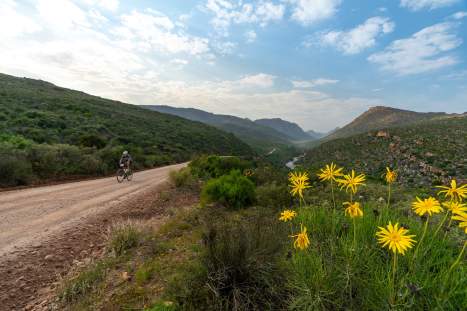
Credit: Micheal Viljoen (also feature photo)
Cycling Experience
Q: Is this your first TDA tour, and how does it compare to your usual cycling?
Yes, this is my first TDA tour. I’ve done some longer rides before, but this is by far the most consistent daily distance I’ve ever covered. Normally, I’d ride about 50 km a day on a road bike, but here I’m doing 120–130 km on gravel. That’s a big step up and definitely a challenge.
Q: How has it felt to cycle through South Africa and Namibia?
It’s been fascinating. Even as a South African, I’ve ridden through areas I’d never seen before. Crossing into Namibia really reinforced just how spectacular southern Africa is.
Q: And after this TDA section, what’s next?
I joined the tour from Cape Town to Windhoek, and I plan to ride another thousand kilometres on each of the other continents – probably Japan, Canada or North America, and the Carretera Austral in South America. Antarctica might be the tricky one!
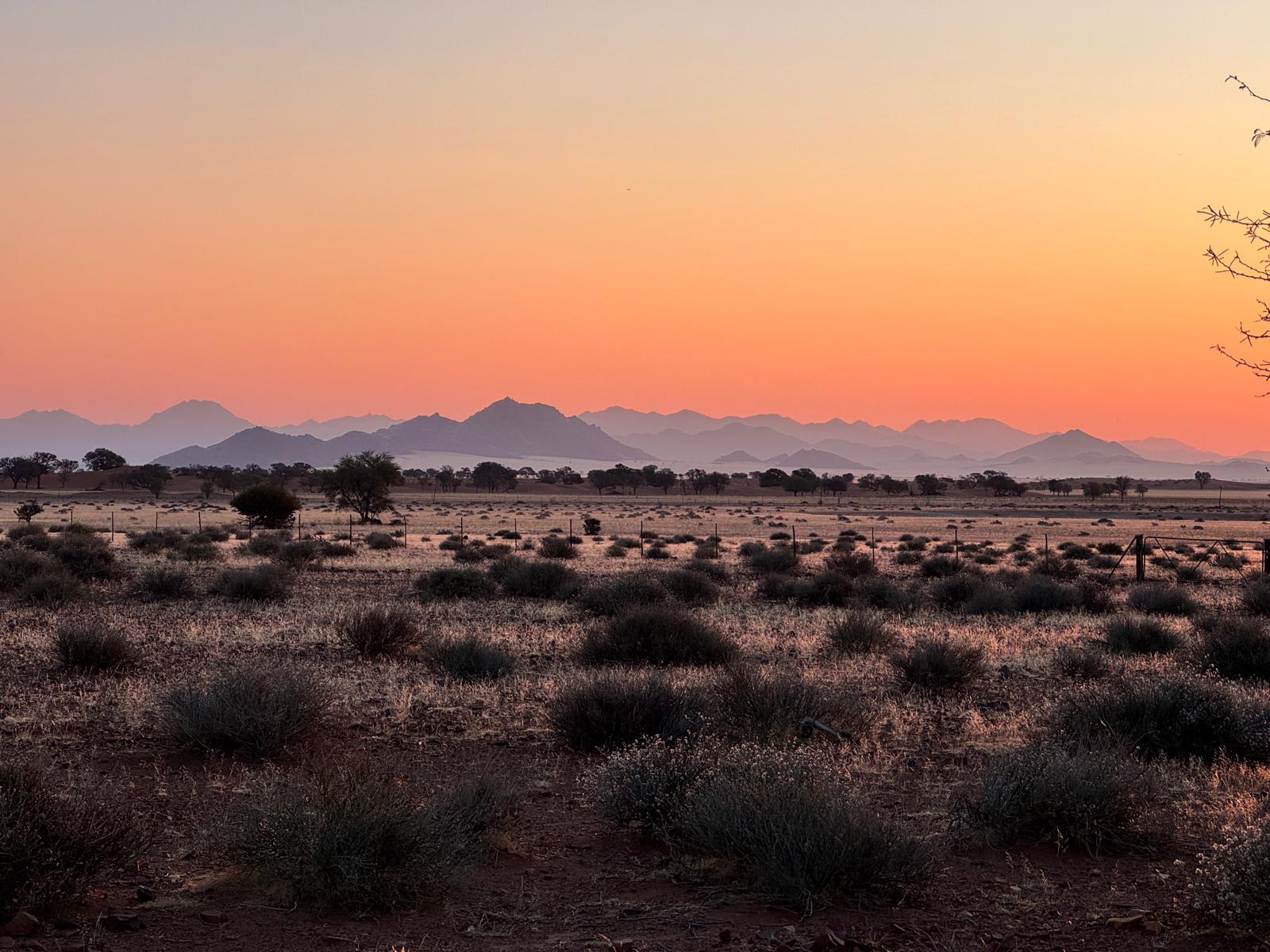
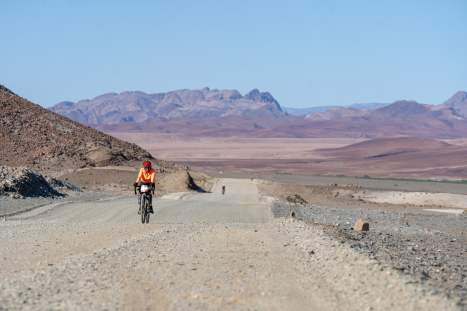
Credit: Micheal Viljoen
Photography & Cycling
Q: How does photography shape the way you experience cycling and travel?
I try to combine three things on my trips: cycling, tourism, and photography. I carry an action camera, my phone, a drone, and a DSLR. For some riders, this is purely a cycling holiday, but for me, it’s just as much about capturing the journey. Photography changes the way you see the world. You notice colours, shapes, and small details in the landscape that you might otherwise pass by. Sometimes the cycling is tough, but if the photography is good, I still count the day as a success. Other times, the riding is fantastic but the scenery isn’t so photogenic — and that’s fine too. And then there are those magical days when both line up perfectly. Even when the cycling and photography are both difficult, you still end the day sharing experiences with the group, which makes it worthwhile. Photography keeps me engaged and opens my eyes to moments I might have otherwise missed.
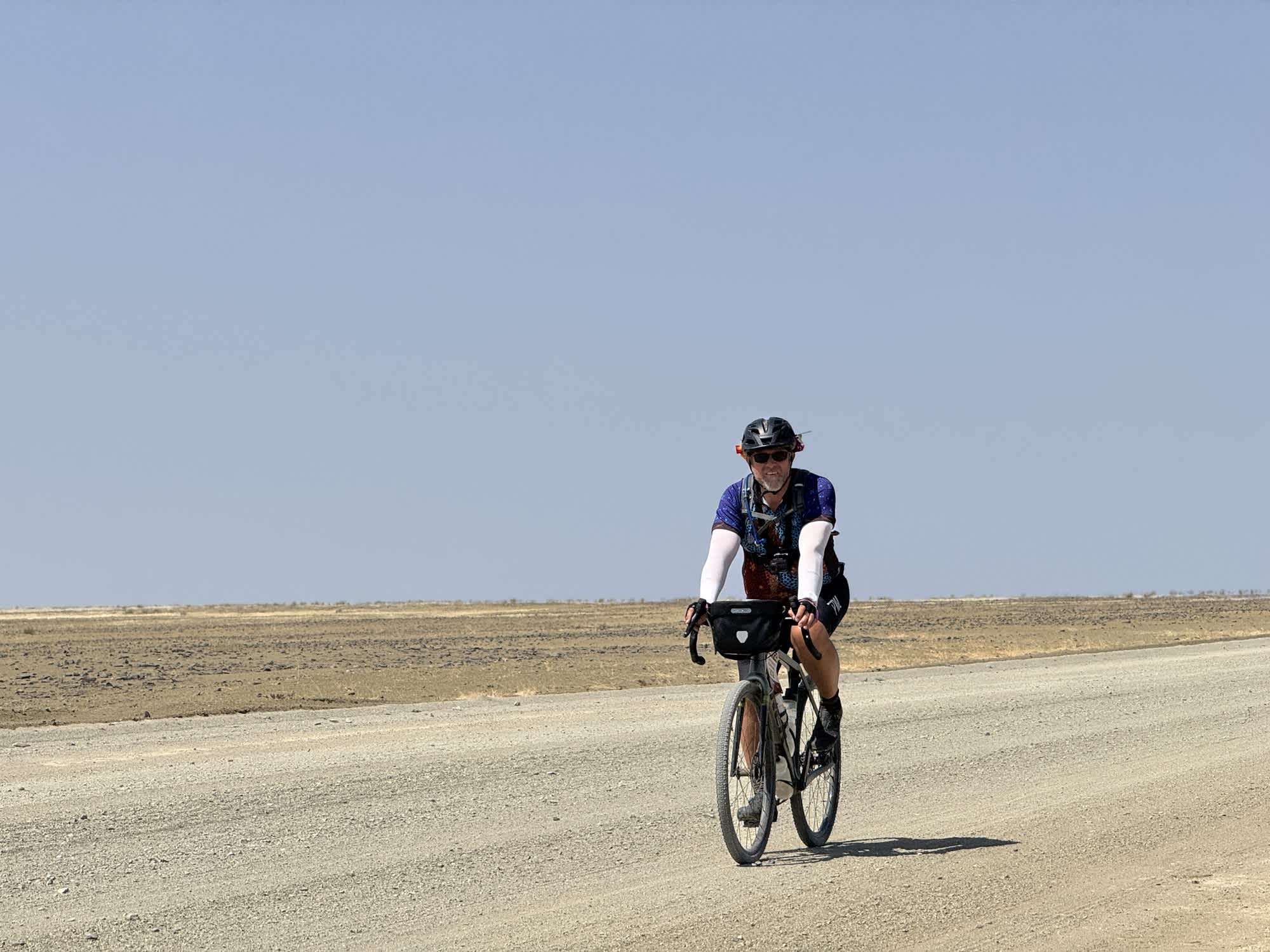
Group Riding Experience
Q: How has it been riding with a group, compared to riding alone?
This is the first time I’ve cycled in a group like this, and it’s been great. You’ve got the flexibility to ride at your own pace if you want, but there’s also the social side — sharing meals, conversations, and time together on rest days. At the same time, if you’d rather have some privacy, nobody minds if you just sit quietly and read a book. There’s also a difference between being alone and being lonely. In a city, people can feel lonely, but out in nature you feel part of something bigger. You notice the sky, the wind, the birds, and it puts things into perspective. These rides really clear the mind — you stop worrying about work or other stresses, and you can just be in the moment. It’s almost meditative, as if your brain finally has space to simply receive everything around you.
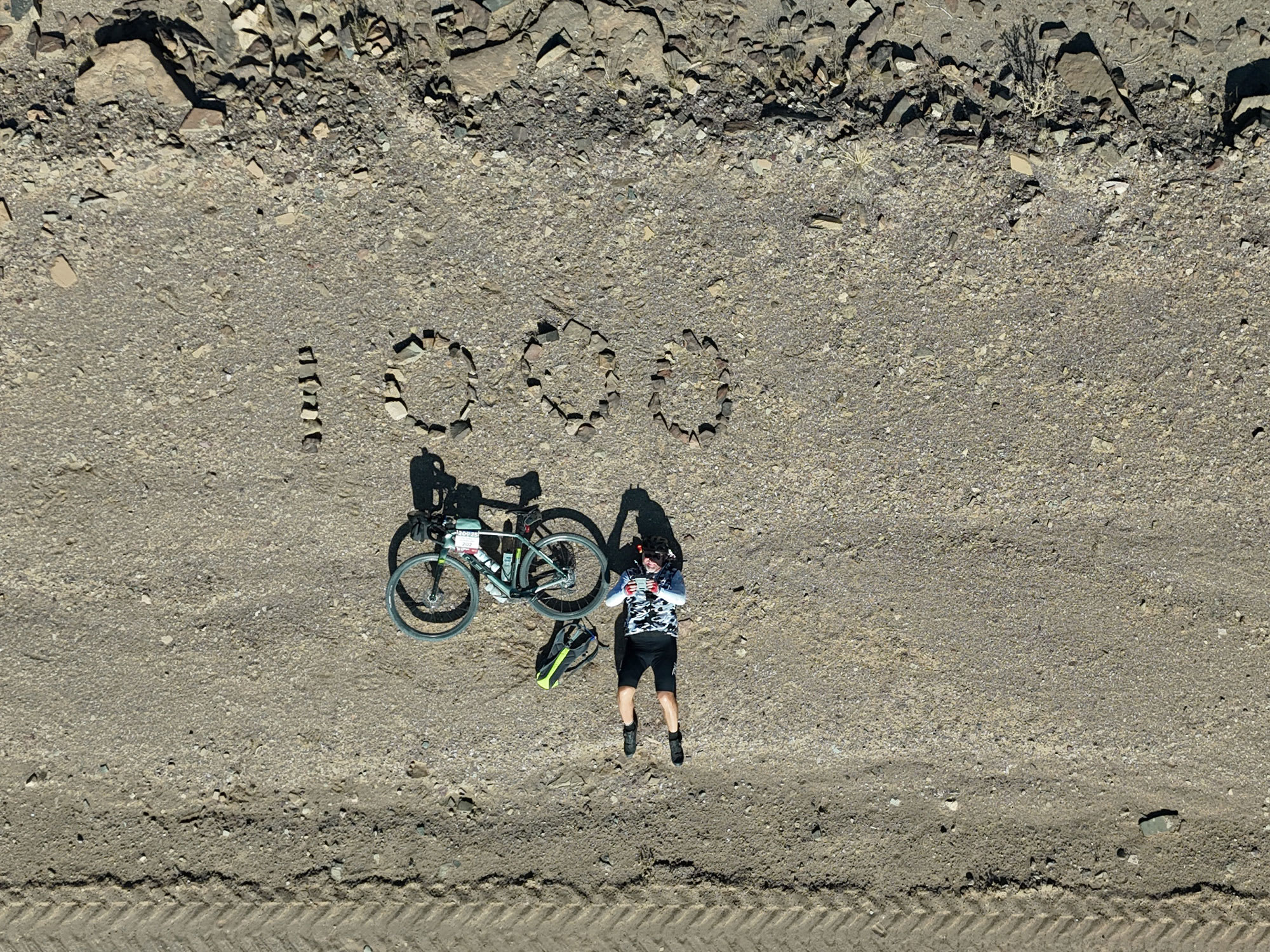
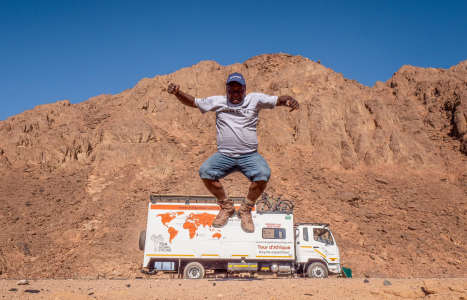
Credit: Micheal Viljoen
Challenges on Tour
Q: What are the biggest challenges you’ve faced on this tour?
The challenges are both physical and mental. Physically, you definitely get sore hands, saddle sores, and aches in your arms, shoulders, hips, and sit bones. A well-fitted bike makes a huge difference, and I got some good advice from Simon to wear two pairs of cycling shorts on the bumpiest sections, which really helps. Mentally, the distance can feel daunting – riding 120 km a day is a lot. But I break it down into smaller sections. For example, I’ll think, “It’s 30 km to the Coke stop,” then another 40 km to lunch, and so on. Once you hit each milestone, the whole distance feels much more achievable. With that mindset, it’s all manageable.
Michael successfully completed his 1,000 km challenge in Africa and finished this first section of the TDA Cape to Kili Tour. We wish him all the best for his future cycling adventures and hope to have him join us again on another tour soon.
RELATED
TOUR
Leave a Comment for "2025 Cape to Kili Cycling Expedition: Q & A with Australian Cyclist Michael Viljoen"