Blog
 REGISTER NOW


The Peace Caravan – The Island Hopping Japan Cycling Tour in Hiroshima
Engraved in stone long ago,
Lost in the shifting sand,
In the midst of a crumbling world,
The vision of one flower.
– Tamiki Hara, A bomb survivor
“If I had foreseen Hiroshima and Nagasaki, I would have torn up my formula in 1905.” – Albert Einstein
“Since Auschwitz we know what man is capable of. And since Hiroshima we know what’s at stake.” – Victor E. Frankl
The inaugural Island-Hopping Japan Cycling Tour has reached the end of its first section, Mountain Temples, in Hiroshima. The word Hiroshima, perhaps like no other, immediately evokes strong thoughts and emotions for many of us, and certainly for the riders who have decided to take part on this tour.
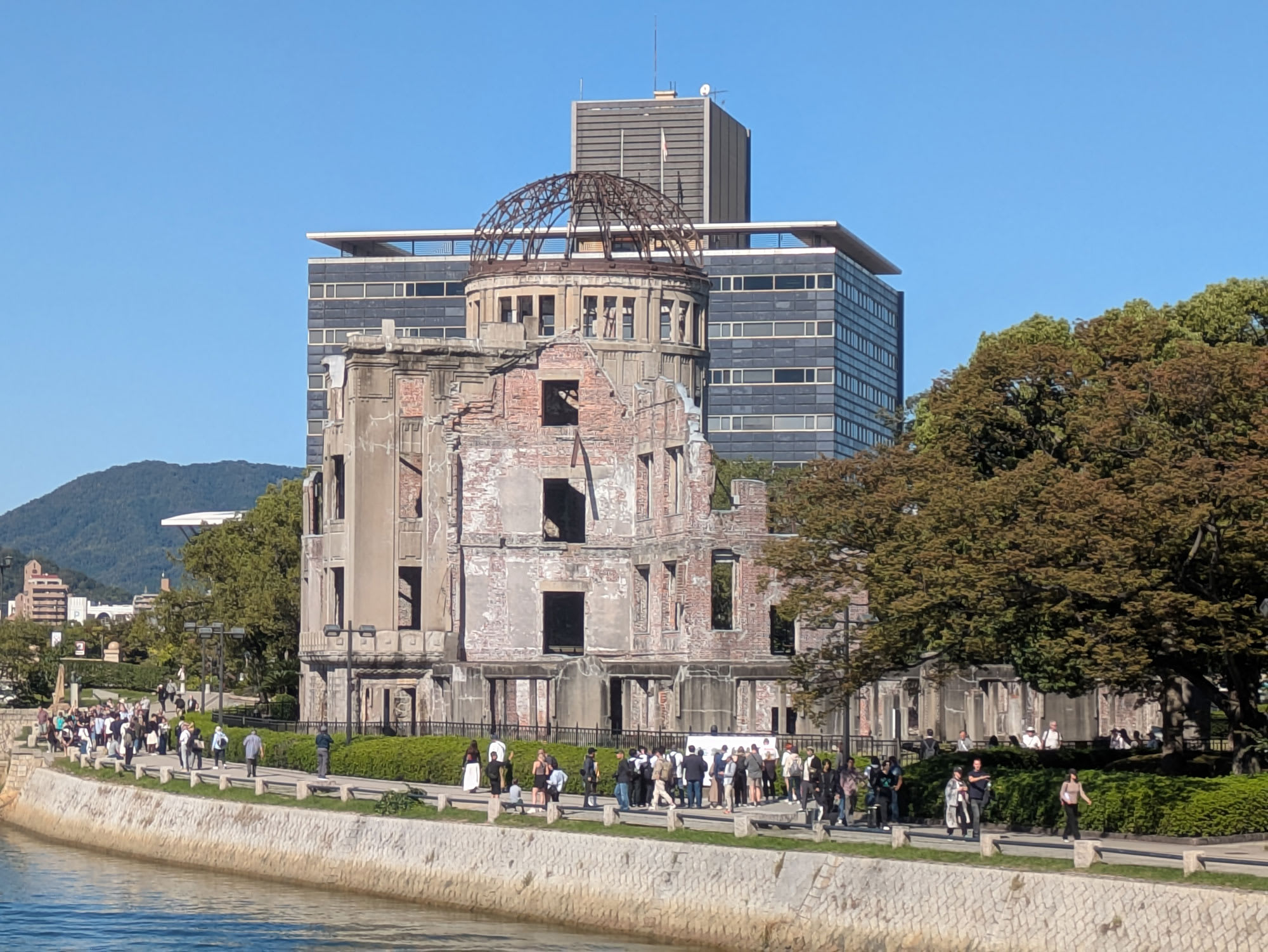
The A Bomb Dome
This morning of our rest day in Hiroshima, I only had to walk a few hundred metres from the hotel to stand in the epicentre of the explosion of the first atomic bomb ever used in combat. As I slowly made my way there, surrounded by tall, modern buildings, paying attention to the traffic on large boulevards that I had to cross, the sun shining, mature trees lining the streets, bushes and flowers enhancing the area, one would never guess what happened here on August 6th, 1945.
“The horror, the horror” were the first two words in my blog from Nagasaki, site of the second atomic bomb dropped during World War 2, when I visited it on our first Journey to the East tour. I had similar emotions when I visited the Tuol Sleng museum on the Killing Fields while cycling TDA’s Bamboo Road tour in Cambodia and in Kigali, Rwanda on the 2017 Tour d’Afrique Cycling Expedition. I used the same words ‘the horror, the horror’ when visiting the war remnants museum in Saigon on the 2023 Golden Buddha Ride.
I thought of those places as I walked around the Peace Memorial Park amongst variety of monuments, memorials to the victims and the most famous landmark – the A Bomb Dome – the twisted shell of what used to be Industrial Promotion Hall constructed in 1915. The building, designed and supervised by Czech architect Jan Letzel, stands 160 metres from the epicentre of the explosion and is now a UNESCO World Heritage site. As I wandered from one memorial to the next, I thought about humankind’s shortcomings, the violent instinct we all seem to carry, mankind’s gullibility to fall prey to charismatic leaders and do horrible things. I watched groups of tourists including young foreign students and hundreds, maybe thousands, of Japanese students of all ages, learning, listening, taking notes.
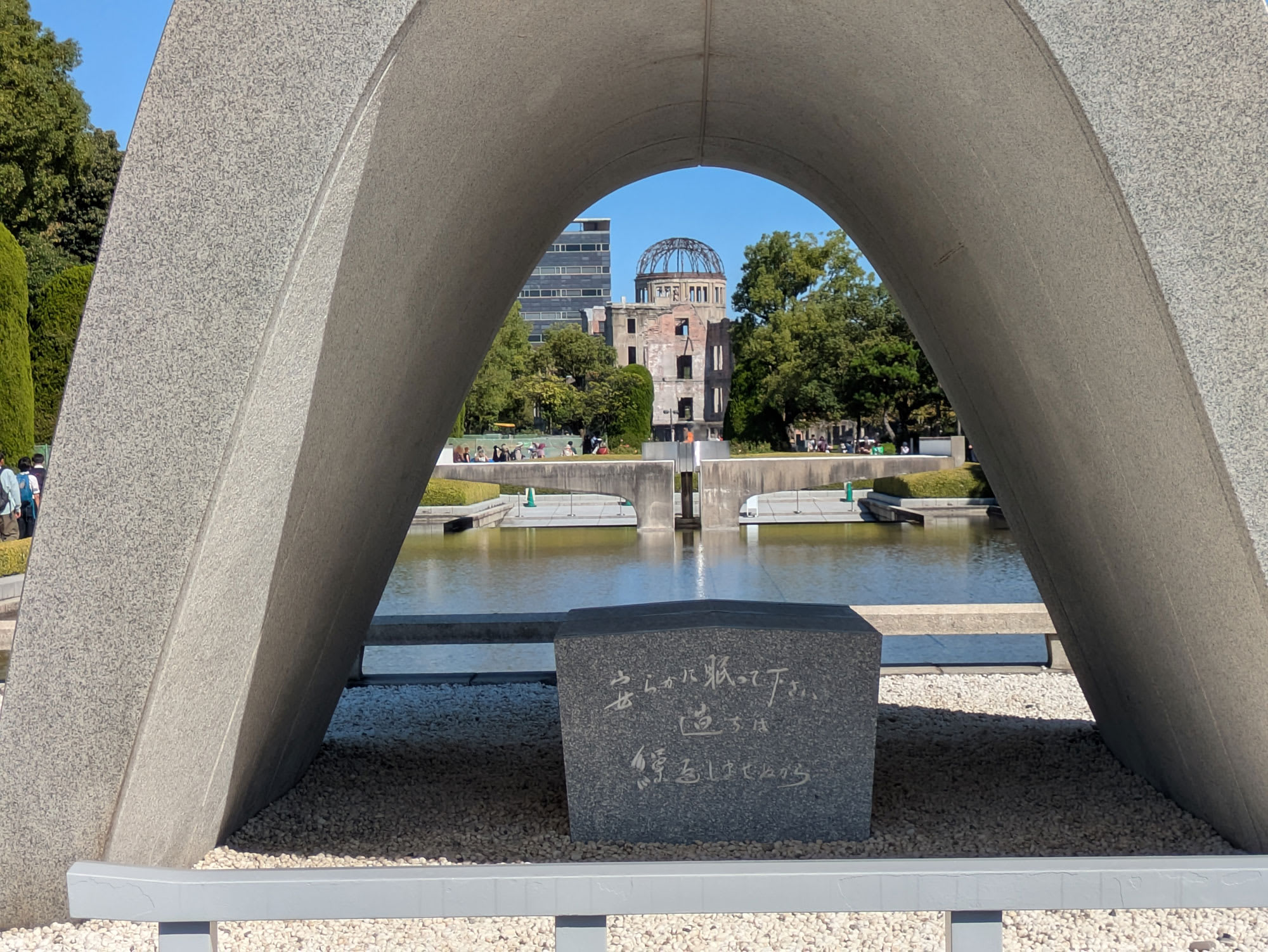
The stone chamber in the centre contains the Register of Deceased Victims
I walked through the packed Peace Museum, looking at exhibits, largely familiar to me from the Nagasaki Museum and other exhibits I have seen about nuclear explosions. In the West Building of the Hiroshima Peace Memorial Museum in the International Conference Center, I learned about city of Hiroshima’s project of Promoting the Culture of Peace and creating a culture that renounces all forms of violence. And I asked myself if the nature of TDA’s cycling tours around the world contributes to the promotion of a Culture of Peace.
In the lobby I picked up a brochure and read under examples of initiatives that contribute to the promotion of culture of peace: Item 1 – Initiatives that enable citizens to enjoy the benefits of peace through cultural arts and sports exchanges: create opportunities for citizens to appreciate the peace that surrounds them by holding art and sporting events. Arts and sports transcend the boundaries of language, beliefs, and genders, they can be considered part of culture of peace when undertaken in support of peace.
Later on, watching a video on a large screen in the Hiroshima National Peace Memorial Hall, I learned a new word, Hibakusha – survivor or bomb-affected person. I listened to testimony after testimony, of which there are over one thousand. One particular woman, Hibakusha, talked at length about the need of the world not to forget, to educate young people so that not to allow this to happen again – “No one should ever suffer as we have.” These words sent shivers down my spine. My mother, one of the first inmates of another horror, a place called Auschwitz, used same words in her video testimony about her three-year incarceration.
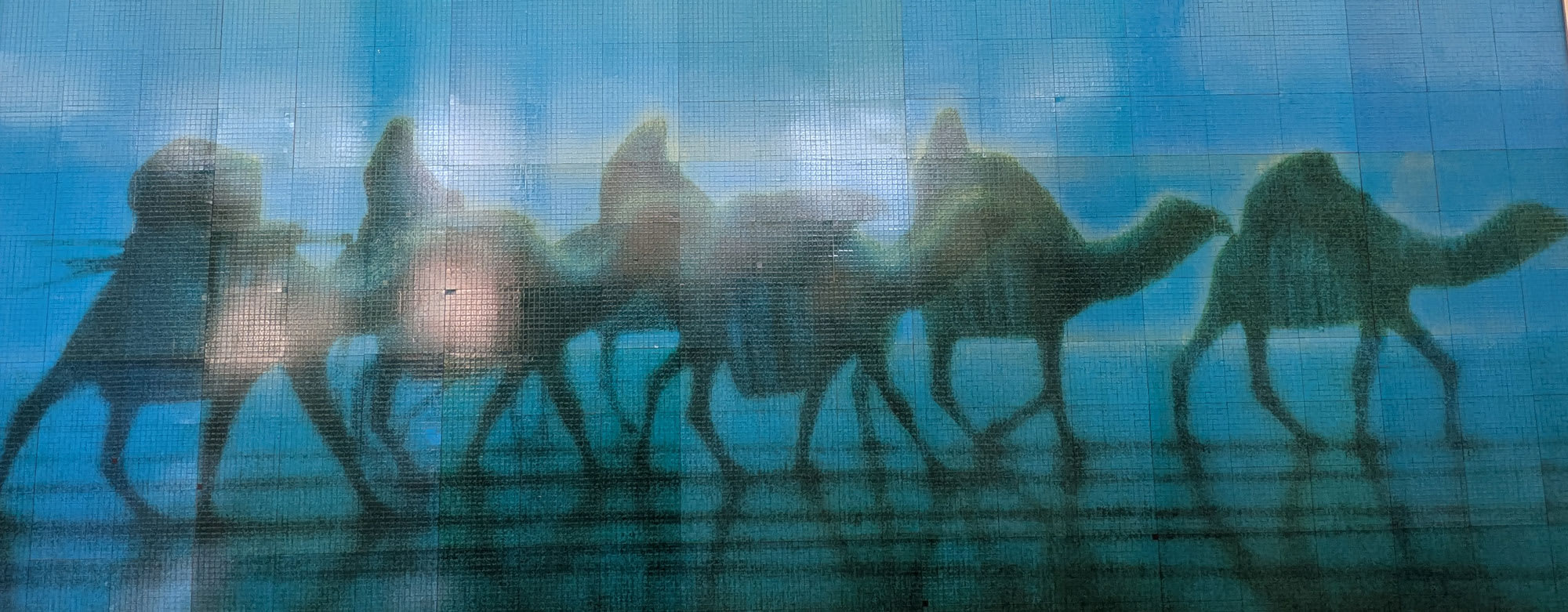
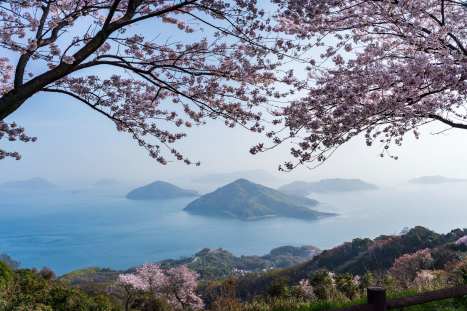
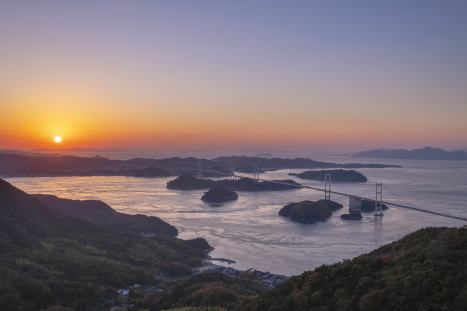
On the way out of the museum, I noticed a large mosaic of a painting I saw just three days ago while cycling on Ikuchi-Jima, also known as Setoda Island, on our way to Hiroshima. We all stopped at the museum to see the work of perhaps the most famous modern Japanese painter and A Bomb survivor, Hirayama Ikuo. The painting is titled ‘Caravan of Peace’. Standing in front of the mosaic, it suddenly hit me. TDA Global Cycling tours have been called by many names, from travelling circus to extreme cycling adventures, but when looking at his work, it crossed my mind that our tours could also be called, Caravans of Peace.
RELATED
TOUR

Island Hopping Japan
Japan Island Hopping. We have taken what was once a military strategy used by both the Japanese and American forces in World War Two and transformed...

Leave a Comment for "The Peace Caravan – The Island Hopping Japan Cycling Tour in Hiroshima"